Interview by Behnam Ghasemi, Editor-in-Chief, Kohan Textile Journal
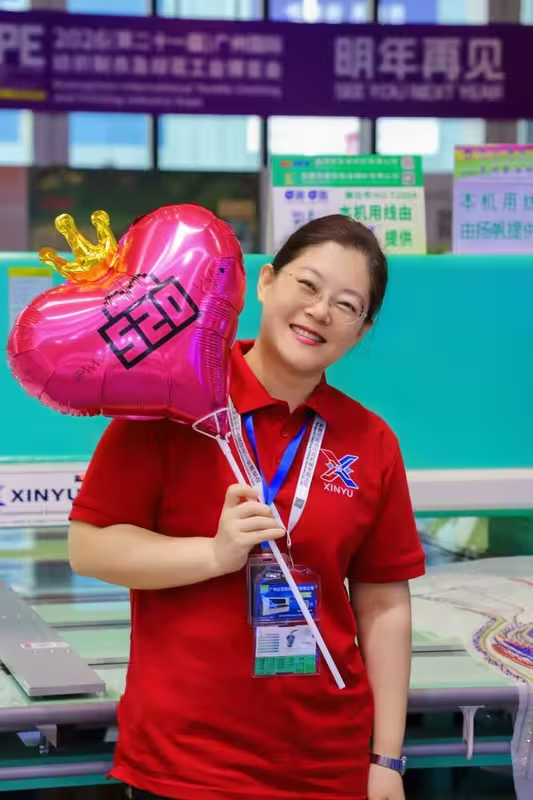
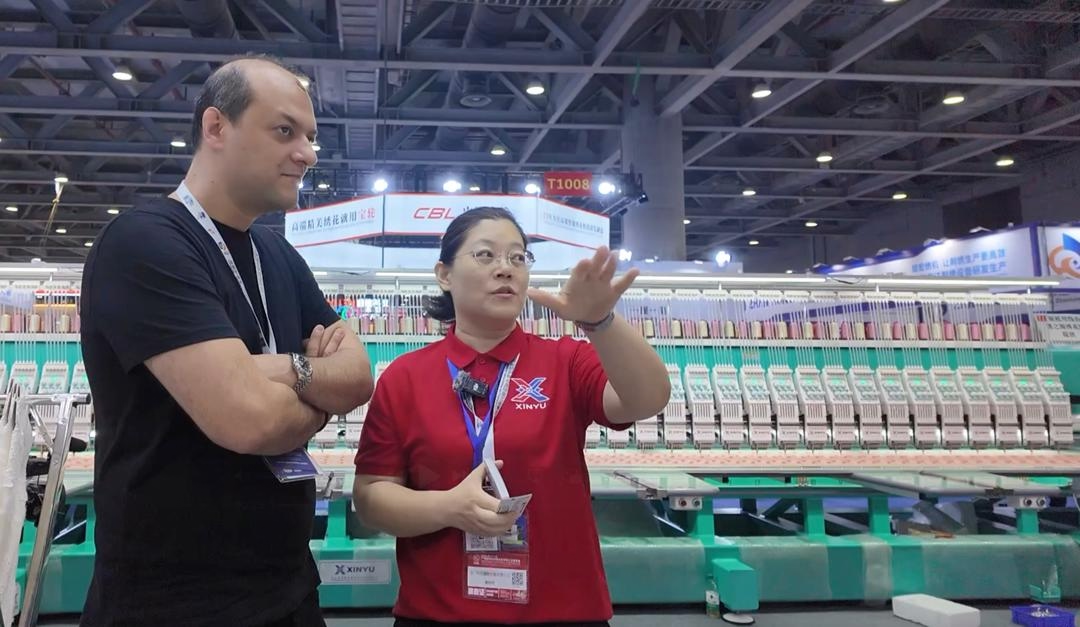
China continues to strengthen its position as one of the world’s leading suppliers of embroidery machinery by combining competitive pricing with continuous innovation and expanding global market reach. At ITCPE 2026 in Guangzhou, Behnam Ghasemi, Editor-in-Chief of Kohan Textile Journal, spoke with Amanda Hu, General Manager of Xinyu Embroidery Machine, about the company’s latest technologies, the rapid development of Chinese textile machinery manufacturers, and opportunities across the Middle East and Africa.
Xinyu Embroidery Highlights Innovation at ITCPE 2026
Could you introduce Xinyu Embroidery Machine and tell us about the products you are showcasing at ITCPE 2026?
Amanda Hu: Xinyu Embroidery Machine specializes in manufacturing a wide range of embroidery equipment for the textile and apparel industry.
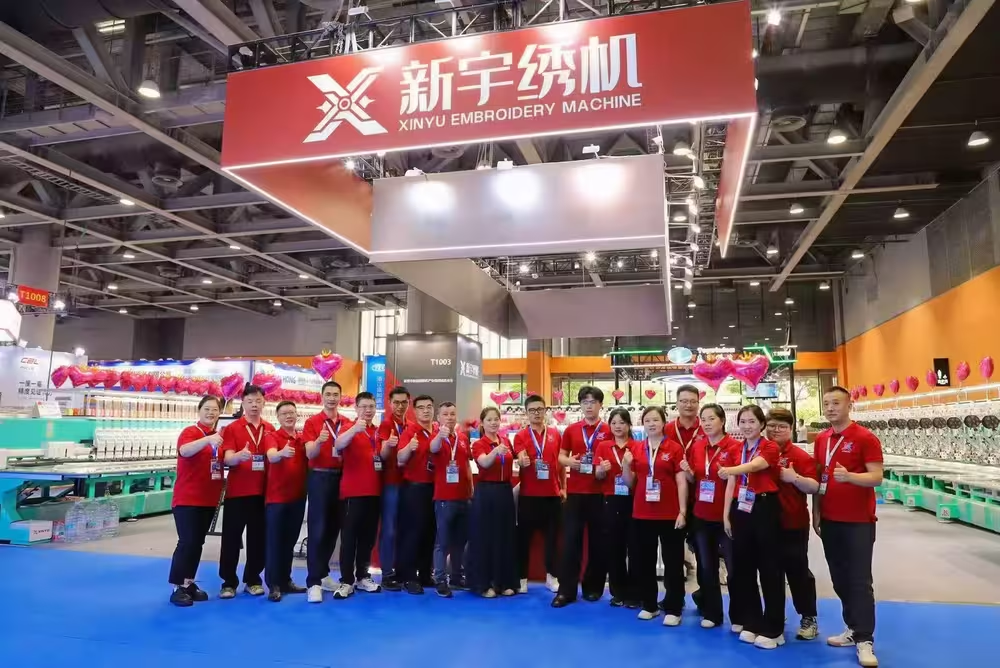
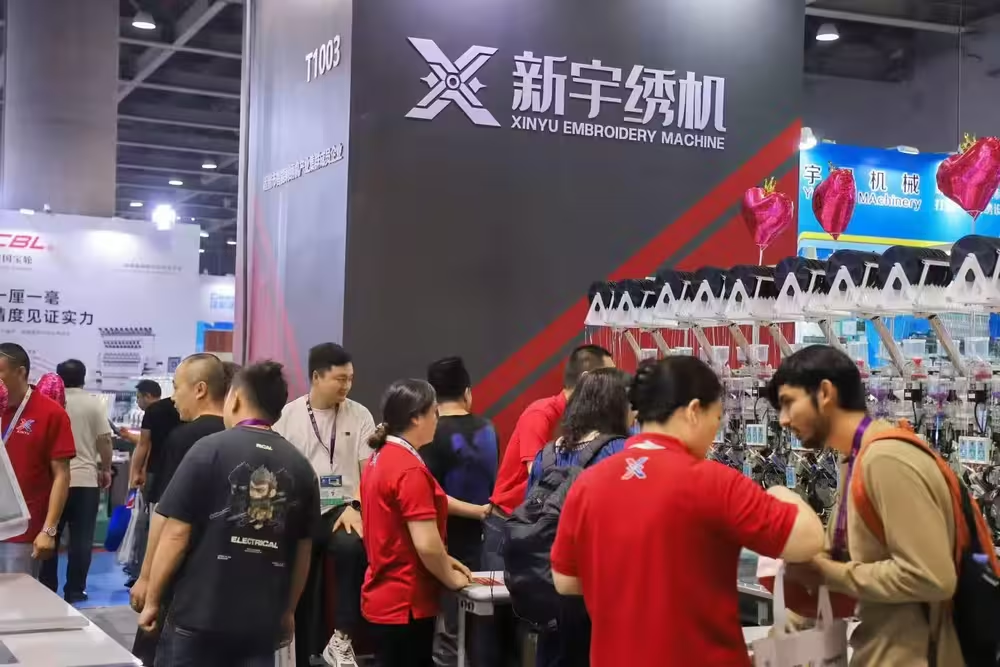
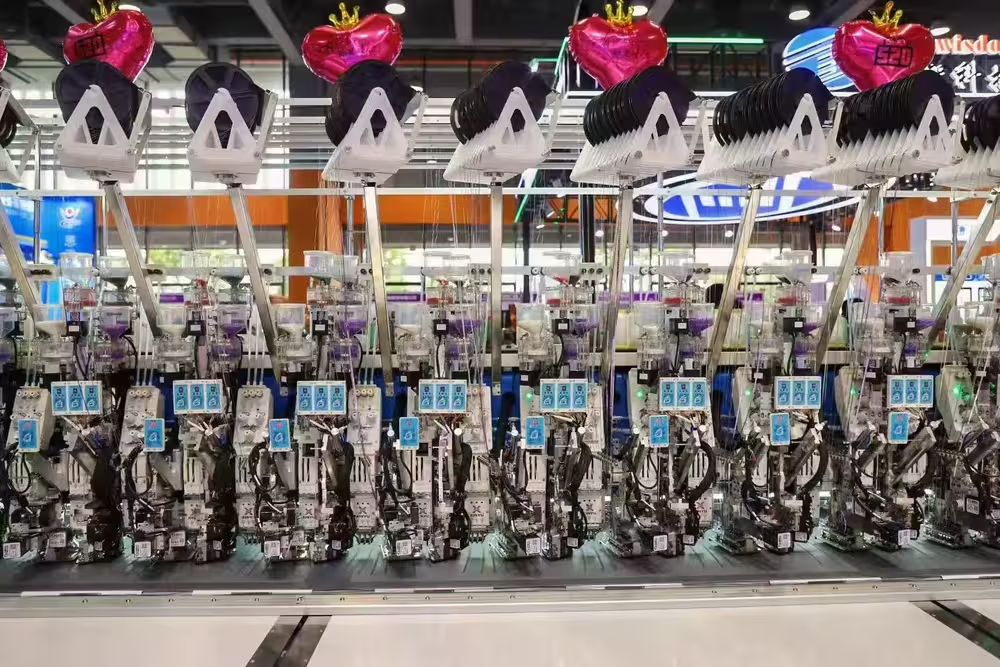
This year at ITCPE, we are exhibiting both multi-head embroidery machines and single-head embroidery machines. In addition, we are presenting several advanced configurations equipped with technologies such as laser cutting, chenille embroidery, and other specialized devices designed to provide greater production flexibility.
We are delighted to welcome visitors from around the world to our booth and demonstrate our latest developments.
Xinyu participates in ITCPE every year. Why is this exhibition so important for your company?
Amanda Hu: ITCPE is one of the most important exhibitions for our company.
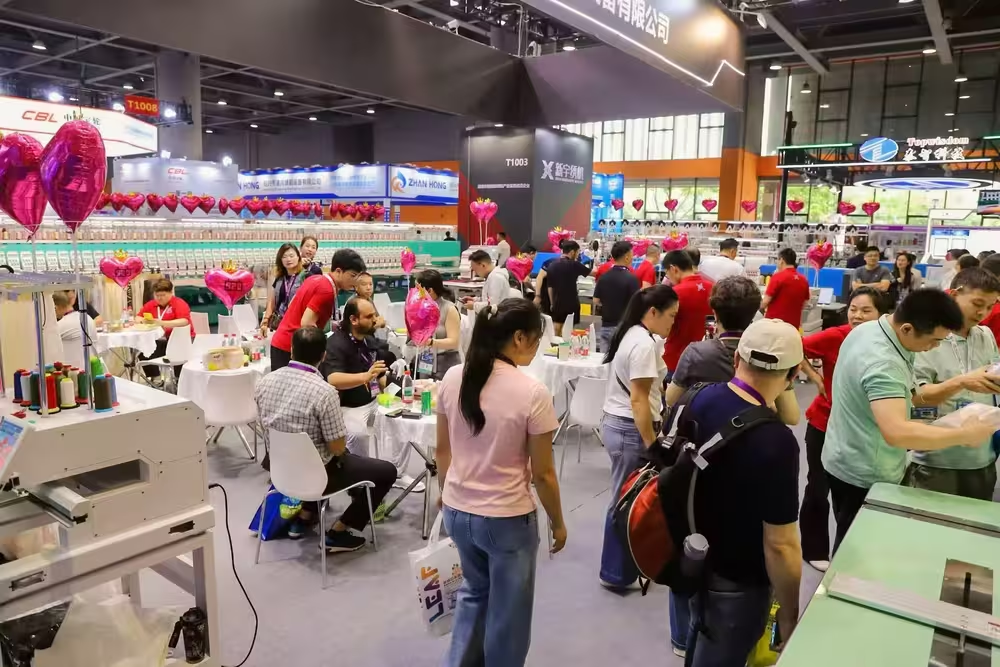
It provides an excellent opportunity to meet not only international customers but also many local manufacturers. Face-to-face communication allows us to better understand customer requirements, introduce new technologies, and establish long-term partnerships.
For us, ITCPE is a key platform for expanding our global business.
Read More: ITCPE Guangzhou 2026 Opens with Strong International Participation and Heavy First-Day Attendance
Chinese textile machinery manufacturers have developed remarkably fast over the past decade. What do you believe is the main reason behind this success?
Amanda Hu: I believe the biggest reason is the dedication and hard work of Chinese manufacturers.
Whether they are our colleagues or competitors, everyone works extremely hard to improve technology, manufacturing capabilities, and product quality.
Continuous investment, innovation, and commitment to customer needs have enabled Chinese machinery manufacturers to grow rapidly and become increasingly competitive in international markets.
How would you compare Chinese embroidery machines with European, German, or Japanese brands in terms of quality and price?
Amanda Hu: Today, customers expect much more than just competitive pricing.
Our goal is to provide an excellent balance between quality, price, and delivery reliability.
We work hard to ensure that our machines offer dependable performance, competitive pricing, and on-time delivery. Most importantly, we always strive to fulfill the commitments we make to our customers.
Building trust through reliable products and services is our priority.
How do you evaluate the opportunities in the Middle East and Africa?
Amanda Hu: Every country has different production requirements and market characteristics.
That is why we do not believe in offering the same solution everywhere. Instead, we carefully evaluate each market and recommend the machine configurations that best suit local production needs and customer expectations.
The Middle East and Africa have significant long-term potential, and we see many opportunities to grow our business in these regions by providing customized solutions.
Finally, what message would you like to share with customers worldwide?
Amanda Hu: We sincerely appreciate everyone who visits our booth at ITCPE.
Our goal is to continue delivering high-quality embroidery machines, reliable service, and solutions that help our customers grow their businesses. We look forward to building stronger partnerships with customers around the world.
Editor’s Insight
The conversation with Amanda Hu highlights a broader transformation taking place within China’s textile machinery industry. Manufacturers are no longer competing solely on price—they are increasingly focusing on technology, delivery reliability, product quality, and market-specific solutions. As textile production continues to expand across emerging regions such as the Middle East and Africa, companies capable of adapting their technologies to local market requirements are likely to strengthen their global competitiveness in the years ahead.