




From production planning and real-time quality control to machine maintenance and AI-powered factory intelligence, Solvei8 is building a connected operational layer for modern apparel manufacturing.
Garment manufacturing has never lacked data. Production reports, ERP systems, planning spreadsheets, quality records and machine maintenance logs generate enormous amounts of information every day. The bigger challenge is turning that information into action while there is still time to influence the outcome.
This is the problem Solvei8 is addressing with its Factory OS, an operational control platform designed specifically for apparel manufacturing.
Rather than functioning as another isolated reporting system, Factory OS connects planning, production, quality, maintenance and workforce information within one real-time operational layer. According to Solvei8, the technology works with manufacturers’ existing systems and is currently live across more than 60 apparel groups in eight countries. The company reports that deployments represented on its platform have collectively covered more than 850 million articles produced.
So where can this approach make a practical difference inside a garment factory?
1. Connecting the Entire Garment Production Plan
Planning becomes increasingly complicated when cutting, embellishment, embroidery, sewing and washing are managed as separate processes.
Solvei8’s Plani8 connects these processes within a single live production plan. Material readiness can flow from existing ERP or warehouse management systems, while actual production data continuously updates the plan and highlights downstream conflicts.
This matters because a delay in apparel manufacturing rarely remains isolated. Fabric arriving late can affect cutting, which affects sewing and eventually threatens the shipment date.
Solvei8 gives an example in which a two-day fabric delay triggered Plani8 to check available cutting capacity, divide production between two cutting tables and re-sequence another order. The objective was to absorb the disruption while protecting the original production start and buyer delivery dates.
For planners, this changes the role of software from showing that a delay happened to helping determine what should happen next.
2. Giving Manufacturers Real-Time Production Visibility
Many factories already have production data, but the information can be fragmented across departments and systems.
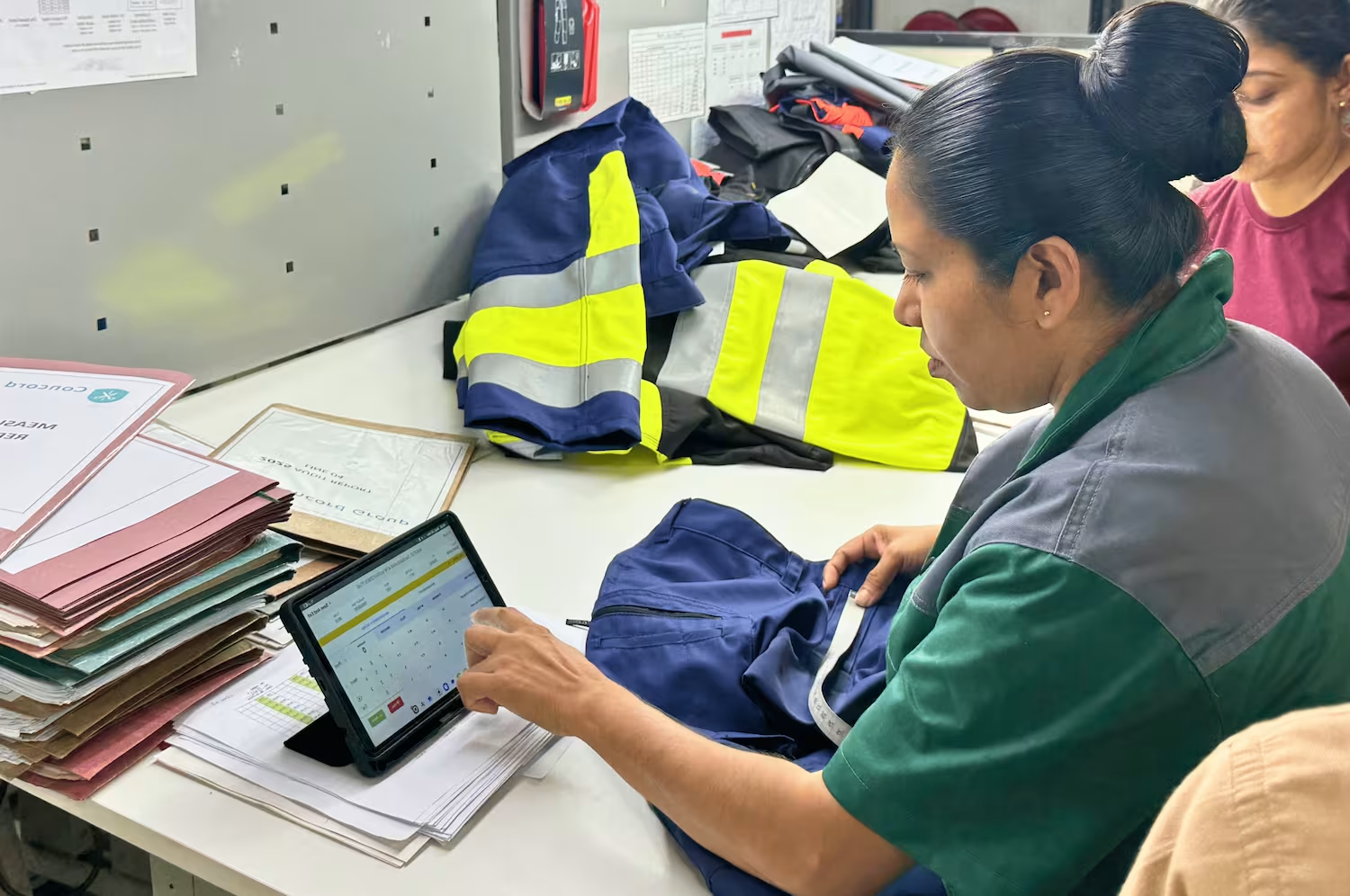
Tracki8 is designed to reconcile production and work-in-progress information across the manufacturing process, tracking orders through stages including cutting, embellishment, preparation, sewing, washing, finishing, AQL and packing.
The platform can break this information down by size and colourway, giving planners a clearer picture of where an order actually stands at a particular moment.
For large apparel manufacturers managing multiple factories, this type of visibility can reduce dependence on manually consolidated reports and provide management teams with a common operational picture.
Read more: Concord by Guston Ltd Expands Real-Time Factory Control with Solvei8’s Factory OS
3. Finding Quality Problems Before They Become Bigger
Quality problems become considerably more expensive when they are discovered late.
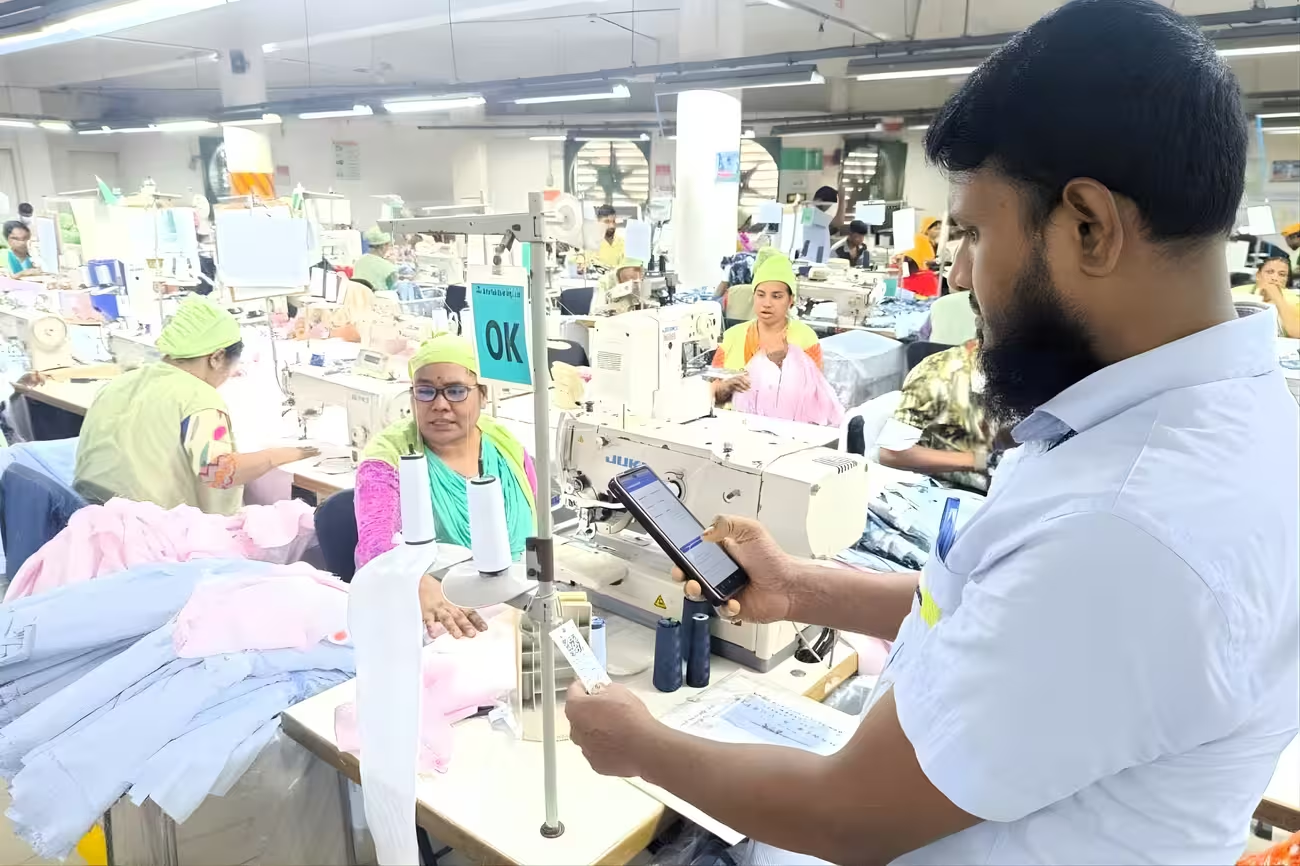
Solvei8 approaches quality management by identifying unusual patterns while production is still running. In one scenario presented by the company, Tracki8 detects a cluster of defects at a specific operation, alerts the quality manager and simultaneously routes a machine-related issue to the relevant mechanic.
The principle is simple but important: shorten the distance between detecting a problem and taking corrective action.
Instead of waiting for an end-of-shift quality report, managers can potentially intervene while the affected garments are still moving through production.
4. Reducing Machine Downtime Through Faster Maintenance Response
An idle sewing or production machine may look like a maintenance issue, but its consequences quickly become a production and delivery problem.
Solvei8’s Maintaini8 focuses on machine downtime, Mean Time Between Failures (MTBF), Mean Time To Repair (MTTR) and non-productive time.
When an issue occurs, the system is designed to raise it with the relevant context, prepare a corrective-action framework and escalate it to the appropriate stakeholder. Solvei8 positions this as an alternative to maintenance processes that depend heavily on end-of-day reporting and manual escalation.
For manufacturers operating hundreds or thousands of machines, even relatively small improvements in response time can become significant when multiplied across factories and production lines.
Read more: Interfab Embarks on Data-Led Maintenance Transformation with Solvei8’s Factory OS
5. Using Workforce Data to Improve Line Performance
Technology alone does not determine garment factory productivity. Operator skills and line balance remain fundamental.
Skilli8 monitors operator output and can identify efficiency drops before the end of a shift. The platform can then use available skill and historical production information to recommend corrective actions.
In an example provided by Solvei8, the system detects a 24% drop in an operator’s output, identifies a skill gap and recommends pairing that operator with a more experienced colleague. The company says output returned to target within the same shift.
This represents an interesting evolution in production management: workforce data is not simply recorded for performance reporting but used to support decisions while production is underway.
6. Bringing AI Directly into Factory Decision-Making
Perhaps one of the most interesting directions within Solvei8’s development is the introduction of AI Bot, designed to allow managers to interact with factory information using natural language.
Instead of searching through multiple reports, a manager could ask why a particular plant missed an operational target. The system is designed to analyse information from production, maintenance and workforce data and provide an answer supported by the underlying operational records.
This is where artificial intelligence could become particularly useful for apparel manufacturing.
The value of industrial AI is not necessarily in creating another dashboard. It is in reducing the time between a question, an explanation and a decision.
And importantly, the quality of any AI system depends heavily on the operational data underneath it. Solvei8 therefore positions Factory OS as the data foundation upon which these AI capabilities can operate.
7. Digitalising Without Replacing the Existing Technology Stack
One of the biggest barriers to factory digitalisation is not necessarily technology itself, but the fear of replacing expensive systems that manufacturers have already implemented.
Solvei8 says Factory OS is designed to operate on top of existing infrastructure rather than requiring manufacturers to start again.
The platform provides integration with SAP, Oracle and other ERP environments through connectors and APIs. According to the company, implementation can be completed in approximately six weeks, with deployment designed to avoid disruption to ongoing factory operations.
This could be particularly relevant for larger garment groups operating several factories, countries and existing software systems.
Solvei8 says its architecture is designed to scale from a single factory to groups operating as many as 50 plants while maintaining a common source of operational information.
From Factory Digitalisation to Factory Control
The apparel industry has invested heavily in digitalisation over the past decade, but collecting more data does not automatically create a smarter factory. The next stage may increasingly be about connecting information with action.
Solvei8’s approach reflects this transition. Plani8 connects production planning; Tracki8 provides production and quality visibility; Maintaini8 focuses on equipment reliability; and Skilli8 brings operator performance into the same operational environment. The company’s higher-level products extend this further with automated planning, engineering and natural-language factory intelligence.
For garment manufacturers facing shorter lead times, pressure on margins, changing order sizes and increasingly complex production environments, the question is no longer simply whether factories should digitalise.
The more important question is whether their digital systems can identify what is happening early enough to actually change the outcome.
That is the space Solvei8 is aiming to occupy: not simply reporting the factory, but helping manufacturers run it.











