




Trützschler Nonwovens highlights how original spare parts, process knowledge and planned maintenance can help nonwoven manufacturers protect product quality, reduce unplanned downtime and maintain stable production.
In a modern nonwoven production line, attention naturally tends to focus on major machinery and process technologies. Yet some of the smallest components in the line can have a surprisingly significant influence on production stability, product quality and overall efficiency.
This is particularly important in continuous nonwoven manufacturing, where opening, carding, hydroentangling and needle punching processes are closely connected. A worn or incorrectly performing component in one section can affect subsequent stages and ultimately influence the quality of the finished material.
According to Axel Loss, Spare Parts Sales Specialist at Trützschler Nonwovens, spare parts therefore need to be considered as part of the overall production process rather than simply as individual replacement components.
“When we talk about spare parts, we don’t look at the component in isolation. We look at the process behind it and at how the entire line is performing,” Loss explains.
This process-oriented approach is becoming increasingly relevant as nonwoven manufacturers seek higher productivity while simultaneously reducing unplanned interruptions and maintaining consistent product specifications.
Why Small Components Can Influence the Entire Nonwoven Line
Every component has a particular function within a production line. Whether the process involves opening fibres, carding, hydroentangling or needle punching, the condition and performance of individual parts can influence how effectively the machinery performs.
Even relatively small changes caused by wear can eventually affect production stability or product quality.
This is one reason Trützschler Nonwovens emphasizes the use of original spare parts engineered specifically for the machine, its operating conditions and expected performance.
Rather than treating spare parts simply as consumable items that are replaced after failure, manufacturers can incorporate them into a broader maintenance and production strategy.
Read more: Trützschler Showcases Spinning and Nonwovens Innovations at ITM 2026 Istanbul
Understanding Wear Before It Becomes a Problem
Many components used in nonwoven machinery are wear parts. Their gradual wear during operation is expected, but the rate at which this occurs is not necessarily the same for every production environment.
According to Trützschler Nonwovens, several factors can influence component wear, including the raw material being processed, production speed and the specific application.
This means that maintenance decisions should ideally reflect actual operating conditions rather than relying only on a standard replacement schedule.
Understanding these variables can help producers estimate when critical components are approaching the end of their optimal operating period and plan replacement before performance begins to deteriorate.
Moving from Reactive to Planned Maintenance
The traditional approach of replacing components only after problems appear can result in unnecessary production interruptions. In continuous manufacturing environments, unexpected downtime can have consequences far beyond the cost of the replacement component itself.
Production losses, quality variations and delays can quickly make an inexpensive wear part considerably more costly.
Loss therefore points to a more proactive approach:
“Instead of simply reacting to problems, we can plan ahead together with our customers. This helps them to prevent unplanned downtime, maintain production quality, and improve overall production efficiency.”
This shift from reactive maintenance toward planned intervention can provide manufacturers with greater control over both machinery performance and production schedules.
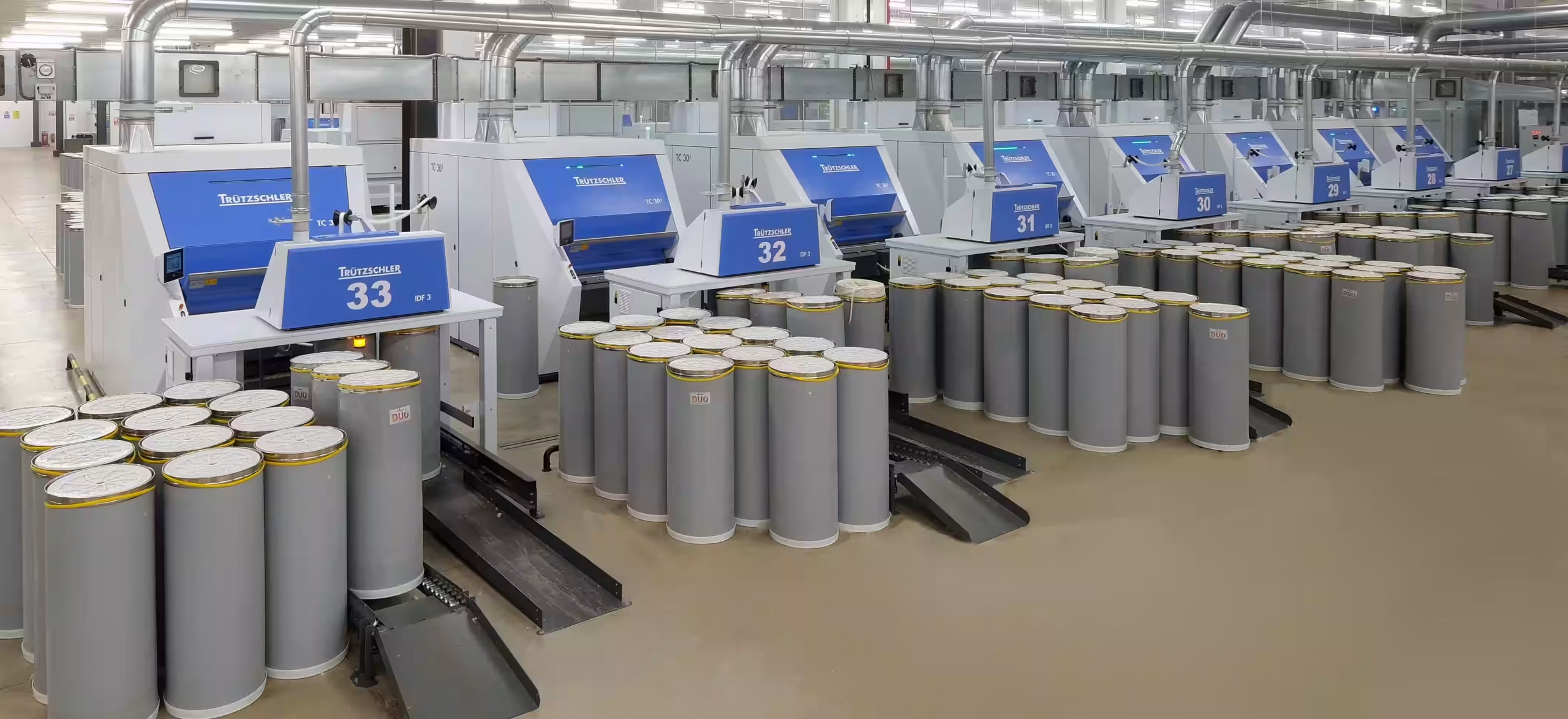
card and the integrated draw frame IDF 3.
Original Parts and Process Expertise
The discussion also highlights an important distinction between simply supplying replacement components and understanding how those components interact with the production process.
Original parts are developed according to the specifications of the machinery and intended operating conditions. Combined with process knowledge, this can help manufacturers maintain consistency over longer operating periods.
For nonwoven producers operating high-output lines, reliability is particularly important. A production line consists of interconnected processes, meaning that performance problems originating from one component may influence several stages of manufacturing.
As production speeds increase and manufacturers place greater emphasis on efficiency, preventive maintenance and spare-parts management are therefore becoming part of a broader production strategy rather than simply a maintenance department responsibility.
Read more: Trützschler Nonwovens Introduces Stainless Steel MPD Dryer Option
A Small Investment in Production Stability
Spare parts may represent only a small physical element of a nonwoven production line, but their influence can extend across quality, productivity and operational reliability.
For manufacturers, the key question is increasingly not simply when a component will fail, but how its wear can be understood and managed before it affects production.
The message from Trützschler Nonwovens is straightforward: combining original spare parts, process expertise and planned maintenance can help producers stay ahead of wear rather than reacting after production has already been disrupted.
In an industry where every hour of production matters, sometimes the smallest components deserve much more attention than their size suggests.











