Trützschler’s third-generation integrated draw frame, the IDF 3, has been developed to improve sliver quality, productivity and operator access while reducing the number of preparation stages required in spinning mills.
The machine brings together a redesigned drafting system, faster can changing, a new measuring system and automated features intended to simplify daily operation. Trützschler positions the IDF 3 as a process-shortening solution for rotor, airjet and other spinning applications.
Homogeneous Sliver Through Controlled Fibre Guidance
One of the central objectives of the IDF 3 is the production of a homogeneous, regulated sliver. The machine uses Trützschler’s Disc Leveller DL and Disc Monitor DM technologies, enabling regulation comparable to a finisher draw frame.
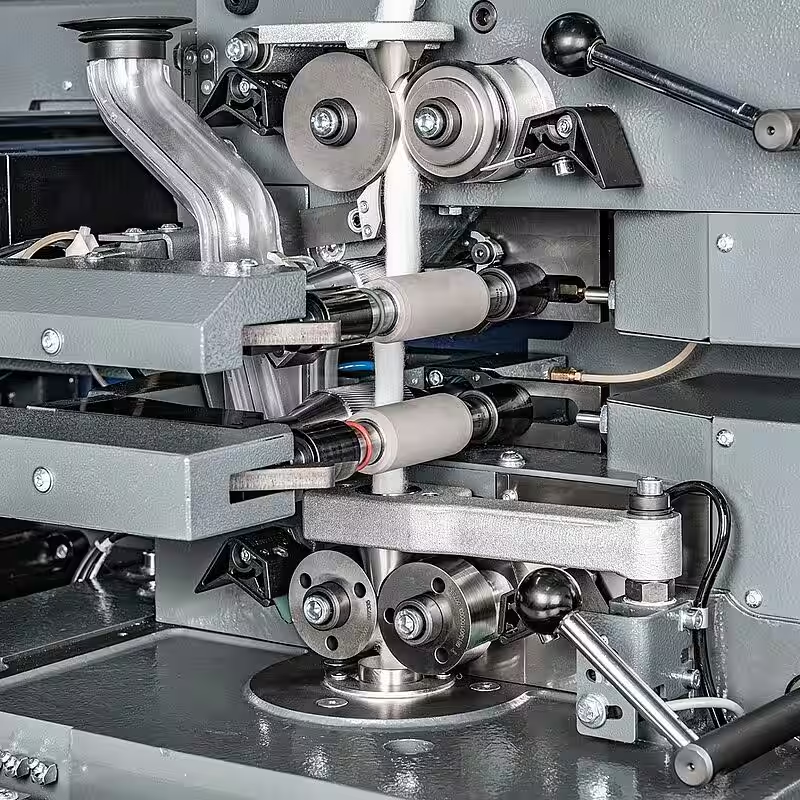
Instead of a conventional measuring funnel, the IDF 3 uses a groove and sensing roller. According to Trützschler, this measuring principle helps reduce contamination while providing reliable monitoring of the sliver.
The drafting system has also been redesigned to guide fibres securely and gently through the drafting zone. This configuration is intended to provide greater independence from differences in the running behaviour of various fibre materials while supporting stable drafting conditions.
Trützschler says the combination of controlled fibre guidance and a homogeneous sliver can help stabilise the downstream spinning process and reduce yarn imperfections.
Faster Can Changing Improves Productivity
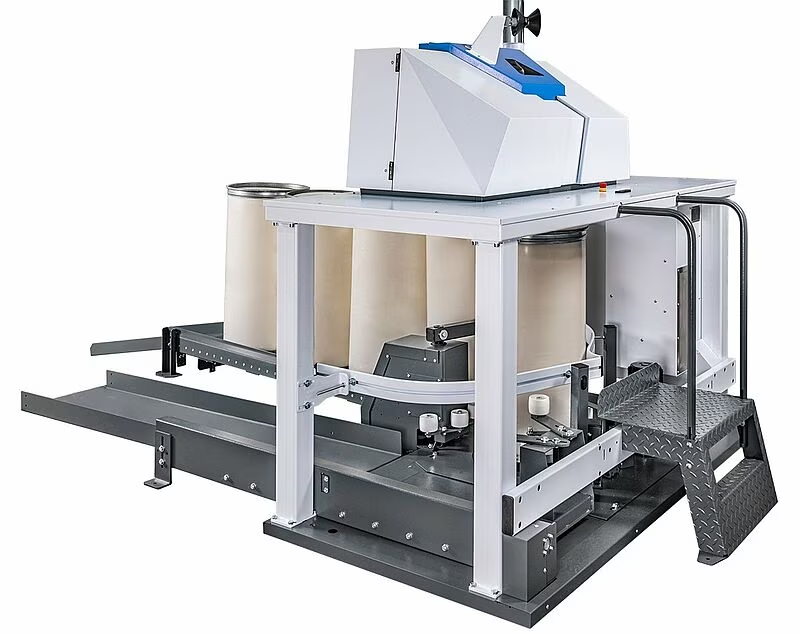
Can changing is one of the areas where Trützschler has introduced a significant mechanical improvement. The IDF 3 can change cans at delivery speeds of up to 300 metres per minute without stopping the coiler plate.
The company states that this represents a fourfold increase in can-changing speed compared with conventional solutions. By reducing the time required for each change, the system can raise machine availability and overall production efficiency.
According to the IDF 3 technical fact sheet, the faster changing process can contribute to an efficiency increase of approximately 3%. The machine can accommodate cans with diameters ranging from 400 to 1,200 millimetres, with different options for empty-can feeding and full-can delivery.
Available configurations include delivery tracks, floor delivery and can carriages for selected smaller can sizes. Above-floor can changers are available across the stated can range, while below-floor systems are offered for 1,000 and 1,200-millimetre cans.
Lower Compressed-Air Consumption
The new measuring system has been designed with self-cleaning functionality while requiring less compressed air. Trützschler estimates that the reduced compressed-air consumption can save approximately €650 annually for each machine.
Although actual savings will depend on local energy costs and operating conditions, lowering compressed-air demand can be important for spinning mills because compressed-air systems are often among a factory’s significant energy consumers.
The combination of shorter process sequences, faster can changes and lower auxiliary-energy consumption is intended to reduce both operating costs and the amount of capital tied up in production.


QUICK START Simplifies Sliver Break Handling
The IDF 3 introduces a QUICK START function designed to accelerate automatic piecing following a sliver break.
According to Trützschler, the system stabilises and simplifies sliver-break correction without requiring operators to open machine covers.
When processing short fibres, the company estimates that QUICK START can save more than one hour of handling time per day for a set consisting of six cards.
This feature is particularly relevant in production environments where frequent manual interventions can affect both machine efficiency and labour requirements.
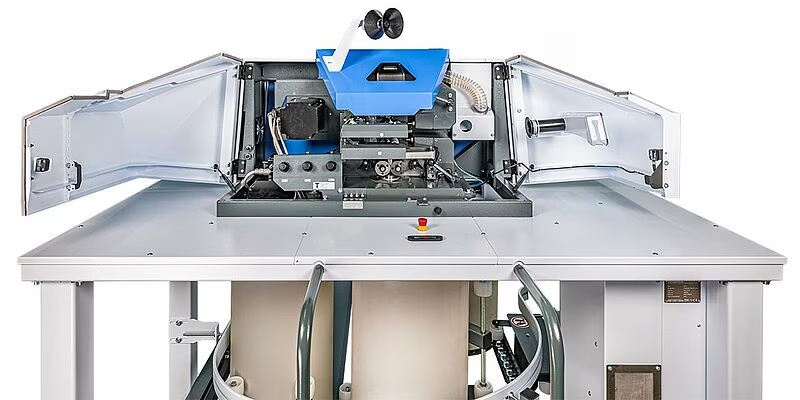
Operator access has also been reconsidered. The IDF 3 can open fully, allowing easier access to its components for adjustment, cleaning and maintenance. Central drafting-distance adjustment is possible without retightening belts, while the available setting range has been increased to 70 millimetres.
Top-Roller Monitoring and Longer Service Life
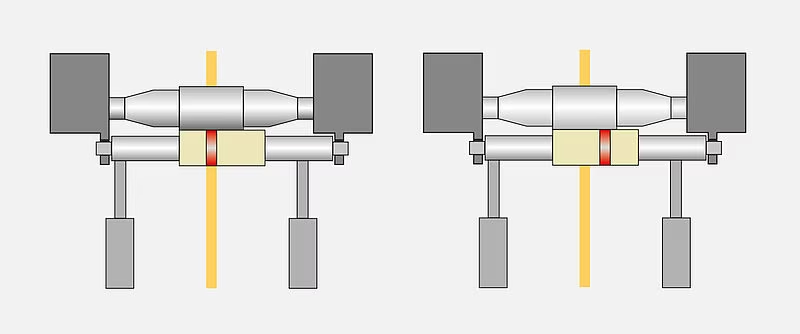
The IDF 3 incorporates individually adjustable pressure settings for its top rollers, together with automatic pressure monitoring. Self-adjusting lap monitoring is designed to identify winding around the top rollers and support more stable operation.
The top rollers can also be rotated, which Trützschler says can double their service life. High-performance bearings are used to keep process temperatures lower during operation.
These improvements are intended to reduce maintenance requirements while giving operators greater control over the drafting process.
Applications in Rotor and Airjet Spinning
Trützschler presents the IDF 3 as a way to shorten fibre preparation across different spinning applications.
For rotor spinning, the company says its preparation system can process up to 100% waste into yarn. One proposed configuration is a separate compact line for processing spinning waste, such as noils generated in a ring-spinning installation. The achievable yarn quality will naturally depend on the waste composition, fibre condition and process settings.
For airjet spinning, the IDF 3 can be used to reduce the number of preparation stages. Trützschler also highlights its “Twin but Independent” concept, which is intended to increase productivity in conventional processes involving three passages.
By removing unnecessary process stages, spinning mills may reduce machinery investment, space requirements, material tied up between stages, operator workload and the potential for handling errors.
Read more: Trützschler Nonwovens Appoints Ingo Mählmann as Director Sales & Marketing
The IDF 3 therefore represents more than an incremental draw-frame update. Its importance lies in combining sliver regulation with a shorter and more automated preparation route—an approach that could help spinning mills address growing pressure to improve quality while controlling energy, labour and production costs.