


The nonwovens industry is no longer short of innovative materials, alternative fibres or circular concepts. Its more urgent challenge is converting these developments into stable, economical and reliable industrial production, according to Trützschler Nonwovens.
Following discussions at EDANA OUTLOOK 2026, the company identified four signals expected to influence the future of hygiene products, wipes and other nonwoven applications: industrial-scale sustainability, changing consumer expectations, regulatory compliance and the transition of circularity beyond pilot projects.
“The future of nonwovens will not be determined by the materials we invent, but by our ability to transform those innovations into robust, reliable and economically sustainable production,” said Dr. Ingo Mählmann, Director Sales & Marketing at Trützschler Nonwovens.
Sustainability Must Perform at Industrial Scale
New fibre concepts and alternative feedstocks continue to enter the nonwovens market, but technical availability does not automatically guarantee commercial success.
Manufacturers must determine whether these materials can run efficiently on industrial equipment, produce consistent quality and meet the performance requirements of the final application.
Process stability and economics are therefore becoming as important as the sustainability profile of the raw material itself.
A material may offer environmental advantages at laboratory or pilot scale, but manufacturers also need to evaluate production speed, fibre behaviour, web uniformity, energy consumption, waste generation and the consistency of the finished nonwoven.
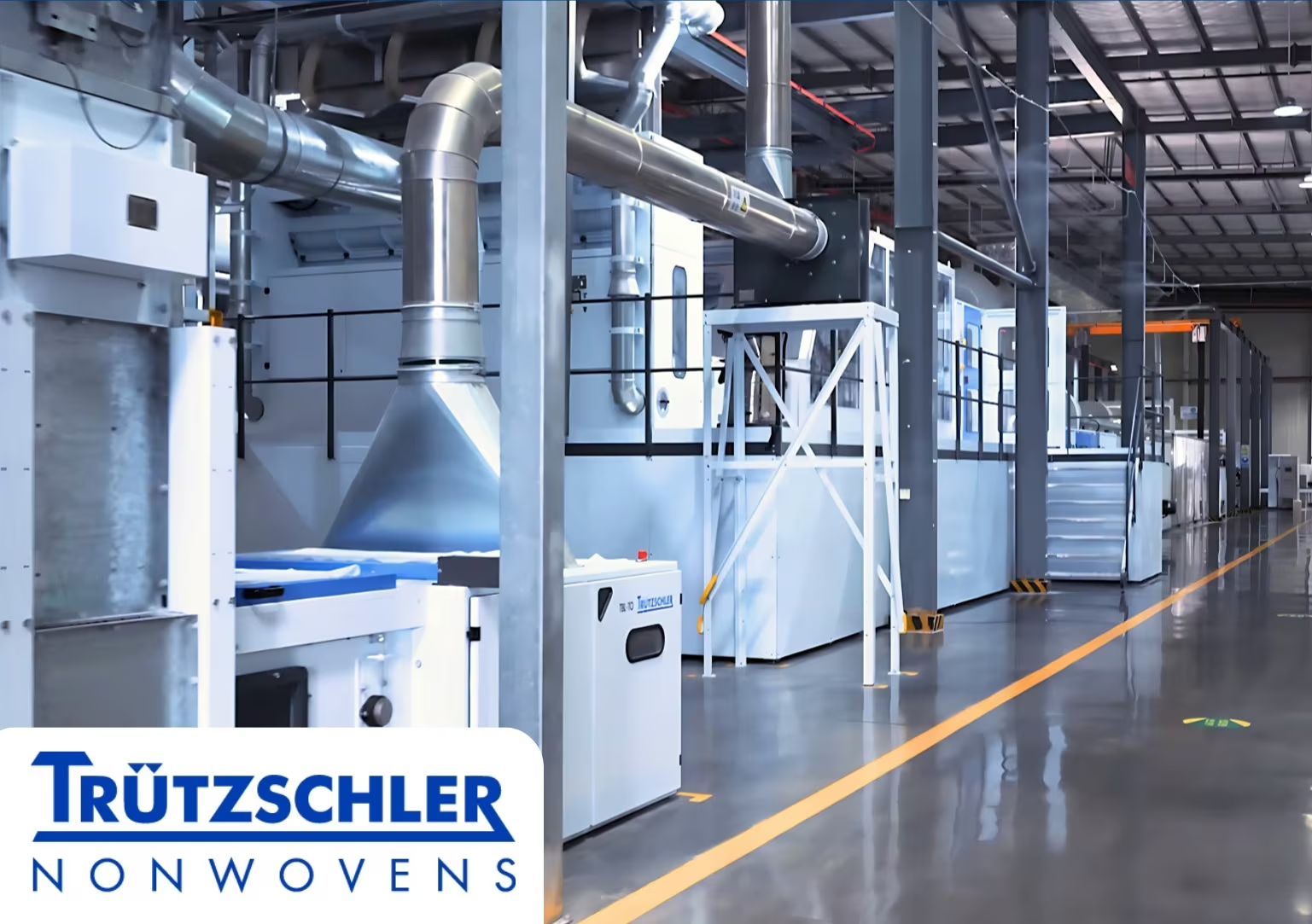
Trützschler Nonwovens argues that the industry must look beyond individual materials and consider the entire production system. This includes fibre preparation, web forming, hydroentanglement, needlepunching, air-through bonding, drying and digital process optimisation.
Long-term technical support will also be important as manufacturers introduce unfamiliar fibres and production concepts into continuous industrial operations.

Consumer Value in Nonwovens Is Changing
The second signal identified at OUTLOOK 2026 concerns the way consumers evaluate hygiene and personal-care products.
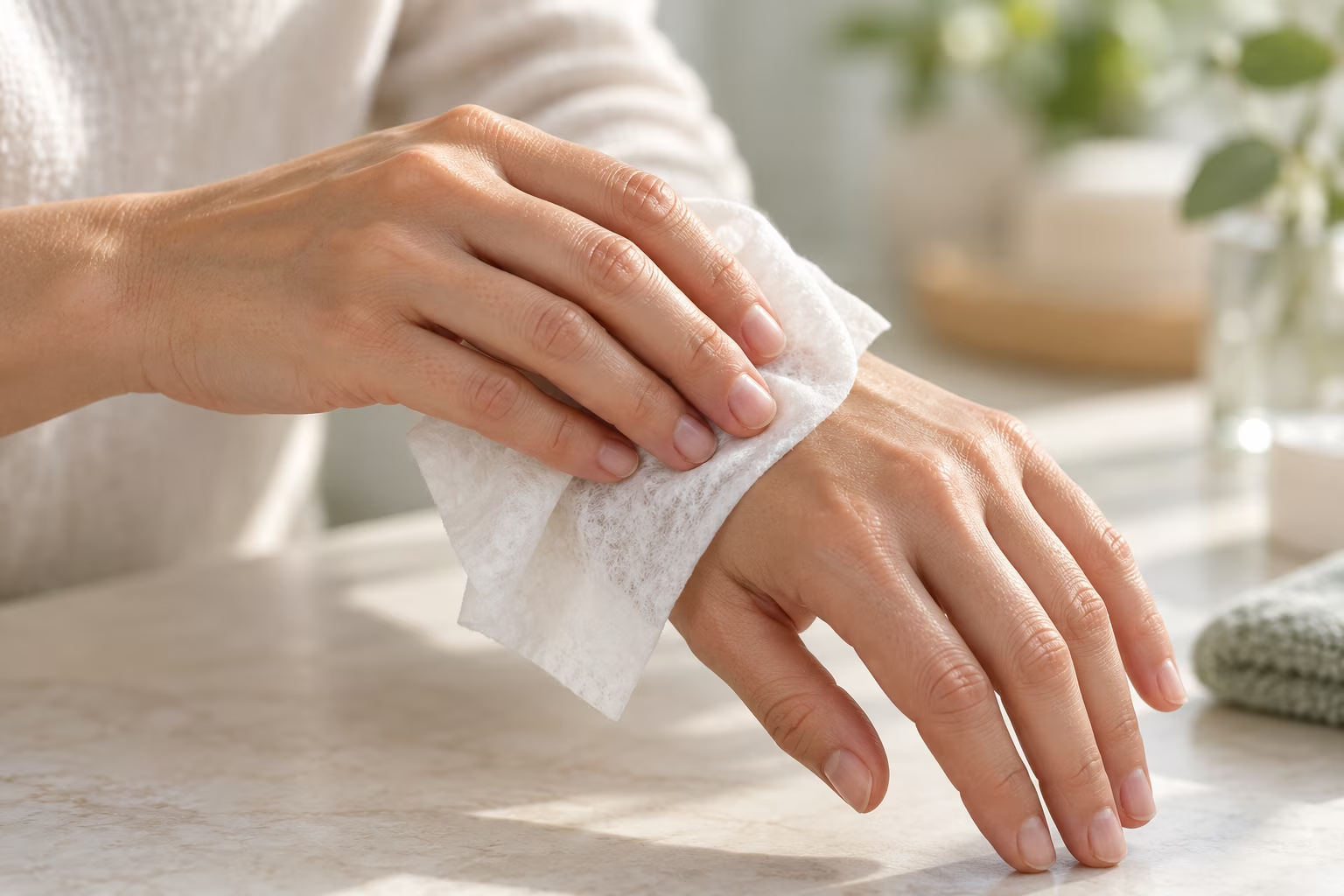
Consumers do not purchase materials based only on their technical composition. They respond to the experience delivered by the final product, including comfort, skin health, confidence and trust.
This means manufacturers must connect material innovation with measurable product performance. A more sustainable wipe, diaper or hygiene product must still provide the softness, absorbency, safety and reliability expected by consumers.
Read more: Trützschler Expands TRUECYCLED Network With Three New Customers
The shift places additional responsibility on machinery and material suppliers. New fibres must be processed in a way that delivers both the required environmental profile and a consistent user experience.
For nonwoven manufacturers, the challenge will be balancing performance, sustainability and production costs without compromising the qualities that consumers value most.
Compliance Becomes a Competitive Advantage
Regulatory requirements are also moving from a secondary consideration to a central factor in investment and product-development decisions.
Trützschler Nonwovens noted that regulations increasingly influence product design, material selection, production technologies and access to important markets.
Companies that prepare early for changing requirements may gain an advantage over competitors that treat compliance only as an administrative obligation.
This is particularly relevant as manufacturers face growing expectations concerning product safety, traceability, recycled content, environmental impact and end-of-life management.
Production systems must consequently provide the stability, documentation and process visibility required to demonstrate compliance while maintaining commercial efficiency.
Digital process monitoring and optimisation can support this transition by giving manufacturers better control over production parameters and helping them identify quality deviations before they affect large volumes of material.
Circularity Moves Beyond Pilot Projects
The fourth signal concerns the movement of circularity from experimental programmes toward industrial implementation.
According to Trützschler Nonwovens, circularity begins with product design. Material choices, product architecture and production technology all influence whether components can later be recovered, reused or recycled.
This requires closer cooperation between fibre suppliers, machinery manufacturers, nonwoven producers, converters, brands and recycling companies.
Products developed without considering their end-of-life stage may remain difficult or uneconomical to recycle, even when they contain materials described as sustainable.
Read more: Trützschler Nonwovens Appoints Ingo Mählmann as Director Sales & Marketing
The industrialisation of circular nonwovens will therefore depend on designing products and production processes together. Manufacturers must assess not only whether a new material can be converted into a nonwoven, but also whether the resulting product can satisfy performance standards and enter a realistic recovery or recycling system.
The central message emerging from EDANA OUTLOOK 2026 is that innovation creates value only when it can perform consistently under commercial production conditions.
For Trützschler Nonwovens, the next phase of industry development will be shaped by the ability to connect material innovation with dependable machinery, process knowledge and economically viable production at scale.