

A recent FERBER – GIOBBE CR8EE, custom-built to operate in particularly narrow spaces in a textile production environment.
During daily operation, we identified an issue that we have also encountered in other textile applications: the accumulation of dirt and textile residues around the wheels.
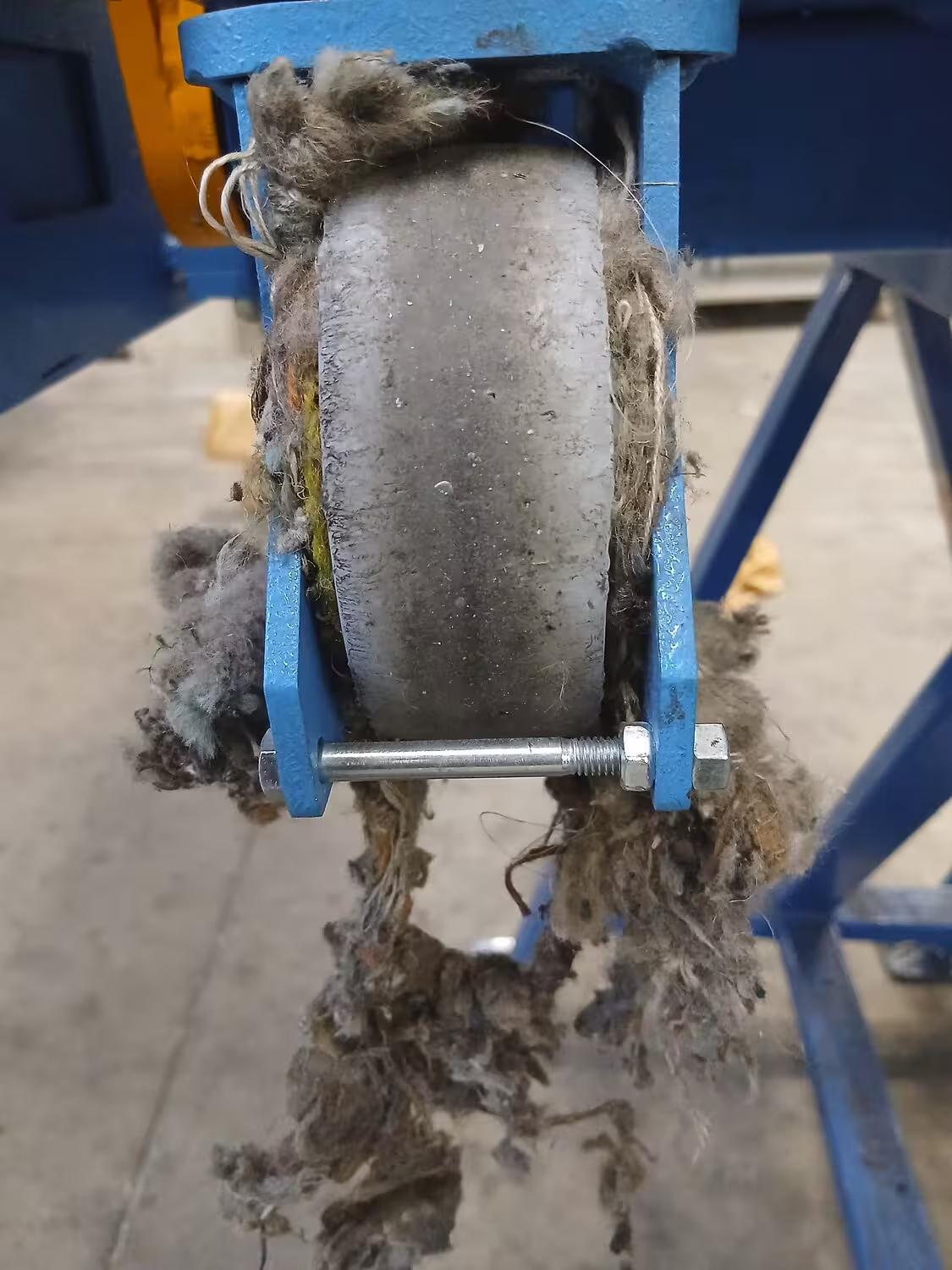
After the first maintenance intervention, we tried removing the original thread guards (as shown in the picture of the previous wheel configuration). Unfortunately, the results were not entirely satisfactory.
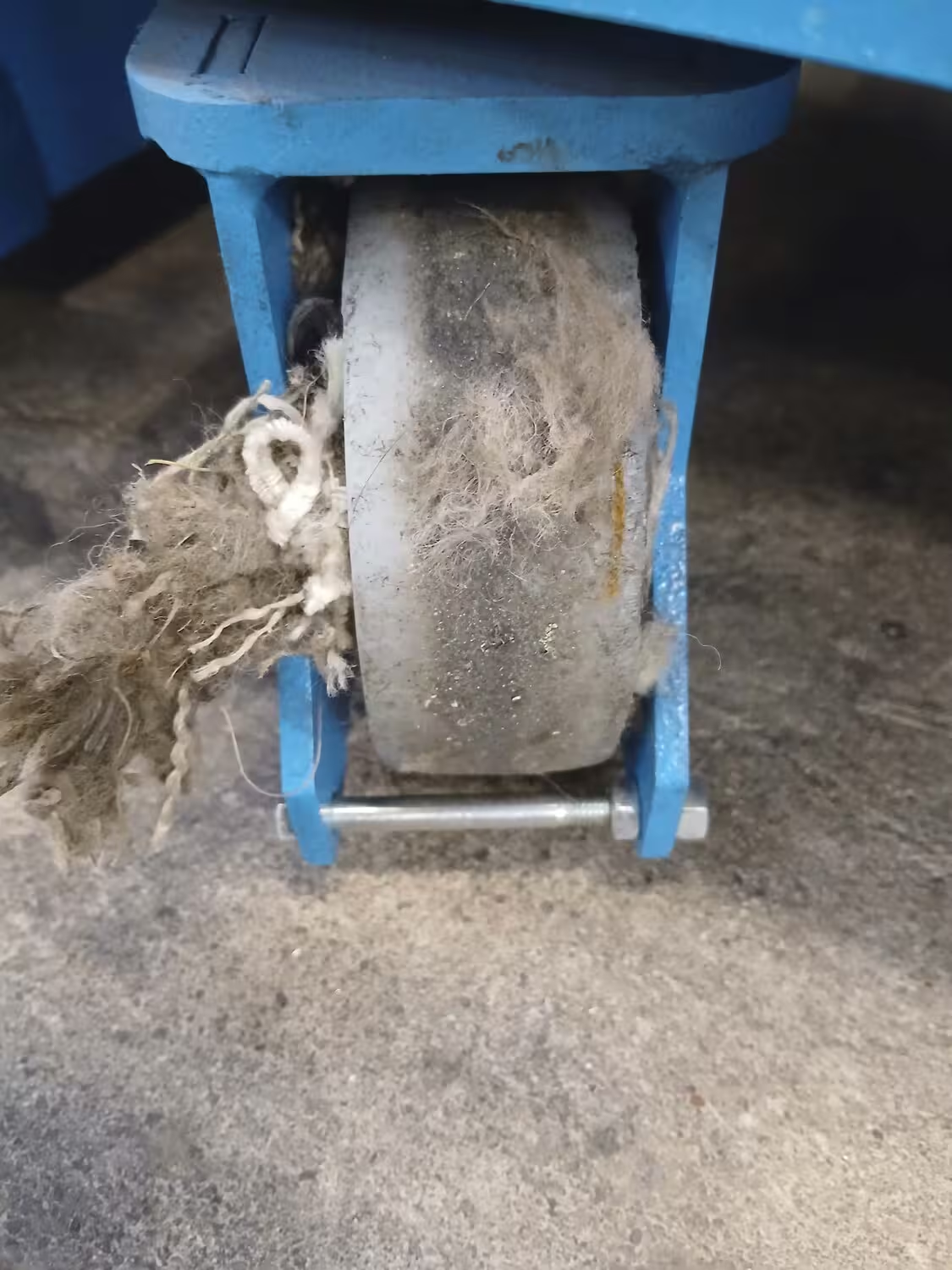
Redesigning the Wheel Fixing System
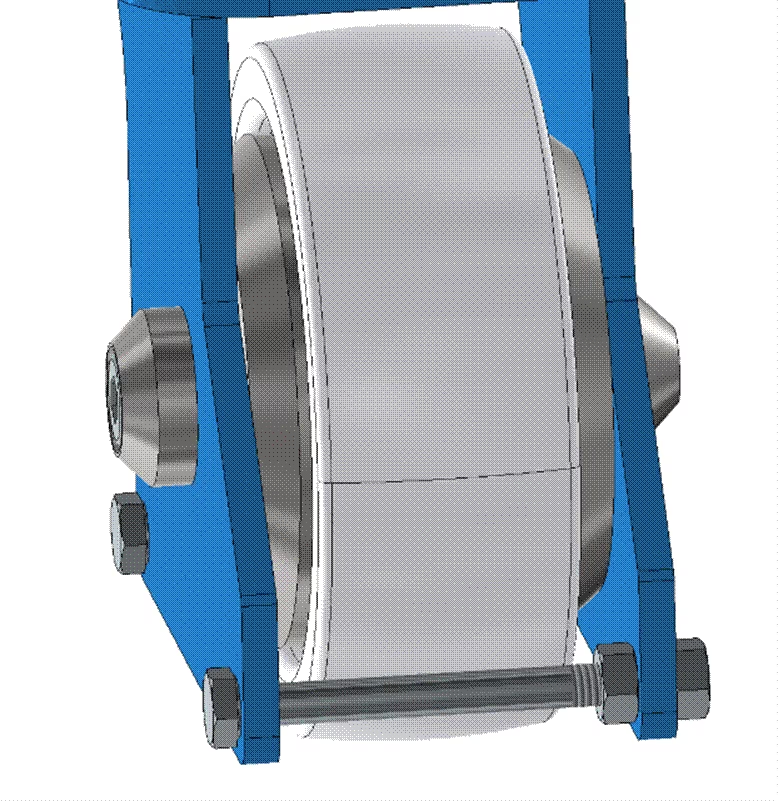
We are now looking at a different solution, involving a redesigned wheel fixing system.
The current idea is to manufacture a hollow central pin together with two chamfered washers:
- one with a recess for a socket head cap screw;
- the other with a threaded hole and external milled flats, allowing it to be tightened with a wrench, working much like a nut.
Some lateral protrusions would still remain, so we are continuing to evaluate how to improve the design.
Read More: Smarter Textile Dyeing: How Machinery, Automation and AI Can Improve Colour Consistency
Real Working Conditions Drive Machine Improvements
These are the kinds of issues that are not always easy to identify during the design stage, but become clear when a machine is used every day in a real working environment.
And this is exactly where we find opportunities to improve our machines.