
Modern textile dyeing increasingly depends on the connection between machinery, chemical dosing, colour measurement and production data. Artificial intelligence adds new possibilities, but its value depends on how reliably the dyehouse controls and records the physical process.
A shade approved in the laboratory does not always emerge unchanged from a production machine. Differences in fabric preparation, water quality, circulation, loading and chemical addition can turn an acceptable laboratory recipe into an expensive bulk correction.
For manufacturers, the consequences extend beyond colour. Additional treatment consumes machine time, water, chemicals and energy, while potentially delaying delivery and affecting fabric properties.
The objective of a smarter dyehouse is therefore practical: produce the required shade and performance consistently, with fewer corrections and a clear understanding of the resources consumed.

Machinery Selection Starts with the Material
Different textile products require different approaches to dyeing. Fabric construction, fibre composition, sensitivity to tension and order size all influence equipment selection.
| Dyeing system | Typical application | Important process considerations |
|---|---|---|
| Jet and overflow machines | Batch processing of knitted and woven fabrics in rope form | Fabric circulation, nozzle conditions, loading and crease control |
| Airflow machines | Rope-form processing using air to transport fabric | Air movement, moisture application and suitability for the fabric |
| Jiggers | Open-width processing of suitable woven fabrics | Tension, speed, reversal and exposure consistency |
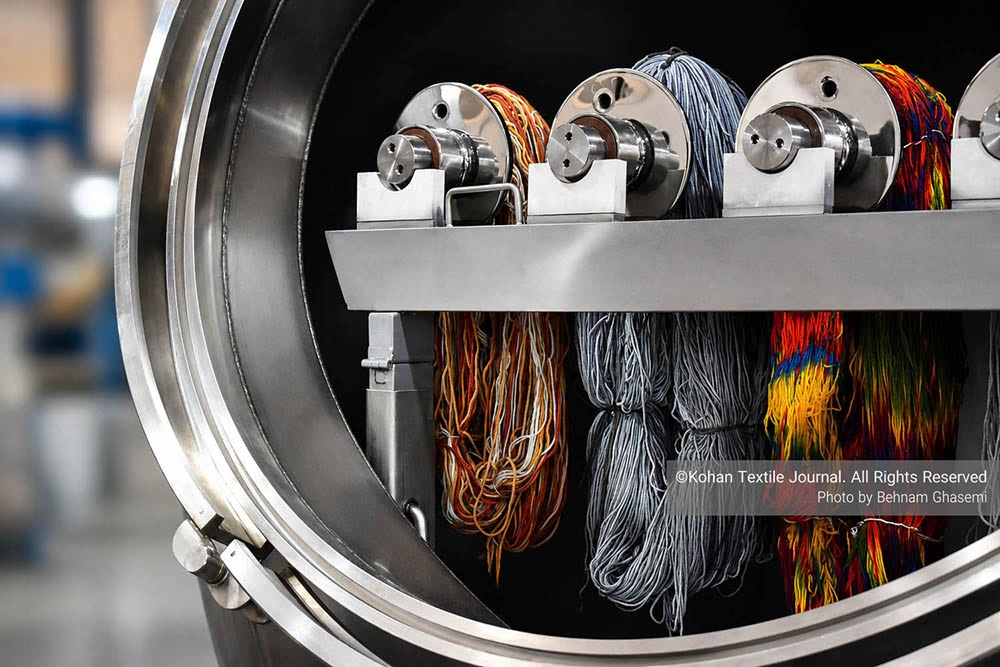
| Package dyeing machines | Yarn wound onto perforated packages | Package density, winding uniformity and liquor penetration |
| Continuous ranges | Larger-volume production of compatible fabrics | Uniform application, line speed, fixation and washing |
The most advanced machine is not automatically the best choice for every product. Equipment must operate effectively at the mill’s actual batch sizes and fabric mix.
Low liquor ratios are an important development, but the quoted ratio describes the relationship between material and treatment liquor at a particular stage. It is not the same as total water consumption across preparation, dyeing, washing and cleaning.
FONG’S Europe, for example, describes its THEN AIRFLOW system as using air to transport the fabric, reducing reliance on dye liquor as the transport medium. Its published liquor ratios vary with fibre and article construction, illustrating why machine specifications must be evaluated against the intended production programme.
Automation Makes Recipes Repeatable
A dyeing recipe is more than a list of chemicals. It also defines temperature gradients, holding periods, addition sequences, circulation settings, washing stages and other operating conditions.
Machine controllers can execute these instructions consistently and record deviations. Depending on the installation, control systems can manage heating and cooling, water filling, dosing requests, pump settings and process transitions.
However, a controller needs dependable information. An incorrectly calibrated temperature probe, unreliable level measurement or poorly maintained valve can undermine an otherwise accurate programme.
Effective automation therefore begins with calibrated instruments, functioning equipment and clear procedures. Connecting machines to software cannot compensate for unstable basic operating conditions.
Automated Dosing Controls Quantity—and Timing
Manual chemical handling introduces opportunities for incorrect weighing, product substitution, missed additions and inconsistent preparation.
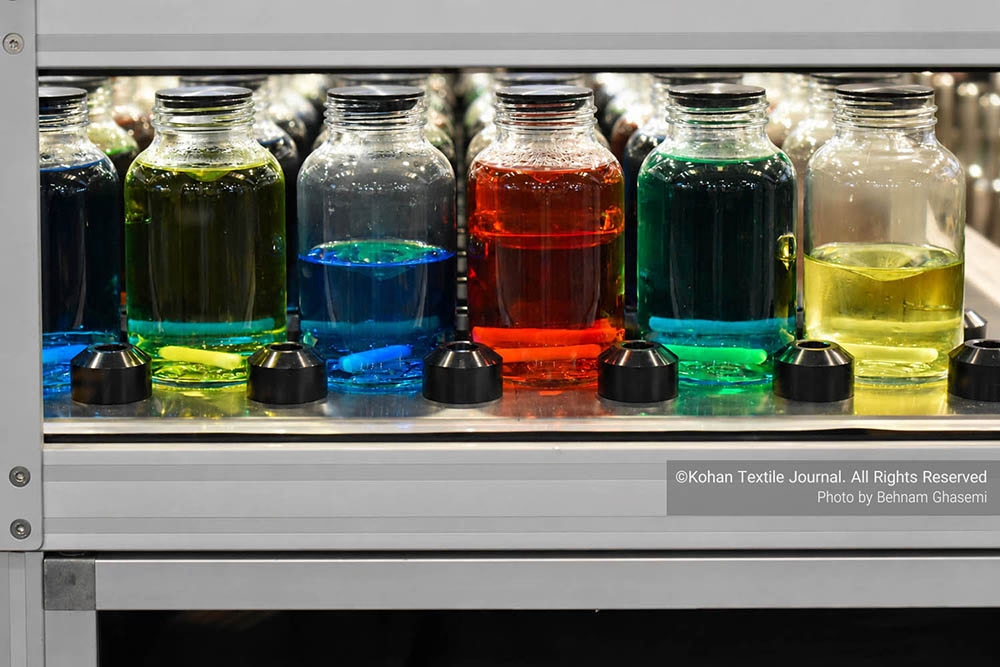
Automated dispensing systems can connect the approved recipe with weighing, dissolving and delivery. Their value lies both in delivering the correct quantity and in supplying it at the required stage of the process.
Thies’ MPS-Colourmatic, for example, is designed to automate the handling of powder dyes, from storage and batch weighing to dissolving and transfer to dyeing machines. Its wider dosing portfolio covers different chemical-handling requirements.
For reactive dyeing, the addition profile of salt and alkali can influence dye uptake and fixation. For other dye systems, controlled additions of acids, auxiliaries or other products may be equally important.
Centralised systems also require attention to transfer-line cleaning, residual chemicals, product compatibility and dispensing accuracy across both small and large quantities.
Closing the Gap Between Laboratory and Bulk Production
Laboratory-to-bulk transfer remains one of the most demanding parts of colour management.
An approved sample establishes a target, but production introduces different hydrodynamics, heating behaviour and material movement. Fabric absorbency, residual preparation chemicals, dye strength and water quality can introduce further variation.
A useful digital record should connect each approved laboratory recipe with:
- The substrate, fibre composition and preparation route.
- Dye and auxiliary identities, concentrations and relevant lot information.
- Production machine, loading and actual process conditions.
- Colour measurements before and after correction.
- Final approval and any associated quality results.
This creates a basis for understanding recurring differences rather than repeatedly correcting the same problem.
For example, if a particular substrate consistently produces a directional shade shift on one machine family, the mill can investigate whether the cause lies in preparation, recipe transfer or operating conditions.
Colour Measurement Needs Consistent Rules
Spectrophotometers help translate colour into measurable information, supporting formulation, comparison and approval.
However, a colour-difference value is meaningful only when the measurement conditions and calculation method are understood. Results can be influenced by the instrument setup, sample presentation, fabric surface and conditioning.
Different colour-difference formulae can produce different numerical results. A universal statement that every sample below one fixed ΔE value is acceptable overlooks differences between products, customers and visual requirements.
Instrumental assessment should therefore work alongside agreed visual evaluation, including consideration of metamerism—the possibility that two samples match under one light source but differ under another.
Software-supported recipe calculation is already established. Datacolor’s Match Textile documentation describes tools for recipe prediction, correction and communication of recipes and reflectance data. These capabilities should be distinguished from the additional functions offered by machine-learning systems.
Where AI Can Add Value
AI is most useful when it addresses a defined production problem using relevant historical data.
In textile dyeing, potential applications include predicting colour from a recipe, suggesting concentrations for a target shade, identifying unusual process behaviour and supporting quality inspection.
A systematic review published in Fashion and Textiles examined 101 research articles on intelligent techniques in textile colour management. It identified applications across colour prediction, colour-difference assessment, image-based recognition and dye-solution analysis, using methods including neural networks and support vector machines.
For a dyehouse, the distinction between these applications matters:
| Application | Potential contribution | Practical limitation |
|---|---|---|
| Recipe prediction | Suggest a formulation based on earlier results | Needs representative dye and substrate data |
| Lab-to-bulk prediction | Estimate likely production shade differences | Must reflect actual machines and operating conditions |
| Process anomaly detection | Flag departures from normal temperature, dosing or flow patterns | An alert does not establish the chemical cause |
| Vision-based inspection | Identify visible shade variation or defects | Requires controlled lighting and validated inspection conditions |
| Maintenance analysis | Detect patterns associated with equipment deterioration | Depends on suitable sensors and reliable maintenance records |
These are decision-support opportunities. A model trained on one dye range or substrate should not be assumed to perform equally well on another.
Nor should a predictive recommendation automatically trigger a chemical addition. Changes affecting pressure equipment, chemical compatibility or final product performance need appropriate operating limits and approval.
Connecting the Dyehouse Through MES
A manufacturing execution system, or MES, links production orders with machines, recipes, schedules and actual process records.
Sedo Treepoint describes SedoMaster as a system for managing a dyehouse or finishing plant, including machine-specific process programmes and connections with colour and recipe-management systems.
This connection can make deviations visible: an unplanned waiting period, a repeated correction or a process that takes longer than expected.
For an existing mill, integration may be more practical than replacing all equipment simultaneously. The first step is identifying which machines can communicate, which measurements are trustworthy and where additional instrumentation would solve a specific information gap.
Measure Results per Accepted Kilogram
A successful investment should improve measurable production outcomes.
Useful indicators include right-first-time approval, correction frequency, water and energy consumption, chemical use, cycle time and delivery performance.
Definitions must remain consistent. A mill should decide whether right-first-time approval excludes all corrective additions and whether performance is measured by batch count or production weight.
Resource consumption should also be assessed against accepted output. A short dyeing cycle offers limited benefit if a substantial proportion of production requires additional treatment.
Investment calculations should include calibration, maintenance, training, software support and integration costs alongside projected savings.
A Practical Route to Smarter Dyeing
For many dyehouses, the most effective sequence is to stabilise preparation and utilities, calibrate instruments, standardise recipes and establish reliable batch records. Automated dosing and machine connectivity can then strengthen execution and traceability.
AI becomes more useful once those foundations are in place. It can help technicians recognise patterns and evaluate alternatives, while experienced colourists and process engineers remain responsible for interpreting results.
The competitive advantage comes from combining sound dyeing knowledge with dependable machinery and usable data—so that approved colour becomes a repeatable production result.