As textile manufacturers worldwide face rising production costs, water shortages, and increasing sustainability requirements, the demand for more efficient dyeing technologies continues to grow. Modern dyeing machines are no longer evaluated solely by production capacity but also by their ability to reduce water consumption, energy usage, and operational costs while maintaining consistent fabric quality.
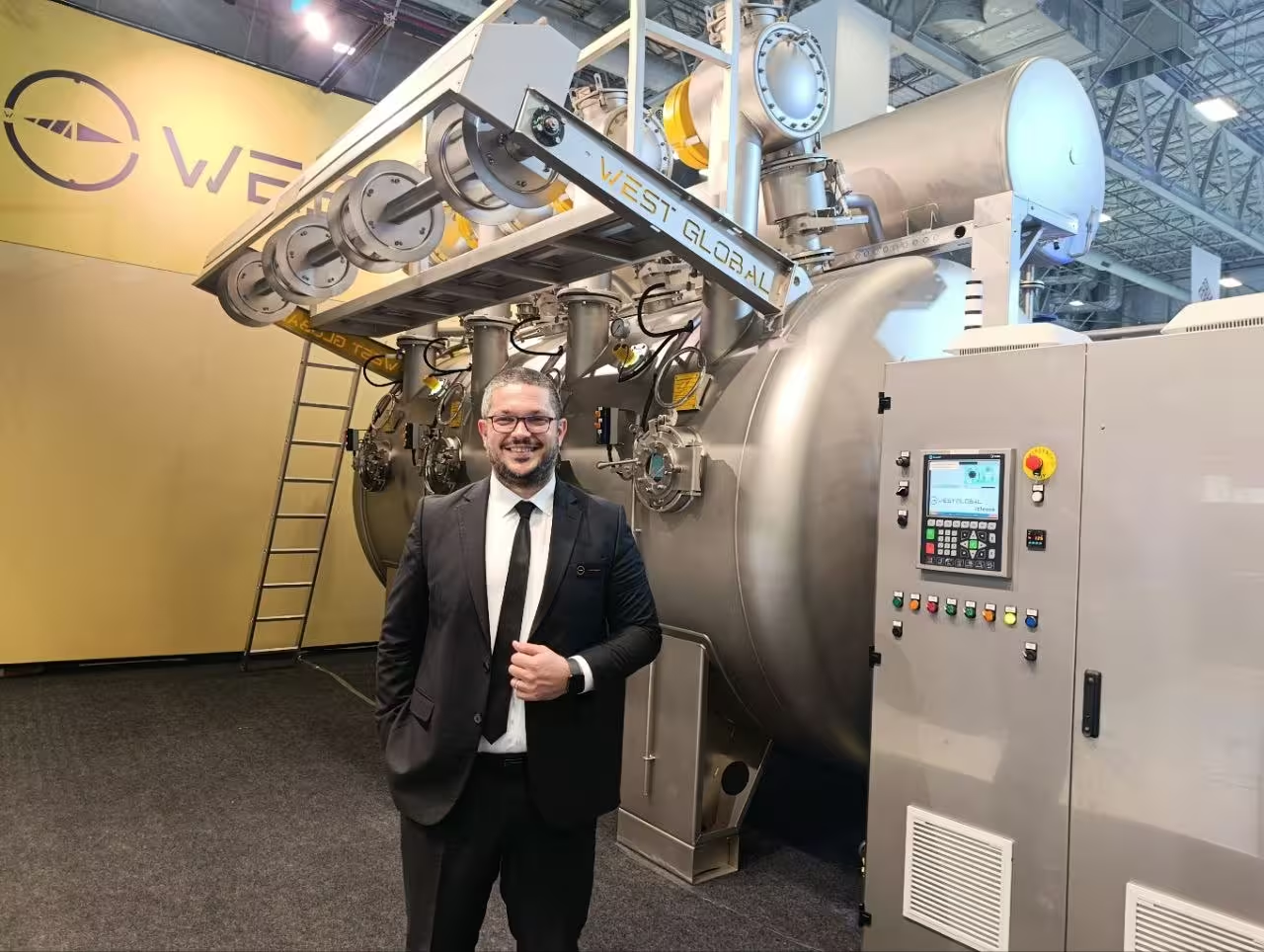
During ITM 2026 in Istanbul, Behnam Ghasemi, Editor-in-Chief of Kohan Textile Journal, spoke with Zafer Demirel, International Sales Manager at West Global, about the company’s third-generation dyeing technologies, its vision for sustainable manufacturing, and the future opportunities emerging across the Middle East and Africa.
Building on Experience with a New Generation of Textile Machinery
Kohan Textile Journal: Could you please introduce yourself and tell us about West Global?
Zafer Demirel: My name is Zafer Demirel, and I am the International Sales Manager at West Global.
Although West Global was officially established in 2022, our foundations are built on decades of textile machinery experience. Our company was created by industry professionals who have spent many years developing textile dyeing and finishing technologies.
Every member of our team brings extensive sector knowledge, with most having more than ten years of experience. Personally, I have worked in international textile machinery sales for over twelve years.
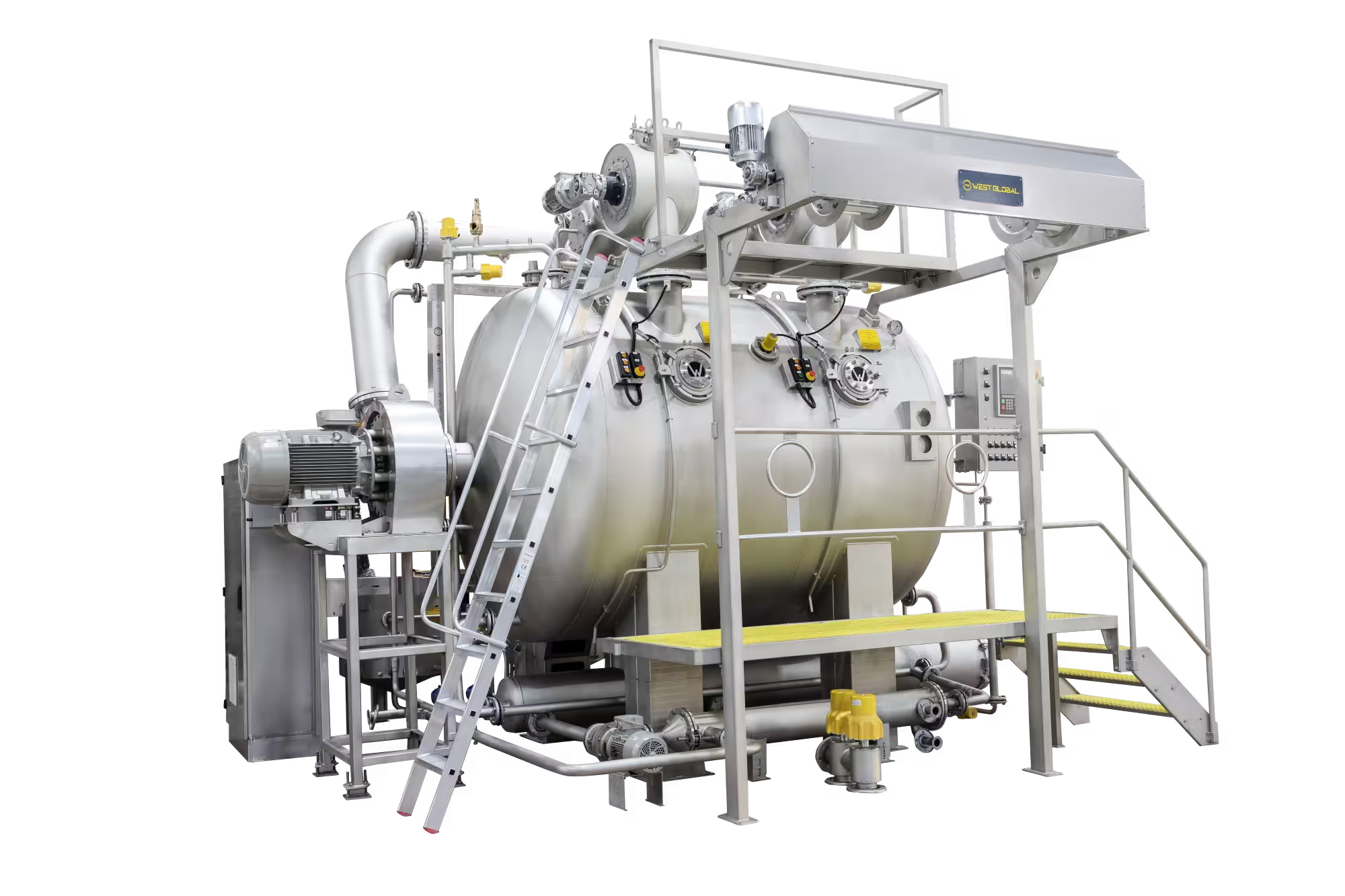
Today, West Global manufactures a complete range of textile finishing equipment, including jet dyeing machines, air-jet dyeing machines, stenter frames, dryers, and related finishing systems. Our manufacturing facility is located in Çorlu, Tekirdağ, approximately one hour from Istanbul.
Developing Third-Generation Dyeing Technologies
Kohan Textile Journal: What technologies and innovations are you presenting at ITM 2026?
Zafer Demirel: At West Global, we describe our latest developments as third-generation dyeing technologies.
One of our greatest strengths is our close relationship with textile manufacturers. Every month we visit customers in different countries, carefully listening to their production challenges and technical requirements. Every textile mill has unique expectations depending on its products and manufacturing processes.
Based on this continuous feedback, we have developed dyeing machines capable of processing a wide variety of knitted and woven fabrics while reducing liquor ratio, water consumption, energy usage, and overall operating costs.
For us, supplying machinery is only part of the business. We aim to become long-term technical partners by sharing our experience and supporting customers throughout their production journey.
Read more: ITM 2026 Results Confirm Global Industry Confidence
Efficiency and Sustainability Will Define the Future
Kohan Textile Journal: How do you see the future of the global textile industry?
Zafer Demirel: Today’s textile industry faces several major challenges.Water resources are becoming increasingly scarce, energy costs continue to rise, and manufacturers are under constant pressure to improve productivity while reducing production expenses.Despite these difficulties, I remain optimistic.Future investments will focus on technologies that combine high productivity with lower water consumption, reduced energy usage, and greater operational efficiency.
Sustainability is no longer an optional feature—it has become a fundamental requirement for every textile producer. Textiles will always remain an essential industry. Market cycles may change, but demand will continue. Our responsibility is to develop technologies that help manufacturers remain competitive while protecting natural resources.
The Middle East and Africa Are Emerging as Strategic Textile Markets
Kohan Textile Journal: How do you evaluate future opportunities in the Middle East and Africa?
Zafer Demirel: I believe the Middle East and Africa represent one of the most promising regions for future textile investments.For many years Europe dominated global textile production and consumption. However, demographic trends and industrial investments are gradually shifting toward emerging regions.
The combined population of Africa and the Middle East is significantly larger than Europe’s, creating enormous long-term potential both for textile manufacturing and domestic consumption.In addition to serving export markets, these regions are developing strong local demand for high-quality textile products. Over the next decade, I expect the Middle East and Africa to become increasingly important players within the global textile supply chain.
Sustainability Must Guide Every Innovation
Kohan Textile Journal: How important is sustainability for West Global?
Zafer Demirel: Sustainability is no longer a choice—it is a necessity.Every new generation of machinery should consume fewer resources than the previous one. Our objective is to continuously reduce water usage, energy consumption, and environmental impact while improving production efficiency.As technology evolves, sustainability must evolve with it. This philosophy influences every stage of our product development and supports textile manufacturers in achieving more responsible production.
Editor’s Insight
West Global’s strategy reflects one of the industry’s strongest emerging trends: manufacturers are no longer looking only for machines—they are investing in technologies that deliver measurable savings in water, energy, and production costs. As sustainability regulations tighten worldwide, equipment suppliers capable of combining process efficiency with environmental performance will become increasingly valuable partners for textile mills.
Read more: Kipaş Textile Expands Sustainable Production Capacity with New Monforts Machinery Investment