At ITM 2026 in Istanbul, Behnam Ghasemi, Editor-in-Chief of Kohan Textile Journal, spoke with Mr. Gianluca Macchi, Sales Manager of Konica Minolta. In this exclusive interview, he discusses the company’s leadership in digital textile printing, the growing importance of sustainable production, the Turkish market, and future opportunities across Africa and the Middle East.
Driving Sustainable Textile Printing Through Digital Innovation
Please introduce Konica Minolta and its role in the textile industry.
Gianluca Macchi: Konica Minolta is a Japanese multinational company with more than 150 years of history. We began in photography, later expanded into office automation, including copiers and scanning systems, followed by industrial printing and many other technology sectors.
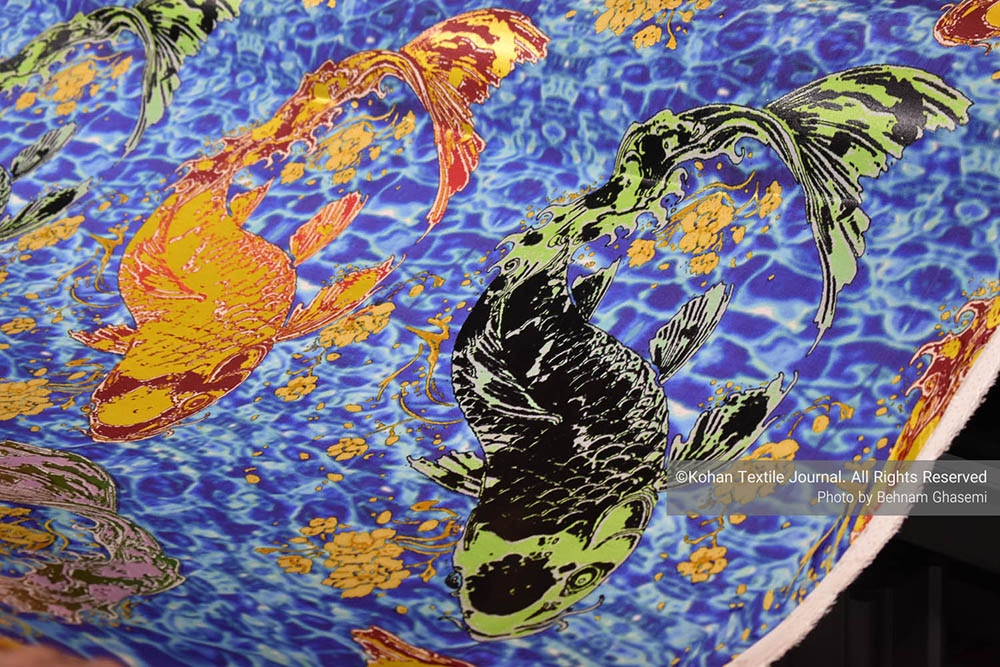
Today, we are one of the pioneers of digital printing. In the textile industry, we manufacture the complete digital printing ecosystem, including textile printing machines, printheads, software, and textile inks. By developing the entire solution ourselves, we can provide customers with reliable, high-quality digital printing technologies.
What technologies are you presenting at ITM 2026?
Gianluca Macchi: Türkiye has always been one of our most important markets because of its strong textile industry and its early adoption of digital printing technologies.
Digital printing represents a major transformation compared with traditional textile printing. Besides providing greater production flexibility and enabling just-in-time manufacturing, digital printing significantly reduces environmental impact.
Traditional textile printing consumes enormous quantities of water and generates considerable pollution. Digital printing helps manufacturers dramatically reduce water consumption while improving efficiency and production flexibility.
Read More: ITM 2026 Results Confirm Global Industry Confidence
How do you see the future of the textile industry?
Gianluca Macchi: The future of the textile industry is clearly moving toward sustainability.
At Konica Minolta, sustainability is not only about our machines but also about the consumables used during production. Our textile inks—including reactive, disperse, acid and pigment inks—are all certified according to ZDHC Level 3, one of the highest environmental and chemical safety standards available today.
This certification ensures that our solutions are safe both for the environment and for consumers who ultimately wear the finished garments.
How do you evaluate opportunities in the Middle East and Africa?
Gianluca Macchi: Africa is undoubtedly a fast-growing market.
Initially, many manufacturers will continue using conventional textile production methods before gradually adopting digital printing technologies. This transition will require time because textile manufacturing is a highly specialized industry where production processes have remained relatively stable for decades.
Printing and dyeing fabrics still depend on chemical reactions, water, energy and heat. While digital printing is the industry’s most significant innovation, adopting new technologies across the entire production chain takes time.
What message would you like to share with textile manufacturers?
Gianluca Macchi: Today’s world is changing much faster than ever before. Developments that previously took ten years can now happen within a single year.
Our goal at Konica Minolta is to continue supporting textile manufacturers by providing technologies that improve sustainability, increase production flexibility and maintain the highest product quality.
These three elements will define the future competitiveness of the textile industry.
Editor’s Insight
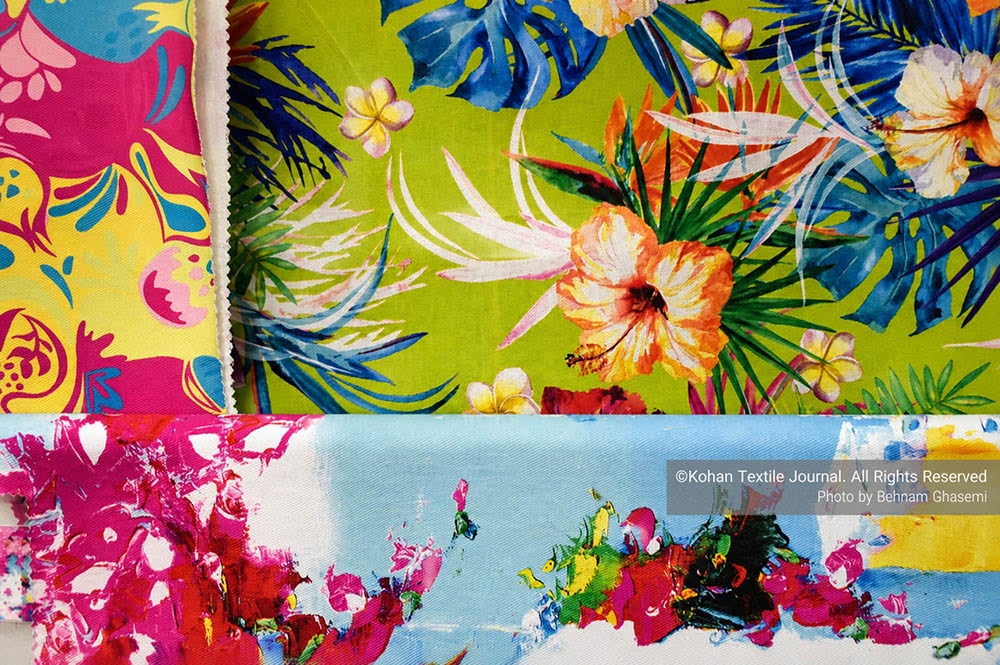
Digital textile printing continues to reshape textile manufacturing by reducing water consumption, minimizing chemical waste and enabling flexible, on-demand production. Konica Minolta’s integrated approach—combining proprietary printing machines, printheads, software and certified textile inks—demonstrates how digital technologies can help manufacturers meet increasingly demanding environmental standards without compromising print quality.
As sustainability regulations tighten worldwide and brands seek more responsible supply chains, digital textile printing is expected to play an increasingly important role in the industry’s transition toward cleaner, more efficient manufacturing.