Introduction
Over the past decade, Uzbekistan has emerged as one of the world’s most dynamic textile manufacturing destinations. Through comprehensive reforms, large-scale investments, and a strong commitment to value-added production, the country has transformed itself from a major cotton exporter into a competitive textile and apparel manufacturing hub.
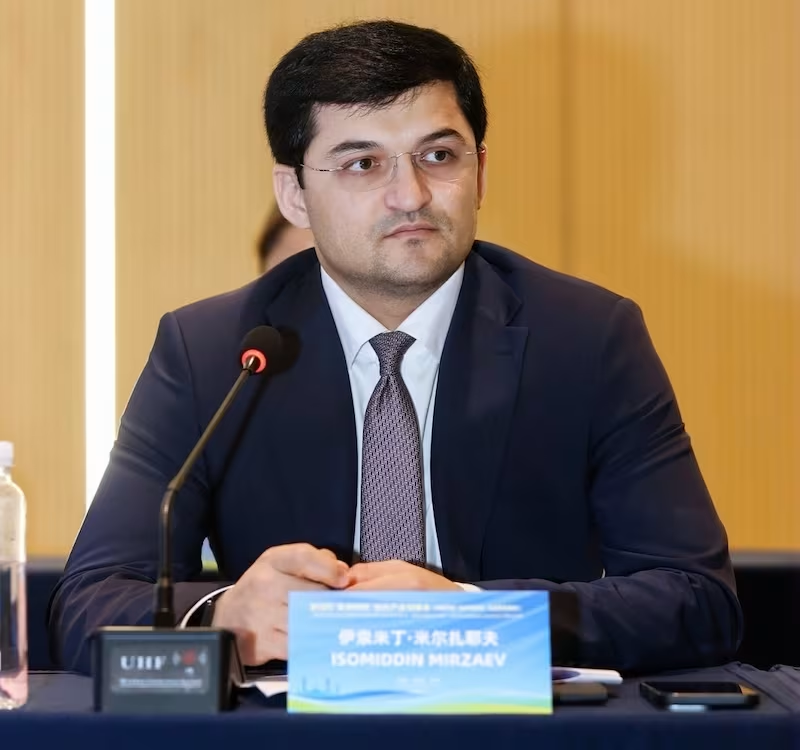
During this exclusive interview with Kohan Textile Journal, Isomiddin Mirzaev, Director, New Bekabad Textile LLC (under the Uzbekistan Textile and Garment Industry Association) | Founder & CEO, Global Silk Advisory, explains how Uzbekistan’s vertically integrated cotton-textile cluster model, sustainability initiatives, investment incentives, and digital transformation are reshaping the country’s textile industry and creating new opportunities for international manufacturers, brands, and investors.
From Cotton Producer to Global Textile Manufacturing Hub
1. Uzbekistan has emerged as one of the fastest-growing textile manufacturing hubs in Central Asia. In your opinion, what have been the main drivers behind this transformation?
Uzbekistan has always had a strong foundation in the textile industry thanks to its long tradition of cotton cultivation. However, the country’s real transformation began after 2017, when comprehensive economic reforms and a new industrial policy fundamentally changed the sector.
One of the most important achievements was the introduction of the vertically integrated cotton-textile cluster system, which combines the entire production chain—from cotton cultivation to finished garments. This model has significantly improved efficiency, product quality, and traceability, and has become so successful that similar approaches are now being introduced in several neighboring countries.
Another major milestone was Uzbekistan’s transition to 100% domestic cotton processing. Today, all cotton fiber is processed within the country, creating significantly higher added value and supporting the rapid growth of garment manufacturing. Annual apparel production has increased from less than one billion pieces in 2017 to more than three billion pieces today.
Combined with strong government support, investment incentives, export promotion, and the creation of the Agency for the Development of the Light Industry, these reforms have positioned Uzbekistan as one of the fastest-growing textile manufacturing hubs in Central Asia.
2. The government has introduced several reforms to strengthen the textile sector. Which initiatives have had the greatest impact on attracting investment and increasing competitiveness?
Several government initiatives have significantly increased the competitiveness of Uzbekistan’s textile industry.
First, the creation of vertically integrated cotton-textile clusters transformed the entire production model by connecting cotton farming, spinning, weaving, dyeing, and garment manufacturing into one efficient ecosystem. This has improved productivity, quality control, and supply chain transparency.
Second, Uzbekistan established specialized Textile Industrial Zones in key regions, offering ready-to-use infrastructure, tax incentives, preferential financing, and access to a qualified workforce.
Another important milestone was the removal of Uzbek cotton from the international boycott in 2022, followed by the launch of the Better Cotton and Better Work programs in 2023. Together with Uzbekistan’s GSP+ status, these developments have strengthened confidence among international brands and significantly improved the country’s investment attractiveness.
3. Uzbekistan has traditionally been known as a major cotton producer. How is the country progressing toward creating a fully integrated textile value chain, from fiber to finished garments?
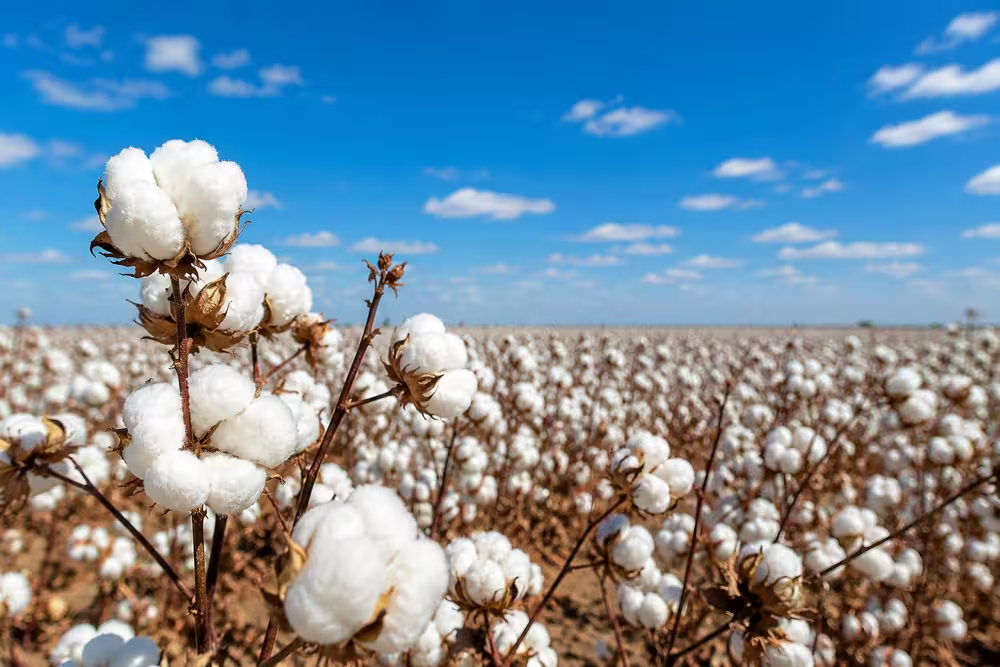
Uzbekistan has successfully transformed itself from a raw cotton exporter into a country that creates value throughout the entire textile production chain.
Today, Uzbekistan processes 100% of its cotton domestically, making it one of the few countries in the world to fully utilize its cotton resources for local manufacturing. This has encouraged investment in spinning, weaving, dyeing, and garment production while significantly increasing exports of finished textile products.
The cotton-textile cluster system allows many companies to control every stage of production—from cotton fields to finished apparel—ensuring traceability, quality, and faster response to international buyers’ requirements.
As a result, Uzbekistan is increasingly recognized not simply as a cotton producer, but as a reliable manufacturer of high value-added textile and apparel products.
Read more: Uzbekistan’s Textile Industry: A Conversation with Uztextileprom
Export Markets, Sustainability and Investment Opportunities
4. What are the biggest export markets for Uzbek textile and apparel products today, and which new international markets offer the greatest growth potential?
Today Uzbekistan exports textile products to more than 80 countries worldwide.
The CIS region remains our largest export destination, the European Union, Türkiye, and the Middle East are becoming increasingly important markets. Duty-free access through the EU’s GSP+ program and the CIS Free Trade Zone gives Uzbek manufacturers significant competitive advantages.
Looking ahead, we see strong growth potential in Europe, particularly as international brands continue to diversify their sourcing strategies and seek reliable manufacturing partners that combine competitive costs with sustainability and compliance.
5. Sustainability is becoming increasingly important across the global textile industry. How are Uzbek manufacturers adapting to international sustainability standards and environmental requirements?
Sustainability has become one of the key priorities of Uzbekistan’s textile industry.
Following major labor reforms, Uzbekistan was officially recognized in 2022 as being free from systemic forced labor, while Better Cotton and Better Work programs were launched to strengthen sustainability and working conditions across the sector. These reforms have also been recognized by the International Labour Organization and other international institutions.
Many manufacturers are certified under internationally recognized standards including OEKO-TEX®, BSCI, WRAP, Sedex, ISO 14001, GOTS, Organic Cotton Standard, and EU Organic Certification. Uzbekistan is also becoming an increasingly important supplier of organic textile products.
These efforts are helping Uzbek companies meet the sustainability expectations of global brands while improving their international competitiveness.
6. What opportunities do you see for foreign companies interested in investing in or partnering with Uzbekistan’s textile industry?
Uzbekistan is one of the most promising investment destinations for the textile industry today.
With a population of more than 38 million—the largest in Central Asia—the country offers both a strong domestic market and an abundant workforce. At the same time, investors gain access to duty-free export opportunities through the EU’s GSP+ and the CIS Free Trade Zone.
The government actively supports foreign investors throughout the implementation of their projects by providing infrastructure, financial incentives, assistance in attracting foreign experts, and support for participation in international exhibitions and trade fairs.
For investors looking for long-term manufacturing opportunities, Uzbekistan offers a complete ecosystem—from raw materials and industrial zones to export support and reliable government partnership.
Challenges, Digitalization and the Future of Uzbekistan’s Textile Industry
7. What are the biggest challenges currently facing the Uzbek textile sector, and how can they be addressed over the next few years?
Like any rapidly developing industry, Uzbekistan’s textile sector continues to face several important challenges.
Our priority is to further increase exports of finished garments with higher added value rather than semi-finished products. At the same time, continued investment in digital technologies, workforce development, sustainability, and product quality will be essential.
8. Digitalization, automation, and smart manufacturing are reshaping textile production worldwide. How do you see these trends influencing Uzbekistan’s textile industry?
Digitalization and automation are becoming key drivers of the next stage of Uzbekistan’s textile development.
Many manufacturers are investing in modern production equipment, automated manufacturing lines, ERP systems, and digital quality control solutions to improve efficiency, reduce costs, and meet international buyer requirements.
Looking ahead, digital transformation will also strengthen sustainability by improving resource efficiency, enhancing traceability, and supporting better quality management. These priorities are fully aligned with Uzbekistan’s long-term strategy for developing a modern, globally competitive textile industry.
9. Finally, what message would you like to share with international textile manufacturers, investors, and buyers who are considering Uzbekistan as their next business destination?
My message is simple: now is the right time to discover Uzbekistan. The country offers a strong investment climate, a reliable raw material base, a skilled workforce, and full government support for investors. We are seeing growing interest from international brands and manufacturers, and I believe this trend will continue.
For companies considering Uzbekistan, having a reliable local partner is equally important. At Global Silk Advisory, we help foreign businesses understand the market, find the right partners, communicate with government institutions, and support projects from the initial idea to successful implementation.
Uzbekistan is open for business, and we welcome everyone who wants to build long-term partnerships with our textile industry.