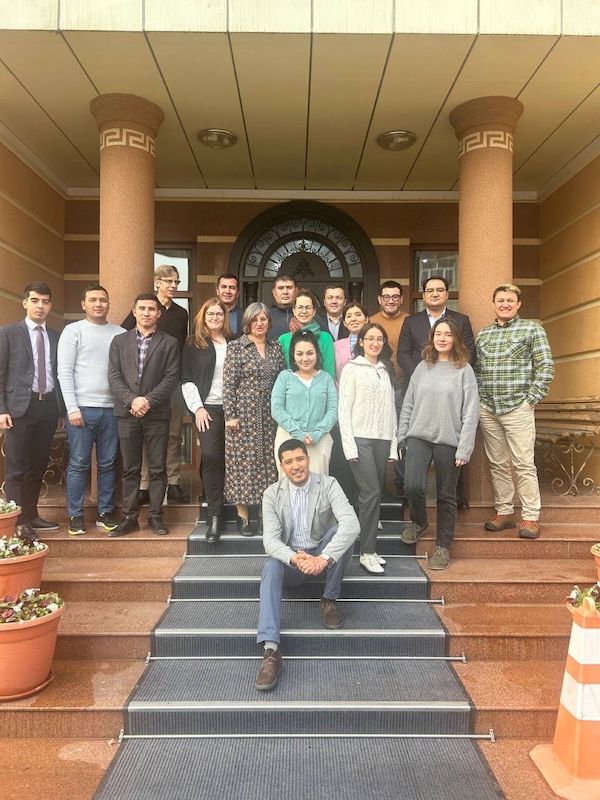
How to overcome the challenges to enter the European market? Making Uzbek trainers ready for the most relevant standards in Europe.
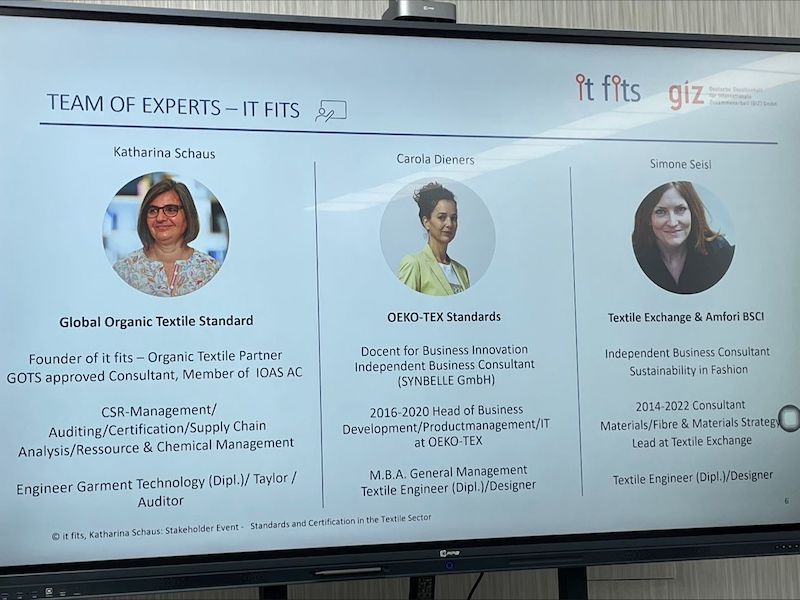
On behalf of GIZ Uzbekistan a group of trainers received a three-day training by Katharina Schaus Carola Dieners and Simone Seisl. As a part of the Global Programme „Sustainability and Value Added in Agriculture Supply Chains“ the seminar intended to create awareness of the relevant social and environmental standards and certification within textile industry.
Beside the huge investments which have been made by the Uzbek textile industry, adherence to International social and environmental standards has become priority for those who want to enter the EU and US markets.
Integration of the Uzbek textile industry into the supply chain of European importers and brands involves the adaptation of requested standards by clients from Europe and the US.
The three-day seminar included an introduction to the GOTS standard: Scope and Assurance System and Labelling. OEKO-TEX and its modular system: The core elements were identified as 1. RESPONSIBLE BUSINESS, 2. STeP and the Impact Calculator, 3. MADE IN GREEN, 4. STANDARD 100 and 5. ORGANIC COTTON. Textile Exchange with a focus on Global Recycled Standard (GRS), Recycled Content Standard (RCS) and Organic Claim Standard (OCS).
The impact of the German Act on Corporate Due Diligence Obligations in Supply Chains and the upcoming European Due Diligence Directive clearly create a future competitive advantage for Uzbek Clusters due to their vertical integration of all tiers from harvest to final product. Certification of all parts of existing supply chains from tier one to tier four will be accomplished much easier.
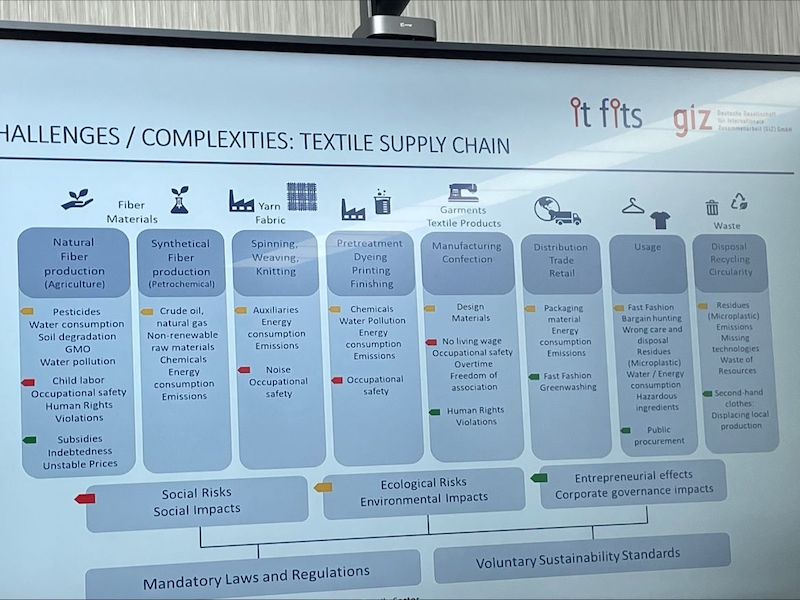
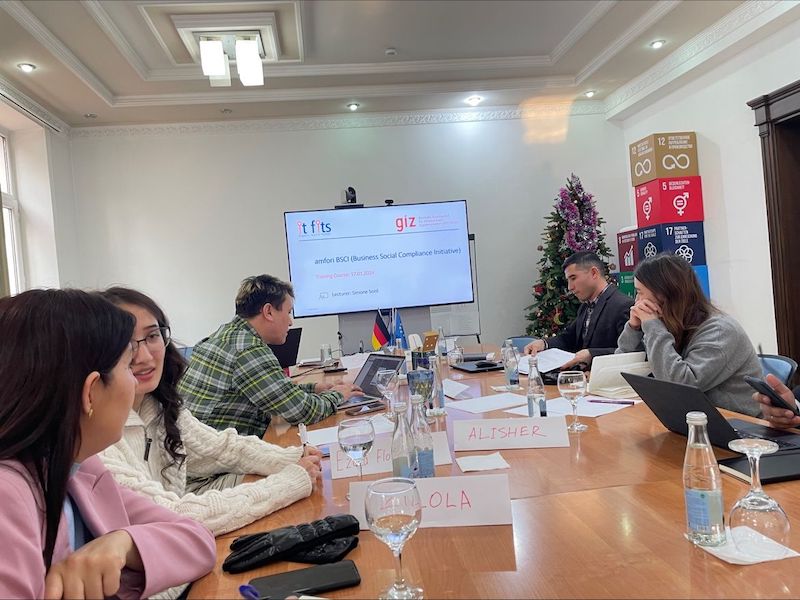
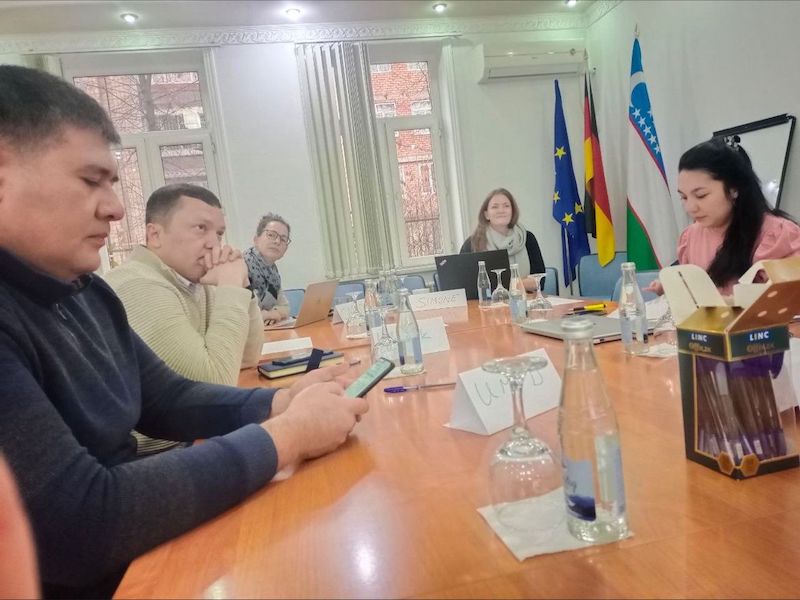
In terms of what standards are most relevant the answer was: “It depends”. Nevertheless, one could say that the two gold standards for Europe and the US markets are the „MADE IN GREEN“ or if organic cotton is used than GOTS would be a suitable choice. Because both standards cover a maximum of social and environmental criteria.
The co-operation between local sustainability managers as well as a joint round table of sustainability managers of relevant companies could be a first step to tackle information gaps.