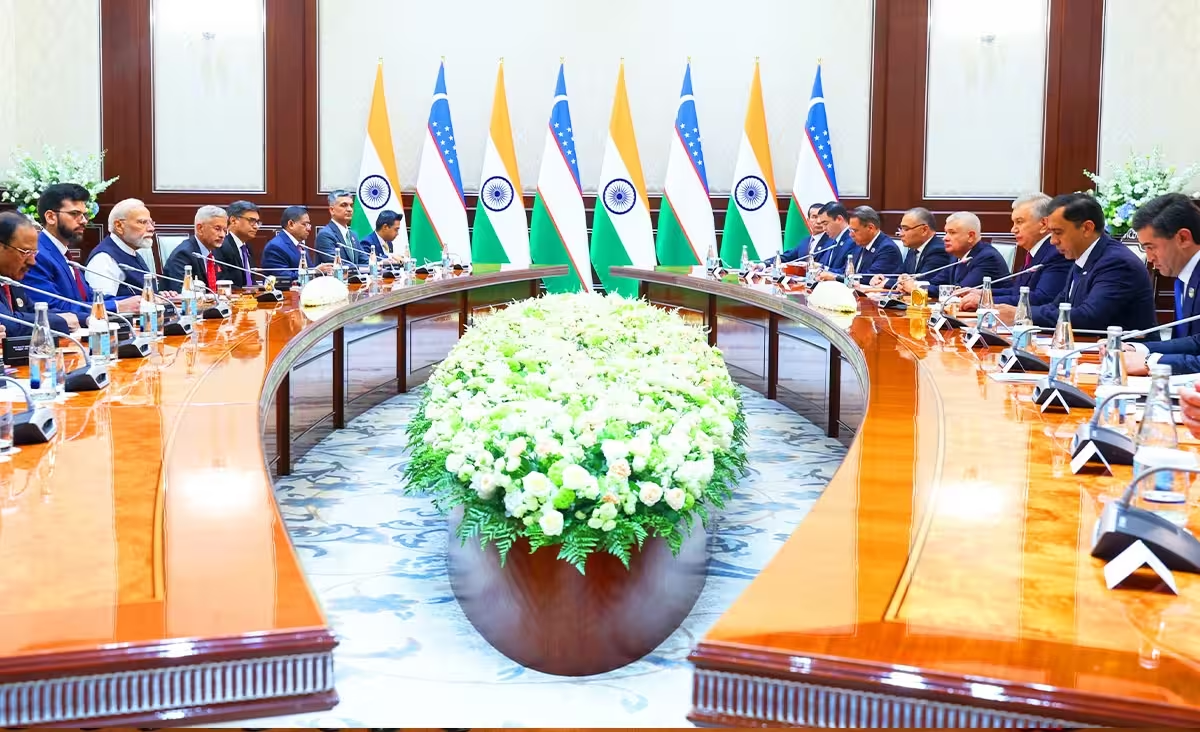
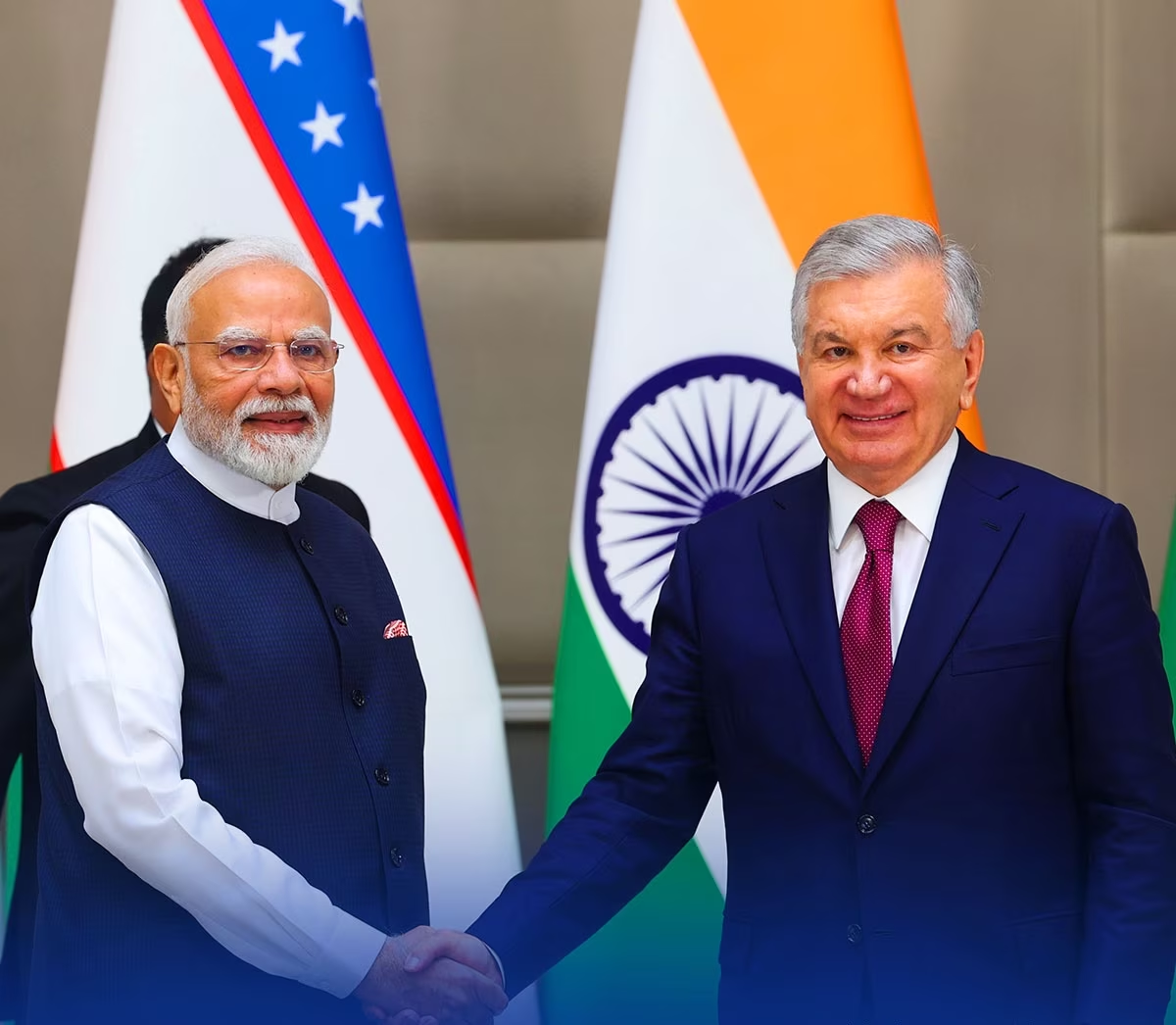
Indian Prime Minister Narendra Modi’s two-day state visit to Uzbekistan on August 29–30, 2026, at the invitation of President Shavkat Mirziyoyev, has elevated bilateral relations to a Comprehensive Strategic Partnership — and textiles and cotton have emerged as one of the standout sectors for future cooperation between the two nations.
Highlights of the Visit
During the visit, Modi received a grand welcome in Tashkent, paid floral tributes to former Indian PM Lal Bahadur Shastri at the Shastri Memorial, and visited the Tashkent State University of Oriental Studies. He was also conferred with Uzbekistan’s highest honour for foreign leaders, the “Oliy Darajali Do’stlik Order”, in recognition of his contribution to strengthening India-Uzbekistan ties.
The two countries signed 11 MoUs and agreements, spanning trade, culture, higher education, environmental protection, tourism, critical minerals, and Ayurveda and traditional medicine. Leaders also set an ambitious target of increasing bilateral trade fivefold — to $5 billion by 2030, up from just over $1 billion last year.
Why Textiles Matter in This Partnership
Textiles and cotton have been repeatedly highlighted as a natural and complementary area of cooperation between the two economies:
- Uzbekistan’s strength: One of the world’s most established cotton producers, Uzbekistan has undergone a major transformation in its cotton sector — eliminating forced labour, shifting to a cluster-based management system, and investing in mechanization. Despite a smaller planted area, the country is expected to deliver stronger-than-expected cotton output for the 2025/26 season. Uzbekistan is also targeting roughly $2 billion in new investment to accelerate growth in its textile industry, and is positioning itself as a regional textile and garment manufacturing hub for markets in the CIS, Europe, and the Middle East.
- India’s strength: India brings decades of leadership in textile manufacturing, garment production, design, and access to global fashion and retail markets.
Read more: How Uzbekistan Is Transforming the Global Textile Industry Through Investment and Sustainability
Indian Commerce and Industry Minister Piyush Goyal has specifically called on both countries to move toward co-investment, co-manufacturing, and co-innovation in textiles — combining Uzbek raw cotton production with Indian processing, design, and manufacturing expertise to jointly expand into garment manufacturing and global export markets.
Practical Opportunities for the Textile Industry
Based on the outcomes of the visit and recent trade forums, several concrete opportunities are opening up for textile businesses in both countries:
- Joint ventures in cotton and yarn processing — Indian companies with agri-tech and processing expertise can partner with Uzbek cotton producers under the new cluster-based system.
- Garment manufacturing and design partnerships — leveraging Uzbekistan’s raw material base and India’s design/manufacturing know-how to produce for export markets.
- Access to new export corridors — Uzbekistan’s push to become a regional hub (with parallel initiatives already underway with UAE’s TEXMAS and Chinese textile firms) means Indian firms partnering early could gain access to CIS, European, and Middle Eastern markets via Uzbekistan.
- Investment facilitation — a new institutional mechanism between Uzbekistan’s Investment Promotion Agency and Invest India, along with a concluded Bilateral Investment Treaty, is expected to make it easier for textile companies on both sides to invest and set up operations.
- A potential Preferential Trade Agreement (PTA) — following the completion of a Joint Feasibility Study, both governments have directed ministries to explore next steps on a Uzbekistan-India PTA, which could eventually reduce tariffs on textile and other goods.
Read more: India ITME Networking Event in Uzbekistan
The Bigger Picture
Uzbekistan currently sits at a crossroads: while it has significant potential in high-value textiles and ready-to-wear apparel, it also faces financial constraints, shrinking farmland, and water shortages.
This creates an opening for India — with its scale, technology, and manufacturing experience — to become a preferred partner rather than a competitor, at a time when Uzbekistan is also deepening textile ties with China and Gulf markets.
For Indian textile machinery makers, dye and chemical suppliers, spinning and processing companies, and garment manufacturers, the elevated India-Uzbekistan partnership — backed by high-level political commitment and a $5 billion trade target — signals a market worth watching closely over the next several years.
Sources:
– Joint Statement during the State Visit of PM Narendra Modi to Uzbekistan (pmindia.gov.in);
– Gazeta.uz;