




The United States has extended the African Growth and Opportunity Act (AGOA) through December 31, 2028, preserving duty-free access to the US market for eligible products from sub-Saharan African countries.
The two-year extension provides renewed certainty for African textile and apparel manufacturers, exporters and international buyers following months of uncertainty over the programme’s future.
AGOA, first introduced in 2000, allows eligible sub-Saharan African countries to export qualifying products to the United States without import duties. Textiles and apparel are among the sectors that have benefited most significantly from the programme, particularly in countries such as Kenya, Lesotho, Madagascar, Mauritius and Eswatini.
Extension Brings Relief to African Apparel Exporters
The extension was signed into law as part of a US government funding package. It follows an earlier reauthorisation that had extended AGOA only until the end of 2026.
Extending the programme through 2028 gives manufacturers more time to plan production, negotiate sourcing contracts and consider new investments. However, the relatively short duration means that industry stakeholders are likely to continue calling for a longer-term renewal.
Apparel production requires substantial investment in machinery, workforce training, compliance systems and factory capacity. Buyers also make sourcing decisions well in advance. As a result, short renewal periods can make it difficult for African manufacturers to secure long-term orders or attract new investment.
The latest legislation also maintains AGOA’s third-country fabric provision. This mechanism allows qualifying African apparel producers to use fabric sourced from outside the region while retaining duty-free access to the US market.
For apparel industries that do not yet have access to a complete domestic textile supply chain, this provision is essential to remaining competitive in international sourcing.
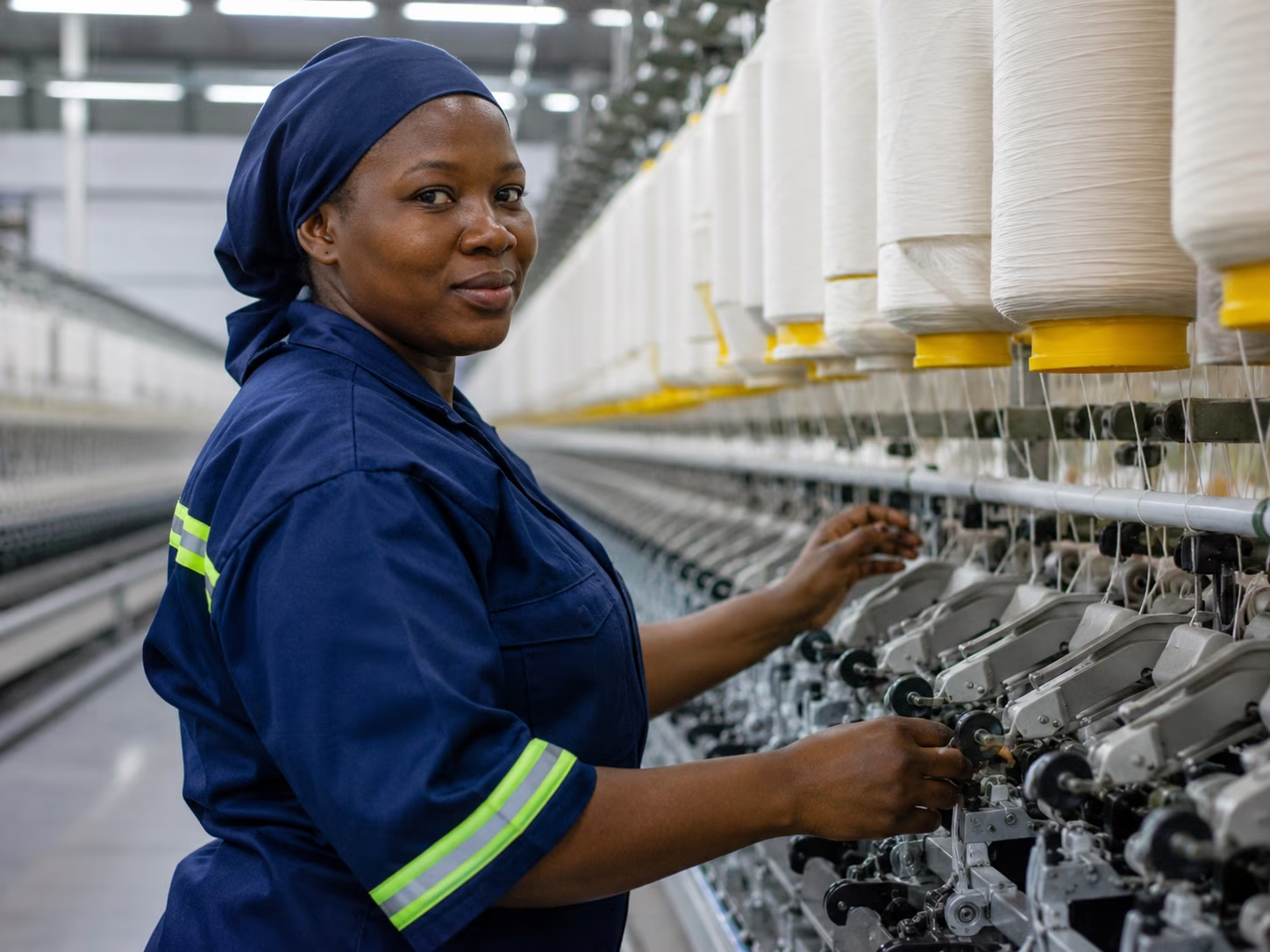
Kenya’s Textile and Apparel Industry Among Key Beneficiaries
Kenya is one of the African countries most closely connected to the US apparel market through AGOA. Export-oriented factories operating in the country’s industrial and export-processing zones manufacture garments for American brands and retailers while supporting thousands of direct and indirect jobs.
The extension is expected to help Kenyan exporters maintain existing orders and provide greater confidence for factory expansion, recruitment and investment.
Nevertheless, Kenyan industry organisations have repeatedly argued that a substantially longer extension is needed. A long-term framework would give textile and garment companies greater confidence to invest in upstream production, including spinning, weaving, knitting, dyeing and finishing.
This could help participating countries move beyond cut-and-sew garment manufacturing and retain more value within Africa.
AGOA Remains Important for African Industrialisation
Although AGOA covers many product categories, its influence on Africa’s textile and apparel sector has been particularly visible. Preferential access to the US market has supported export-oriented manufacturing and helped several African countries participate in global apparel supply chains.
However, the programme’s benefits remain uneven. Some eligible countries have developed sizable export industries, while others continue to face limitations including inadequate infrastructure, high energy and logistics costs, limited production capacity and weak access to raw materials.
The extension therefore provides an opportunity, but it does not automatically guarantee greater exports. African governments and manufacturers will need to use the additional period to improve competitiveness, strengthen regional supply chains and expand value-added production.
Read more: https://kohantextilejournal.com/kenya-agoa-extension-boosts-apparel-trade-certainty/
Industry Calls for a Longer-Term AGOA Framework
Textile and apparel industry groups have welcomed the continuation of AGOA but continue to advocate for a longer renewal period. A framework of ten years or more would offer greater predictability for manufacturers, investors and international buyers.
The next two years will consequently be important for discussions over the programme’s longer-term future and possible modernisation.
For African apparel exporters, the immediate result is greater stability and continued duty-free access to one of the world’s largest consumer markets. The larger challenge is to convert this temporary certainty into stronger textile supply chains, more investment and sustainable industrial growth across the continent.











