




African textile production is emerging as a credible and increasingly competitive alternative to Asian sourcing, according to industry leaders and policymakers who gathered at the European Parliament to discuss the future of Europe–Africa textile partnerships. The event, held on 30 June at the invitation of François Kalfon, brought together representatives from government, retail and industry to examine how strengthening Africa’s textile sector could improve supply chain resilience, support sustainable sourcing and deepen economic cooperation between Europe and Africa.
Europe’s Textile Trade Deficit Continues to Grow
Opening the discussion, Bruno Delaye presented data showing that while the European Union’s textile trade has continued to expand, imports remain heavily concentrated in Asia. According to figures presented during the forum, the EU imported approximately €122 billion worth of textiles and clothing in 2023, with nearly one-third originating from China. China accounted for 38.4% of textile imports and 30.2% of clothing imports, while the EU’s textile trade deficit has widened from more than €35 billion in 2012 to over €60 billion today.
Speakers noted that the removal of textile quotas in 2005, combined with shifting global trade flows and the rapid growth of ultra-fast fashion platforms such as Shein and Temu, has further increased dependence on Asian manufacturing.
Africa Promotes Integrated Cotton-to-Garment Production
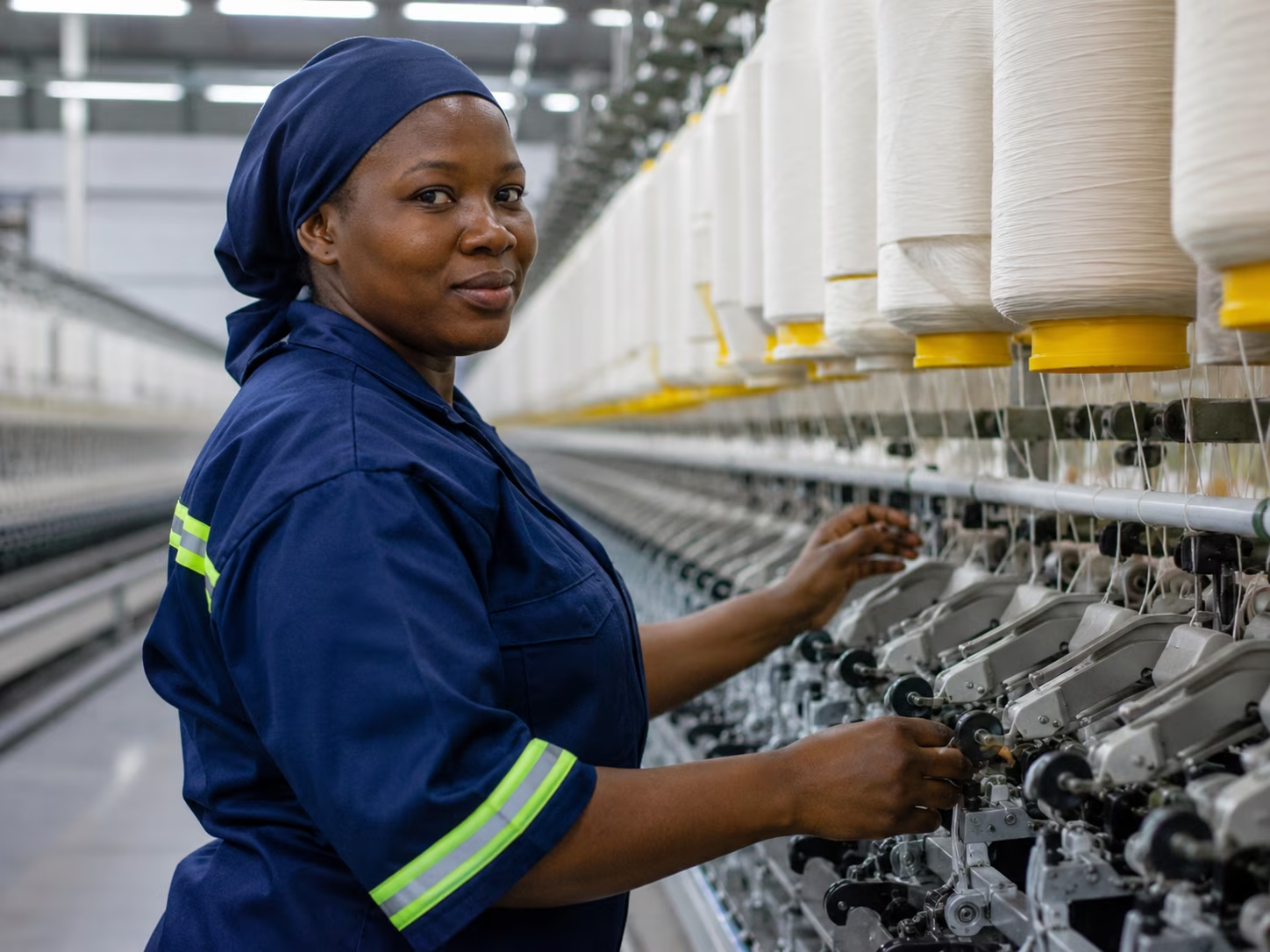
Representatives from ARISE Integrated Industrial Platforms and its textile subsidiary Panafritex outlined a strategy centered on developing fully integrated textile value chains within Africa. The initiative focuses on processing cotton locally—from ginning and spinning to weaving, garment manufacturing and exports—rather than shipping raw cotton overseas.
ARISE is currently developing 11 textile projects across eight African countries, including Benin, Cameroon, Ghana, Côte d’Ivoire, Chad, Tanzania, Kenya and Nigeria. Once fully operational, the projects are expected to process 900 tonnes of cotton per day and create approximately 130,000 direct jobs.
Benin Demonstrates “Farm-to-Fashion” Model
Speakers highlighted Glo-Djigbé Industrial Zone as a successful example of integrated textile manufacturing. Within the industrial zone, textile facilities convert locally grown cotton into finished apparel, reportedly increasing the value of raw cotton by five times while supplying international brands including H&M, Kiabi and C&A.
According to the presenters, women account for 44% of total employment, while around 70% of workers are under the age of 25.
Read more: U.S. Ends AGOA: African Textile Exports Face Heavy Tariff Burden
Competitive Advantages Beyond Cost
Industry representatives argued that Africa offers several strategic advantages beyond labor costs. Shipping goods from Africa to Europe typically takes around 15 days, compared with 70–80 days from parts of Asia, reducing both delivery times and transport-related emissions.
They also emphasized shorter and more transparent supply chains, widespread use of hand-harvested non-GMO cotton, improving industrial infrastructure, and expanding legal and regulatory harmonization through the Organisation for the Harmonization of Business Law in Africa framework.
EU Support Seen as Essential
Participants agreed that Africa’s textile potential will require stronger European engagement to fully develop. Recommendations included increased investment in industrial infrastructure, logistics, financing mechanisms and textile manufacturing ecosystems, alongside greater sourcing from African suppliers as part of Europe’s long-term diversification strategy.
At the same time, the European Union is introducing new regulations that could reshape global textile sourcing. Since 1 July 2026, the EU has removed the customs duty exemption for low-value parcels under €150, replacing it with a flat €3 per-item charge.
Further measures under the Ecodesign for Sustainable Products Regulation, the Digital Product Passport, and the revised Waste Framework Directive are expected to increase traceability, strengthen sustainability requirements and promote circularity across the textile sector over the coming years.
Read more: US Proposes New Tariffs on Seven African Countries Over Forced Labour Concerns











