Ethiopia is accelerating the development of its textile and apparel industry through a network of industrial parks modeled on China’s successful special economic zones, positioning the country as one of Africa’s emerging manufacturing hubs.
At the center of this strategy is the Hawassa Industrial Park (HIP), a US$250 million project launched in 2015 and now recognized as Africa’s largest textile-focused industrial park. Located about 280 miles south of Addis Ababa, the park has become a flagship project in Ethiopia’s efforts to attract foreign direct investment (FDI), boost exports, and create large-scale industrial employment.
Textile Industry Drives Industrial Park Development
Ethiopia currently operates 22 industrial parks, offering investors serviced industrial land, reliable infrastructure, tax incentives, and streamlined administrative procedures. The parks are designed to replicate China’s special economic zones, which played a key role in transforming cities such as Shenzhen into global manufacturing centers.
The textile and apparel sector has become the backbone of this industrialization strategy. According to the United Nations Development Programme (UNDP), approximately 85% of production within Ethiopia’s industrial parks is dedicated to textiles and garments, making the sector the country’s leading industrial activity.
The strategy is supported by Ethiopia’s significant cotton resources. The country has more than three million hectares suitable for cotton cultivation, yet less than 3% of this potential has been utilized. Industrial parks in Hawassa, Bahir Dar, and Mekelle have therefore been developed to support a fully integrated cotton and textile value chain.
Read more: Kenya, Ghana, and Ethiopia Face Lowest US Tariffs Under Trump’s New Trade Policy
Investment and Employment Growth
According to Tsegaye Abebe, Executive Director of the Ethiopian Cotton Association, the industrial parks have attracted more than 300 investors and created tens of thousands of jobs, particularly for young workers entering formal employment.
“Hawassa Industrial Park alone employed more than 35,000 workers at its peak,” Abebe noted, highlighting the project’s role in establishing Ethiopia as an export-oriented textile manufacturing destination.
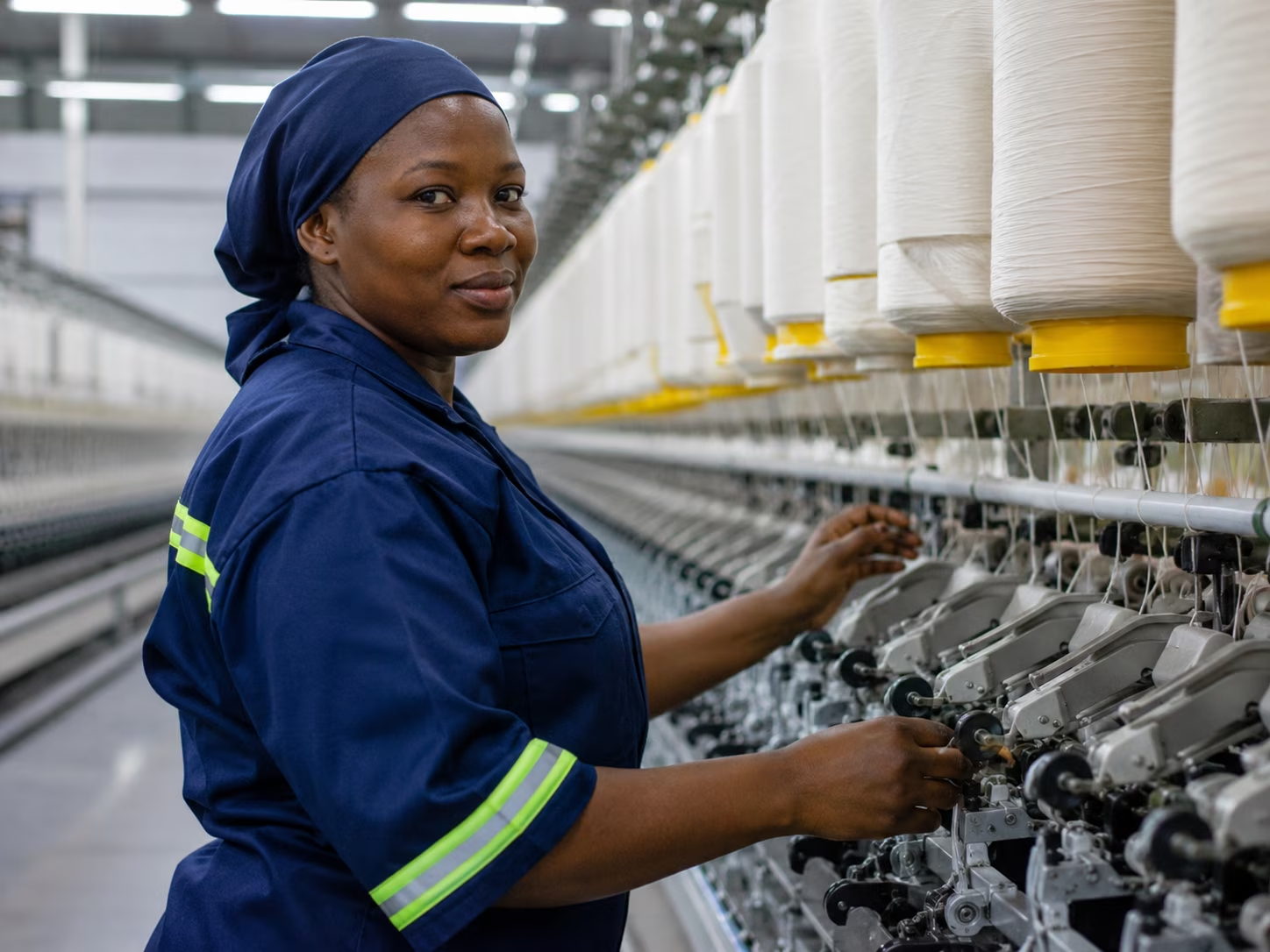
Women have been among the primary beneficiaries of the country’s industrialization strategy. UNDP data shows that women represented 86% of employees in Hawassa Industrial Park, 89% in Bole Lemi, and 96% in Adama Industrial Park, making the textile sector an important driver of female employment.
Challenges Slow Industrial Growth
Despite early success, Ethiopia’s textile industry has faced several setbacks in recent years. The COVID-19 pandemic reduced global apparel demand and disrupted supply chains, while the civil conflict in the Tigray region led to the closure of the Mekelle Industrial Park and contributed to Ethiopia’s suspension from the African Growth and Opportunity Act (AGOA), reducing preferential access to the U.S. market.
Additional pressures from global logistics disruptions, Red Sea shipping challenges, rising raw material costs, and geopolitical conflicts have further affected production and exports.
Industry experts also point to structural challenges within Ethiopia’s cotton value chain. Although the country possesses abundant cotton resources, textile manufacturers continue to rely heavily on imported yarns and raw materials due to limited domestic processing capacity and quality constraints.
Read more: Ethiopia’s Textile Sector Faces Crisis Amid Calls for Minimum Wage Reform and Policy Overhaul
Building an Integrated Textile Value Chain
Industry leaders believe Ethiopia’s next stage of development will depend on strengthening its domestic textile supply chain. Priorities include improving cotton seed varieties, expanding irrigation, investing in farmer training, modernizing logistics, streamlining customs procedures, and developing a more skilled manufacturing workforce.
Despite recent challenges, Ethiopia’s industrial parks continue to demonstrate strong long-term potential. According to the World Bank, publicly owned industrial parks have attracted approximately US$740 million in investment since 2014 and achieved average annual export growth of around 50% before the pandemic.
As Ethiopia continues to expand its industrial infrastructure and textile ecosystem, the country’s industrial parks are expected to remain central to its strategy of increasing manufacturing exports, attracting international investors, and establishing itself as one of Africa’s leading textile production hubs.