




Discussions about yarn dyeing costs usually focus on dyes, water, energy and production time. Yet a component as simple as a plastic bobbin can also offer an opportunity to review costs and reduce waste, particularly when deformation limits its reuse.
Reforming perforated bobbins is one approach to addressing this issue. The process aims to restore the shape of a used bobbin so that it can return to production. The central questions are which bobbins can be reformed and whether they meet the requirements for further use after treatment.
How Does Reforming Differ from Recycling?
Reforming preserves the existing bobbin and corrects its shape. This differs from recycling the plastic material to manufacture a new component. Rather than converting a used bobbin back into raw material, the aim is to extend the service life of the original part.
However, deformation and damage require separate consideration. A bobbin that has moved outside acceptable dimensional tolerances should be assessed differently from one with cracks, fractures or damage to its perforated structure. Restoring its appearance or dimensions does not, by itself, establish that it is suitable for reuse.
Sorting and inspection therefore need to form part of the evaluation. Manufacturers must establish which types of deformation can be corrected, which defects require rejection, and what acceptance criteria should apply after reforming.
Compatibility with the bobbin’s material and design is another consideration. Results obtained with one type of bobbin cannot be extended to all dyeing bobbins without testing. Dimensions, perforated structure and previous use are among the details that should be recorded during a technical assessment.
Savings Must Be Measured in Actual Production
An economic assessment requires more than a comparison between the purchase price of a new bobbin and the cost of reforming a used one. Inspection time, labour, energy consumption, equipment maintenance and the proportion of rejected bobbins must also be included. The number of additional cycles a reformed bobbin can complete is another decisive factor.
Quality assessment should likewise extend beyond an initial dimensional check. Reformed bobbins need to be evaluated under actual production conditions to determine whether their dimensions and performance remain acceptable during subsequent use.
Recording results across several cycles provides a stronger basis for investment decisions than a simple demonstration of the bobbin before and after treatment.
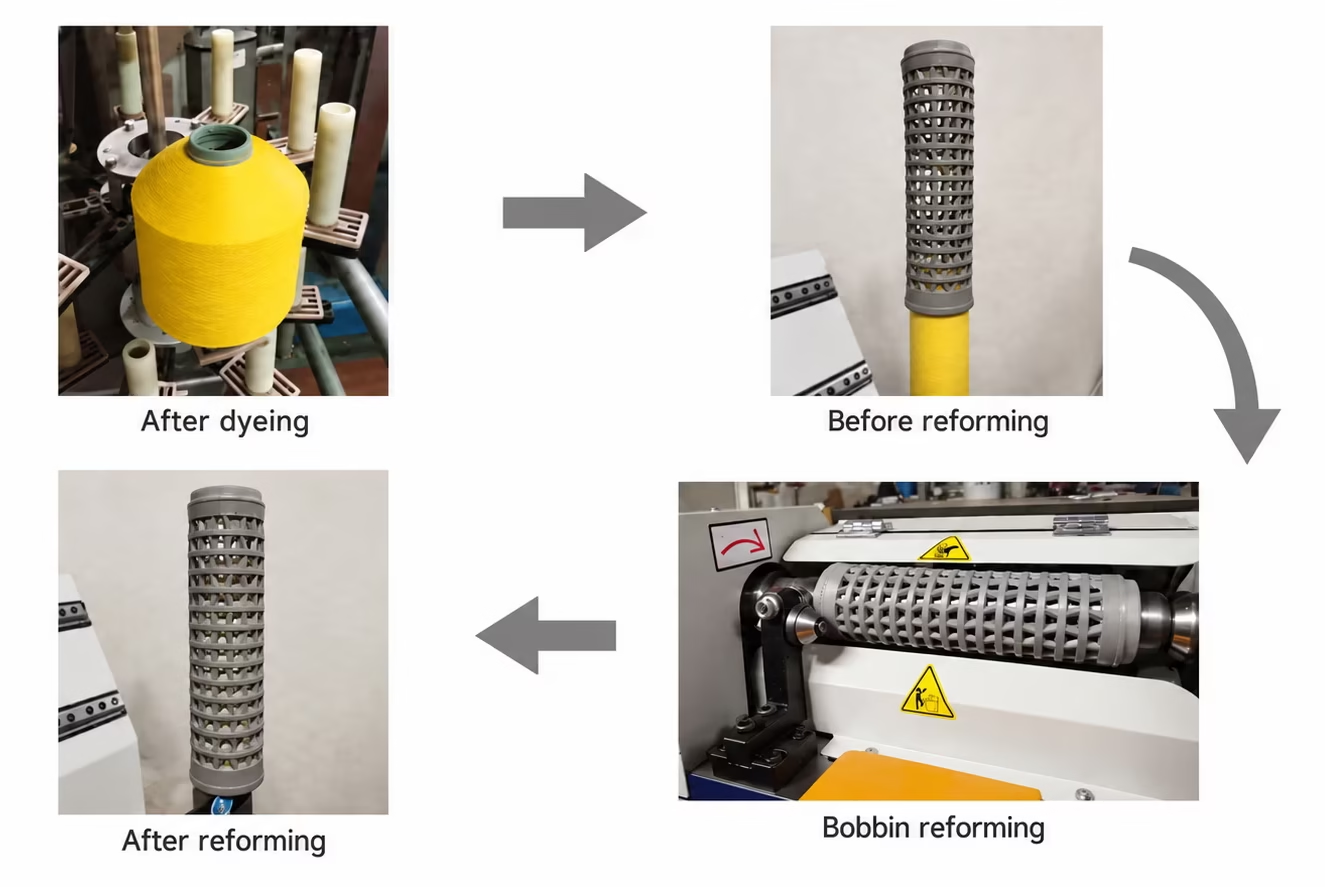
From an environmental perspective, extending bobbin service life could help reduce plastic waste. The extent of that benefit, however, depends on how many bobbins successfully return to production, how long they remain usable and the resources consumed during reforming. Without these data, firm conclusions about waste reduction or energy savings would be premature.
For dyeing mills that discard bobbins because of deformation, reforming deserves practical investigation. Its value becomes clearer when inspection, production trials and cost calculations are considered together, allowing mills to determine whether reuse is both technically reliable and economically justified.
Read More: LAIP at ITM 2026: Sustainable Dyeing and Uncompromised Material Quality
Bobbin Reforming Equipment Enters the Market
Machinery manufacturers have begun offering equipment for reforming yarn dyeing bobbins. The development of such machines could be significant for dyeing mills seeking to extend bobbin service life, reduce plastic waste and manage operating costs, provided that the quality and performance of the reformed bobbins are verified under actual production conditions.