




The Textile Export Council of Egypt joined European and Mediterranean textile stakeholders in Gammarth, Tunisia, where Executive Director Rasha Fahim moderated a session focused on bottlenecks in advancing the Euro-Med supply chain.
Egypt Joins Euro-Mediterranean Textile Dialogue
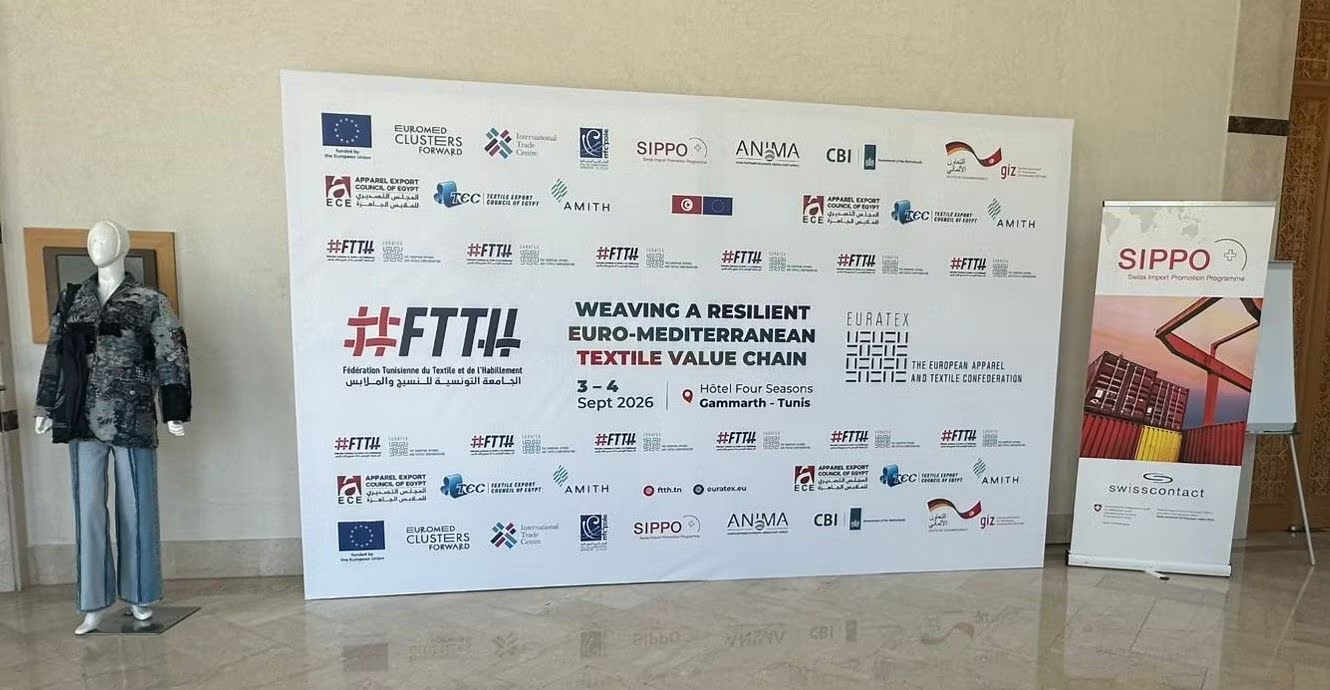
The Textile Export Council of Egypt (TEC) participated in the “Weaving a Resilient Euro-Mediterranean Textile Value Chain” conference held in Gammarth, Tunisia, on 3–4 September 2026, joining textile industry representatives from Europe and the Mediterranean to discuss stronger and more connected regional value chains.
The conference was hosted by the European Apparel and Textile Confederation (EURATEX) and the Fédération Tunisienne du Textile et de l’Habillement (FTTH), bringing together industry stakeholders to exchange perspectives on the challenges and opportunities shaping textile production and trade across the Euro-Mediterranean region.
The gathering formed part of the wider EUROMED Clusters Forward initiative, which is seeking to strengthen cooperation between European and Southern Mediterranean textile ecosystems. Key themes around the event included supply chain resilience, sustainable production, circularity, innovation and greater regional value chain integration.


Rasha Fahim Leads Discussion on Supply Chain Bottlenecks
As part of the conference programme, Rasha Fahim, Executive Director of the Textile Export Council of Egypt, moderated Session 2, titled “Where Are the Bottlenecks in Advancing the Euro-Med Supply Chain?”
Rather than relying solely on panel discussion, the session adopted a structured industry-driven format. It began with a framing presentation, followed by an industry case study and a series of guiding questions designed to identify practical barriers to deeper regional cooperation.
Read more: Egypt’s Textile Surge: Why Global Investors Are Moving to North Africa
Participants then worked in table-based groups to identify key bottlenecks and priorities before reconvening to share conclusions and consolidate the main insights emerging from the discussions.
The wider conference was also designed to deepen textile supply chain integration between stakeholders from Egypt, the EU, Morocco, Tunisia and Türkiye, while helping companies and institutions navigate changing European regulatory requirements, including the Ecodesign for Sustainable Products Regulation (ESPR) and the revised Pan-Euro-Mediterranean (PEM) Convention.
Strengthening Egypt’s Role in Regional Textile Supply Chains
For Egypt’s textile sector, participation in the Tunisia conference provided an opportunity to contribute directly to discussions on how the Euro-Mediterranean textile industry can become more resilient, competitive and better connected.
Regional textile supply chains are receiving increased attention as manufacturers and buyers reassess sourcing strategies, seek shorter supply routes and respond to evolving sustainability and regulatory requirements in major European markets.
Read more: Egypt’s Textile and Apparel Industry Enters New Growth Phase with SCZONE-Led Mega Projects
Egypt’s geographical position between Europe, Africa and the Middle East, together with its established textile manufacturing base and export relationships, gives the country a potential role in this changing regional production landscape.
TEC described the conference as a valuable platform for regional dialogue, practical exchange and identifying opportunities to strengthen Euro-Mediterranean textile value chains, while also giving Egypt’s textile sector a voice in discussions about the future structure of regional cooperation.











