




By: Behnam Ghasemi | Editor-in-Chief, Kohan Textile Journal
On-location coverage at Intertextile Shanghai Apparel Fabrics
Executive Summary
At Intertextile Shanghai, the Egypt home textile industry and the country’s expanding presence in the global textile landscape were on full display. Amid a shift in regional manufacturing dynamics, Towelie for Styles stands out as a pioneer in North Africa’s home textile segment.
In this exclusive interview, Eng. Ehab Samir Salama, General Manager at Towelie, discusses Egypt’s unique positioning in microfiber manufacturing, trade incentives driving international investment, and the strategic outlook for Middle Eastern and European trade.
Towelie Builds a Specialized Microfiber Manufacturing Base in Egypt
Kohan Textile Journal (Behnam Ghasemi): Could you please introduce Towelie and give us an overview of your manufacturing capabilities and product line in Egypt?
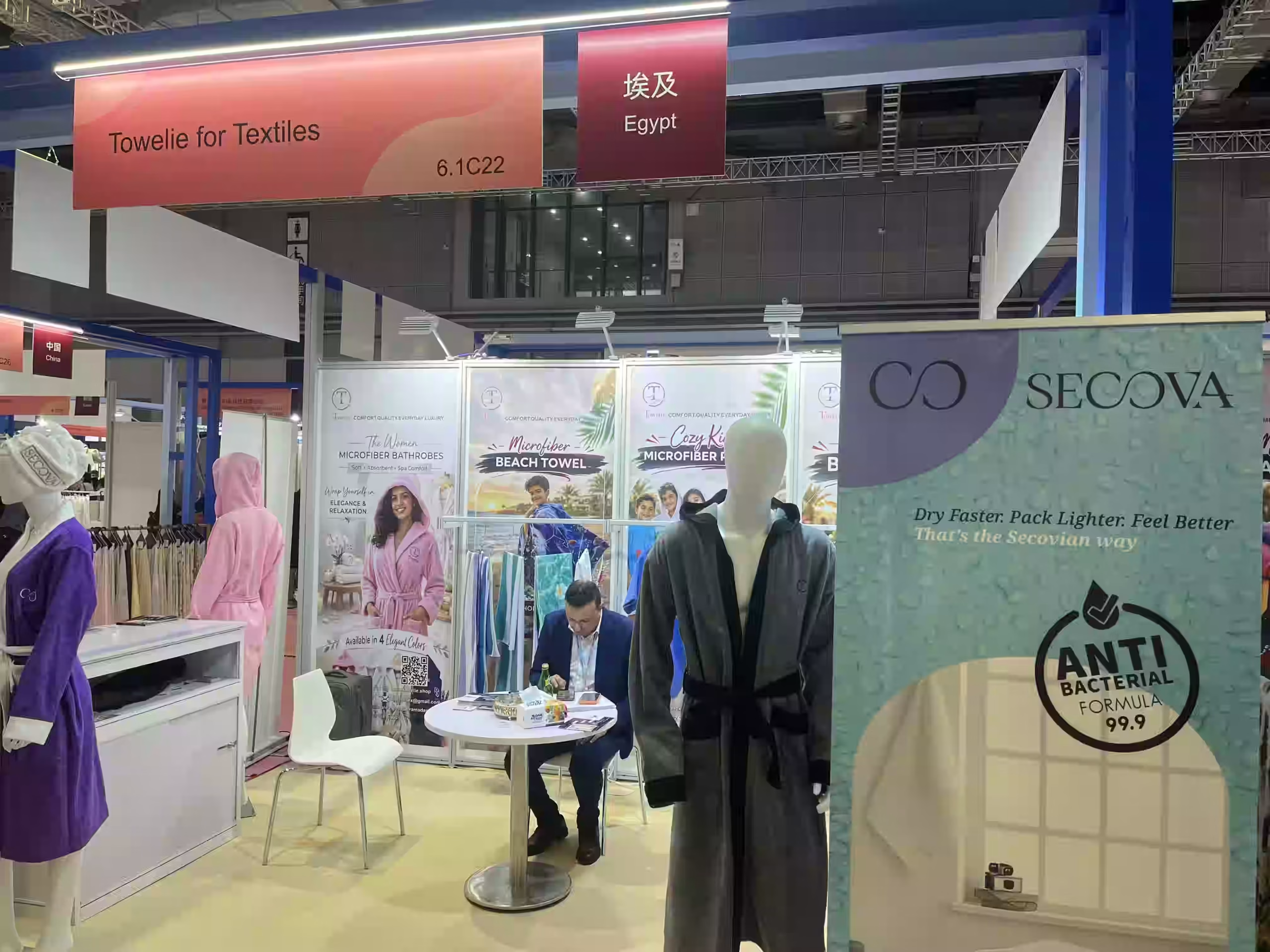
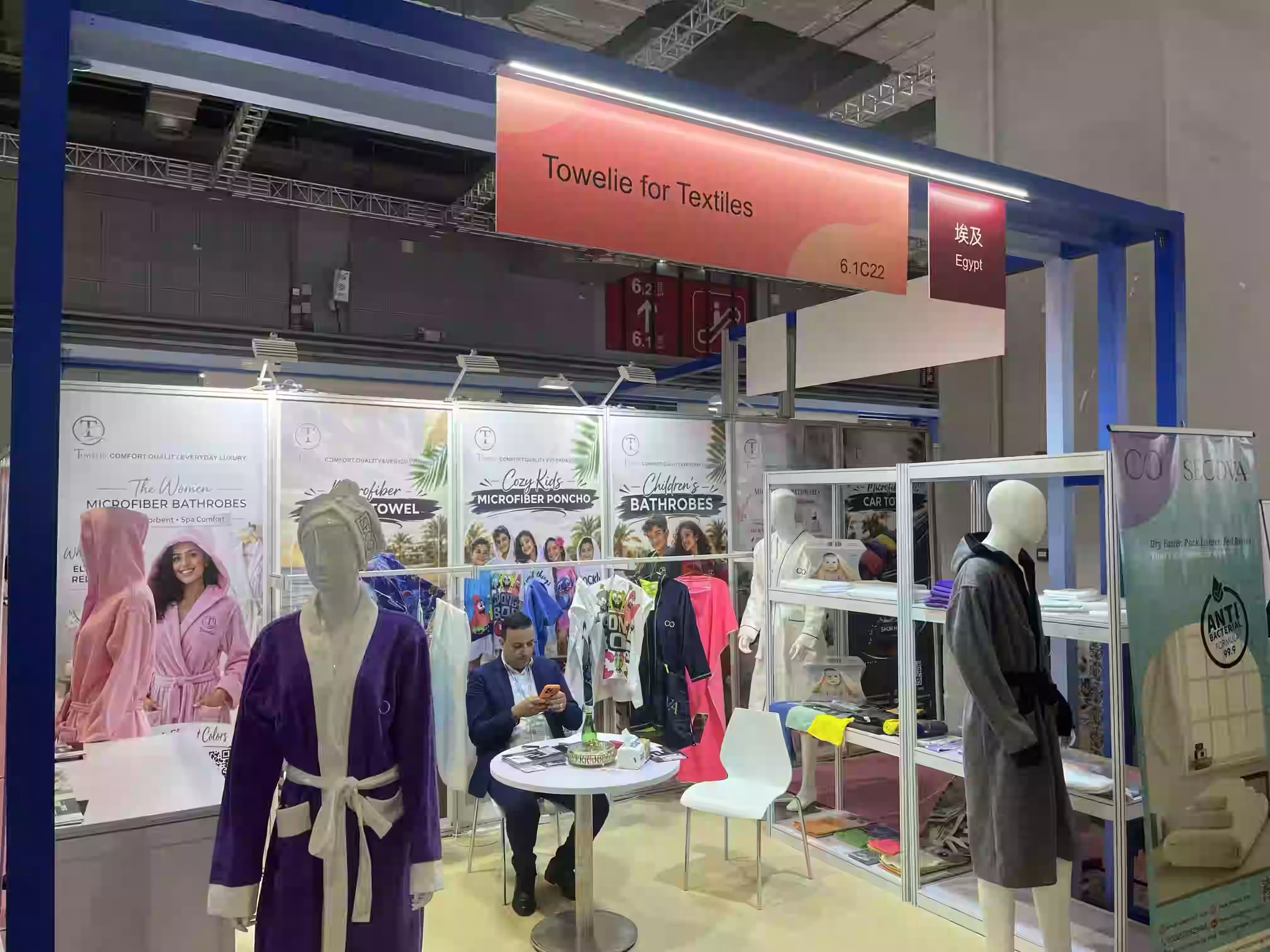
Eng. Ehab Samir Salama: We are Towelie for Styles, located in the 10th of Ramadan City, Egypt. We specialize in high-quality microfiber towels and hold a unique position in the market as the only specialized microfiber towel factory in Egypt.
Our product portfolio covers a wide range of applications:
- Functional & Bathing: Microfiber bath towels, bathrobes, and specialized Ihram sets.
- Lifestyle & Outdoor: Beach and travel towels, kids’ poncho towels, and custom-printed designs.
- Utility: High-absorbency car towels and kitchen cleaning cloths.
We also process advanced fabric treatments—including antibacterial finishing—to enhance durability, hygiene, and performance. Currently, we export to regional markets such as Saudi Arabia, the UAE, and Morocco, and our presence here at Intertextile Shanghai is aimed at expanding our footprint into Europe and the Americas.
Why Egypt Is Attracting New Textile Manufacturing Investment
Kohan Textile Journal: Egypt’s textile sector has seen noticeable momentum recently, with investments coming from China, Türkiye, and Bangladesh. What key factors are driving this boom?
Eng. Ehab Samir Salama: Egypt currently offers a compelling set of competitive trade and operational advantages:
- Strategic Duty-Free Access: Through trade agreements like EUR.1, Egyptian textile exports enter Europe and Middle Eastern markets at zero custom tariffs.
- Drastic Freight Savings: Shipping costs from China to Europe or the Middle East can reach $8,000 to $9,000 per container, whereas shipping directly from Egypt averages around $1,000 to $1,050.
- Competitive Operational Costs: Average monthly labor costs in Egypt range between $150 and $200, compared to $1,500+ in neighboring competitive markets like Türkiye.
These structural advantages are leading foreign manufacturers—especially Chinese and Turkish companies—to set up production hubs in Egypt to efficiently supply Western and Middle Eastern markets.
CONTAINER SHIPPING COST COMPARISON TO EUROPE / MENA
Combining Chinese Microfiber Technology with Egypt’s Trade Advantages
Kohan Textile Journal: How do you balance raw material sourcing and technology, especially when competing with global textile hubs like China?
Eng. Ehab Samir Salama: Rather than competing directly with Chinese raw material volume, we leverage synergy. We import high-grade synthetic microfiber yarn directly from China, which leads the world in synthetic fiber innovation and eco-friendly fabric development.
Synthetic microfibers naturally resist bacteria compared to organic fibers, making them ideal for high-hygiene applications. By combining Chinese fiber technology with Egypt’s low shipping costs, tariff-free agreements, and local finishing capabilities, we offer an attractive value proposition to international buyers.
Egypt’s Home Textile Industry Expands Its Production Ecosystem
Kohan Textile Journal: How would you describe the broader Home Textile ecosystem in Egypt right now?
Eng. Ehab Samir Salama: Domestic and export demand for home textiles—particularly towels, bedding, and blankets—is growing rapidly. The Egyptian government has established dedicated industrial zones out of desert areas, providing streamlined infrastructure and facilities specifically tailored for manufacturing investors.
Government Support Helps Egyptian Textile Companies Reach Global Markets
Kohan Textile Journal: How is the government supporting Egyptian manufacturers attending major international trade fairs like Intertextile Shanghai?
Eng. Ehab Samir Salama: Governmental export promotion initiatives provide strong assistance. For events like Intertextile Shanghai, the Egyptian government subsidizes approximately 60% of our booth space costs, requiring companies to cover the remaining 40%. This support helps local manufacturers showcase their capabilities on global trade stages.
Workforce Training Remains Key to Egypt’s Textile Manufacturing Growth
Kohan Textile Journal: Many foreign investors moving into Egypt highlight labor training as a key focal point. What has been your experience with the local workforce?
Eng. Ehab Samir Salama: Labor onboarding requires structured training programs. Because workforce turnover can be high during the initial months, manufacturers typically recruit at higher capacity—for instance, hiring 10 workers to secure 5 long-term, skilled team members.
With structured training and consistent operational oversight, manufacturers successfully build stable, productive teams capable of meeting international production standards.
Read more: Intertextile Shanghai Home Textiles 2026 to Spotlight Premium and Sustainable Designs
Conclusion & Industry Outlook
Egypt’s position as a nearshore textile manufacturing hub for Europe and the Middle East continues to strengthen. Through strategic trade agreements, competitive logistics, and target subsidies, companies like Towelie illustrate how Egyptian manufacturers are translating local advantages into a global market presence.











