




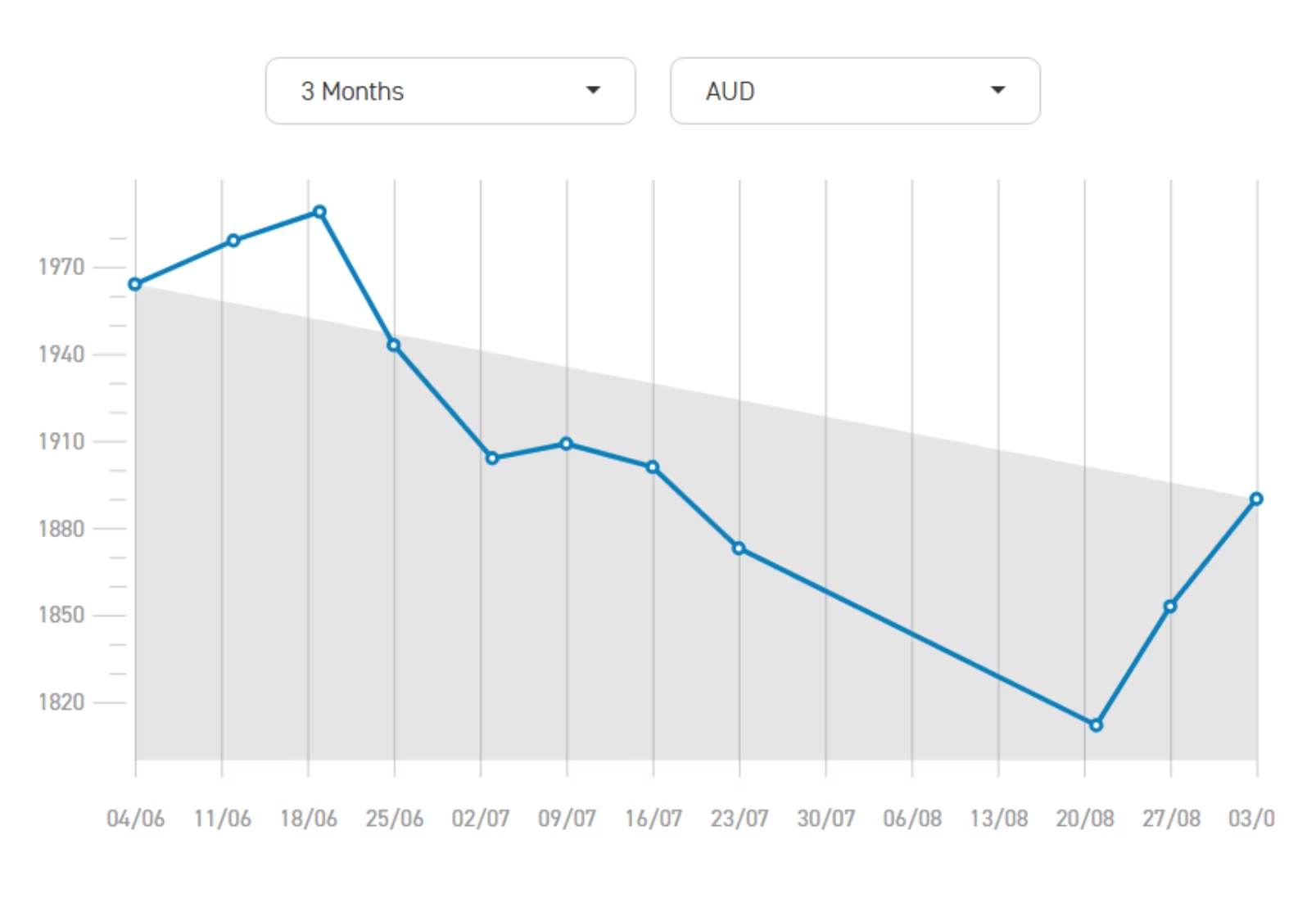
The Australian wool market recorded a second consecutive weekly gain in Week 10 of the 2026/27 season, with the Eastern Market Indicator reaching 1,890 A¢/kg — 46.4% above the corresponding level a year earlier — as strong demand met relatively limited supply.

Australia’s wool market continued its upward momentum in the week ending 4 September 2026, supported by broad buyer competition and tight availability, particularly across fine and superfine Merino categories.
According to Australian Wool Innovation (AWI), 25,021 bales were offered nationally during the week, an increase of 1,370 bales from Week 9. Of these, 23,926 bales were sold, while just 4.4% of the offering was passed in.
The Eastern Market Indicator (EMI), the key benchmark for Australian wool prices, gained 37 Australian cents, or 2%, to close at 1,890 A¢/kg. In US dollar terms, the indicator increased by 25 cents to 1,350 US¢/kg.
The rise marks the market’s second consecutive weekly increase and strengthens the recovery that began after prices reached considerably lower levels in August.
Fine Merino Wool Leads the Market
Buyer competition was particularly strong for fine and superfine wool.
During the opening day of sales, Merino categories gained between 13 and 59 cents, helping the EMI rise by 26 cents in a single session. Fremantle followed the same direction, recording gains of between 36 and 60 cents.
The market continued to strengthen on Wednesday, although at a slower pace, with the EMI adding another 11 cents.
Fine and superfine wool emerged as one of the strongest areas of the market, with several 16.5 to 18.5 micron indicators in Sydney and Melbourne gaining between 70 and 86 cents.
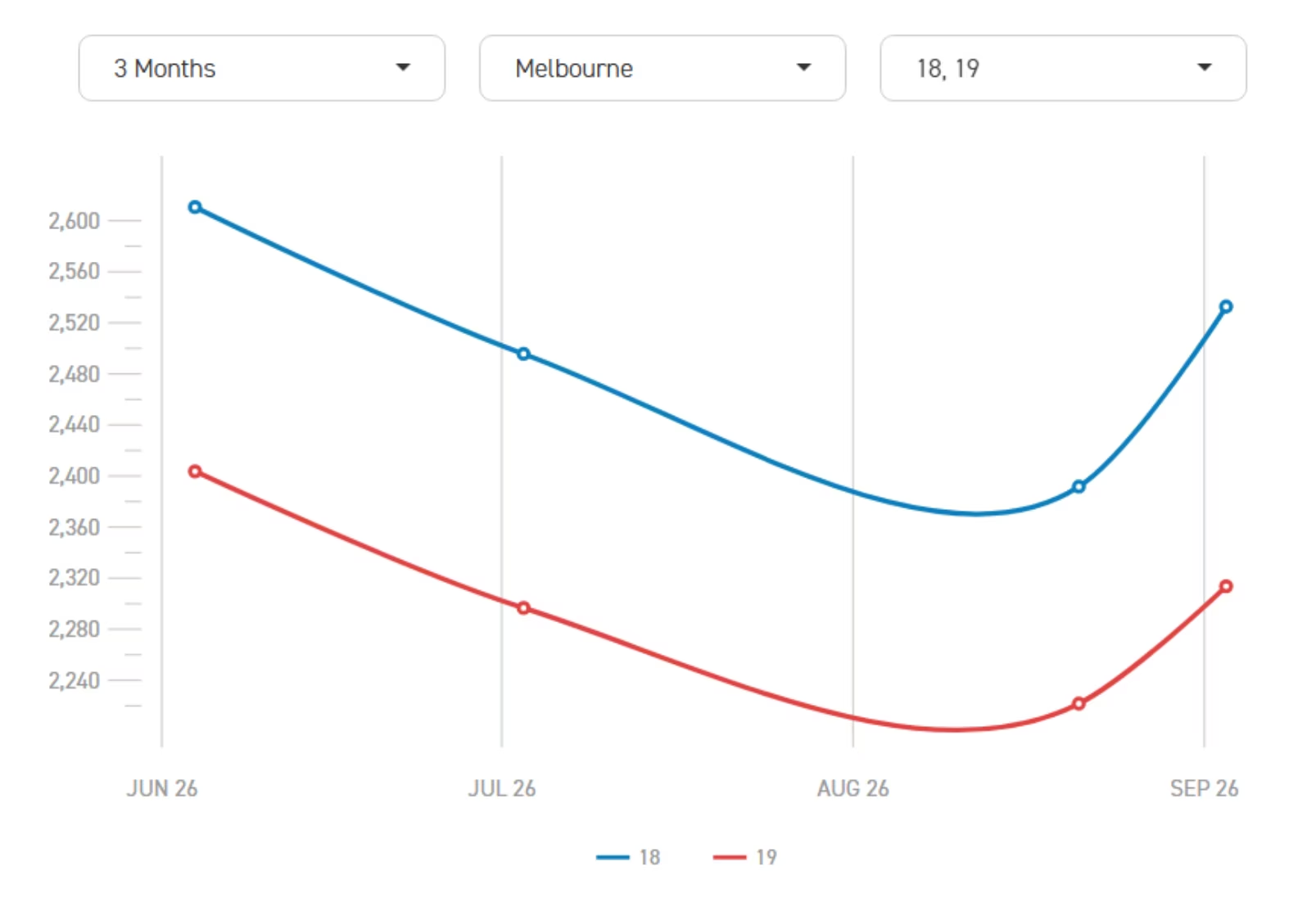
The micron price guides also showed broad increases across major categories. In Melbourne, for example, 16.5-micron wool reached 2,664 A¢/kg, while 18-micron wool stood at 2,532 A¢/kg and 19-micron wool at 2,313 A¢/kg.
Demand for Australian Merino fleece was also strong. Of the 8,539 bales of 19.5 micron and finer Merino fleece offered, 8,283 were sold, resulting in a pass-in rate of only 3%.
Australian Wool Prices Now 46.4% Higher Year-on-Year
Perhaps the most significant indicator of the current market strength comes from the year-on-year comparison.
At the corresponding point last season, the EMI closed at 1,291 A¢/kg. This year, it stands at 1,890 A¢/kg — a difference of 599 cents, or 46.4%.
The movement is particularly relevant for wool spinners, fabric manufacturers and sourcing companies because raw wool prices can have a direct impact further downstream in the textile value chain.
In currency terms, the latest EMI stood at:
- 1,890 A¢/kg, up 2.00%
- 1,350 US¢/kg, up 1.89%
- 90.74 CNY/kg, up 1.86%
- €11.66/kg, up 2.55%
The broad increase across currencies indicates that the weekly rise was not simply the result of movements in the Australian dollar.
Tight Supply Supports the Market
Supply conditions remain an important part of the current market dynamics.
AWI noted that tight wool availability ahead of the annual Nanjing Wool Market Conference, scheduled for 18–20 September, is contributing to stronger competition in auction rooms as early-stage processors and traders seek to maintain adequate stock levels.
This combination of constrained supply and purchasing demand could continue to support prices in the short term.
Read more: Top Wool Producing Countries Shaping Global Textile Supply
However, higher price levels may also begin to influence purchasing behaviour. As raw material costs rise, buyers are likely to become increasingly selective over wool quality, specifications and price.
What Comes Next for the Australian Wool Market?
The immediate supply outlook remains relatively tight.
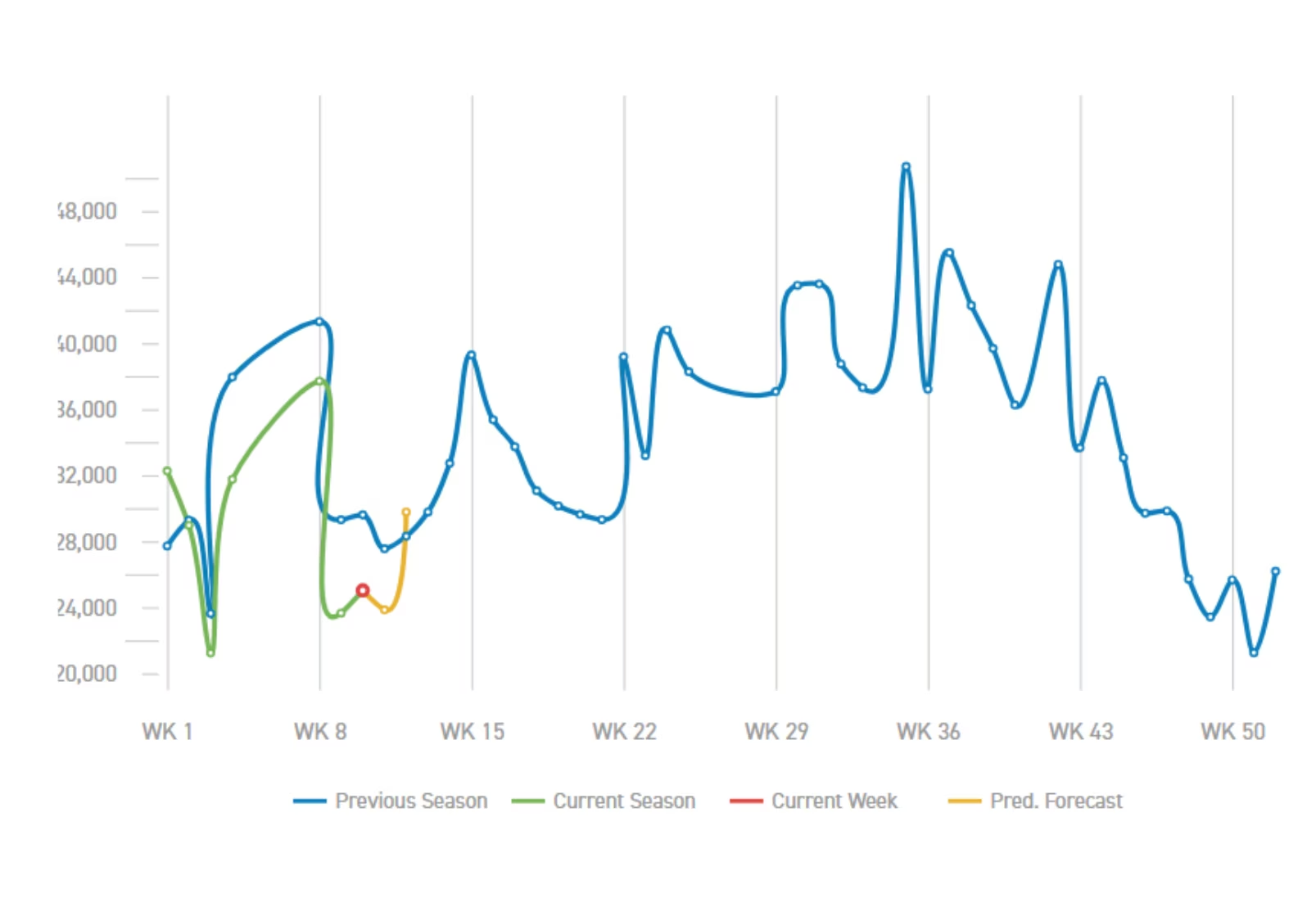
For Week 11, ending 10 September, 23,851 bales are forecast to be offered, compared with 27,544 bales offered during the corresponding week of the previous season.
Supply is then projected to increase to 29,770 bales in Week 12, slightly above the 28,306 bales offered in the same week last season. Week 13 is scheduled as a recess.
The short-term picture therefore remains supportive: limited supply, strong competition and renewed demand have pushed Australian wool prices substantially above last year’s levels.
Read more: Weekly Wool Market Review by Australian Wool Innovation
The key question now is whether downstream textile manufacturers and wool processors will continue buying at these elevated prices.
With the EMI already 46.4% higher year-on-year, the coming weeks could provide an important test of how much further the wool market can rise before higher raw material costs begin to limit demand.
Source: Australian Wool Innovation (AWI), Week 10 – September 2026 market report.











