
The sharp decline in exhibitor participation, near disappearance of textile machinery companies and growing frustration among manufacturers have exposed the deteriorating condition of Iran’s textile industry — and raised serious questions about the future of one of the country’s longest-established industrial exhibitions.
The 32nd edition of IRANTEX, taking place from 18 to 21 October 2026 at the Tehran International Permanent Fairground, is unfolding against one of the most difficult economic and industrial environments Iran’s textile sector has faced in recent years.
Once regarded as an important meeting point for textile machinery manufacturers, technology suppliers, yarn producers, fabric manufacturers and industry professionals, IRANTEX now appears to be struggling to maintain its former commercial relevance.
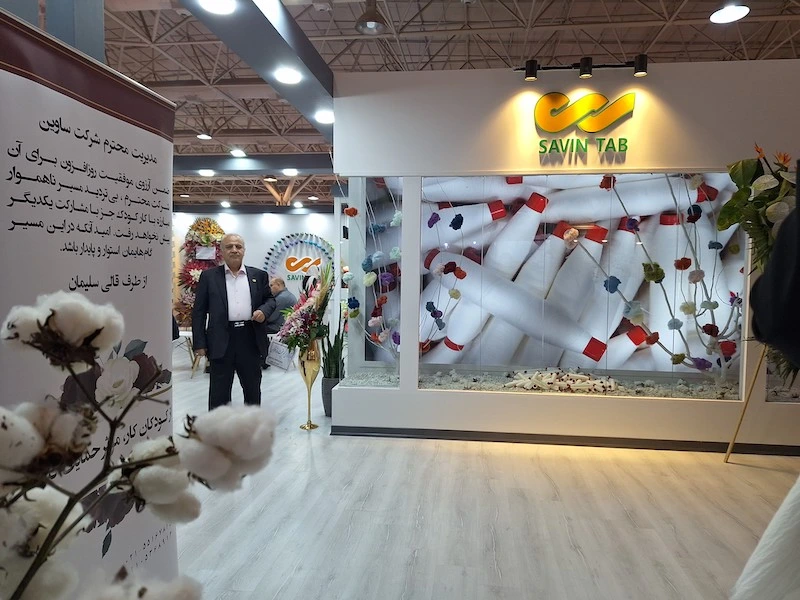
This year’s exhibition has been marked by a visibly reduced industry presence, an extremely limited representation of textile machinery companies and a much narrower focus on yarn, fibres and fabrics.
The decline is particularly concerning because IRANTEX was historically positioned as an international exhibition covering the broader textile manufacturing chain, including machinery, raw materials, home textiles and related technologies.
Its weakened machinery presence is therefore more than a reduction in exhibitor numbers. It reflects the increasingly difficult environment for industrial investment, international technology cooperation and textile manufacturing in Iran.
The situation also raises serious questions about the effectiveness of industry associations and the ability of Iran’s textile sector to protect its remaining industrial strengths.
A Formerly Important Textile Exhibition Losing Its Identity
For many years, IRANTEX provided a platform for Iranian textile manufacturers to meet machinery suppliers, examine new technologies, establish business relationships and explore opportunities for industrial development.
Textile machinery was traditionally one of the exhibition’s defining categories.
Spinning, weaving, knitting, dyeing, finishing and other textile equipment formed an important part of the event’s industrial identity.
However, the 2026 edition presents a noticeably different picture.
According to observations of this year’s exhibition, machinery suppliers have an extremely limited presence, while the event is increasingly dominated by companies involved in yarn, fibres, fabrics and textile raw materials.
The apparent withdrawal of machinery companies represents a serious loss for an exhibition that continues to promote itself as an international textile machinery event. A trade fair that loses one of its principal industrial categories inevitably risks losing its identity.
For textile manufacturers, machinery exhibitions are not merely promotional gatherings. They are important opportunities to evaluate technology, discuss investment, compare equipment and establish relationships with international suppliers.
When machinery companies disappear from the exhibition floor, much of that value disappears with them.
The decline also raises a fundamental question: if machinery manufacturers no longer consider IRANTEX a commercially attractive event, what exactly is the exhibition offering to the wider textile industry?
Read More: IranTex & Iran Mode 2026: An Exhibition with Fewer Visitors and Unanswered Questions
Textile Machinery Companies Are Almost Absent
The limited machinery presence is arguably one of the most alarming developments at IRANTEX 2026.
Iran’s textile industry requires continuous technological investment to maintain production efficiency, improve quality, reduce energy consumption and remain competitive.
However, international sanctions, financial restrictions, currency instability and difficulties in transferring payments have made importing industrial equipment increasingly complicated.The uncertain investment environment has also discouraged manufacturers from committing to expensive machinery purchases.
For international machinery suppliers, participation in Iran involves additional commercial risks, including payment difficulties, logistical uncertainty, compliance requirements and the limited ability of potential customers to finance new investments.
Under these circumstances, many suppliers may see little commercial justification for exhibiting.
Nevertheless, the near disappearance of machinery exhibitors should be treated as a major warning sign.
It suggests that the exhibition is losing its ability to function as a platform for industrial modernization.
While textile manufacturers elsewhere continue exploring automation, digitalization, energy efficiency and advanced production technologies, many Iranian producers are increasingly occupied with maintaining existing equipment and managing short-term operational problems.
IRANTEX should ideally provide a window into the future of textile manufacturing.
Instead, its reduced machinery representation illustrates how difficult it has become for Iranian manufacturers to access that future.
Sanctions, Shipping Disruptions and a Deepening Raw Material Crisis
The difficulties facing IRANTEX cannot be separated from the broader crisis affecting Iran’s textile manufacturing supply chain.
US sanctions, international banking restrictions, war-related uncertainty and maritime transportation disruptions have created serious obstacles for companies attempting to import machinery, spare parts and textile raw materials.
The consequences are particularly significant for manufacturers dependent on imported fibres, yarns, chemicals and specialized production inputs.
Although Iran maintains domestic production capabilities in several textile material categories, the industry still requires access to international suppliers for certain grades, qualities and products.
Restrictions on financial transactions, difficulties arranging international shipments, higher freight costs and uncertainty surrounding deliveries can make these imports more expensive and less predictable.
The situation has been further complicated by the conflict affecting the region and the disruption of maritime trade routes.
For manufacturers, these problems translate directly into production costs.
When raw materials become difficult to obtain, factories may face delays, reduced operating flexibility and additional pressure on working capital.
Even manufacturers that can secure the materials they need may be forced to pay substantially higher prices.
This has contributed to growing concern over yarn prices and the availability of competitively priced textile inputs.
Read More: Iranian Textile Machinery Makers Show Strong Competitive Edge Despite Challenges
Soaring Yarn Prices Are Putting Manufacturers Under Severe Pressure
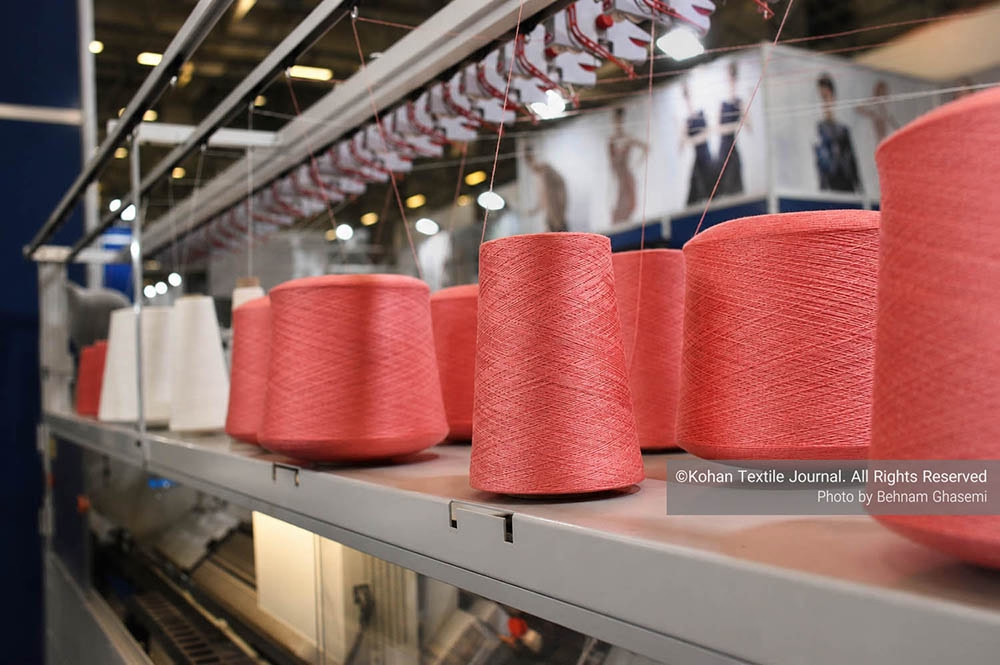
Yarn is one of the most important cost components in many textile manufacturing processes.
For weaving, knitting, fabric production and several downstream applications, changes in yarn prices directly affect production economics.
Iranian manufacturers are facing significant pressure from currency depreciation, supply-chain disruption and rising input costs.
Industry concerns about sharp increases in yarn prices highlight the difficult situation facing textile producers.
Manufacturers must either absorb these increases, reducing their margins, or pass them on to customers who are already struggling with inflation and weaker purchasing power.
Neither option offers a sustainable solution.
Rising yarn prices can also create uncertainty in pricing finished products.
When manufacturers cannot reliably predict replacement costs for raw materials, accepting long-term orders becomes increasingly risky.
Some companies may hesitate to commit to fixed prices, while others may reduce production or postpone purchasing decisions.
The consequences extend throughout the textile value chain.
Fabric manufacturers, garment producers, home textile companies and other downstream businesses all depend on a reasonably stable supply of raw materials. When that stability disappears, the entire manufacturing system becomes more vulnerable.

Domestic Demand Is Weakening as Production Costs Continue to Rise
The raw material crisis is only one side of the problem.
Iran’s textile manufacturers are also confronting a domestic market weakened by inflation, currency depreciation and declining consumer purchasing power.
As household spending becomes increasingly concentrated on essential goods, demand for clothing, home textiles and other manufactured textile products faces additional pressure.
For many producers, the domestic market has historically provided a degree of protection against the difficulties associated with exporting under sanctions.
However, that protection is becoming less reliable.
Manufacturers are being squeezed between rising production costs and customers who are increasingly unable or unwilling to accept higher prices.
The result is a difficult commercial environment characterized by weaker demand, uncertainty over pricing and pressure on factory cash flow.
A textile industry cannot remain healthy simply because factories continue operating.
Production must be supported by sufficient demand, reasonable profitability and the ability to reinvest in machinery, technology and workforce development.
When manufacturers are forced to concentrate almost entirely on short-term survival, the foundations of long-term competitiveness begin to weaken.
Read More: When Trade Policies Hurt Domestic Textile Manufacturing: Lessons from Iran’s Textile Industry
Where Are Iran’s Textile Industry Associations?
The difficulties surrounding IRANTEX also raise broader questions about the role of Iran’s textile industry associations and representative organizations.
In a healthy industrial environment, professional associations should serve as independent advocates for manufacturers, particularly small and medium-sized private companies.
Their responsibilities should include communicating industry concerns, identifying regulatory obstacles, supporting access to raw materials, encouraging technological investment and defending the commercial interests of their members.
However, the severity of the problems facing Iran’s textile sector raises questions about whether existing representative bodies are responding effectively enough.
Manufacturers are dealing with rising costs, difficult import conditions, restrictions on international payments, unstable demand and limited investment opportunities.
These are not minor operational problems. They directly affect the survival and competitiveness of private textile businesses.
The relationship between industry associations, government institutions and the private sector therefore deserves closer examination.
- To what extent are textile associations able to act independently when the interests of manufacturers conflict with existing policies?
- How effectively do they represent the concerns of privately owned factories?
- And what practical results have they achieved in addressing the difficulties that manufacturers face?
These questions are especially important in an industrial environment where businesses may have limited influence over economic decisions that directly affect their operations.
Industry associations should not exist merely to participate in official ceremonies, attend exhibitions or issue statements.
Their value must be measured by their ability to represent members, communicate problems openly and advocate for practical solutions.
The weakened condition of IRANTEX offers another reason to examine whether the institutional structures surrounding Iran’s textile industry are providing the support that manufacturers need.
Private Textile Manufacturers Are Fighting to Survive
Behind the declining exhibition participation lies a more serious industrial reality.
Private textile manufacturers in Iran are facing a combination of pressures that make long-term business planning exceptionally difficult.
Raw material costs are rising, currency volatility complicates purchasing decisions, access to international suppliers is restricted and domestic demand remains uncertain.
At the same time, manufacturers must continue paying wages, maintaining machinery, financing operations and meeting their financial obligations.
For many businesses, the immediate priority is no longer expansion or technological modernization.
It is survival.
This is particularly concerning for smaller manufacturers, which often have fewer financial resources and less flexibility to absorb sudden increases in production costs.
Large companies may be better positioned to maintain inventories, negotiate supply arrangements or manage temporary disruptions.
Smaller factories can face much greater difficulties when materials become scarce or customers delay purchases.
The risk is that prolonged economic pressure will gradually weaken the private manufacturing base that supports employment, technical expertise and industrial production across Iran. Once factories close, skilled workers leave and supply networks break down, rebuilding that capacity can be extremely difficult.
IRANTEX Is Losing Ground While Global Textile Exhibitions Move Forward
The contrast between IRANTEX and leading international textile exhibitions is becoming increasingly significant.
Around the world, major textile machinery exhibitions are increasingly focused on automation, digital manufacturing, artificial intelligence, energy efficiency, recycling, sustainable production and advanced materials.
These events provide platforms for technology suppliers and manufacturers to discuss the future direction of textile production.
IRANTEX, by contrast, appears increasingly disconnected from many of these developments.
Its limited machinery presence and narrower exhibitor profile reflect an industry that is struggling to maintain existing production rather than confidently investing in future capabilities.
This does not mean Iranian manufacturers lack technical knowledge or industrial ambition.
Iran has an established textile manufacturing base, experienced engineers and companies with considerable production expertise.
The problem is that industrial knowledge alone cannot compensate for restricted access to technology, unstable financial conditions and limited opportunities for international cooperation.
An exhibition that once helped connect Iranian textile manufacturers with machinery suppliers and new technologies is now struggling to preserve that function.
That represents a significant loss for the industry.

Can IRANTEX Recover, or Is Its Decline Becoming Permanent?
The problems visible at IRANTEX 2026 should be regarded as a warning about both the future of the exhibition and the broader condition of Iran’s textile industry.
The reduced exhibitor presence, near absence of machinery companies and increasingly narrow focus on raw materials and fabrics suggest that the event is losing some of the characteristics that once made it an important industrial gathering.
The reasons are complex.
International sanctions, geopolitical instability, maritime transportation problems, currency depreciation and rising raw material costs have created an exceptionally difficult business environment.
Industry associations must also demonstrate that they are capable of defending the practical interests of manufacturers rather than merely maintaining an institutional presence.
Iran’s textile sector still possesses valuable industrial infrastructure, technical experience and manufacturing capabilities.
However, these strengths are increasingly threatened by economic uncertainty and the difficulties confronting private businesses.
The decline of IRANTEX is therefore not simply an exhibition problem.
It is a visible reflection of a manufacturing sector under growing pressure.
Perhaps the most troubling aspect of IRANTEX 2026 is that an exhibition once associated with industrial development and new investment now appears increasingly focused on preserving its own existence.
If the current trend continues, IRANTEX risks losing its position as a meaningful meeting point for Iran’s textile industry.
Reversing that decline will require more than better exhibition marketing. It will demand stronger industry representation, improved commercial conditions, renewed access to international technology and a genuine commitment to supporting private manufacturers.
The central question is no longer whether IRANTEX can fill more exhibition halls next year. It is whether Iran’s textile industry — and the institutions claiming to represent it — can create the conditions needed for those halls to be worth filling.