An Editorial Analysis by Kohan Textile Journal
A Fragile Starting Point Before the War
Any realistic assessment of Iran’s post-war future must begin with an honest look at the country’s pre-war conditions. Even before the escalation of conflicts in 2025, Iran’s economy—and particularly its industrial sectors—was already operating under significant structural pressure.
Three major challenges had defined the landscape.
The first was the erosion of social capital. Rising economic hardship, declining purchasing power, and a widening gap between public expectations and policymaking had gradually weakened trust. For industries such as textiles—highly dependent on workforce stability, consumer demand, and long-term investment—this erosion translated into uncertainty at every level of production.

The second challenge was a persistent structural imbalance in infrastructure and resources. Energy shortages, particularly in electricity and gas, had already disrupted production cycles across manufacturing sectors. Textile mills, spinning units, and finishing plants were among the most affected, as inconsistent energy supply directly reduced output efficiency and increased operational costs.
Read more : Iran’s Textile Industry Faces Deepening Crisis as War Conditions Threaten Over One Million Jobs
The third issue was the lack of normal international trade relations, largely shaped by long-standing sanctions. This limitation had constrained access to raw materials, restricted export channels, and increased dependency on indirect and costly trade routes—factors that have long undermined the competitiveness of Iran’s textile and apparel industry.
Post-War Reality: Deeper, More Complex Challenges
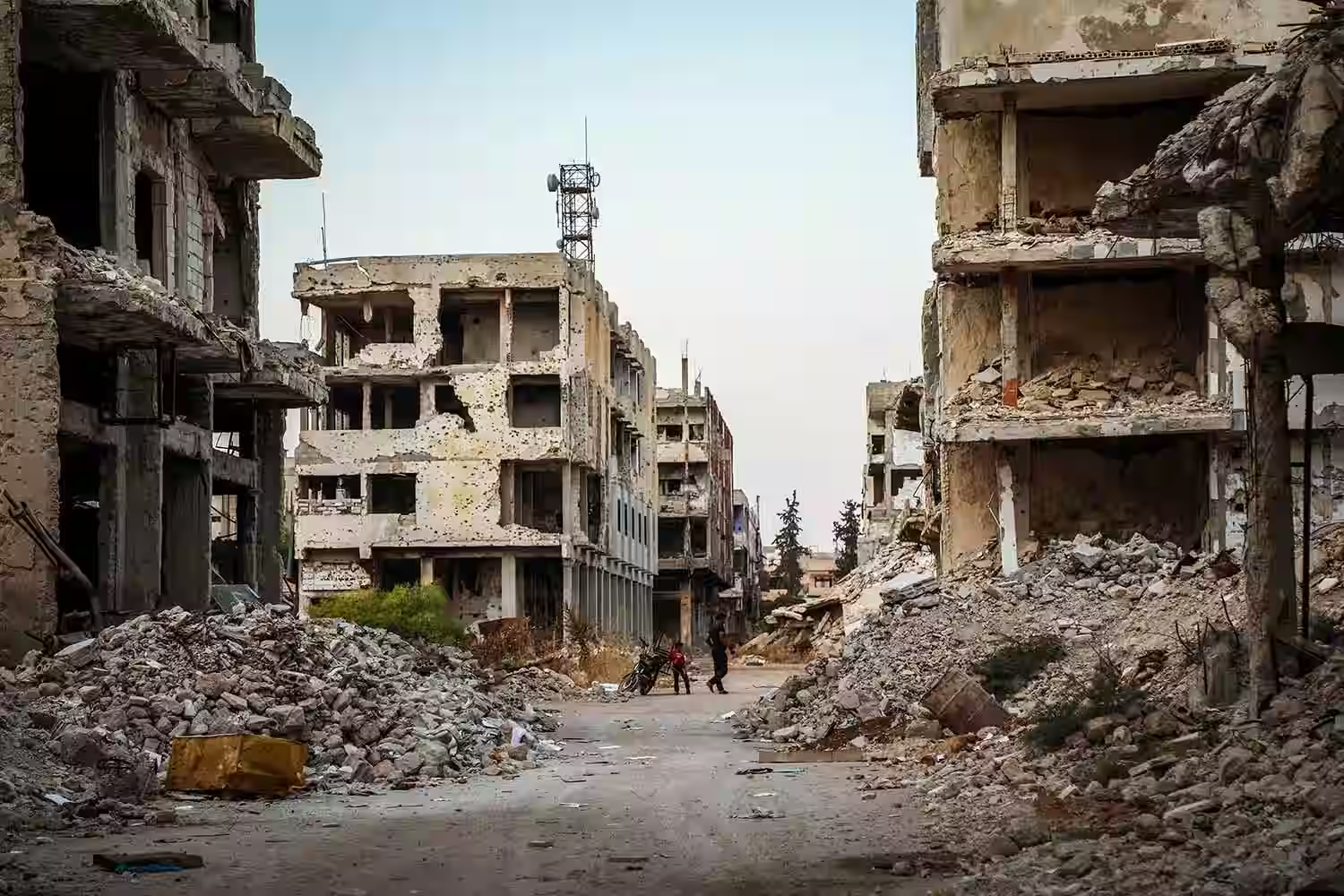
The post-war period is unlikely to mark a simple transition toward recovery. On the contrary, the same structural challenges are expected to return—but in a more intensified and complex form.
Social Pressure and Economic Strain
The erosion of social capital is expected to deepen further. War-related economic damage, combined with ongoing inflation and declining real incomes, may intensify pressure on both consumers and the workforce. For labor-intensive industries such as textiles, this creates a dual challenge: reduced domestic demand and increased difficulty in maintaining a stable workforce.
Without a meaningful shift in economic and social policies, this dimension alone could significantly limit the pace of industrial recovery.
Supply Chain Disruptions and Raw Material Crisis
The issue of structural imbalance—already visible before the war—has now escalated into a more critical phase.
Damage to key industrial sectors, including petrochemicals and steel, has introduced new vulnerabilities in the supply of raw materials. For the textile industry, this is particularly significant. Polyester fibers, polypropylene inputs, and other petrochemical-based materials form the backbone of modern textile production in Iran.
Any disruption in these upstream industries directly translates into shortages, price volatility, and production instability for textile manufacturers.
This adds a new layer to an already fragile system, where factories must now navigate both external supply constraints and internal production limitations.
Trade Isolation and Export Challenges
International trade, which was already constrained prior to the war, faces even greater uncertainty in the post-war environment.
Deteriorating relationships with key trade partners and increased geopolitical risk perception are likely to further restrict export opportunities. For textile producers—particularly in sectors such as carpets, apparel, and home textiles—this represents a critical setback.
Export markets that once provided stability and foreign currency inflow may become less accessible, forcing companies to search for new partners under far more challenging conditions. This transition is not only costly but also time-consuming, placing additional pressure on already weakened businesses.
Read more : Iran’s Textile Industry Under Pressure: War, Uncertainty, and the Fragility of Production Chains
Implications for the Textile Industry
The textile sector sits at the intersection of all these challenges. It is highly sensitive to:
- Raw material availability
- Energy stability
- Labor conditions
- Export market access
In a post-war scenario, all four factors are under strain simultaneously.
As a result, the industry faces a real risk of capacity contraction, reduced investment, and long-term competitiveness loss. Manufacturers may be forced to scale down operations, delay modernization efforts, or exit certain market segments altogether.
At the same time, regional competitors are likely to capitalize on these weaknesses, gradually replacing Iranian products in international markets.

A Narrow Path Toward Recovery
Despite the severity of the situation, the outlook is not entirely predetermined. A path toward recovery does exist—but it requires strategic, coordinated, and realistic action.
Rebuilding social trust, addressing structural imbalances in energy and raw materials, and redefining international trade relationships will be essential. Equally important is the need to engage industry experts and private sector stakeholders in policymaking processes.
For the textile sector, targeted support in raw material supply, export facilitation, and technology investment could help stabilize production and preserve employment.
Conclusion: A Critical Turning Point
Iran’s post-war future will not be shaped by short-term recovery measures alone. It will depend on the country’s ability to confront its structural challenges with a long-term strategic vision.
Without meaningful reform in economic policy, industrial support systems, and international engagement, the risk of prolonged crisis remains high. However, with a pragmatic approach—leveraging national and regional advantages while rebuilding trust and connectivity—there remains a possibility for gradual stabilization.
For the textile industry, the coming years will be decisive. The sector will either adapt and reposition itself within a changing global landscape—or face a slow and irreversible decline.