




Digital Transformation Moves Beyond Experimentation
The 2026 edition of Texprocess 2026 in Frankfurt demonstrated that the global sewn products industry is entering a more mature phase of digital transformation. Across exhibition halls, conference sessions, and technical discussions, one message became increasingly clear: textile and apparel manufacturers are no longer looking at digital tools as isolated technologies. Instead, they are searching for connected ecosystems capable of improving efficiency, reducing waste, accelerating product development, and supporting long-term sustainability goals.
Held alongside Techtextil 2026, the exhibition once again attracted strong international participation from textile manufacturers, apparel brands, software providers, machinery companies, and product development specialists. However, unlike previous years where digitalization was often discussed as a future ambition, Texprocess 2026 reflected a market that is now actively implementing integrated workflows across product development and production processes.
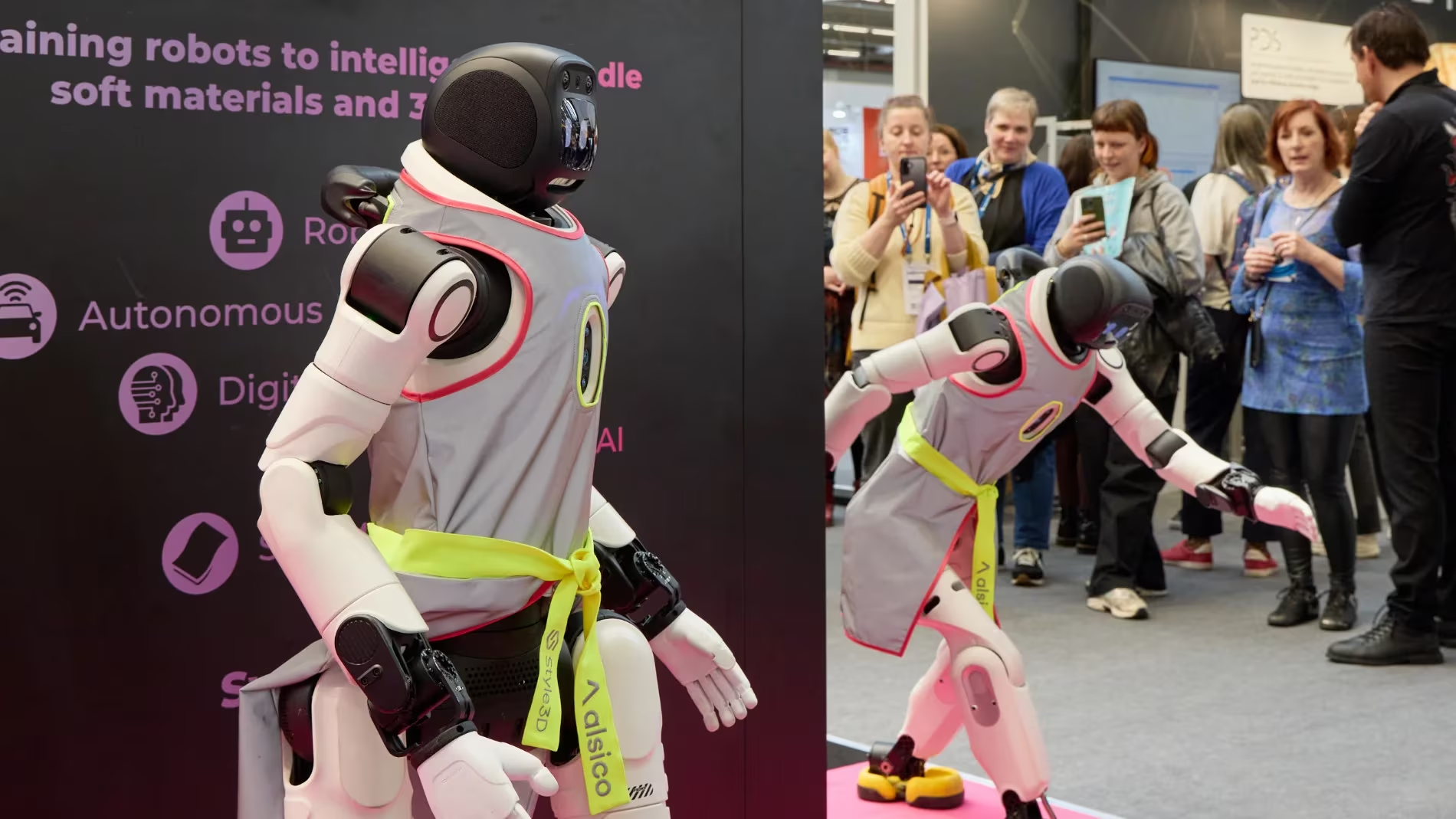
From pattern development and 3D prototyping to production planning, automation, and digital collaboration, the exhibition highlighted how the textile industry is increasingly shifting toward fully connected operational models.
Read more : Texprocess 2026: AMANN Group presents six new sewing and embroidery threads in Frankfurt
Sustainability Is Becoming an Operational Requirement
One of the most noticeable changes at Texprocess 2026 was the way sustainability was discussed throughout the exhibition. Sustainability is no longer positioned merely as a branding strategy or corporate responsibility initiative. Instead, it is increasingly treated as a measurable operational requirement directly connected to efficiency, waste reduction, and profitability.
Across many technology presentations and product demonstrations, exhibitors emphasized solutions designed to:
- Reduce material waste
- Improve marker efficiency
- Minimize physical sampling
- Optimize fabric utilization
- Lower energy consumption
- Accelerate approval cycles
This reflects a broader transformation taking place across the textile and apparel sector. Global brands and manufacturers are under increasing pressure to reduce environmental impact while simultaneously improving speed-to-market and operational flexibility. As a result, technologies that combine sustainability with measurable economic value are gaining stronger market attention.
The industry’s focus is gradually moving away from theoretical sustainability messaging toward practical tools capable of delivering quantifiable improvements in production efficiency and resource management.
Integrated Workflows Become the Industry Standard
Another key trend visible at Texprocess 2026 was the growing demand for integrated digital workflows connecting multiple stages of product development and production preparation.
Manufacturers increasingly want systems capable of creating seamless transitions between:
- Textile design
- Pattern development
- 3D visualization
- Marker planning
- Production preparation
- Digital collaboration
This evolution reflects deeper operational realities within today’s global textile industry. As supply chains become more complex and product cycles shorten, companies are searching for technologies that reduce manual intervention, eliminate duplicated work, and improve communication between creative and technical teams.
Industry discussions at the exhibition suggested that companies are no longer asking whether systems can connect. Instead, the focus has shifted toward how effectively those systems integrate, how smoothly data moves between workflows, and how much friction can be removed from the development process.
This represents an important shift in purchasing priorities. Technology investments are increasingly evaluated not only on individual software capabilities, but on how effectively they contribute to larger connected production ecosystems.
Read more : UK Showcases Technical Textile Strength at Techtextil and Texprocess 2026
3D Product Development Gains Stronger Industrial Relevance
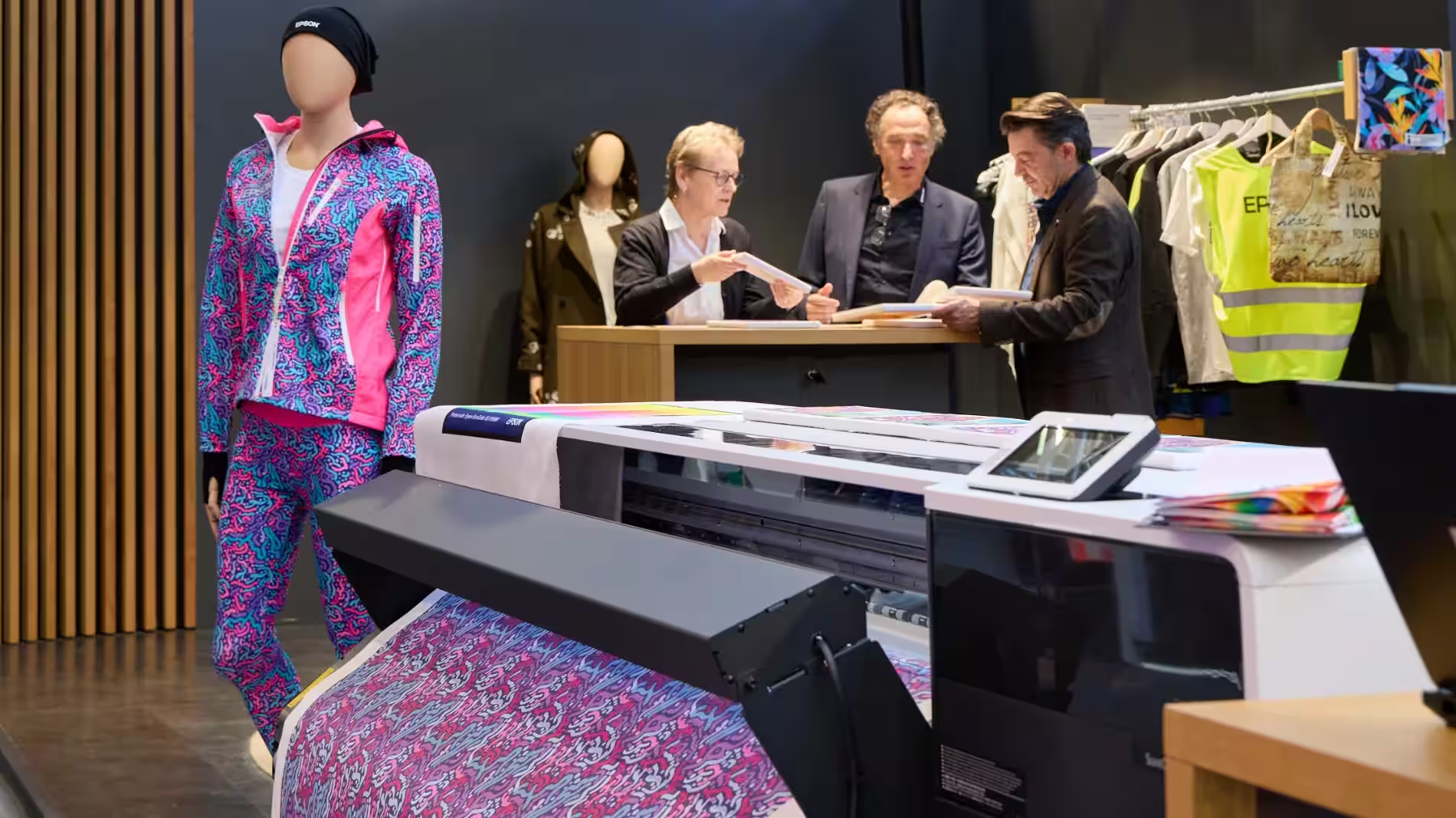
3D technologies also continued gaining momentum during the exhibition, particularly in fashion, sportswear, technical textiles, automotive interiors, and upholstery applications.
While 3D design and virtual prototyping have been discussed within the industry for many years, Texprocess 2026 demonstrated that these technologies are now becoming far more industrially relevant and commercially practical.
Manufacturers are recognizing that virtual development workflows can help:
- Reduce sample development time
- Improve communication between teams
- Shorten approval processes
- Reduce material consumption
- Improve fit validation before physical production
For many companies, the value of 3D development is no longer limited to visualization. It is increasingly viewed as a strategic production tool capable of improving decision-making earlier in the development cycle.
This trend is particularly important as brands continue demanding faster product launches while simultaneously expecting lower waste levels and greater product customization.
The Industry Is Entering a More Data-Driven Phase
Texprocess 2026 also reflected the textile industry’s broader transition toward data-driven manufacturing environments.
Digital product development today is no longer limited to design visualization or file management.
Increasingly, manufacturers want technologies capable of supporting:
- Real-time collaboration
- Centralized asset management
- Traceability
- Workflow automation
- Production consistency
- Cross-functional communication
The growing importance of digital product passports, traceability requirements, and sustainability reporting is accelerating this transformation even further, especially within European markets.
As a result, digital continuity between design, development, and production is becoming a major competitive advantage for manufacturers seeking to improve responsiveness and reduce operational complexity.
Europe Continues Driving High-Value Textile Innovation
The exhibition also reinforced Europe’s continuing importance as a center for high-value textile innovation, particularly in technical textiles, advanced manufacturing, automation, sustainability technologies, and digital product engineering.
German and European manufacturers attending the exhibition appeared strongly focused on:
- Production optimization
- Industrial automation
- Sustainable manufacturing
- Connected systems
- Smart factory concepts
- Advanced product development technologies
Rather than focusing purely on production volume, many companies are increasingly investing in technologies that improve flexibility, precision, traceability, and operational intelligence.
This reflects a larger structural transformation taking place across global textile manufacturing, where competitiveness is increasingly defined by technology integration, process efficiency, and innovation capability rather than labor cost alone.
The Growing Strategic Role of Digital Ecosystems
One of the strongest observations from Texprocess 2026 was the industry’s growing interest in complete digital ecosystems rather than standalone tools.
As textile and apparel companies continue managing shorter product cycles, distributed teams, and rising compliance requirements, isolated systems are becoming increasingly inefficient.
Manufacturers now expect technologies capable of functioning within broader interconnected environments where:
- Data continuity is preserved
- Communication gaps are minimized
- Manual corrections are reduced
- Product accuracy improves
- Development timelines accelerate
This shift is likely to shape future investment strategies across the global textile sector for years to come.
Conclusion
From an editorial perspective, Texprocess 2026 showed that the textile and apparel industry is moving into a far more pragmatic and mature phase of digital transformation.
The conversations at the exhibition were no longer centered around whether digitalization is necessary. That debate appears largely over. Instead, the focus has shifted toward implementation quality, workflow integration, operational efficiency, sustainability performance, and measurable industrial value.
The companies attracting the strongest attention were not necessarily those offering isolated technologies, but those capable of presenting connected production concepts that reduce friction between creativity, engineering, and manufacturing.
At the same time, sustainability is becoming increasingly inseparable from productivity and efficiency. Manufacturers are now expected to reduce waste, improve speed, increase flexibility, and maintain transparency simultaneously — all while remaining commercially competitive.
Texprocess 2026 clearly demonstrated that the future of the textile industry will belong to companies capable of combining automation, digital workflows, sustainability, and integrated production systems into one coherent industrial strategy.











