The global textile industry has never been static. For decades, production shifted from one region to another, following labor costs, trade agreements, and evolving consumer demand. Yet the changes taking place today are different. The fabric industry is no longer being reshaped by a single factor. Instead, it stands at the intersection of technology, sustainability, geopolitics, and supply chain transformation.
As we move through 2026, textile manufacturers around the world are facing a new reality. Brands are demanding faster delivery, greater transparency, lower environmental impact, and more flexible production models. Governments are introducing stricter sustainability regulations. At the same time, digital technologies and automation are transforming how fabrics are designed, produced, finished, and delivered.
Against this backdrop, the question facing the industry is not simply who produces the most fabric. The more important question is which countries are best positioned to lead the next era of textile manufacturing.
China Still Leads the Industry, But Its Role Is Evolving
China remains the undisputed leader of global fabric production. No other country comes close to matching the scale, infrastructure, and integration of China’s textile ecosystem. From fiber production and spinning to weaving, knitting, dyeing, finishing, and garment manufacturing, China has built one of the most complete industrial supply chains in the world.
However, the story of China’s textile industry in 2026 is no longer just about volume. The country has spent years investing in automation, intelligent manufacturing, technical textiles, digital printing, and sustainable production technologies. Chinese manufacturers increasingly compete through efficiency and innovation rather than simply through labor costs.
This transformation reflects a broader shift within the global textile market. While some buyers continue diversifying sourcing destinations, China remains the benchmark against which all other textile-producing countries are measured. Its challenge is not maintaining production capacity; it is maintaining leadership in a market that increasingly rewards flexibility, sustainability, and technological sophistication.
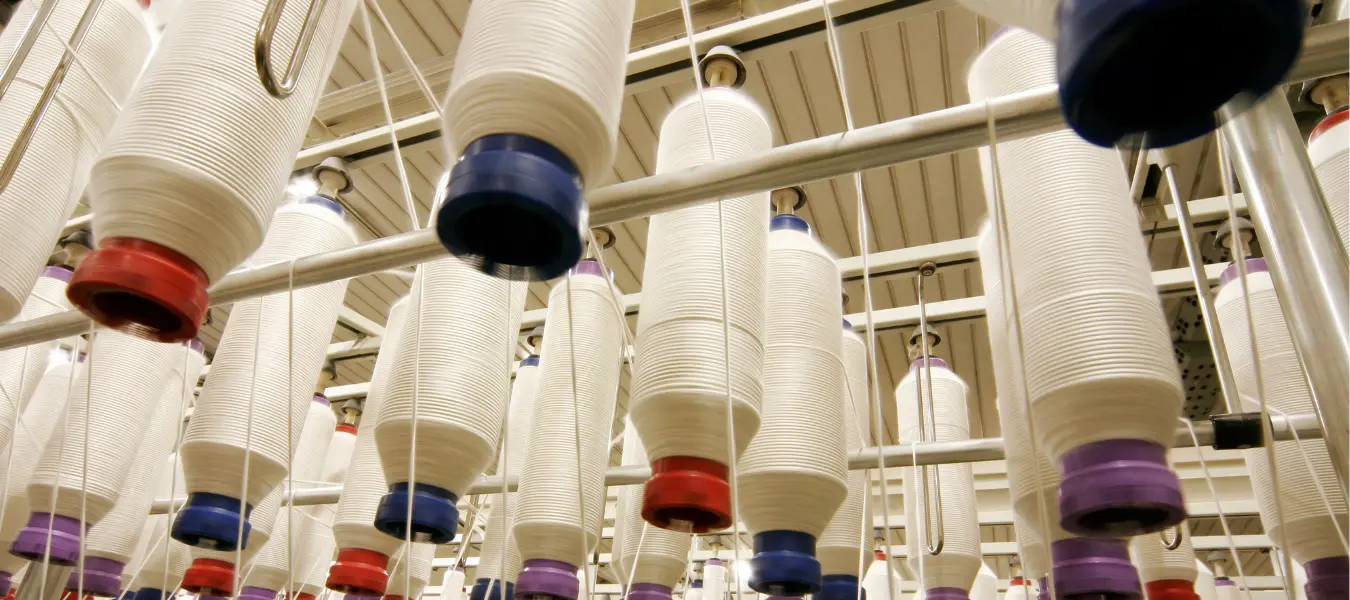
India Is Becoming the Industry’s Most Important Growth Story
If China represents maturity, India represents momentum.
Few countries have generated as much attention from global textile buyers and investors as India. Supported by government initiatives, expanding manufacturing capacity, and a strong domestic raw material base, India is steadily strengthening its position across the textile value chain.
The country’s natural advantage begins with cotton. As one of the world’s largest cotton producers, India benefits from direct access to a critical raw material that continues to dominate global apparel and home textile markets. Combined with a vast labor force and growing industrial investment, this creates a powerful foundation for long-term growth.
What makes India particularly important in 2026 is the changing sourcing strategy of global brands. Many international companies are actively seeking alternatives to over-dependence on a single production country. India has emerged as one of the most attractive destinations for this diversification.
The opportunity is significant, but so is the challenge. As investment flows into the sector, Indian manufacturers must continue improving infrastructure, productivity, and operational efficiency if they want to fully capitalize on this moment.
Bangladesh Wants More Than Garment Manufacturing
For many years, Bangladesh’s reputation was built on apparel exports. The country became one of the world’s largest garment manufacturing hubs, supplying major international brands with competitively priced products.
Today, however, Bangladesh is pursuing a more ambitious goal.Rather than remaining dependent on imported fabrics, particularly from China, the country is investing in domestic textile manufacturing capabilities. New weaving mills, knitting facilities, dyeing plants, and finishing operations are helping create a more integrated textile ecosystem.
This shift is strategically important. Countries that control more stages of the supply chain retain greater value, improve responsiveness, and reduce dependency on external suppliers.
Bangladesh’s textile sector still faces infrastructure and energy-related challenges, but its direction is clear. The country wants to move beyond being a garment producer and establish itself as a more complete textile manufacturing destination.

Turkey’s Advantage Is Not Scale—It Is Speed
Turkey occupies a unique position within the global fabric industry.Unlike China or India, Turkey cannot compete purely on production volume. Its competitive advantage comes from something increasingly valuable in modern supply chains: proximity.
For European buyers, Turkey offers shorter lead times, lower transportation risks, and faster response capabilities than many Asian competitors. In an era where fashion cycles continue to accelerate, these advantages carry significant weight.
Turkey has also built a strong reputation for quality, particularly in cotton fabrics, denim, home textiles, and value-added textile products. The country’s manufacturers have invested heavily in modern machinery, sustainability certifications, and advanced finishing capabilities.
As environmental requirements become stricter across Europe, Turkey’s focus on sustainable manufacturing could become an even stronger differentiator. Buyers are increasingly evaluating suppliers not only on price, but also on environmental performance, traceability, and compliance.For Turkey, the future may depend less on producing more fabric and more on producing smarter, faster, and more sustainably than competitors.
Read more : Alarming Decline in Turkey’s Textile and Apparel Industry: $7 Billion Production Loss and 210,000 Jobs Gone
Vietnam Continues Its Remarkable Rise
Few textile-producing countries have attracted as much international attention over the past decade as Vietnam.The country’s emergence has been driven by a combination of competitive manufacturing costs, favorable trade agreements, political stability, and growing foreign investment. As sourcing diversification accelerates, Vietnam continues to benefit from brands seeking additional production options.
Yet the Vietnamese textile industry faces a critical question. Can it build a stronger domestic textile supply chain?
Many Vietnamese manufacturers still depend heavily on imported fabrics and raw materials. This creates vulnerabilities whenever disruptions occur within global supply networks.The next phase of Vietnam’s development will likely depend on its ability to strengthen upstream textile production and reduce reliance on external suppliers. If successful, the country could further solidify its position as one of the world’s leading textile manufacturing centers.
Read more : Vietnam Textile Industry Attracts High-Tech FDI
Sustainability Is No Longer Optional
Perhaps the most significant change affecting the fabric industry in 2026 is the role of sustainability.Not long ago, sustainability was often treated as a marketing initiative. Today, it is becoming a business requirement.Major brands increasingly demand evidence of responsible production practices. Governments are introducing stricter regulations. Consumers are asking tougher questions about the environmental impact of textile products.
As a result, fabric manufacturers are investing in technologies that reduce water consumption, lower energy use, minimize chemical impact, and support circular production models.Digital textile printing, recycled fibers, renewable energy systems, and advanced wastewater treatment technologies are becoming increasingly important components of modern textile manufacturing strategies.
The companies and countries that adapt fastest to these expectations will likely enjoy stronger market access and long-term competitiveness.
Automation Is Redefining Textile Manufacturing
Another transformation reshaping the industry is automation.Across textile-producing countries, manufacturers are investing in technologies that improve efficiency, reduce waste, and address labor challenges.Artificial intelligence is beginning to influence production planning, quality control, predictive maintenance, and inventory management. Automated inspection systems are improving consistency. Smart factories are creating new levels of operational visibility.While automation will not replace the need for skilled workers, it is fundamentally changing the economics of textile manufacturing.
Countries that embrace these technologies will be better positioned to compete in increasingly demanding markets. Those that fail to modernize risk falling behind regardless of labor cost advantages.
Could Africa Become the Industry’s Next Growth Region?
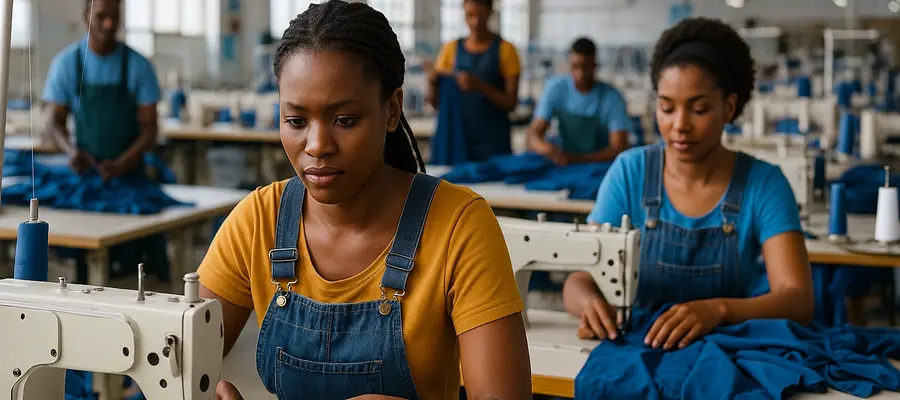
As global sourcing strategies evolve, many industry observers are paying closer attention to Africa.Countries such as Egypt, Morocco, Ethiopia, and Kenya are actively working to attract textile investment. Competitive labor costs, expanding industrial zones, and growing government support are creating new opportunities.
The continent is unlikely to challenge Asia’s dominance in the near future. However, it is increasingly viewed as a region with significant long-term potential.For global brands seeking supply chain diversification, Africa represents an important part of the conversation about the future of textile manufacturing.
The Future Will Belong to Integrated Manufacturing Ecosystems
One of the clearest lessons from the textile industry’s recent evolution is that success no longer depends on a single advantage.Low labor costs alone are not enough. Large production capacity alone is not enough. Even access to raw materials is not enough.
The countries and companies that will lead the next decade are those capable of combining multiple strengths: technology, sustainability, efficiency, quality, speed, and supply chain resilience.The future belongs to integrated manufacturing ecosystems where fibers, fabrics, technology, logistics, and innovation work together seamlessly.
Conclusion
The global fabric industry in 2026 is more dynamic than at any point in recent memory.China remains the dominant force, but its leadership is evolving. India is expanding rapidly and attracting unprecedented investment. Bangladesh is building a more complete textile ecosystem.
Turkey continues leveraging quality and proximity to key markets. Vietnam is strengthening its role as a strategic sourcing destination. Meanwhile, Africa is beginning to emerge as a potential future manufacturing frontier.At the same time, sustainability, digitalization, and automation are reshaping the rules of competition.
The next decade will not be defined simply by which country produces the most fabric. It will be defined by which countries can adapt fastest to the industry’s changing expectations.For textile manufacturers, machinery suppliers, investors, and global brands, understanding these shifts is no longer optional. It is essential.