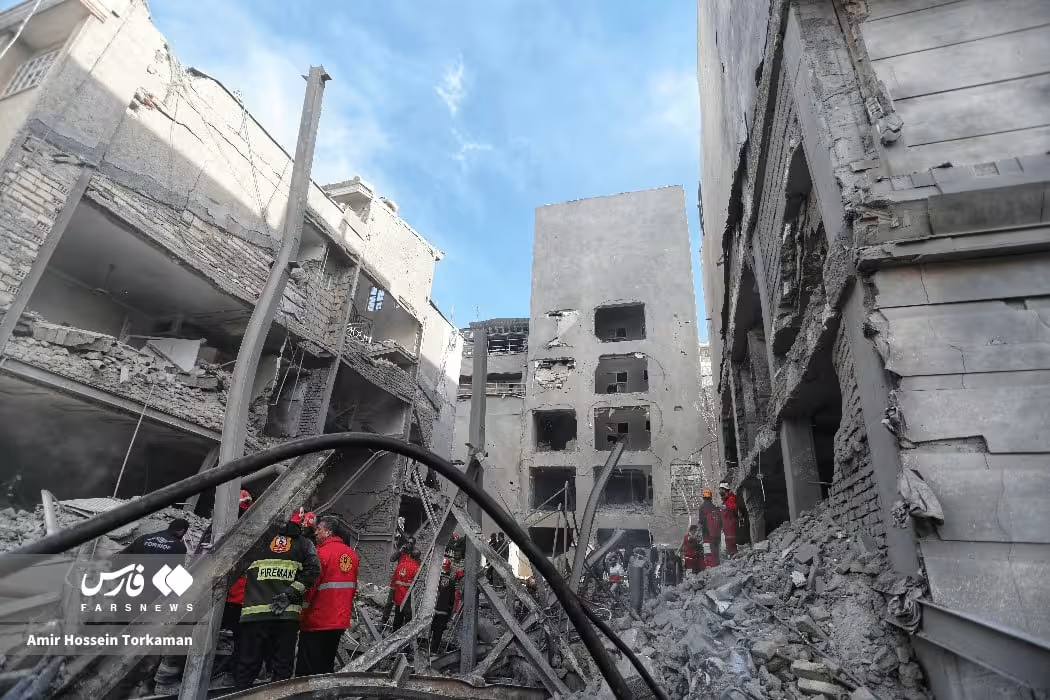
War changes more than borders and headlines. It alters trade routes, investor confidence, currency stability, and industrial rhythm. For Iran’s textile and apparel industry — a sector already operating under structural pressure — the beginning of an active conflict would not simply mean slower business. It could mean a sudden structural shock.
If exports are practically halted due to military escalation, insurance restrictions, shipping disruption, or financial isolation, the consequences would ripple across the entire textile value chain. The question is no longer whether exports matter. It is how deeply the industry depends on their continuity.
The Immediate Shock: Liquidity Under Pressure
The first impact of an export freeze would not appear in production statistics. It would emerge in cash flow.
Textile and apparel exporters operate on a rhythm. Orders are confirmed, production is scheduled, goods are shipped, payments are processed, and raw materials are repurchased. When that cycle is interrupted, liquidity becomes the most critical vulnerability.
Also Read: Behind the Surge of Fabric Imports: A Serious Alarm for Iran’s Textile Industry
Factories producing machine-made carpets, home textiles, knitwear, and yarns rely significantly on regional and international markets. If buyers suspend contracts due to geopolitical risk or if transport routes become uncertain, inventory begins to accumulate. Warehouses fill, payments are delayed, and working capital tightens.
For companies already navigating inflation and exchange rate volatility, even a few months of disrupted exports could create significant financial strain.
Supply Chain Fragility in a Wartime Environment
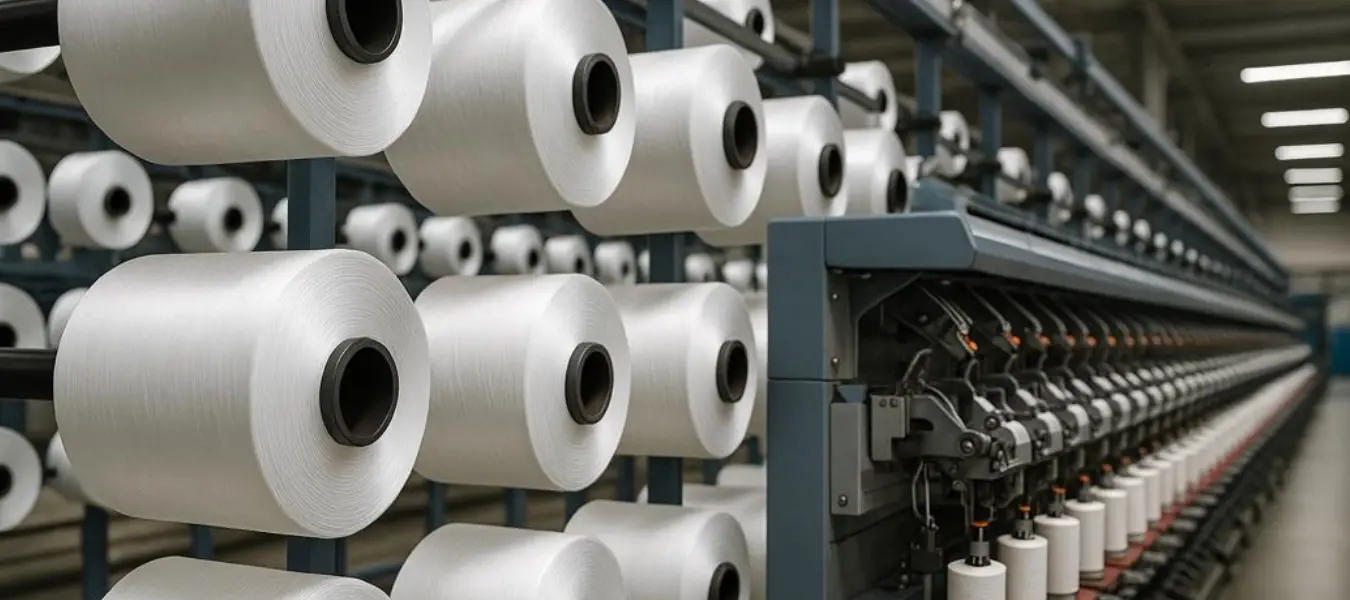
Iran’s textile industry is not entirely insulated from global supply chains. While certain fibers and yarn categories are produced domestically, many inputs — including specialized synthetic fibers, dyestuffs, chemicals, and machinery components — depend on imports.
War introduces multiple uncertainties. Shipping routes can become unpredictable. Suppliers may hesitate to engage. Insurance costs may surge. Currency depreciation can sharply increase the cost of imported materials.
This creates a paradoxical situation. Production costs rise at the exact moment when sales channels are constrained. Manufacturers may find themselves squeezed between higher input prices and shrinking revenue streams.
The Domestic Market: A Partial Buffer, Not a Replacement
In theory, a contraction in exports could redirect supply toward domestic consumers. In practice, wartime economies rarely experience stable consumer demand.
Conflict often triggers inflationary pressure and weakens purchasing power. Households prioritize essentials. Apparel and non-essential home textile purchases typically slow. Mid-range and premium segments feel the impact first.
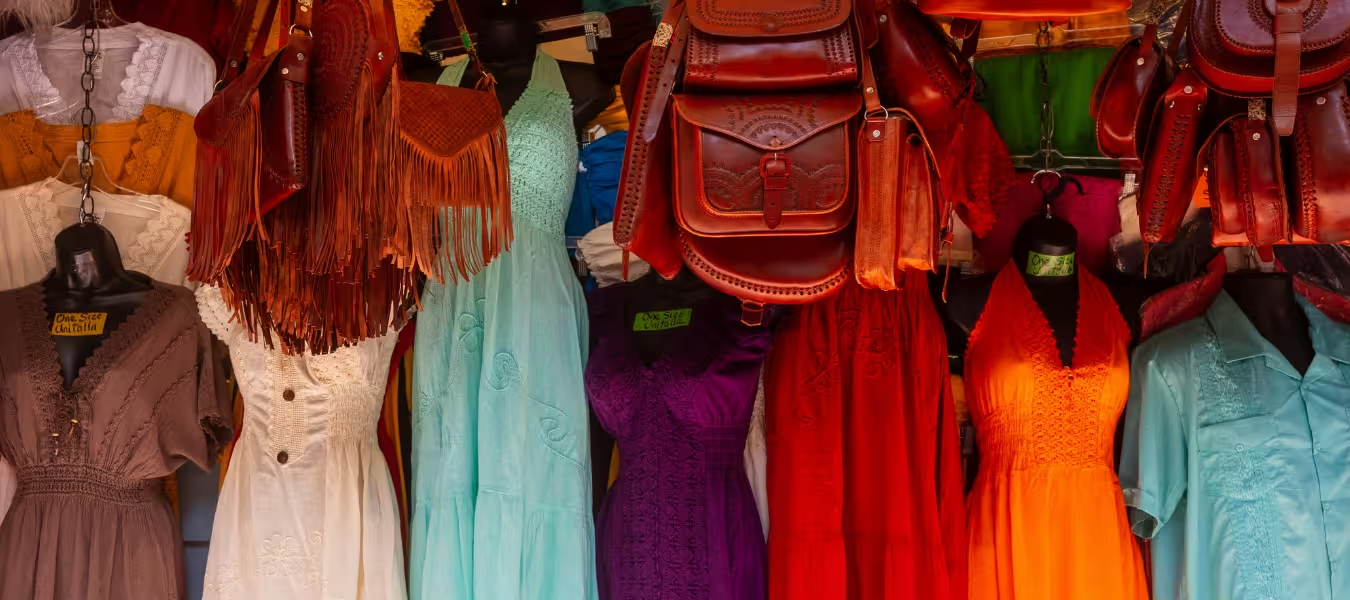
However, certain categories may demonstrate relative resilience. Basic garments, institutional orders, uniforms, and state-related procurement could maintain steady demand. These segments may soften the shock, but they cannot fully compensate for the loss of foreign revenue, particularly for export-oriented factories structured around international contracts.
Employment and the Human Dimension
The textile and apparel sector remains one of Iran’s more labor-intensive industries. From spinning mills in Yazd to garment workshops in Tehran and carpet factories in Kashan, thousands of small and medium-sized enterprises rely on continuous production flow.
If exports stall and domestic demand weakens simultaneously, companies may respond cautiously at first by reducing shifts or slowing output. Over time, more difficult decisions could follow, including delayed wage payments or workforce reductions.
The economic shock would therefore extend beyond balance sheets. Textile employment supports regional economies and family incomes. Prolonged disruption would carry social implications that reach far beyond factory walls.
Technology, Investment, and Competitive Position
Another layer of impact lies in investment behavior. Textile modernization depends on machinery upgrades, digital printing systems, finishing technologies, and automation solutions. These investments require confidence and access to international suppliers.
Under wartime uncertainty, capital expenditure is typically postponed. Machinery imports become more complex. Technical service support from foreign partners may decline. Spare part availability could tighten.
While production might continue, technological advancement would slow. In a competitive regional environment, this pause could widen the gap between Iranian manufacturers and rivals in Türkiye, India, or Pakistan.
Currency Volatility: Opportunity or Illusion?
Currency depreciation often appears to create export competitiveness. A weaker rial can reduce dollar-denominated prices. But price competitiveness only matters when trade channels function.
If logistics are disrupted and buyers perceive geopolitical risk, lower prices alone cannot sustain export momentum. In fact, severe currency volatility can increase uncertainty for both sellers and buyers, complicating contract negotiations and financial planning.
In such an environment, exchange rate shifts may provide limited practical relief.
The Carpet Sector’s Exposure
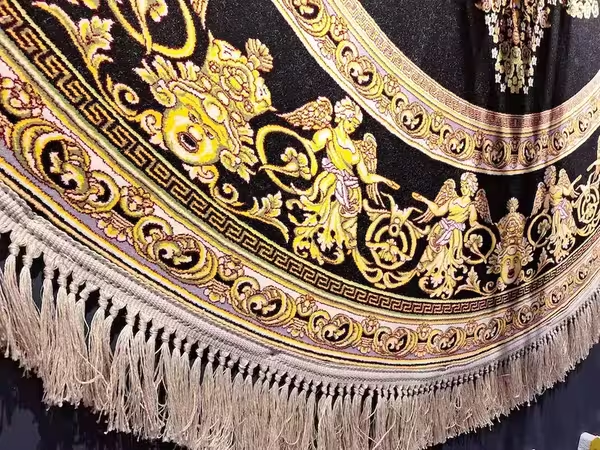
Iran’s carpet industry, both handmade and machine-made, is particularly sensitive to export conditions. Many manufacturers align production closely with confirmed foreign orders. A disruption in cross-border trade can therefore create inventory pressure relatively quickly.
Read more: Iran Develops First Standardized Machine-Made Carpet Pile Shedding Test Device
Larger factories with storage capacity and stronger financial buffers may endure temporary accumulation. Smaller producers, however, often depend on continuous cash turnover. For them, sustained export interruption could threaten operational continuity.
Not Collapse — But Structural Reshaping
Would the textile industry collapse entirely in the event of a wartime export halt? That outcome is unlikely. The sector has demonstrated resilience under sanctions and economic turbulence. Production networks are deeply rooted, and domestic manufacturing capacity remains intact.
However, resilience does not mean immunity. A prolonged disruption could trigger consolidation. Smaller enterprises might merge or exit. Market focus could shift toward lower-cost segments. Export strategies would likely diversify more aggressively once stability returns.
History suggests that textile industries in conflict-affected regions often recover faster than heavy industries because they require lower capital reinvestment. Yet recovery speed depends heavily on infrastructure integrity and the restoration of trade confidence.
Duration Determines Depth
The single most important variable would be duration. A short-term disruption measured in weeks may cause temporary contraction without long-term structural damage. A prolonged period of instability extending for many months would alter the industry’s landscape more fundamentally.
Infrastructure damage, currency collapse, and extended trade isolation would compound risk. Conversely, if transport routes remain partially functional and policy responses stabilize liquidity, the sector could maintain core capacity even under stress.
A Sector at a Crossroads
Iran’s textile industry stands at a delicate intersection of resilience and exposure. It has survived external pressure before, adapting to sanctions and shifting trade dynamics. War, however, introduces a broader spectrum of uncertainty — one that touches logistics, finance, psychology, and global perception simultaneously.
The outcome would not be binary. It would be gradual and layered. Some firms would contract. Others would adapt. The sector as a whole would likely emerge reshaped rather than erased.
The fundamental question is not whether the industry can endure temporary shock. It is whether companies are prepared with liquidity buffers, diversified markets, and flexible supply chains to navigate an environment where trade may pause without warning.
Beyond War: Structural Realities Facing Iran’s Textile Industry
Yet for many observers inside the industry, the war itself is only part of the story. A deeper structural challenge has been unfolding for years — one that may prove far more consequential than any short-term geopolitical shock.
A senior figure in Iran’s textile sector and a member of the Iran Textile Association describes the current moment as a culmination of long-standing pressures rather than a sudden crisis. According to him, the outbreak of conflict has already made production and export operations significantly more complicated. Logistics have become less predictable, financial channels more constrained, and foreign partners increasingly cautious.
But in his view, the larger concern lies beyond the battlefield.
“Unfortunately, production and export conditions have become much more difficult since the war began,” he says. “However, even if the conflict were to end tomorrow, it would be difficult to be optimistic about the future of the textile industry under the current policy environment.”
For decades, Iran’s industrial sectors — including textiles — have operated within a framework that limits sustained engagement with global markets. Ideological and political priorities have often overshadowed economic integration, leaving manufacturers increasingly isolated from international supply chains, technology flows, and investment capital.
The consequences have accumulated gradually. Over the past forty years, many segments of Iran’s textile industry have lost ground to regional competitors such as Türkiye, Pakistan, and India — countries that have actively expanded exports, modernized machinery, and strengthened connections with global brands.
Another structural issue frequently cited by industry insiders is the role of state ownership and management in large industrial assets. Several major textile factories that were once among the country’s industrial flagships are now operating under state-controlled structures.
Without consistent reinvestment, modern management practices, or strong access to international technology partners, a number of these enterprises struggle with inefficiencies and persistent financial losses.
For private manufacturers and exporters, the result is an environment where long-term planning becomes increasingly difficult. Currency volatility, regulatory uncertainty, and restricted access to global markets combine to create a climate of hesitation rather than expansion.
From this perspective, the end of war alone may not be enough to restore the sector’s trajectory. Stability in trade routes and logistics would certainly help. But many within the industry believe that deeper economic reforms, greater international engagement, and a renewed focus on competitiveness would be necessary to reverse decades of gradual industrial erosion.
In other words, the real crossroads for Iran’s textile industry may not lie solely in geopolitics — but in the structural choices that will determine whether the sector reconnects with the global economy or continues to drift further from it.
Beyond Iran: The Global Trade Ripple Effect
While much of the focus remains on domestic resilience, the implications of a conflict affecting Iran extend well beyond its borders. The Strait of Hormuz is not merely a regional shipping corridor. It is one of the world’s most strategic energy and trade chokepoints.
Any sustained disruption in this corridor would affect global oil flows, insurance premiums, maritime routing decisions, and freight pricing structures. For the textile industry — heavily dependent on both energy and petrochemical-based fibers — this introduces a second layer of vulnerability.
Oil price volatility directly influences polyester, nylon, and synthetic fiber production costs. With nearly 70% of global fiber output derived from hydrocarbons, sustained crude price increases would impact manufacturers from Asia to Europe and the Americas.
Shipping companies have already demonstrated how quickly trade routes can shift under geopolitical stress. Rerouting vessels around the Cape of Good Hope instead of relying on traditional passages adds weeks to delivery times and significantly increases fuel and insurance expenses. Even short-term maritime instability tends to produce immediate freight surcharges — particularly in high-risk zones.
For European and Asian textile exporters, rising logistics costs combined with longer transit times reduce flexibility in a market already driven by short lead times and seasonal cycles. Air freight, often used as a contingency tool, may also face constraints under regional airspace restrictions.
In other words, a regional conflict does not remain regional in economic terms. It feeds directly into cost structures, pricing negotiations, and risk calculations across global textile supply chains.
Energy, Freight, and the Cost of Uncertainty
Perhaps the most underestimated variable in wartime trade environments is uncertainty itself.
Buyers hesitate. Insurance providers reassess risk exposure. Freight forwarders adjust premiums. Banks tighten compliance scrutiny. Even if production capacity remains intact, psychological and financial caution slows transaction velocity.
For an industry built on rhythm — order, production, shipment, payment — any disruption in that rhythm increases friction.
The duration of instability will determine whether this remains a temporary shock or evolves into a structural shift in routing strategies, sourcing geography, and investment flows.
If the crisis is brief, markets recalibrate.
If prolonged, supply chains reconfigure.
And in that reconfiguration, competitive positioning may change not only for Iran — but for multiple textile-producing nations connected to the same trade arteries.
What Is Your Perspective?
If exports were interrupted for several months, how prepared is the textile and apparel sector? Would domestic demand provide meaningful support, or would liquidity pressures dominate the landscape?
We invite industry leaders, manufacturers, exporters, and analysts to share their insights. Your perspective helps shape a clearer understanding of the industry’s future in uncertain times.