An Editorial by Kohan Textile Journal
Introduction: A Strategic Yet Underrated Segment in Iran’s Textile Industry
In the broader landscape of Iran’s textile and apparel sector, few segments are as widely used yet strategically underestimated as underwear. Often hidden beneath outer garments, underwear remains a fundamental product category—one that sits at the intersection of comfort, hygiene, textile engineering, and consumer behavior.
In recent years, however, this segment has undergone a quiet transformation. Driven by changing lifestyles, rising consumer awareness, and gradual improvements in manufacturing capabilities, the Iranian underwear industry is emerging as a growing and increasingly competitive segment within the national textile ecosystem.
From Basic Necessity to Value-Added Textile Product
Changing Consumer Expectations in Iran
Historically, underwear in Iran was largely viewed as a basic necessity, with limited emphasis on branding, design, or material innovation. Price sensitivity dominated purchasing decisions, and product differentiation remained minimal.
Today, this dynamic is shifting.
Iranian consumers—particularly younger demographics—are placing greater importance on comfort, fabric quality, fit, and aesthetics. Exposure to global trends, expansion of retail channels, and the influence of digital platforms have all contributed to a more informed and demanding customer base.
This evolution is gradually pushing manufacturers to move beyond low-cost production and toward value-added, design-oriented, and performance-driven products.
The Role of Textile Innovation in Product Development
Underwear, more than many other apparel categories, requires careful material selection and engineering. As a product in direct contact with the skin, it must meet strict requirements in terms of breathability, softness, moisture management, and durability.
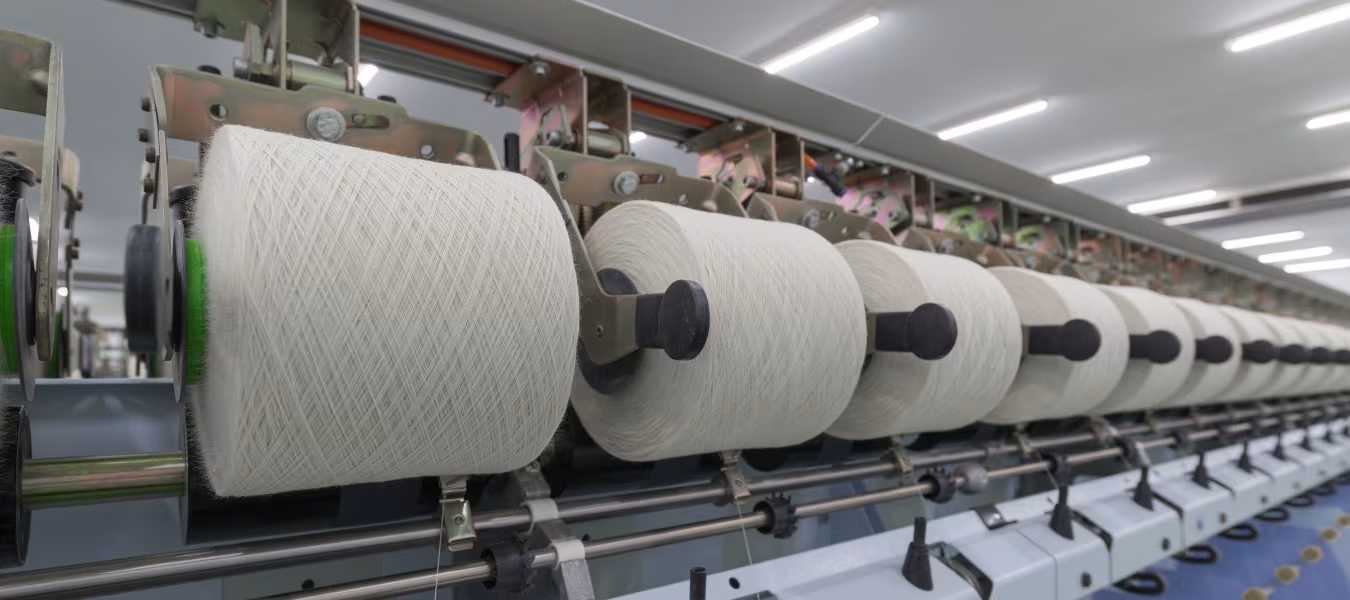
Iranian manufacturers are increasingly integrating advanced textile materials into their production, including improved cotton blends, synthetic fibers with enhanced elasticity, and fabrics designed for better ventilation and hygiene.
This shift toward functional textiles is redefining the segment—not merely as a clothing category, but as a technical textile application focused on comfort and health.
Market Growth and Emerging Opportunities
A High-Potential Domestic Market
The Iranian underwear market, particularly in the women’s segment, has shown notable growth potential in recent years. Rising demand for higher-quality products, combined with limited penetration of global brands due to trade restrictions, has created a favorable environment for local producers.
Market projections indicate a strong upward trajectory, supported by:
1. Increasing urbanization
2. Growing middle-class demand
3. Rising awareness of personal comfort and hygiene
This positions the underwear segment as one of the more dynamic and scalable categories within Iran’s textile industry.
Read more : Iran’s Textile Industry Faces Deepening Crisis as War Conditions Threaten Over One Million Jobs
Export Potential Under Structural Constraints
Despite its growth potential, the sector faces significant challenges when it comes to international expansion.
Trade restrictions, limited access to global distribution networks, and branding limitations have constrained export growth. However, regional markets—particularly in neighboring countries—still represent a viable opportunity for Iranian manufacturers.
If supported by improvements in branding, packaging, and product standardization, the underwear segment could evolve into a competitive export category, especially within regional supply chains.
Manufacturing Capabilities and Industry Structure
A Diverse Base of Local Producers
Iran’s underwear industry is supported by a wide network of small to mid-sized manufacturers, many of which combine traditional experience with gradually modernizing production processes.
These companies operate across different product segments, including:
1. Basic everyday underwear
2. Fashion-oriented designs
3. Functional and performance-based products
While production quality varies, the overall trend indicates a gradual shift toward better finishing, improved fabric selection, and more structured branding efforts.
Technology Gap and Modernization Needs
One of the key challenges facing the sector is the technology gap compared to leading global producers.
Many manufacturers still rely on semi-automated or outdated machinery, limiting their ability to scale production efficiently or maintain consistent quality standards.
Investment in modern textile machinery, digital design systems, and automated production lines will be critical if the industry aims to compete on a larger scale.
This is particularly relevant as global underwear production increasingly moves toward precision manufacturing and flexible production models.
Challenges Facing the Industry
Raw Material Dependency
Despite having a relatively developed textile base, Iran remains partially dependent on imported raw materials, particularly in synthetic fibers and specialized fabrics.
Fluctuations in currency, supply chain disruptions, and limited access to international markets can directly impact production costs and stability.
Branding and Market Positioning Limitations
Unlike global players, many Iranian underwear brands still lack strong brand identity and international recognition. This limits their ability to compete in higher-value segments where branding plays a critical role.
Developing brand equity, improving packaging, and investing in marketing strategies will be essential for long-term growth.
Economic and Structural Pressures
Macroeconomic challenges—including inflation, reduced purchasing power, and limited investment capacity—continue to affect both producers and consumers.
For manufacturers, this translates into higher production costs and reduced margins. For consumers, it often results in price sensitivity, slowing the transition toward premium products.
Read more: Iranian Researchers Develop Advanced EC Reactor to Treat Textile Dye Wastewater
Future Outlook: A Segment Ready for Transformation
Despite its challenges, the Iranian underwear industry holds significant potential for transformation.
The convergence of consumer demand, textile innovation, and manufacturing adaptation creates a foundation for long-term growth. However, unlocking this potential will require:
1. Investment in modern machinery and production technologies
2. Development of strong, recognizable local brands
3. Improved access to regional and international markets
4. Greater focus on quality, sustainability, and functional performance
If these conditions are met, the segment could evolve from a largely domestic market into a regionally competitive textile category.
Conclusion: From Invisible Product to Strategic Industry Segment
Underwear may remain invisible in daily wear, but its role within the textile industry is anything but minor.
In Iran, this segment is moving through a critical transition—from basic, price-driven production toward a more innovative, quality-oriented, and market-responsive industry.
The coming years will determine whether Iranian manufacturers can fully capitalize on this opportunity. With the right combination of technology, strategy, and market positioning, the underwear sector has the potential to become one of the quiet success stories of Iran’s textile industry.