Iran has a diverse textile manufacturing base spanning synthetic fibres and yarns, upholstery fabrics, machine-made carpets and internationally recognised handmade rugs. Alongside its long textile heritage, a number of Iranian manufacturers are also represented in international textile certification systems.
A search of the OEKO-TEX® Buying Guide for Iran in September 2026 returned six textile companies across several parts of the textile value chain. The results range from polyester filament yarn and staple fibre manufacturers to upholstery fabric producers and both machine-made and handmade carpet companies.
The OEKO-TEX Buying Guide is designed to help sourcing professionals identify companies and products connected with valid OEKO-TEX certifications. Because certification scope and validity may change, buyers should always verify the relevant certificate or label number before making sourcing or compliance decisions.
Previous coverage: Iranian Companies Holding OEKO-TEX® Certification
6 OEKO-TEX® Certified Textile Manufacturers in Iran
1. Jahan Orum Oyaz
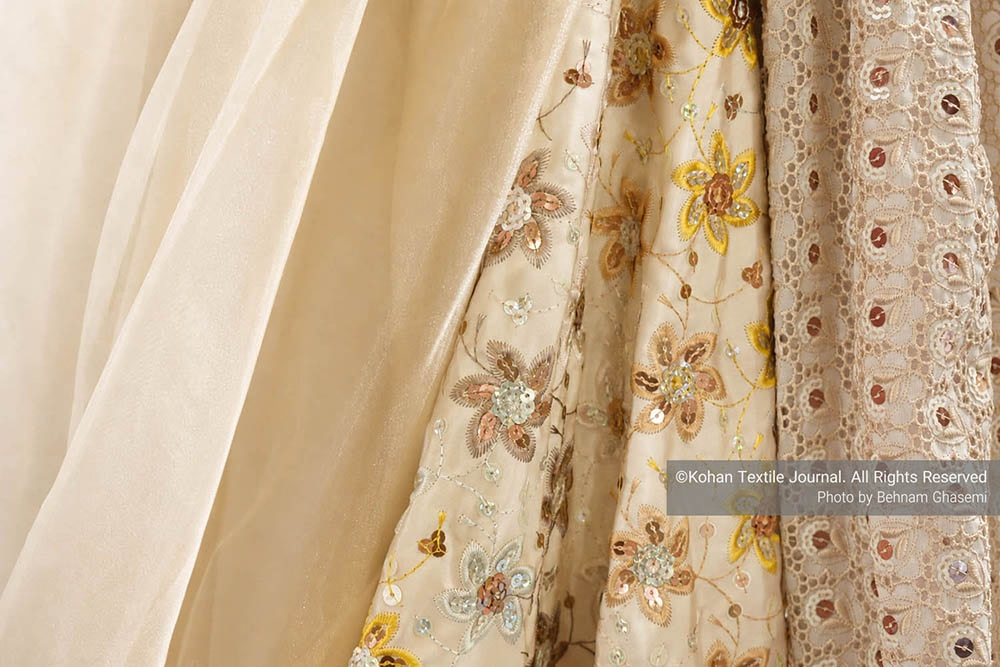
Jahan Orum Oyaz is an Iranian textile manufacturer specializing in upholstery and curtain fabrics. Established in 2018 with experience built on more than two decades of activity in the textile sector, the company operates a modern manufacturing facility in Qarchak. Its production chain includes warping, dyeing and finishing, while its product portfolio extends to upholstery, curtains, bedspreads, wall coverings and automotive upholstery fabrics.
The company reports an annual nominal production capacity exceeding 33 million square metres and produces more than 200 fabric varieties. Jahan Orum Oyaz also highlights OEKO-TEX certification as part of its international quality and sustainability strategy.
Jahan Orum Oyaz Company Information
- Website: oyaz.uz
- Head Office Tel: +98 21 88556250
- Factory Tel: +98 21 34261000
- Head Office: No. 7, 9th Alley, Bokharest Street, Argentina Square, Tehran, Iran
- Factory: 2nd Pishraft Street, Kooshesh Boulevard, Qarchak Industrial Town, Qarchak, Iran
2. Khavaran Alyaf Parsian
Khavaran Alyaf Parsian is an Iranian manufacturer specializing in polyester filament yarn and forms part of the Pardis Pazh Khorasan Industrial Group. Established in 2010, the company has developed a major production base using modern textile machinery and specialist manufacturing expertise.
According to its parent group, Khavaran Alyaf has achieved production of more than 50 tons of polyester filament yarn per day, making it one of Iran’s significant producers in this segment. Located in Neyshabur, Khorasan Razavi, the company supplies an important upstream material used across weaving, knitting and other textile manufacturing operations.
Khavaran Alyaf Parsian Company Information
- Tel: +98 51 43239575
- Group Tel: +98 51 38334026
- Address: Attar Industrial Estate, Neyshabur, Khorasan Razavi, Iran
- OEKO-TEX Buying Guide Location: Neyshabur 9331143315, Iran
3. Kimia Polyester QOM Co.
Kimia Polyester QOM is an Iranian manufacturer and exporter of polyester staple fibres and is affiliated with the Golriz Qom Industrial Group. Its wider industrial group operates across textile materials, PET, packaging and related manufacturing activities. Kimia Polyester supplies both virgin and recycled polyester fibres, including solid, hollow and bicomponent low-melt products used in applications such as nonwovens, geotextiles, home textiles, bedding, furniture filling and other industrial products.
The company serves domestic and export markets and represents Iran’s sizeable synthetic-fibre manufacturing sector, where recycled polyester is increasingly becoming part of industrial raw-material production.
Kimia Polyester QOM Company Information
- Website: kimiapolyester.com
- Tel: +98 21 41480000
- Address: No. 57, Haghani Highway, Tehran, Iran
- OEKO-TEX Buying Guide Location: Tehran 1969935641, Iran
Read more: Top Five Yarn Producers in Iran
4. NafisNakh Company
NafisNakh is one of Iran’s established manufacturers of polyester filament yarn. Founded in 2003, the company employs more than 600 people and produces both standard and specialty yarns using modern spinning and texturing technologies. Its portfolio includes POY, FDY, DTY, ATY and TFO yarns, supplying a wide range of downstream textile applications.
NafisNakh operates a major production complex at Lia Industrial City in Qazvin Province and also maintains a head office in Tehran. Its combination of melt-spinning, texturing and twisting capabilities makes the company an important domestic source of synthetic filament yarn for Iran’s weaving, knitting and other textile industries.
NafisNakh Company Information
- Website: nafisnakh.com
- Tel: +98 21 46048167 / +98 21 88870100
- Factory Address: End of Honar St., Lia Industrial City, 14th Km of Buin Zahra Road, Qazvin 3449133734, Iran
- Head Office: No. 10, 5th Floor, Block 1, Corner of Western Bahar, Sardar-e Jangal St., Poonak, Tehran 1476844950, Iran
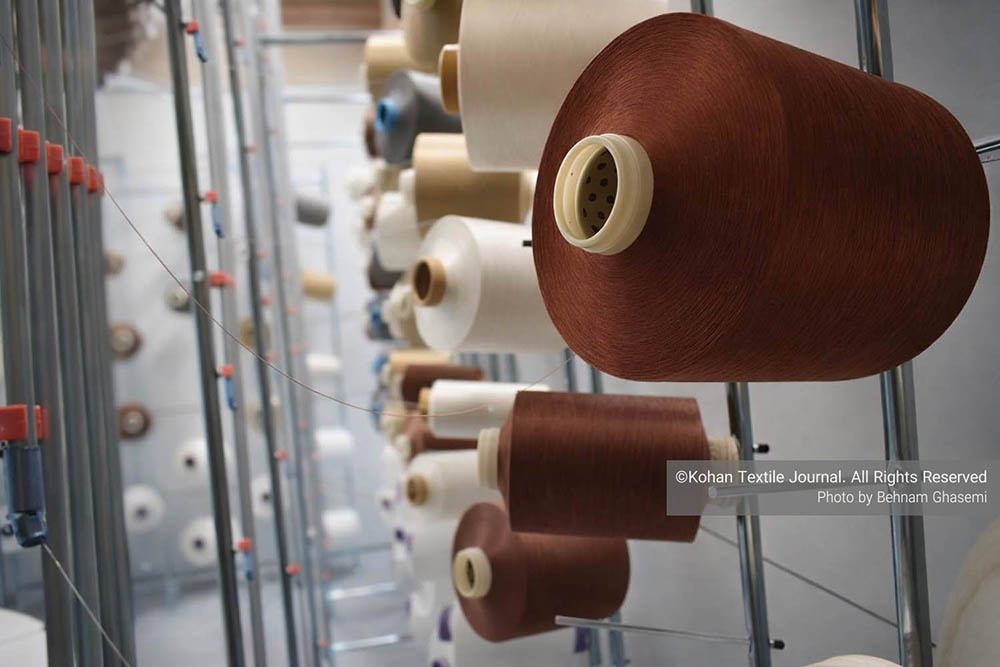
5. Sahand Carpet Co.
Sahand Carpet Co. is an Iranian manufacturer active in both machine-made carpet production and polypropylene yarn. Its operations include the production of polypropylene BCF yarn in different colours for carpet manufacturing, giving the company capabilities in both an important carpet raw material and the finished flooring product.
Sahand’s manufacturing profile reflects the vertically connected structure found in parts of Iran’s machine-made carpet sector, where yarn preparation and carpet weaving can operate within the same industrial network. The company maintains its head office in Tehran while its production facilities are associated with the Zanjan region.
Sahand Carpet Co. Company Information
- Website: sahandcarpet.com
- Tel: +98 21 22044865-8
- Email: info@sahandcarpet.com
- Head Office: 11th Floor, No. 13, East Armaghan St., Africa Avenue, Tehran 1915615163, Iran
- Factory: Km 30, Zanjan–Tehran Transit Road, Zanjan, Iran
6. Zollanvari Carpet Company
Zollanvari is one of Iran’s internationally recognised producers of handwoven Persian carpets, Gabbehs, kilims and flatweaves. The family business traces its modern development to 1947 and works closely with weaving communities in the Zagros region, particularly using hand-spun highland wool and traditional natural dyes.
Zollanvari has played an important role in bringing contemporary Gabbeh designs to international markets while preserving traditional weaving techniques. The company states that its handwoven carpets have achieved OEKO-TEX® STANDARD 100 certification, with products tested to Class II requirements. Its combination of traditional craftsmanship, design development and internationally oriented quality standards gives it a distinctive position in Iran’s textile sector.
Zollanvari Carpet Company Information
- Website: zollanvari.com
- Iran Office Tel: +98 21 56543691
- Iran Headquarters: Vakil Mosque Ave. 37, Shiraz, Postal Code 71377 57476, Iran
Read more: Top 10 Machine-Made Carpet Producers in Iran
What the OEKO-TEX Buying Guide Shows About Iran’s Textile Industry
The six Iranian companies currently returned in the OEKO-TEX Buying Guide represent a surprisingly broad cross-section of the country’s textile manufacturing base.
Two companies — Khavaran Alyaf Parsian and NafisNakh — highlight Iran’s capacity in polyester filament yarn, while Kimia Polyester QOM represents the polyester staple fibre and recycled-fibre segment. Jahan Orum Oyaz adds upholstery and home-textile fabric manufacturing, while Sahand and Zollanvari demonstrate the continuing importance of both machine-made and handmade carpets within Iran’s textile economy.
Related Kohan Textile Journal: Textile Industry in Iran
The list also illustrates how international certification can extend across very different textile products, from industrial synthetic fibres to traditionally handwoven rugs. For export-oriented manufacturers, certification can provide additional assurance to buyers seeking traceability, product safety and compliance within international supply chains.
However, the OEKO-TEX Buying Guide should be treated as a current sourcing snapshot rather than a permanent list. Certification scope, certificate holders and validity can change over time. Buyers should therefore verify the relevant certification and product scope directly through OEKO-TEX before placing orders or making compliance decisions.
- Editorial note: Company names in this article are based on the Iran results displayed in the OEKO-TEX Buying Guide during September 2026 research. Website, telephone and address information has been cross-checked against company websites and industry sources, but sourcing professionals should confirm current contact and certification details directly with each company before doing business.