




OEKO-TEX issued 60,495 certificates and product labels during its 2025/2026 reporting year, representing a 5% increase compared with the previous period, according to the organisation’s newly released annual report.
Growth was particularly strong in organic cotton, chemical certification, traceability and sustainable production. The figures indicate that textile and apparel companies are placing greater emphasis on verified supply chains as regulatory requirements and scrutiny of environmental claims increase.
OEKO-TEX ORGANIC COTTON recorded the fastest growth across the certification portfolio. The number of certificates increased from 159 in 2024/2025 to 500 in 2025/2026, representing a 214% rise.
The certification’s presence expanded to more than 20 countries, while the total certified fibre volume reported by ginners reached 33.7 million kilograms in completed and approved transactions.
Traceability and Chemical Certification Drive Growth
OEKO-TEX has integrated TextileGenesis into its ORGANIC COTTON certification and validation processes. The token-based digital system is designed to follow certified cotton from the farm through different supply-chain transactions to the finished product.
The initiative is intended to replace paper-based documentation with a more scalable and fraud-resistant approach to transaction verification. OEKO-TEX said the organic cotton programme will serve as a pilot before digital traceability is gradually extended to other certifications and labels.
The reporting year also saw the first OEKO-TEX MADE IN GREEN labelled product based on ORGANIC COTTON certification. This combines verification of organic fibre sourcing with traceability and information about the environmental and social conditions under which the product was manufactured.
The number of MADE IN GREEN labels increased by 13%, from 18,048 to 20,427. More than 6,000 companies are now involved in the MADE IN GREEN supply chain.
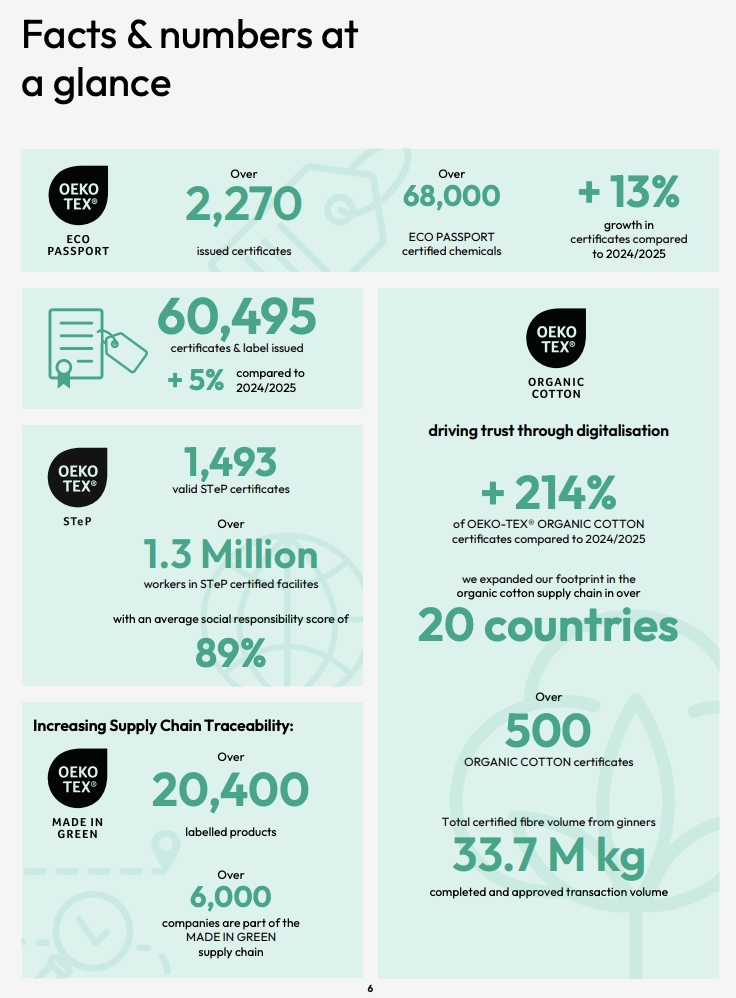
STANDARD 100 remained OEKO-TEX’s largest certification, with 36,592 certificates issued during the year, almost unchanged from 36,543 in 2024/2025.
ECO PASSPORT certifications increased by 13% to 2,270. The programme now covers more than 68,000 certified chemical products and has over 1,400 customers in more than 50 countries.
In June 2026, ECO PASSPORT expanded its certification scope to include wastewater-treatment chemicals. This followed the addition of commodity and maintenance chemicals in 2025.
Certificates for polymers can now also identify products made using recycled materials when the required evidence and documentation have been provided.
OEKO-TEX STeP certificates issued during the reporting year increased by 13%, from 519 to 585. The organisation reported 1,493 valid STeP certificates globally, covering facilities that collectively employ more than 1.3 million workers.
The average social-responsibility score among STeP-certified facilities was reported at 89%.
LEATHER STANDARD was the only major certification category to decline, falling by 6% from 126 to 118 certificates. RESPONSIBLE BUSINESS remained unchanged at three certificates.
Read More: 6 OEKO-TEX® Certified Textile Manufacturers in Iran
OEKO-TEX Tightens PFAS and Chemical-Management Requirements
Chemical safety remained a central focus during the reporting period.
OEKO-TEX introduced a comprehensive ban on the intentional use of PFAS across its certifications in 2024. However, the persistence of these substances means that unintentional contamination can still enter products through water, raw materials, environmental exposure or manufacturing equipment.
In January 2026, the organisation introduced limits covering individual PFAS compounds as well as total PFAS content. OEKO-TEX said the requirements were developed to align with some of the strictest regulatory frameworks currently in force.
The collaboration between OEKO-TEX STeP and chemical-management platform The BHive also expanded.
A total of 306 facilities were connected to the platform, an increase of 8% compared with the previous year. Of these, 218 had uploaded chemical-inventory data.
Auditors regularly checked 25,545 uploaded chemicals. Only 16% of these chemicals were ECO PASSPORT certified, although this share increased by five percentage points year on year.
The data illustrates both the progress being made and the scale of the remaining opportunity for verified chemical inputs across textile production.
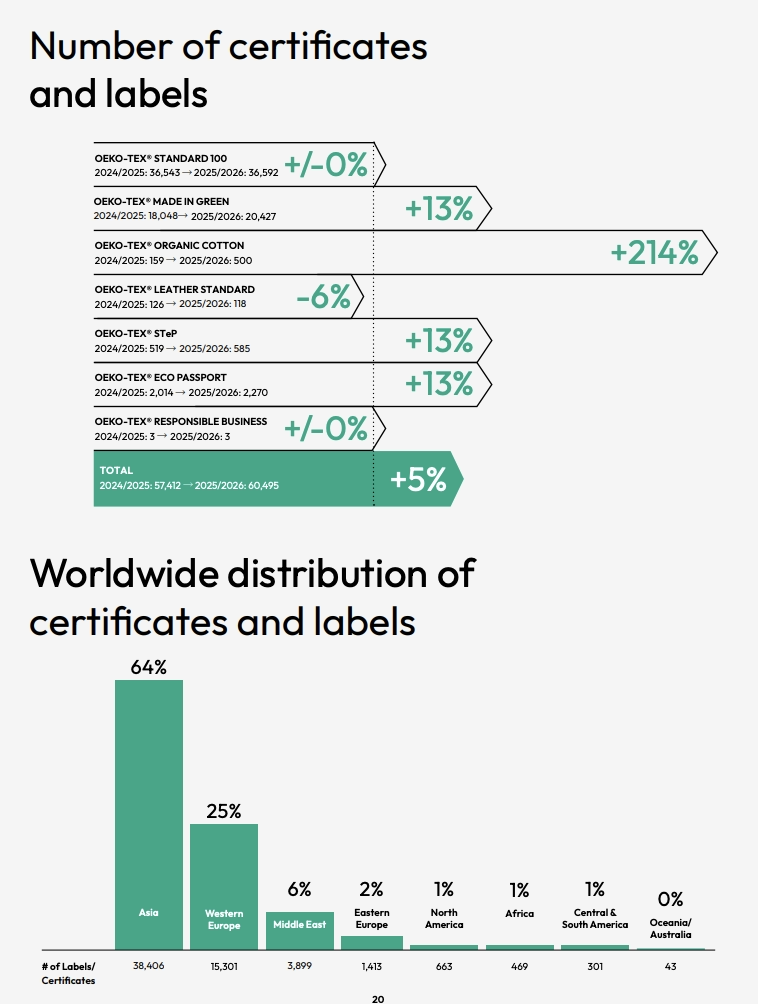
Asia Accounts for 64% of OEKO-TEX Certificates and Labels
Asia remained the largest region within the OEKO-TEX system, accounting for 38,406 certificates and labels, or 64% of the worldwide total.
Western Europe followed with 15,301 certificates and labels, representing 25%. The Middle East accounted for 3,899, equivalent to 6% of the total.
Eastern Europe represented 2%, while North America, Africa and Central and South America each accounted for around 1%. Africa recorded 469 certificates and labels during the reporting year.
OEKO-TEX’s accredited certification bodies and their contact offices are now present in more than 70 countries.
To support consistency across this international network, 11,137 on-site visits were completed for STANDARD 100, LEATHER STANDARD, ECO PASSPORT and ORGANIC COTTON. STeP audits were conducted separately as part of the STeP certification process.
The organisation also collected more than 10,000 samples through retail purchases, on-site visits and certificate renewals. These samples generated over 8,300 test reports and more than 47,000 tests and checks covering over 800 potentially harmful substances.
OEKO-TEX received 87 complaints during 2025/2026. Approximately 77% concerned certification institutes, while 13% related to certificate holders. Nearly two-thirds of all complaints involved STANDARD 100, which remains the organisation’s most widely used certification.
OEKO-TEX said the growing demand for verified claims reflects a wider shift in the textile and leather industries towards stronger traceability, chemical transparency and evidence-based sustainability communication.
With new European requirements increasing scrutiny of environmental claims, certification providers will face growing expectations to demonstrate not only product compliance but also the reliability of the data and transactions behind each claim.











