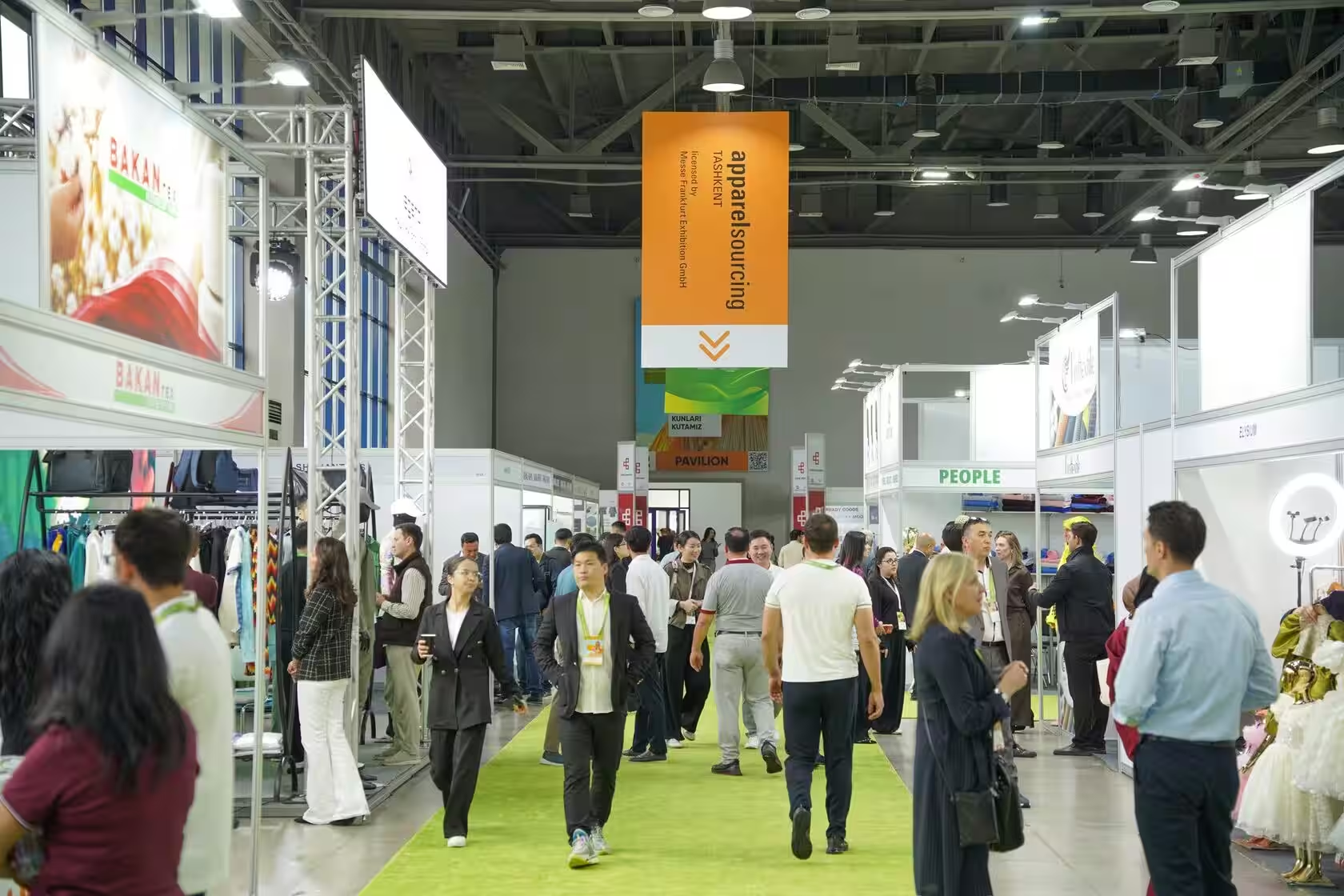
Over three days, 201 companies from 6 countries presented their products and solutions across 7,000 sq m. The six countries were Uzbekistan, India, Armenia, Georgia, Hong Kong and China. Major exhibitors included Bakan Textil, Aya Global Tex, Global Textile, Diromm and others.
Tashkent became a point of synergy for many parts of the industry. Fabric and yarn producers, he textile and apparel factories, equipment suppliers and international buyers all met here.
Uzbek companies didn’t have to travel to Frankfurt or Paris, because the global market came to them. The exhibitions have become a space where the textile industry’s business community takes shape.
Manufacturers, buyers, experts and designers fly to Uzbekistan from around the world. They come to share experience, discuss trends and find partners.
Three days of negotiations showed several things. Uzbekistan is confidently becoming the region’s textile hub. Interest in its products has moved from getting acquainted to placing real orders. The personal connections made here are turning into long-term partnerships.
Read more: Heimtextil Uzbekistan 2027
Three days. One venue. Real business.
The exhibitions opened on 12 October with an official ceremony. It brought together representatives of the Government of Uzbekistan, the diplomatic corps, industry associations and international partners:
- Ibrokhim Ergashev — Deputy Minister of Investment, Industry and Trade of the Republic of Uzbekistan
- Rukhullo Zikrillayev — Deputy Director, Light Industry Development Agency under the Cabinet of Ministers of the Republic of Uzbekistan
- Wu Xinyang — Embassy of the People’s Republic of China in the Republic of Uzbekistan
- Marian Przeździecki — Chargé d’Affaires a.i. of the Republic of Poland to the Republic of Uzbekistan and the Republic of Tajikistan
- Eugen Alles — Messe Frankfurt GmbH
- Susanne Helmrath — Brand Development Specialist, Messe Frankfurt GmbH
- Chan Ligo — Director, China Chamber of Commerce for Import and Export of Textiles (CCCT)
- Mukhammadjon Jumaniyazov — First Deputy Chairman, Uztextileprom Association
- Aliyor Latipov — Head of Department, Uzcharmsanoat Leather and Footwear Industry Association
- Dilfuza Samandarova — General Director, BMCA Uzbekistan
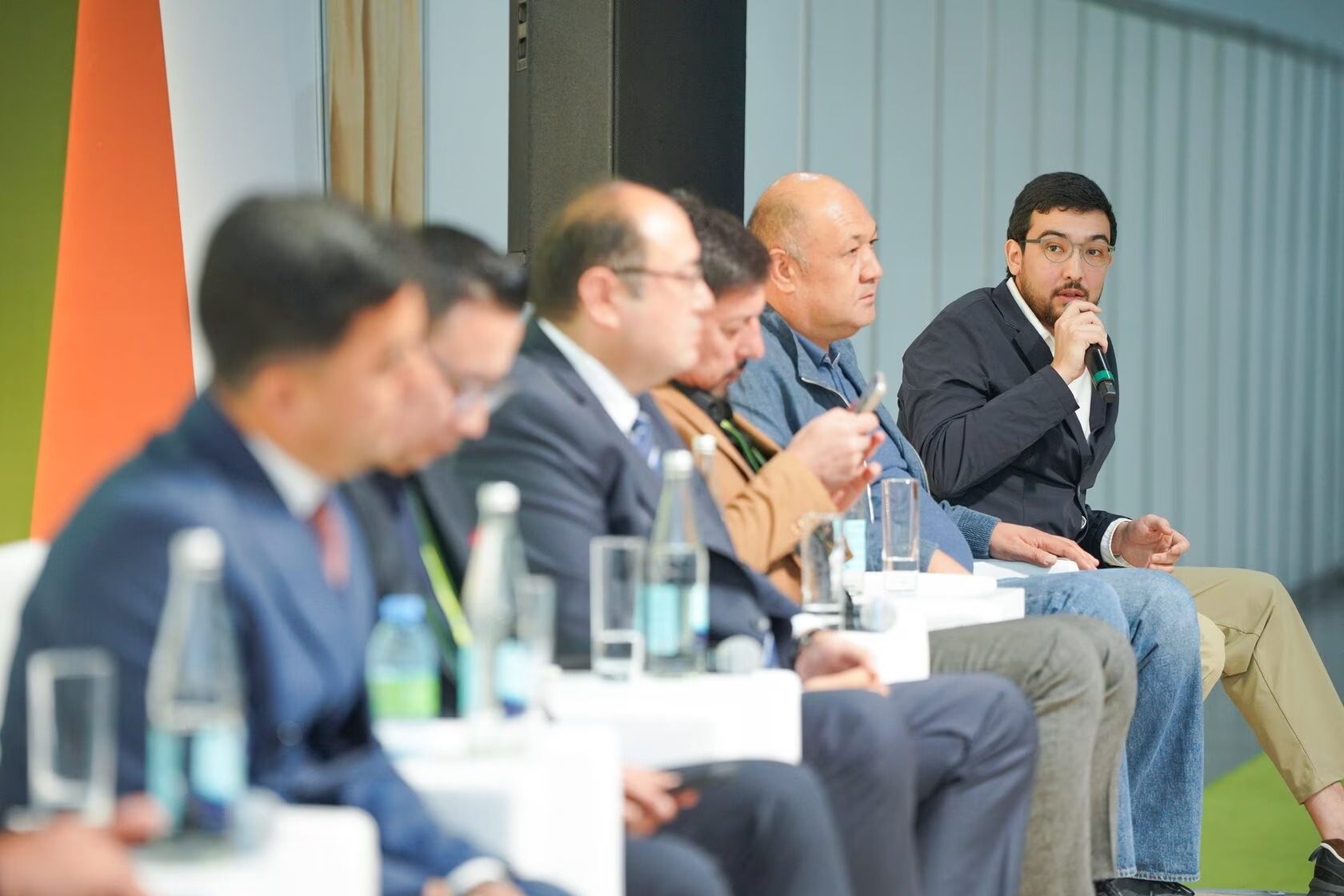
The line-up at the opening was itself a reflection of synergy:
government, business, Europe and Asia at one table. The presence of Chinese and Polish diplomats, Messe Frankfurt and CCCT underlined the international scale of the shows.
Uzcharmsanoat’s participation connected two related industries. Uzcharm Expo was running at Uzexpocentre at the same time. As a result, trade visitors could explore textiles as well as leather, footwear and accessories in a single visit.
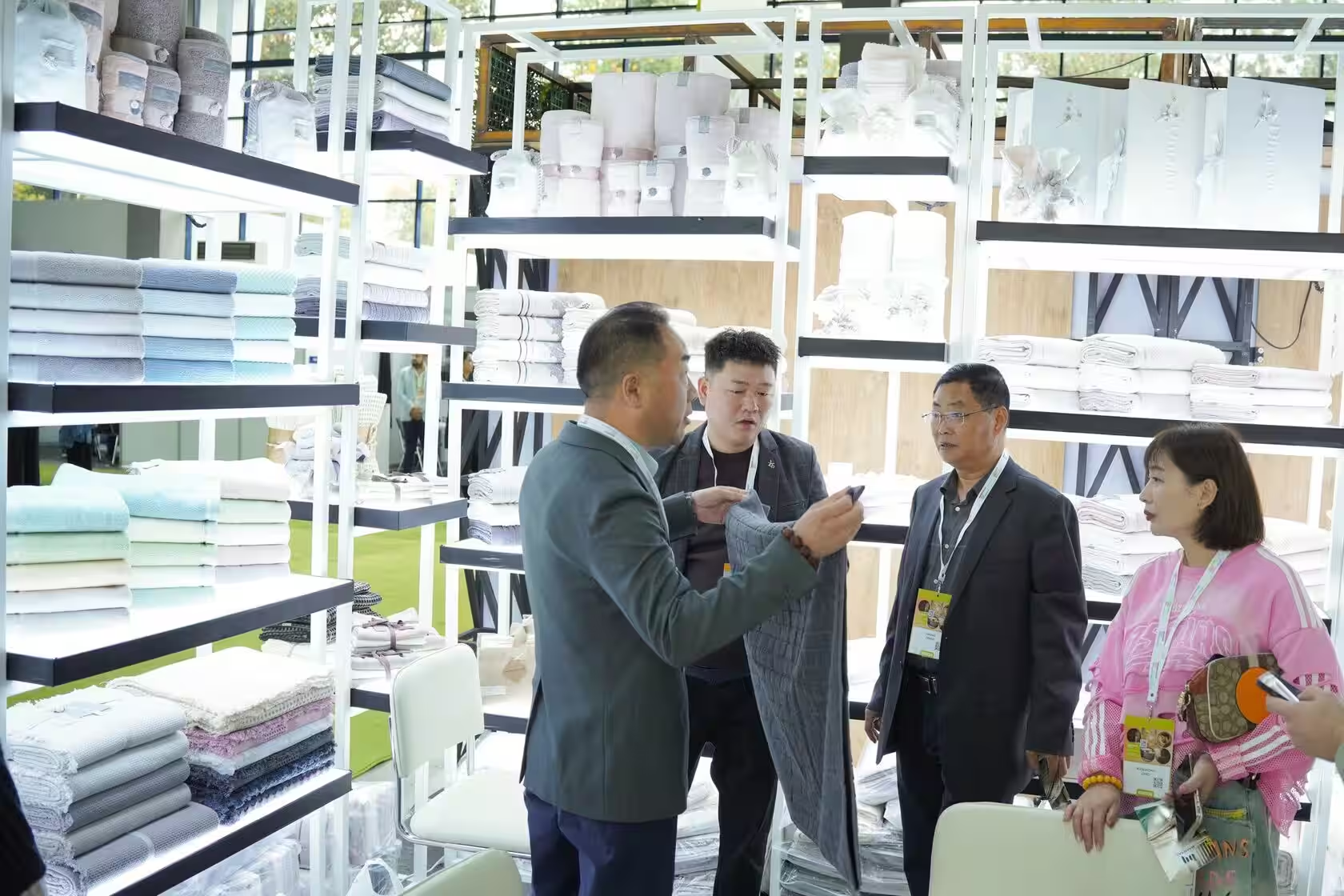
After the ceremony, guests took a VIP tour of the stands, and business got under way immediately. Participants in the International Buyers Programme held B2B meetings with manufacturers according to pre-arranged schedules.
For the first time, the show featured a Textile Machinery section. There, companies could find customers and source equipment to modernise their production at the same venue.
The first day’s conference programme included four panel sessions. Representatives of the Light Industry Development Agency, Kyrgyz Export and Poland’s Ptak discussed how Central Asian and European governments support the textile industry.
Leaders of Big Family Tex, Chust Textile, Bonito Kids, Samarkand Apparel and Haj Textile, together with an expert from Control Union, spoke about what Uzbek businesses need to enter global markets.
Ptak Warsaw Expo, CCCT, Messe Frankfurt, Foursource and the Agency explained how exhibitions and industry organisations help manufacturers grow. The day closed with the session “Women in Textile Business: Turning Production into a Product the Market Wants”.
The second day was all about practice. Ptak Warsaw Expo and the Agency presented “Gateway to Europe”, which covered opportunities for Uzbek textiles in the European market.
Eduardo Pederneira shared a checklist for brands and buyers on choosing a reliable garment factory. Shokhrukh Kayumov explained why foreign buyers can’t find manufacturers and how B2B marketing can fix that. Selin Yıldız spoke about the GOTS standard for working with international brands.
In the afternoon, the Road Show began, an exclusive tour for invited buyers. International buyers went straight from the exhibition halls to the production sites of exhibiting companies. It was the logical next step: yesterday a first meeting at the stand, today a meeting where the products are actually made.
The route went beyond Tashkent. Buyers also visited exhibitors’ factories in Fergana and Namangan, major textile centres of the Fergana Valley. This way, buyers saw not just a single plant but the real geography of Uzbekistan’s textile industry.
Buyers walked through the workshops and followed the entire production cycle. The cycle runs from yarn and fabric to cutting, sewing, quality control and packaging of finished goods.
They saw modern equipment, well-coordinated teams and a scale of capacity that no catalogue can convey. Factory directors personally welcomed the guests. They talked about their capabilities, certifications and experience working with international brands.
But the most important part happened at the negotiating table. Right on the factory floor, the parties discussed specific orders. Topics included volumes and delivery times, product range, quality requirements, and terms for contract manufacturing and private-label production. For many companies, these meetings were the start of a concrete conversation about long-term cooperation.
The Road Show continued on 14 October. Uzbek textiles showed themselves from the inside:
openly, honestly and with confidence in their quality. This is exactly how long-term contracts begin. A buyer who has seen the production with their own eyes, met the team and shaken hands with the director makes decisions faster.
The final day belonged to young talent. Ten designers took part in the MDIS × Heimtextil Uzbekistan × Apparel Sourcing Tashkent × Texworld Tashkent Young Designers Competition.
They presented collections under the motto “Take. Rethink. Create. Give It a Second Life.” Fabric remnants, forgotten items and everyday materials were transformed into bold, contemporary looks. This is where the industry’s future is born: respect for resources, a fresh perspective and a distinctly Uzbek signature in fashion.
The collections were judged by an expert jury. Its members included well-known fashion designers, fashion brand owners and garment industry entrepreneurs. These are people who turn ideas into marketable products every day.
The jury assessed not only creativity but also commercial viability:
how ready each collection was to go beyond the runway. At the awards ceremony, the winner received the grand prize. The prize is a trip to Texworld Paris, one of the key venues of the global textile industry.
It’s a chance to see global trends from the inside, meet leading fabric manufacturers and find inspiration for new collections. The journey from a Tashkent runway to Paris is the best proof that these exhibitions open doors to the global industry. For the young designers, it was more than a competition.
They presented their collections on an international stage in front of buyers, brands and manufacturers. Perhaps this is where the careers of future names that Uzbek fashion will show the world began. The competition confirmed that Uzbekistan is not only a production base but also a growing centre of original design and sustainable fashion.
Facts and Figures
- Exhibitors: 201 companies from 6 countries
- Exhibition space: 7,000 sq m
- Sections: 5, namely Heimtextil, Texworld, Apparel Sourcing, Textile Machinery (new this year), plus Uzcharm Expo (leather, footwear, accessories)
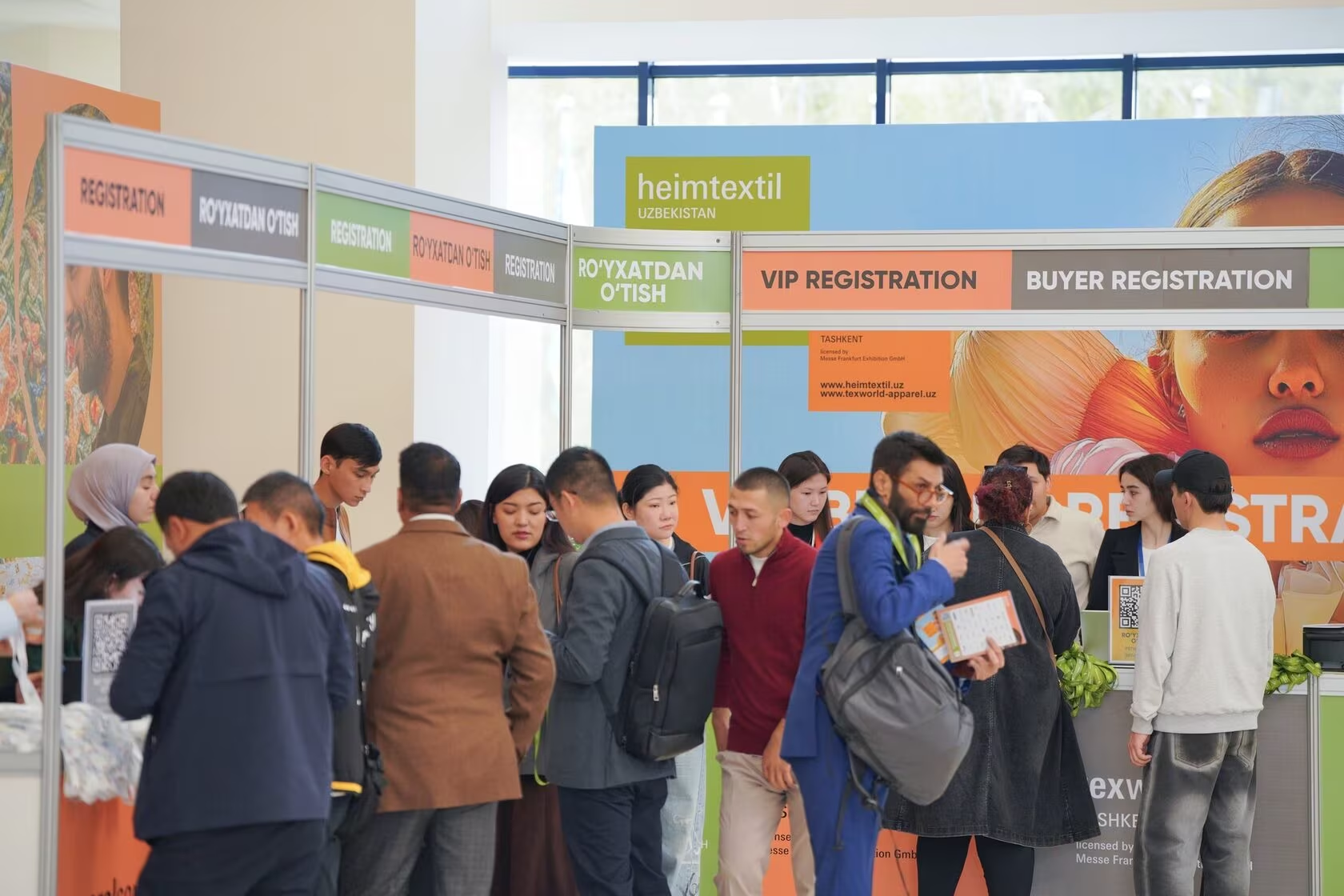
- Visitors: over 5,500 trade professionals from 28 countries over three days
- Foreign buyers: 2,000 company representatives. They came from Germany, Italy, Spain, Austria, Belgium, Poland, Lithuania, the UK, the USA, the UAE, Türkiye, Israel, Lebanon, Iran, Azerbaijan, Russia, Ukraine, Kazakhstan, Kyrgyzstan and other countries, looking for new manufacturers and suppliers in Uzbekistan and Central Asia
- B2B meetings: over 1,500 negotiations between buyers and manufacturers
- Conference programme: 9 sessions, made up of 4 panel discussions and 5 presentations, with over 20 speakers from Uzbekistan, Europe and Asia
Read more: How Uzbekistan Is Transforming the Global Textile Industry Through Investment and Sustainability
Made in Uzbekistan: First Steps Toward Export
For small and medium-sized businesses from the regions, the national pavilion became an entry point into the international textile ecosystem.
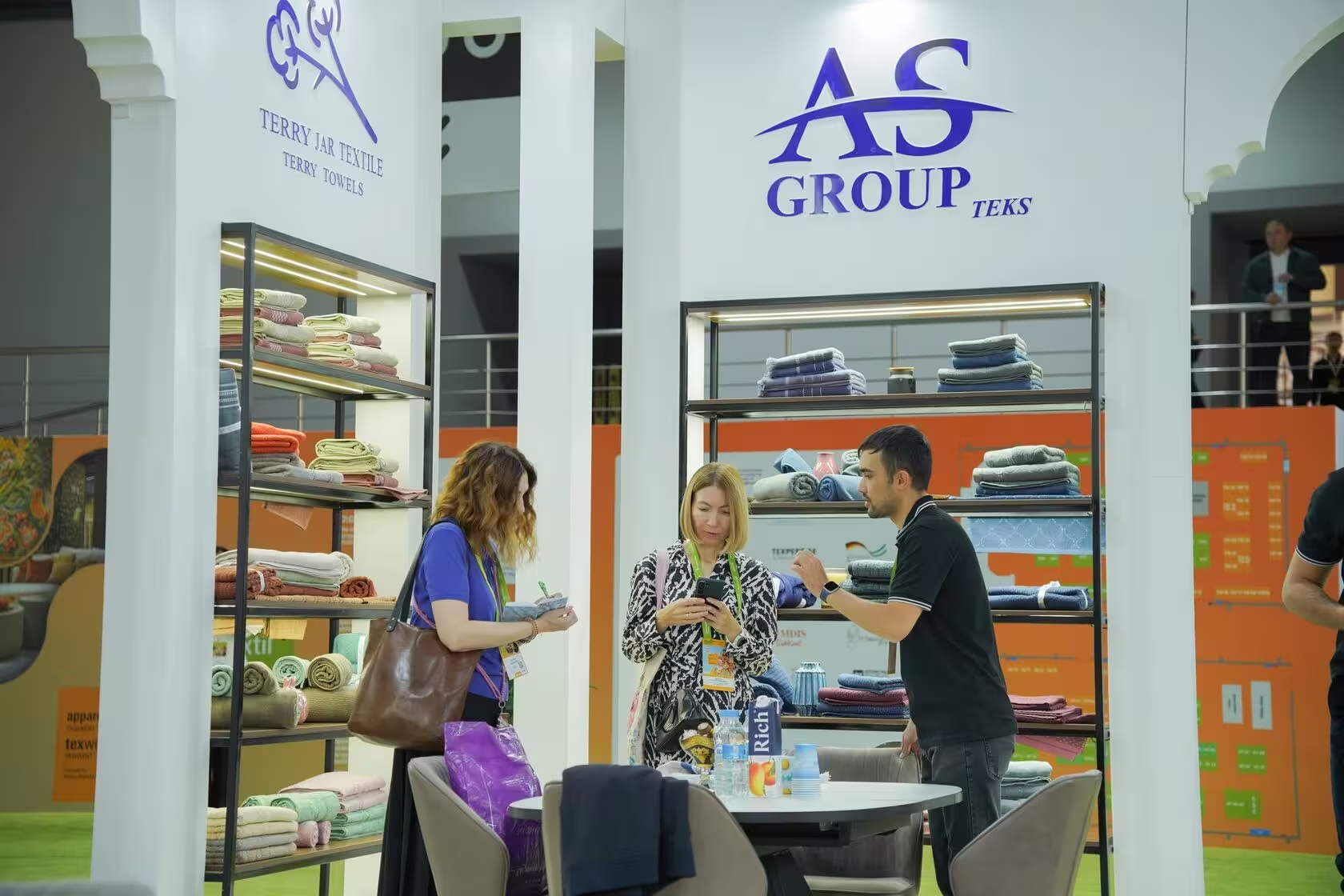
Exhibitors showcased home textiles, knitwear, apparel and accessories. This is where the synergy between government, business and organisers is clearest. The Agency covers the costs, BMCA brings in the buyers, and companies gain direct access to foreign customers.
The Global Market on Uzbek Factory Floors
The exhibitions drew professionals from 28 countries. Buyers included representatives from Germany, Italy, Spain, Austria, Belgium, Poland, Lithuania, the UK, the USA, the UAE, Türkiye, Israel, Lebanon, Iran, Azerbaijan, Russia, Ukraine, Kazakhstan, Kyrgyzstan and other countries. They are looking for new manufacturers and suppliers in Uzbekistan and Central Asia.
Uzbekistan no longer simply exports cotton. The country is building a complete production cycle within its borders. That cycle runs from cotton and yarn to weaving, dyeing, sewing and finished goods under international brands. Buyers who visited factories during the Road Show saw this for themselves.
For global buyers, this means a short path from raw material to finished order, transparent product origin and the chance to diversify supply. For Uzbek manufacturers, it’s an opportunity to join global supply chains as full-fledged partners. Messe Frankfurt’s Tashkent exhibitions speed up this journey. A meeting at the stand becomes a factory visit, and a factory visit becomes a contract.
Context: Why It Matters
Uzbekistan’s textile industry is growing. In 2024, textile exports reached USD 2.8 billion. In January–May 2026, they reached USD 1.3 billion, up 20.1% year on year. The target for 2026 is USD 3.3 billion, and exports are planned to reach USD 7 billion by 2027. In 2026, the industry is expected to attract USD 2.2 billion in foreign investment. It is also expected to produce an additional 397 million sq m of fabric and 224 million garments.
As volumes grow, so do market requirements. Foreign customers expect transparent production and compliance with OEKO-TEX, BCI and Better Work standards. The government is supporting the industry. Import duties on blended fabrics have been abolished until 2028, and international certification is being developed.
From the Organiser: Next Step, World Class
Summing up, Dilfuza Samandarova, General Director of BMCA Uzbekistan, noted that this year’s exhibitions are not the finish line but another stage on a long journey:
“This year we have once again doubled the scale of the exhibitions and raised their quality. But for us, this isn’t the finish line. It’s the next step, and we will keep growing and opening up even more opportunities for participants.
When you see buyers going from the exhibition halls straight to the factories, and a young designer winning a trip to Paris, you understand that Uzbekistan can become a world-class textile hub. Our job is to help companies make that journey:
find partners, enter new markets and establish themselves there. We want Heimtextil Uzbekistan, Texworld Tashkent and Apparel Sourcing Tashkent to become a global platform. It should grow together with Uzbekistan’s textile industry and take it onto the world stage.”
See You in 2027
Messe Frankfurt’s Tashkent exhibitions are part of Central Asia’s new textile ecosystem. This ecosystem is taking shape in synergy with the global industry leaders. Each edition brings new exhibitors, new markets and new contracts, and the next one will be no exception.
Heimtextil Uzbekistan, Texworld Tashkent and Apparel Sourcing Tashkent will open again on 11–13 October 2027. Exhibitor applications are already open. The earlier you apply, the wider your choice of stand location. To apply and learn more, visit heimtextil.uz and texworld-apparel.uz.