




Swedish textile technology company Imogo, a member of the Swedish textile machinery association TMAS, has officially opened a new showroom and production hub at the 7H Dyehouse in Kinnahult, Sweden.
The new facility provides textile brands and manufacturers with a fully operational environment to experience and test Imogo’s digital spray dyeing technology, moving the company’s technology from development and demonstration toward full-scale commercial production.
According to Imogo, its spray dyeing process can significantly reduce water, energy and chemical consumption compared with conventional textile dyeing methods while also lowering production costs.
“For early partners who have followed our journey, this opening marks the moment vision meets reality,” said Imogo CEO Joacim Wellander.
Wellander noted that the company is now equipped with the machinery, technical expertise and operational experience required to take customer projects from laboratory development to commercial-scale production.
Dye-Max and Mini-Max Systems on Display
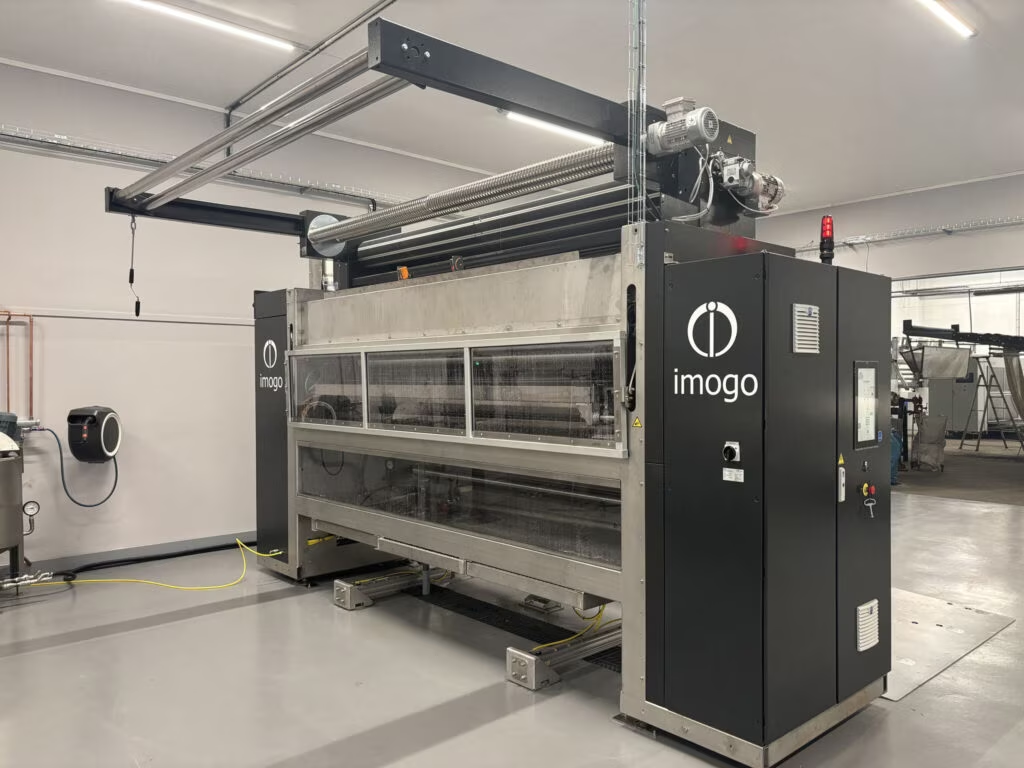
The Kinnahult showroom features Imogo’s latest Dye-Max and Mini-Max spray dyeing systems.
Together, the technologies support both laboratory trials and commercial manufacturing, processing fabrics with widths of up to 2.4 metres.
Imogo focuses primarily on the colouration of natural fibres in knitted and woven fabrics, with its chemistry optimised for high-performance reactive dye applications.
The Dye-Max system is designed for high-volume commercial production and offers a stated production capacity of approximately 1.5 tonnes per day.
The combination of laboratory-scale testing and industrial production capabilities at one location is intended to allow customers to evaluate the technology with their own fabrics before considering integration into existing manufacturing operations.
Reducing the Environmental Impact of Textile Dyeing
Textile dyeing remains one of the industry’s most resource-intensive manufacturing stages, making reductions in water, energy and chemical consumption increasingly important for producers seeking to improve their environmental performance.
Imogo has spent recent years refining both its process and equipment, with the company now positioning spray dyeing as an industrial-scale alternative for manufacturers seeking more resource-efficient colouration.
“We are not just showing a concept, but delivering a proven, high-capacity solution that helps the textile industry meet its urgent sustainability goals without compromising quality or scale,” Wellander said.
Swedish Textile Technology Investments Expand
TMAS Secretary General Therese Premler-Andersson described the new Imogo facility as the third significant expansion undertaken by a TMAS member during the past 12 months.
The development follows ACG’s expansion of advanced automation services at its headquarters in Skene and the establishment of ReSpin’s new Holma spinning mill in Forsa.
According to Premler-Andersson, the three facilities demonstrate the growing role of digital technologies and sustainability in shaping the future of textile production.
Imogo Opens Spray Dyeing Facility for Customer Trials
The new Imogo showroom is now accepting bookings from textile manufacturers, brands and other industry stakeholders.
Visitors will be able to see the Dye-Max technology operating under production conditions, conduct trials using their own fabrics and evaluate how spray dyeing could potentially be incorporated into their existing textile production and supply chains.
By combining demonstration, testing and commercial-scale manufacturing capabilities at the Kinnahult facility, Imogo aims to accelerate industrial adoption of digital spray dyeing while addressing the textile industry’s increasing focus on resource efficiency and sustainable production.











