
From automotive spacer fabrics to high-value textile manufacturing, Birkan Yurdakul of Ames Textile discusses Morocco’s emerging industrial opportunities, Africa’s changing textile landscape and Türkiye’s competitive future.
Interview by Behnam Ghasemi, Editor-in-Chief of Kohan Textile Journal
Morocco is attracting increasing attention from international textile manufacturers seeking new production opportunities, closer access to European markets and stronger connections with Africa’s developing industrial base.
While competitive production costs initially encouraged many companies to explore Morocco, the country’s established automotive industry, proximity to Europe and growing manufacturing capabilities are creating opportunities beyond conventional garment production.
For technical textile manufacturers, these developments raise important questions about the future of regional supply chains, industrial specialization and higher-value manufacturing.
Among the companies observing these changes is Ames Textile, a Türkiye-based producer of three-dimensional spacer fabrics serving automotive, protective, medical and other technical applications.
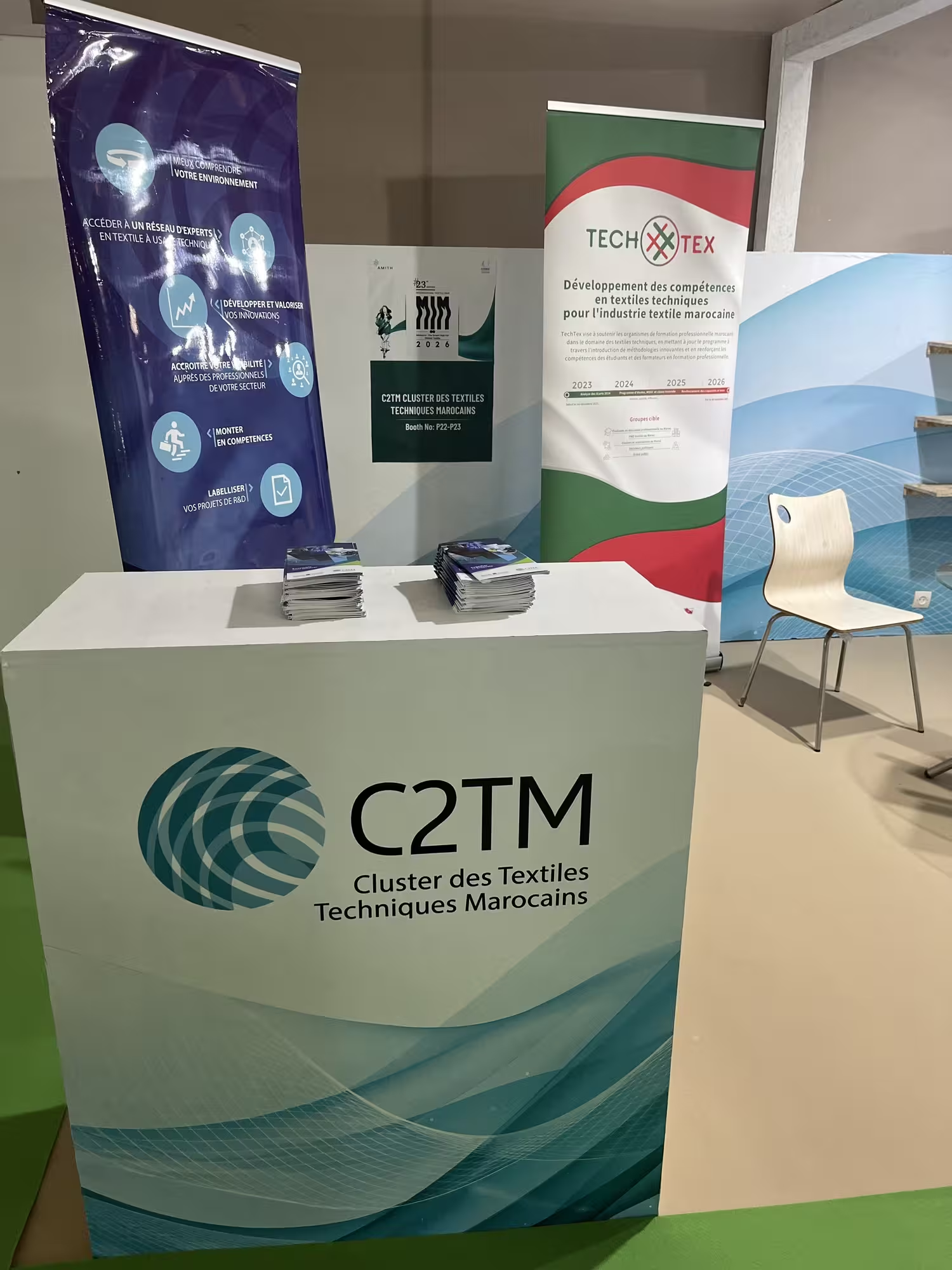
During a recent textile industry event in Morocco, Behnam Ghasemi, Editor-in-Chief of Kohan Textile Journal, spoke with Birkan Yurdakul of Ames Textile about the country’s industrial potential, the possible geographical shift of textile production toward Africa and the challenges facing Türkiye’s established textile industry.

Ames Textile and Morocco’s Technical Textile Opportunity
1. Could you introduce Ames Textile and explain your main areas of specialization, particularly in three-dimensional spacer fabrics and technical textile applications?
Birkan Yurdakul: My name is Birkan Yurdakul, and I represent Ames Textile. We are pleased to participate in this event and to be part of Morocco’s technical textile cluster activities.
Our company is based in İzmir, Türkiye, and belongs to a German group. Our workforce is entirely Turkish.
We specialize in the production of three-dimensional spacer fabrics, which serve a variety of technical and industrial applications.
Approximately 60% of our sales are directed toward the automotive industry. Our products are also used in protective clothing, medical textiles and other specialized applications.
We have been active in technical textiles for approximately ten years.
Our expertise is centered on developing textile structures that provide functional benefits beyond those of conventional fabrics.
According to the company’s product portfolio, Ames Disto manufactures warp-knitted spacer fabrics with thicknesses ranging from approximately 1 to 55 mm. These materials are designed for applications requiring ventilation, cushioning, pressure distribution and dimensional recovery.
The company also offers processing capabilities including lamination, coating, laser cutting, sewing and customized product development. Its high-distance spacer fabrics, available in thicknesses of 18–55 mm, are designed for applications that may include alternatives to conventional foam.
2. Morocco has attracted increasing interest from Turkish textile manufacturers in recent years. How do you evaluate the country’s industrial advantages and its potential in technical textiles?
Birkan Yurdakul: Morocco has become a particularly interesting market for Turkish textile manufacturers over the past two or three years.
Initially, the main attraction was production costs, especially in garment manufacturing and labor-intensive operations.
From this perspective, Morocco emerged as a potential alternative to Egypt.
However, when we look at the broader picture, Morocco offers several important advantages beyond cost.
Its geographical proximity to Europe, ease of access to European markets, product quality and ability to adapt quickly to customer requirements are significant strengths.
Although the cost structure may be somewhat different from Egypt’s, Morocco has other advantages that make it an attractive manufacturing destination.
We know several companies that have established manufacturing operations in Egypt, and there is growing interest in developing opportunities in this part of the region.
In addition, some of our customers in the automotive industry have maintained manufacturing operations in Morocco for many years, serving European markets.
This existing industrial presence is particularly important.
For companies considering expansion into the African market, I believe Morocco could be an excellent starting point.
Africa’s Shifting Textile Manufacturing Map
3. Textile manufacturing has historically shifted between regions, from Europe toward Asia. Do you believe Africa, particularly countries such as Morocco and Egypt, could become the next major destination for global textile production?
Birkan Yurdakul: I believe these geographical changes are inevitable. Industries evolve, and manufacturing activities naturally shift over time. However, we should not look at textile production simply as the manufacturing of fabric or garments.
Textiles represent an entire industrial supply chain.
You need yarn, accessories, machinery components, supporting materials and many other services. All these elements must be available for a manufacturing industry to function efficiently.
This is one of the most important considerations when evaluating the development of new textile manufacturing locations.
Looking at Türkiye, for example, we have an exceptionally strong and established textile infrastructure.
Türkiye has developed a comprehensive industrial ecosystem over many decades. In many respects, it is a textile manufacturing powerhouse.
For that reason, I do not believe Türkiye will simply abandon textile manufacturing as production expands into other regions.
Certainly, some activities will move, and the industry’s geographical structure will change.
These changes will be influenced by customer requirements, suppliers and evolving supply-chain relationships.
Nevertheless, I believe Türkiye will maintain its position as an important textile manufacturing country.
The industry will continue to evolve, but established industrial capabilities remain a major competitive advantage.
Türkiye’s Transition Toward Higher-Value Textiles
4. Many experts argue that Turkish textile manufacturers must move away from competing primarily on price and focus on higher-value products, including technical textiles. How do you assess this transformation?
Birkan Yurdakul: Unfortunately, the situation facing Türkiye’s textile industry has made this transformation increasingly necessary.
Perhaps we describe it as unfortunate because many manufacturers were not fully prepared for how quickly the competitive environment would change.
If this transformation had been anticipated and planned much earlier, companies might have been able to position themselves more effectively.
Moving from labor-cost-based manufacturing toward higher-value production is not an easy process.
It requires preparation, investment and a long-term strategy.
Türkiye was certainly not completely unprepared, but the industry can no longer compete in the same way it did in the past.
Competing solely through inexpensive labor is no longer sufficient.
Manufacturers must increasingly create value through specialized products, design, logistics and customer service.
These capabilities are becoming essential for maintaining competitiveness.
However, I believe the Turkish textile industry is sufficiently dynamic and adaptable to respond to these challenges.
We will find ways to adjust and move forward.
5. Considering Morocco’s growing industrial capabilities and Türkiye’s established textile supply chain, how do you see the future relationship between emerging African manufacturing destinations and traditional textile-producing countries?
Birkan Yurdakul: I believe we will continue to see changes in the geographical distribution of textile manufacturing.
However, the important point is that these developments depend on much more than production costs.
Textile manufacturing requires a complete industrial infrastructure and a reliable network of suppliers, services and technical capabilities.
Türkiye has built these strengths over many years, and this gives the country a solid foundation.
At the same time, manufacturing locations will continue to evolve according to customer needs and supply-chain requirements.
Some production activities will inevitably shift toward new markets.
But I do not see this as meaning that established textile-producing countries will necessarily lose their positions entirely.
Türkiye has the infrastructure and industrial experience to remain competitive, provided that manufacturers continue adapting to changing market conditions.
The industry’s future will involve transformation, specialization and changes in the balance of production between different regions.
Morocco’s Opportunity: Moving Beyond Cost-Based Textile Manufacturing
Yurdakul’s observations highlight an important development in Morocco’s industrial positioning.
Although labor costs have historically played a major role in attracting textile investment, the country’s longer-term opportunities may increasingly depend on its ability to develop specialized manufacturing capabilities.
This is particularly relevant to technical textiles, where production requirements extend beyond conventional fabric manufacturing.
Automotive textiles, protective materials, medical textiles and engineered spacer fabrics require specific performance characteristics, manufacturing expertise and quality consistency.
Morocco’s established automotive manufacturing activities provide a relevant industrial foundation for developing relationships with suppliers of specialized textile components.
For manufacturers such as Ames Textile, whose products are used extensively in automotive applications, the presence of automotive production networks can be an important consideration when evaluating regional opportunities.
However, attracting advanced textile manufacturing requires more than competitive wages and favorable geographical positioning.
It also depends on access to specialized machinery, qualified technical personnel, reliable raw materials and supporting industrial services.
Africa’s Textile Transformation Will Depend on Supply-Chain Development
The wider African textile industry is attracting attention as international manufacturers explore alternative production locations and more diversified supply chains. Morocco and Egypt are among the countries being considered by textile manufacturers seeking access to regional and international markets.
Nevertheless, as Yurdakul emphasizes, the development of a competitive textile manufacturing sector cannot be separated from the wider industrial ecosystem.
A country may offer attractive production costs, but long-term competitiveness also depends on the availability of yarn, components, accessories, technical services and manufacturing expertise.
This distinction becomes even more important in technical textiles, where specialized materials and performance requirements demand closer coordination between manufacturers, technology suppliers and end-use industries.
For emerging African textile economies, strengthening these supporting industries could be as important as attracting investment in final-product manufacturing.
Türkiye’s Future: Technical Textiles, Design and Added Value
One of the central messages of the interview concerns the transformation of Türkiye’s textile industry.
For decades, Türkiye has benefited from an integrated manufacturing ecosystem connecting spinning, weaving, knitting, finishing, garment production, machinery suppliers and related services.
However, increasing cost pressures are challenging traditional models of competition.
Yurdakul argues that the industry’s future cannot depend on low labor costs alone.
Instead, manufacturers must increasingly differentiate themselves through higher-value products, design, logistics and service capabilities. Technical textiles represent one area where specialized manufacturing knowledge and product engineering can support this transformation.
Ames Textile’s focus on three-dimensional spacer fabrics illustrates the type of specialized production that goes beyond conventional textile manufacturing.
Conclusion: A Changing Industrial Map, Not a Simple Relocation
Morocco’s growing attractiveness to textile manufacturers reflects broader changes in international manufacturing and supply-chain strategies.
Its proximity to Europe, automotive manufacturing base and potential connections to wider African markets make it an interesting destination for industrial development.
However, the future of technical textiles in Morocco and elsewhere in Africa will depend on building the capabilities required for advanced manufacturing.
As Yurdakul’s comments suggest, the global textile industry is unlikely to experience a simple transfer of production from one country to another.
Instead, manufacturing activities will continue to evolve according to industrial infrastructure, customer demand, supplier relationships and the ability of companies to create added value.
For Morocco, the opportunity lies in strengthening its position within increasingly sophisticated industrial supply chains.
For Türkiye, the challenge is to build on its established manufacturing strengths while accelerating the transition toward specialized, higher-value textile production.