

As Morocco strengthens its textile manufacturing base and Europe tightens its approach to textile waste, Spanish optical sorting specialist PICVISA is exploring opportunities to bring AI-powered recycling technologies to North Africa. Saleh Seddik discusses the region’s potential, the importance of automated sorting and why Africa should move beyond being a destination for discarded clothing.
Exclusive interview by Behnam Ghasemi, Editor-in-Chief of Kohan Textile Journal
Morocco’s Emerging Role in the Textile Recycling Industry
For decades, Africa has occupied a complicated position in the global textile value chain. While countries such as Morocco, Tunisia and Egypt have developed important textile and apparel manufacturing industries, other parts of the continent have become major destinations for second-hand clothing and discarded textiles.
Today, growing environmental concerns, changing European waste regulations and advances in recycling technology are creating opportunities to reconsider this relationship.
Could African countries move from receiving textile waste to sorting, processing and recycling it locally?
This question is becoming increasingly relevant as the textile industry faces pressure to improve material traceability, increase recycling capacity and reduce the disposal of unwanted garments.
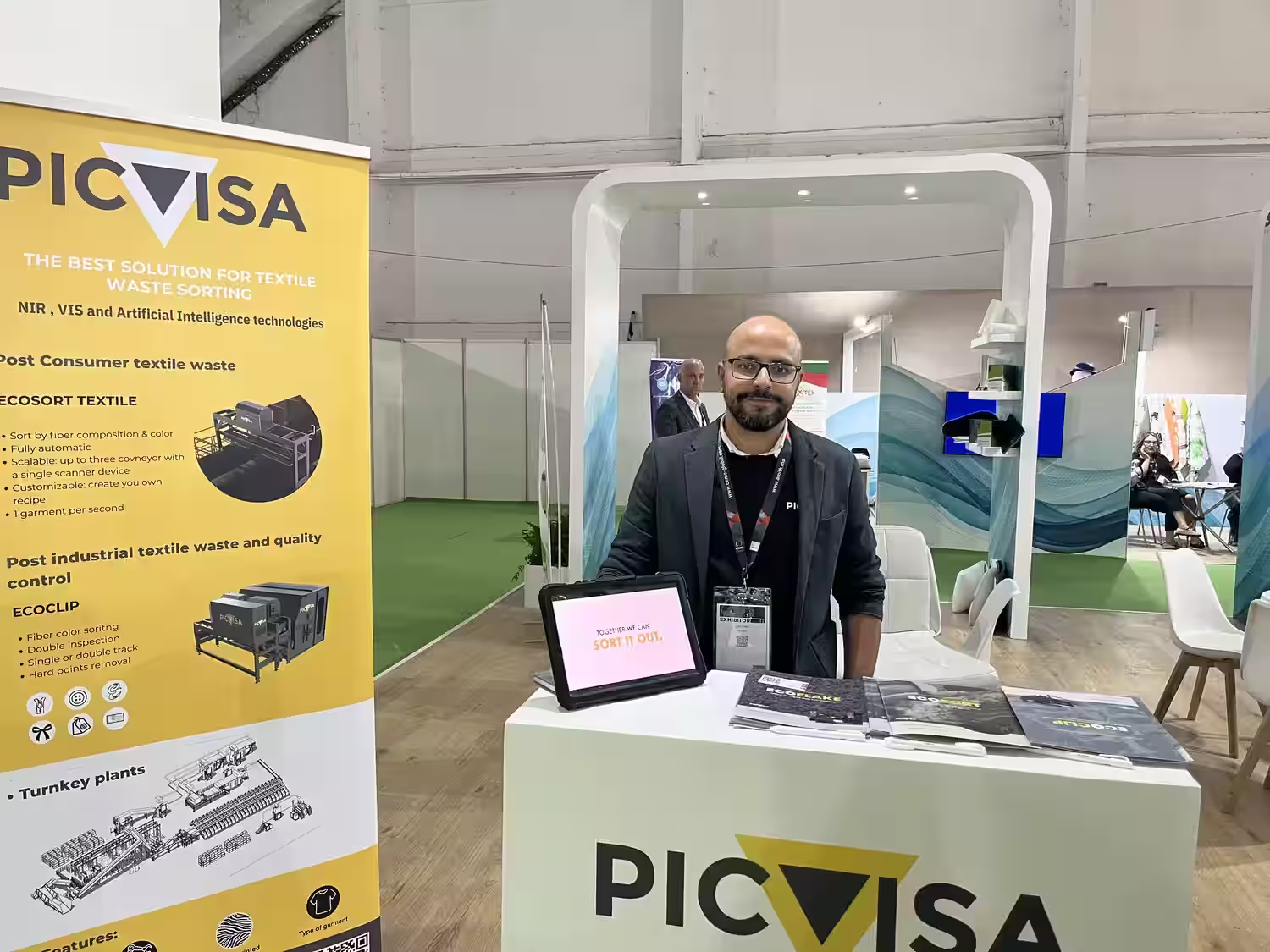
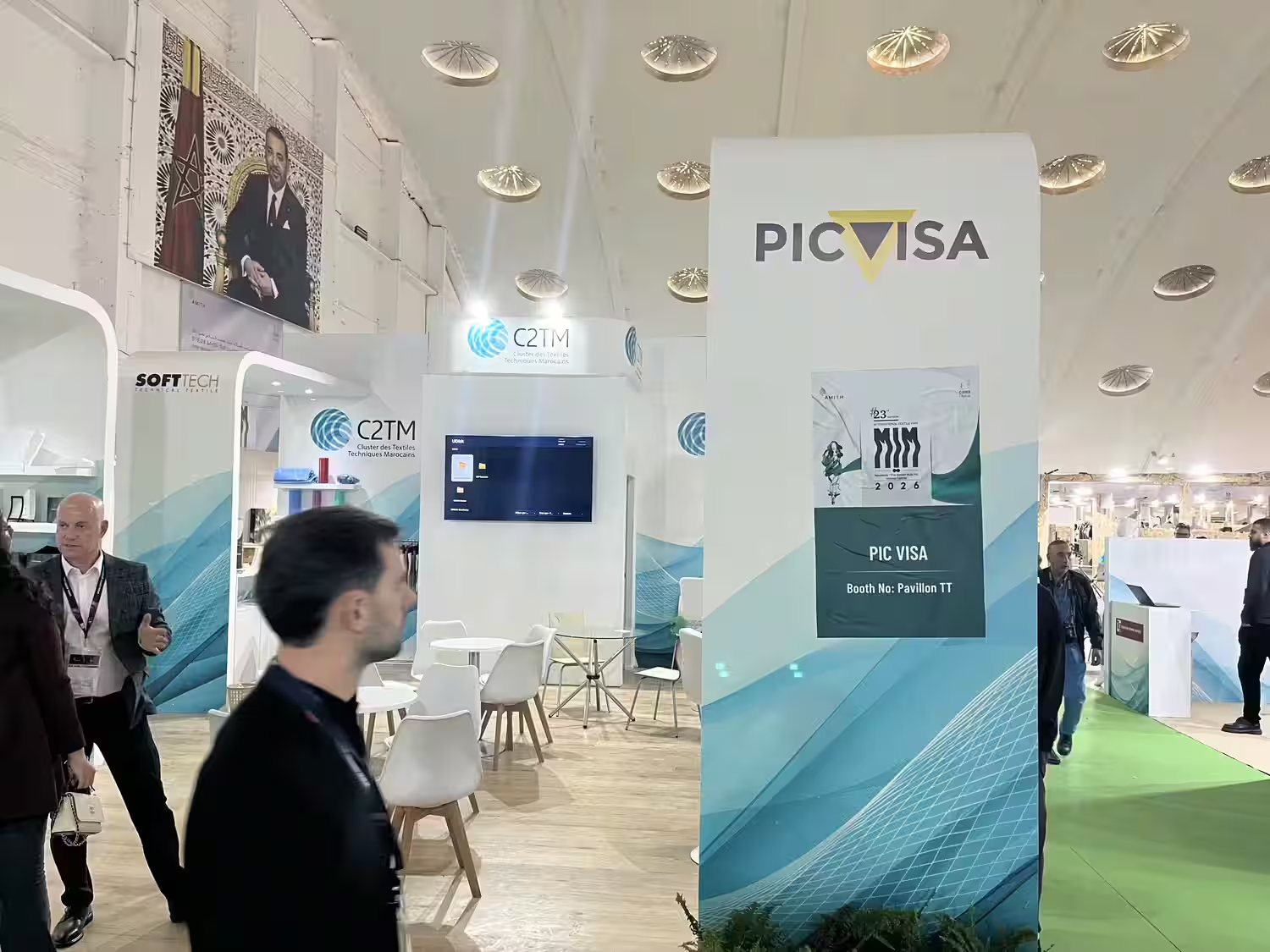
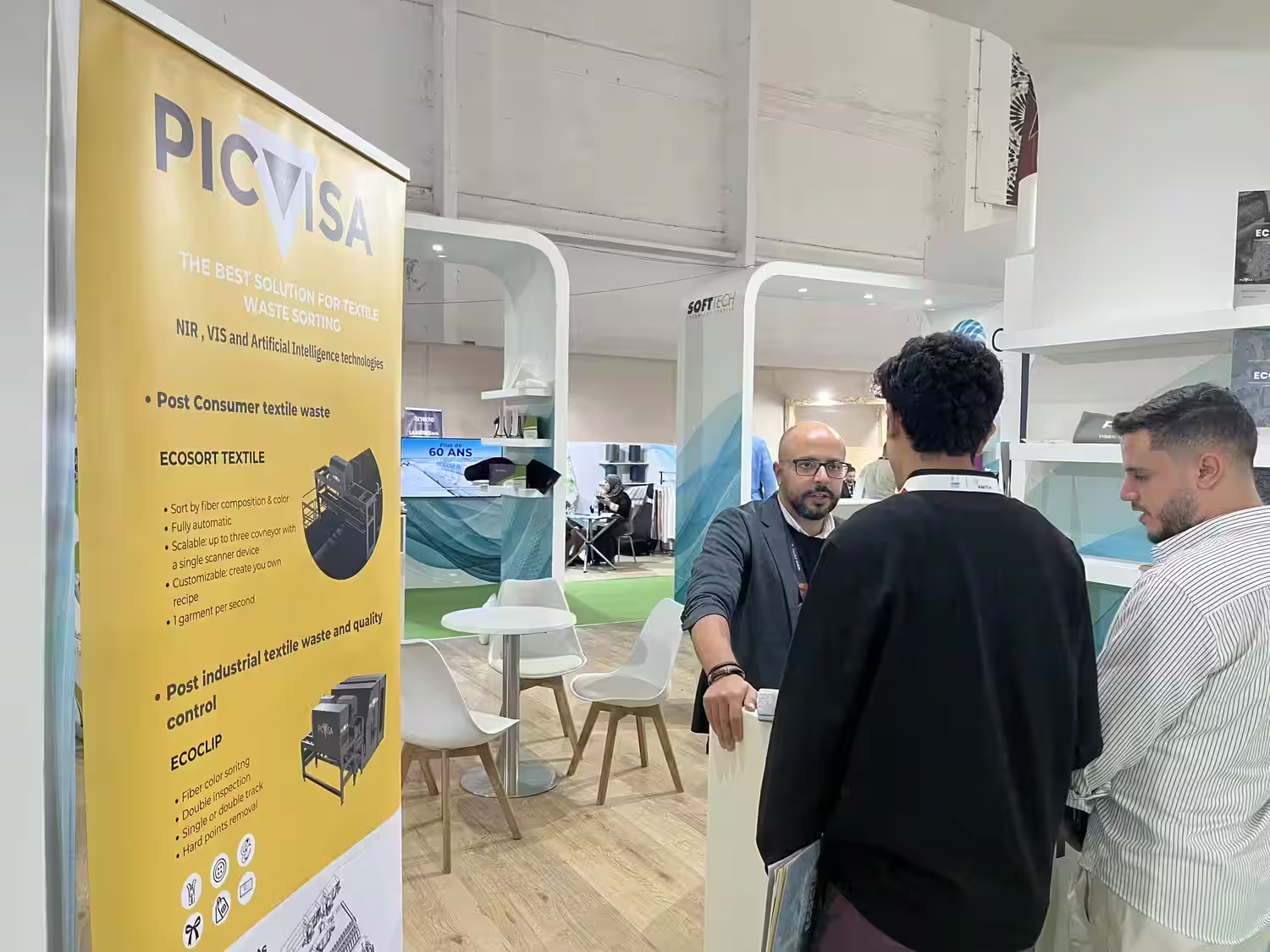
At a textile exhibition in Morocco, PICVISA, a Spanish company specializing in optical sorting technologies, participated in the technical textiles zone organized by the Cluster des Textiles Techniques Marocains (C2TM).
The company’s solutions use technologies including near-infrared spectroscopy (NIR), visible-light imaging (VIS) and artificial intelligence to identify and separate materials according to their composition, color and other characteristics.

PICVISA on Morocco and North Africa’s Recycling Potential
1. PICVISA is participating in Morocco’s technical textile exhibition activities. Why is the Moroccan market becoming important for your company, and what opportunities do you see in its textile recycling sector?
Saleh Seddik: Morocco represents a relatively new market for us, and it is a region that we have not yet explored in great depth.
However, we believe the Moroccan textile sector is evolving, particularly in relation to post-industrial textile waste.
As a company specializing in optical sorting solutions for recycling, we are interested in understanding how this market is developing and identifying opportunities to introduce our technologies.
Our participation here allows us to connect with industry professionals, explore the local market and better understand the recycling requirements of textile manufacturers and other stakeholders.
We see Morocco as an interesting market for the future development of textile recycling solutions.
2. European regulations are increasingly influencing how textile waste is collected, managed and recycled. How could these changes affect Morocco and other North African textile manufacturing countries?
Saleh Seddik: The regulatory environment in Europe is changing significantly, and this is creating new discussions about how textile waste should be managed. Looking toward 2030, countries and companies will increasingly need to reconsider their approach to textile waste and recycling.
This is particularly relevant for countries such as Morocco and Tunisia, where many textile manufacturers are connected to major international fashion brands and European supply chains.
Geographical proximity is another important factor.
For European companies, working with partners in nearby countries can be more practical than managing operations across much longer distances.
Morocco’s close relationship with the European textile and apparel market makes it an interesting location for exploring recycling opportunities.
For us, these developments create reasons to establish relationships in the region and understand how our sorting technologies could support future recycling operations.
Read more: From Waste to Value: How PICVISA Is Redefining Textile Recycling with AI
Can Africa Become a Textile Recycling Hub?
3. Africa receives significant volumes of second-hand clothing, and textile waste disposal has become a serious environmental concern in some countries. Could Morocco and other African countries eventually become textile recycling hubs rather than destinations for discarded garments?
Saleh Seddik: This is precisely one of the reasons we want to introduce our solutions in Morocco and other African markets.
I believe better recycling systems should be developed everywhere, not only in Europe.
In Europe, high labor costs can be an important reason for companies to invest in automated optical sorting technologies.
However, the benefits of these systems are not limited to reducing labor requirements.
Optical sorting can also improve sorting accuracy, support better recycling processes and help increase the amount of material that can be recovered.
These advantages are relevant to countries around the world, including African markets
We should move away from the idea that textile waste can simply be transported somewhere else and discarded.
Instead, we need to develop systems that allow materials to be sorted and recycled more effectively in different regions.
That is the direction we would like to support through our technologies.
Optical Sorting and AI for Material Recovery
4. What role can optical sorting and artificial intelligence play in improving textile recycling efficiency, particularly in markets where recycling infrastructure is still developing?
Saleh Seddik: One of the main advantages of optical sorting is the possibility of improving the accuracy of material separation.
When materials are sorted more accurately, recycling operations can become more effective, and a greater proportion of textile waste may be suitable for further processing. We believe these technologies should be accessible to recycling operations in different parts of the world.
It is not simply a question of replacing manual labor.
The objective is to establish better recycling systems that can identify and separate materials more consistently.
For markets developing their recycling infrastructure, technologies that improve sorting accuracy can play an important role in supporting more efficient material recovery.
This is why we are interested in bringing our solutions to Morocco and other African countries.
PICVISA’s Technology: How Automated Sorting Supports Textile Recycling
PICVISA’s interest in Morocco comes at a time when textile recycling is increasingly dependent on the ability to identify, classify and separate complex material streams.
Textile waste is rarely homogeneous.
A recycling facility may receive cotton, polyester, polyamide, wool and blended fabrics in multiple colors, together with garments containing buttons, zippers, seams and other non-textile components.
Separating these materials accurately is essential because different recycling processes require different input specifications.
Manual sorting can be labor-intensive, while visual identification alone cannot reliably determine the fiber composition of many textile products.
PICVISA addresses these challenges through automated optical sorting systems that combine sensor technologies, imaging and software-based material recognition.
ECOSORT TEXTILE: Automated Sorting of Post-Consumer Garments
PICVISA’s ECOSORT TEXTILE system is designed for post-consumer textile waste.
According to the company’s exhibition materials, the system can automatically classify garments by fiber composition and color using NIR, VIS and artificial intelligence technologies.
Its conveyor-based architecture is intended to support scalable sorting operations, with configurations that can be adapted to specific recycling requirements.
The company indicates a sorting capability of approximately one garment per second, depending on the configuration and operating conditions.
This type of technology can help recycling facilities create more consistent material streams for subsequent processing.
For countries seeking to develop textile recycling capacity, the ability to distinguish between different fiber compositions is particularly important. A cotton-rich waste stream, for example, may require a different recycling route from polyester or mixed-fiber garments.
ECOCLIP: Sorting Post-Industrial Textile Waste
Another important solution in PICVISA’s portfolio is ECOCLIP, developed for post-industrial textile waste and material quality control.
The system is designed to identify and separate textile clippings and other production residues according to fiber composition, color and the presence of unwanted components.
According to the company’s technical brochure, ECOCLIP can support several sorting applications, including:
- Fiber and blended-fiber identification
- Color classification
- Detection and separation of hard components such as buttons, zippers and trims
- Textile defect detection and quality control
- Sorting of garments and textile pieces
The system combines technologies such as NIR, VIS, artificial intelligence and, depending on the configuration, additional detection systems.
PICVISA reports a nominal throughput of approximately 2.5 tonnes per hour for certain ECOCLIP configurations and a target-material recognition accuracy of around 95%, according to its brochure.
Actual performance depends on the application, input material and system configuration.
The process involves transporting material along a conveyor, analyzing it with cameras and sensors, and activating pneumatic separation mechanisms to direct selected materials into the appropriate output streams.
For Morocco, where garment manufacturing and industrial textile production generate cutting waste and other residues, this technology represents a potentially relevant application.
Post-industrial textile waste can offer advantages for recycling because its origin and composition may be easier to establish than those of mixed post-consumer garments.
ECOFLAKE: Extending Optical Sorting to Footwear Recycling
PICVISA’s recycling technology portfolio also includes ECOFLAKE, an optical sorting system designed for shredded footwear materials, particularly shoe soles.
The equipment is intended to separate materials such as polyurethane (PU), thermoplastic polyurethane (TPU), rubber, EVA, PVC and leather. Its technical features include high-resolution imaging, NIR-based identification, belt feeding and pneumatic separation.
According to PICVISA’s brochure, the ECOFLAKE X600 and X1200 configurations have different capacities, with nominal throughput ranges of approximately 0.4–1.0 tonnes per hour and 0.8–2.0 tonnes per hour, respectively, depending on input material characteristics.
Although footwear recycling differs from conventional textile recycling, the technology illustrates the broader application of optical sorting across complex consumer-product waste streams.
Why Morocco Could Become an Important Recycling Market
Morocco’s potential in textile recycling is connected to several structural characteristics of its manufacturing industry.
First, the country has established relationships with European fashion brands and international apparel supply chains.
These relationships may become increasingly relevant as brands seek more transparent and efficient systems for handling manufacturing residues and textile waste.
Second, Morocco’s proximity to Europe creates logistical advantages for companies operating across Mediterranean supply chains.
Third, the development of local technical expertise and industrial cooperation could support more sophisticated recycling activities.
The participation of PICVISA in the technical textile zone organized by C2TM reflects growing interest in connecting textile manufacturing with advanced technologies and industrial innovation.
However, the presence of textile manufacturing capacity does not automatically create a functioning recycling industry.
Successful recycling operations require reliable waste collection, material identification, sorting infrastructure, downstream processing capacity and markets for recovered materials.
This is where companies specializing in automated sorting technologies could contribute.
By improving the quality and consistency of recovered material streams, optical sorting can help address one of the important technical challenges in textile recycling.
From Africa’s Textile Waste Problem to Industrial Opportunity
One of the most significant issues raised during the interview concerns Africa’s role in the international trade of used clothing.
In several African markets, the arrival of large quantities of second-hand garments has created economic activity while also contributing to waste-management challenges.
Clothing that cannot be resold or reused may ultimately be discarded, landfilled or burned.
The environmental consequences are particularly concerning when waste streams contain synthetic fibers, chemical finishes and mixed materials.
Seddik’s argument is that the development of recycling technology should not be restricted to wealthy industrial economies.
More accurate sorting systems could also help African countries recover useful materials and establish stronger local recycling operations.
Nevertheless, optical sorting alone cannot solve the textile waste problem.
Countries also need investment in collection infrastructure, mechanical and chemical recycling capacity where appropriate, technical training and viable markets for recycled fibers and materials.
For Morocco, the opportunity may lie in connecting its existing textile manufacturing sector with new capabilities in material recovery and recycling.
This could support a gradual transition from managing textile waste as a disposal problem toward treating selected waste streams as potential industrial resources.
European Regulation Could Accelerate Regional Investment
European textile waste policies are another important factor shaping the future of recycling investment.
The European Union has already introduced separate collection requirements for textiles, effective from January 2025, while additional measures concerning producer responsibility and waste management are reshaping the regulatory environment.
For manufacturers supplying European brands, these developments increase the importance of traceability, waste management and material recovery.
Morocco and Tunisia, with their established connections to European textile and apparel markets, could potentially benefit from investments designed to improve recycling and circularity.
However, the economic viability of new recycling facilities will depend on collection volumes, material quality, energy and labor costs, available technologies and demand for recycled outputs.
These considerations will determine whether the region can move from recycling ambitions to commercially sustainable industrial operations.
Read more: amec amtex Strengthens Sustainability Vision Through Technical Visit to PICVISA
Conclusion: Morocco’s Next Textile Opportunity May Be Recycling
Morocco has already established itself as an important textile and apparel manufacturing location serving international markets.
The next stage of industrial development could involve greater investment in technical textiles, recycling technologies and circular manufacturing processes.
For PICVISA, the Moroccan market represents an opportunity to explore new partnerships and introduce automated sorting solutions to a region where textile manufacturing and waste-management requirements are evolving.
As Saleh Seddik emphasizes, better recycling systems should not be limited to Europe.
The broader objective is to improve how textile materials are identified, separated and recovered wherever waste is generated or processed.
For Morocco and other African countries, the challenge is to translate this technological potential into reliable infrastructure, industrial investment and economically viable recycling operations.
The central question is no longer simply where textile waste will go, but where the infrastructure and technology needed to recover its value will be developed.