




As the global textile industry moves rapidly toward automation, digitalization, and artificial intelligence-driven production, international cooperation is becoming increasingly important for textile manufacturers seeking long-term growth and technological modernization.
During ITCPE 2026 in Guangzhou, Behnam Ghasemi, Editor of Kohan Textile Journal, spoke with Ildarov Shamkhal, President of the Russian Textile Association, about the current transformation of Russia’s textile and garment sector, the growing role of Chinese technologies, and the future direction of the global textile industry.
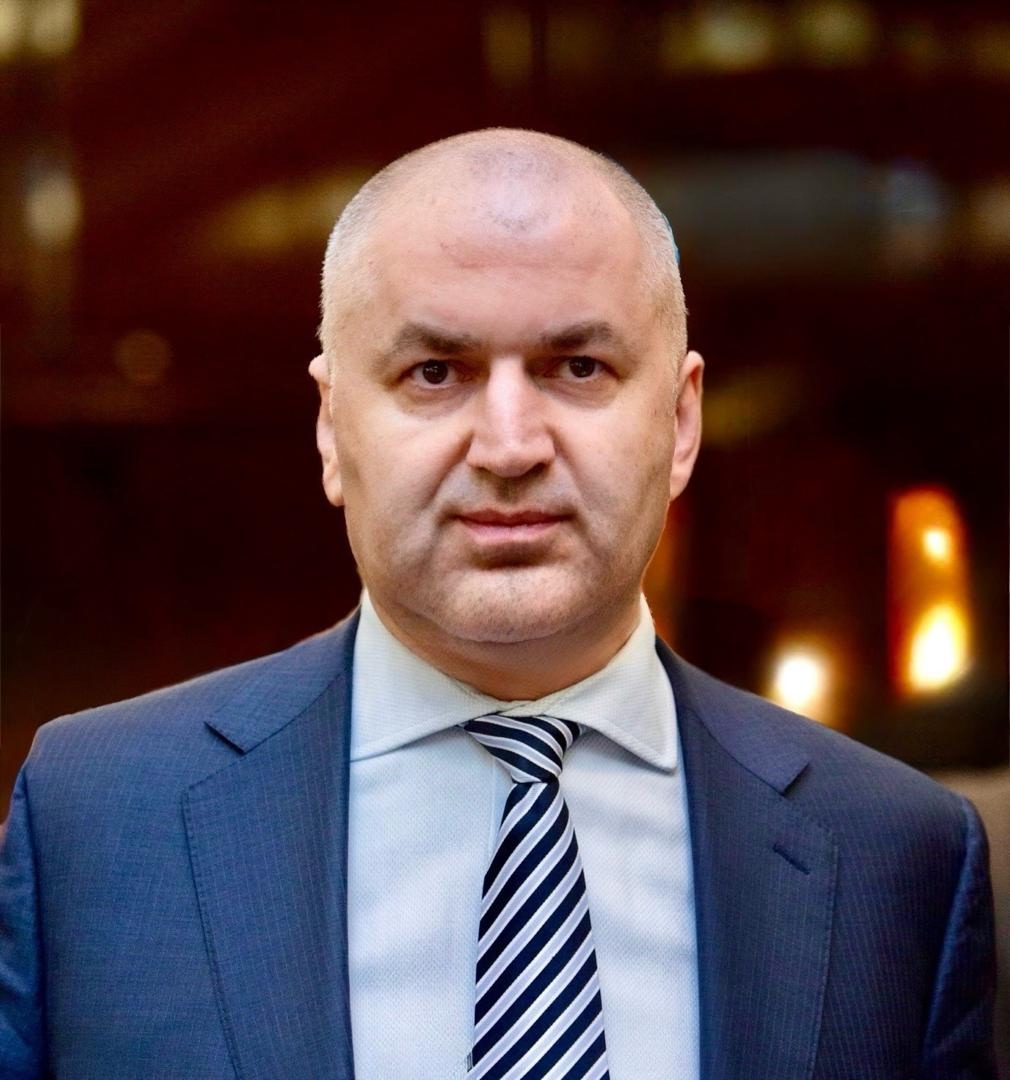
In this exclusive interview, Mr. Shamkhal discusses the increasing importance of ITCPE for Russian and CIS textile companies, the strategic modernization of the Russian textile industry, and the major role that AI, automation, digital textile printing, and 3D technologies are expected to play in the future of global manufacturing.
He also highlights the growing interest of Russian companies in establishing long-term partnerships with Chinese textile machinery manufacturers and technology suppliers as Russia accelerates its industrial development and supply chain transformation.
1- Why are you attending ITCPE with the Russian delegation, and how important is this exhibition for your members?
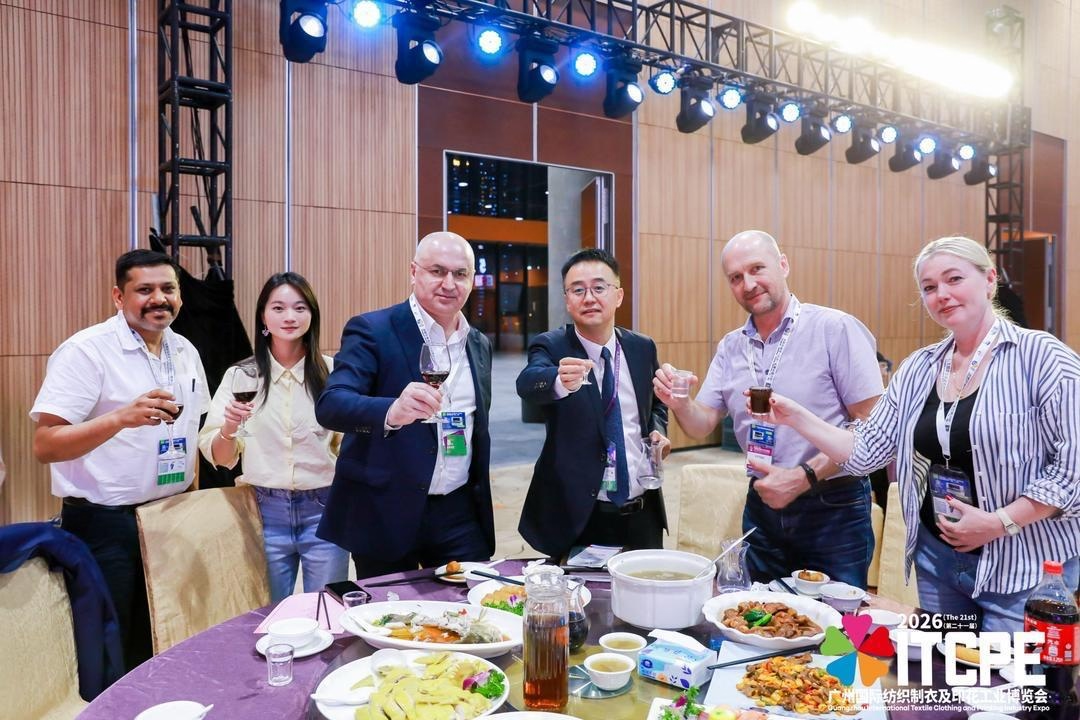
✔️ITCPE is one of the leading international exhibitions in the fields of advanced textile technologies, digital printing, textile machinery, fabrics, and apparel production. That is exactly why this exhibition attracts such strong interest from entrepreneurs and industrial companies from Russia and the CIS countries. For our members, ITCPE is not only a trade fair, but also an important platform for discovering innovations, establishing direct business relations, and understanding the future trends of the global textile industry.
This is already the second visit of our Russian Textile Association delegation to ITCPE, and every trip brings significant practical results. Our schedule here is always full of business meetings, factory visits, negotiations, and new contracts. Each delegation member returns home not only with new business opportunities, but also with trusted partners, new friends, and reliable suppliers of high-quality equipment and textile products.
Every participation in ITCPE strengthens the partnership between our countries and contributes to the growth of bilateral trade and industrial cooperation. We highly appreciate the professionalism of the organizers and the openness of Chinese manufacturers to long-term collaboration with Russian and CIS businesses.
2- How would you describe the current situation of the textile and garment industry in Russia? Approximately how many producers are part of your network? Also, if possible, could you share some figures regarding Russia’s textile imports and exports?
✔️ The textile and garment sector in Russia is currently experiencing significant growth and transformation. In recent years, the industry has become one of the strategic directions for industrial development, with increasing demand for modern equipment, fabrics, technologies, and reliable international partnerships. The departure of many European brands from the Russian market has created new opportunities and made Russia even more attractive for businesses and manufacturers from friendly countries, especially from Asia.
Our Association unites more than 700 entrepreneurs and companies working within Chapter 11 of the HS (According to the international Commodity Nomenclature of foreign economic activity) classification, including textile production, apparel manufacturing, fabrics, home textiles, and related industries. This gives us a very broad and active professional network across Russia and the CIS region.
Russia remains a large and highly перспективный consumer market for textile and garment products. Imports still play an important role, especially in fabrics, textile machinery, accessories, and finished apparel, while domestic production is also growing rapidly thanks to government support and new investment projects. Today, Russian companies are actively looking for long-term cooperation with Chinese partners, suppliers, and technology providers to strengthen production capacity and expand trade turnover between our countries.
3- The Russian market has enormous potential. In your opinion, what is the most important fact international investors should know about this market?
✔️ One of the most important facts international investors should understand about the Russian market is that today the textile industry is entering a new technological era. The key global trend is the integration of artificial intelligence and automation across the entire production chain – from fashion design and digital printing to smart manufacturing and logistics. Russian companies are highly interested in these technologies and are actively searching for partners who can provide advanced solutions and expertise.
In this direction, China is undoubtedly the global leader. Chinese manufacturers and technology companies are setting the pace in automation, AI-driven production, digital textile printing, and intelligent factory systems. For us, cooperation with Chinese partners is extremely valuable not only from a commercial perspective, but also as an opportunity to exchange experience, adopt best practices, and accelerate the modernization of the Russian textile industry.
The Russian market is very large, flexible, and open to new technological partnerships. Companies that are ready to bring innovation, efficiency, and modern production solutions to Russia today have a strong opportunity to secure long-term positions in a market with enormous growth potential.
4- How do you evaluate the global textile industry in recent years, and how do you predict its future?
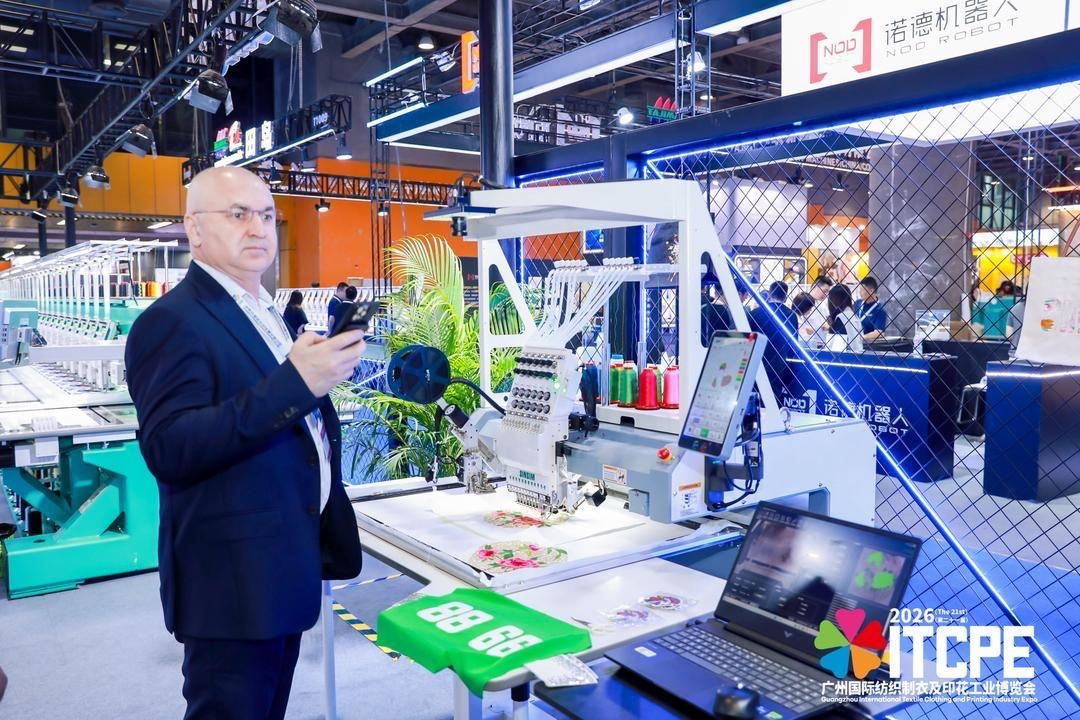
✔️ In recent years, the global textile industry has been undergoing a major technological transformation. We can clearly see that the future of the industry will be shaped by maximum automation, digitalization, and the implementation of artificial intelligence in all production processes. AI is already changing the way companies approach design, forecasting, production planning, quality control, and supply chain management.
At the same time, I also see enormous potential in the development of 3D technologies across the entire textile sector. This includes not only fashion and apparel production, but also technical textiles and interior textile products. 3D design, virtual prototyping, smart materials, and advanced manufacturing technologies will significantly reduce production costs, accelerate product development, and create entirely new possibilities for customization and sustainability.
In my opinion, the companies and countries that successfully combine automation, AI, and 3D technologies will become the leaders of the next generation textile industry. This is why international cooperation and technology exchange are becoming more important than ever before.
5- Could you tell us more about your association, as well as its mission and vision?
✔️ “The Russian Textile Association (ATR) is one of the leading professional organizations representing the interests of the textile and light industry in Russia and the CIS region. Since its establishment in 2009, ATR has united manufacturers, suppliers, designers, technology companies, educational institutions, and industry experts with the common goal of developing a strong, modern, and globally competitive textile industry. Today, our Association includes more than 700 companies with a combined turnover exceeding 650 billion rubles.
Our mission is to support the growth of textile and garment enterprises, strengthen international cooperation, protect the interests of industry participants, and create favorable conditions for industrial development. We work closely with government institutions, business communities, and international partners to promote innovation, improve legislation, support exports and imports, and help companies access new technologies and markets.
Our vision is to build a modern textile ecosystem based on technology, education, industrial cooperation, and global partnerships. We believe the future of the textile industry belongs to companies that combine innovation, automation, sustainability, and international collaboration. That is why ATR actively develops international relations, organizes business missions and industrial tourism, and helps Russian companies establish long-term partnerships with leading manufacturers and technology providers around the world, especially in China and Asia.
Editor’s Insight
From my perspective, one of the most interesting aspects of this interview was seeing how actively Russian textile companies are now looking toward Asia — especially China — not only for sourcing, but also for technological transformation and long-term industrial cooperation.
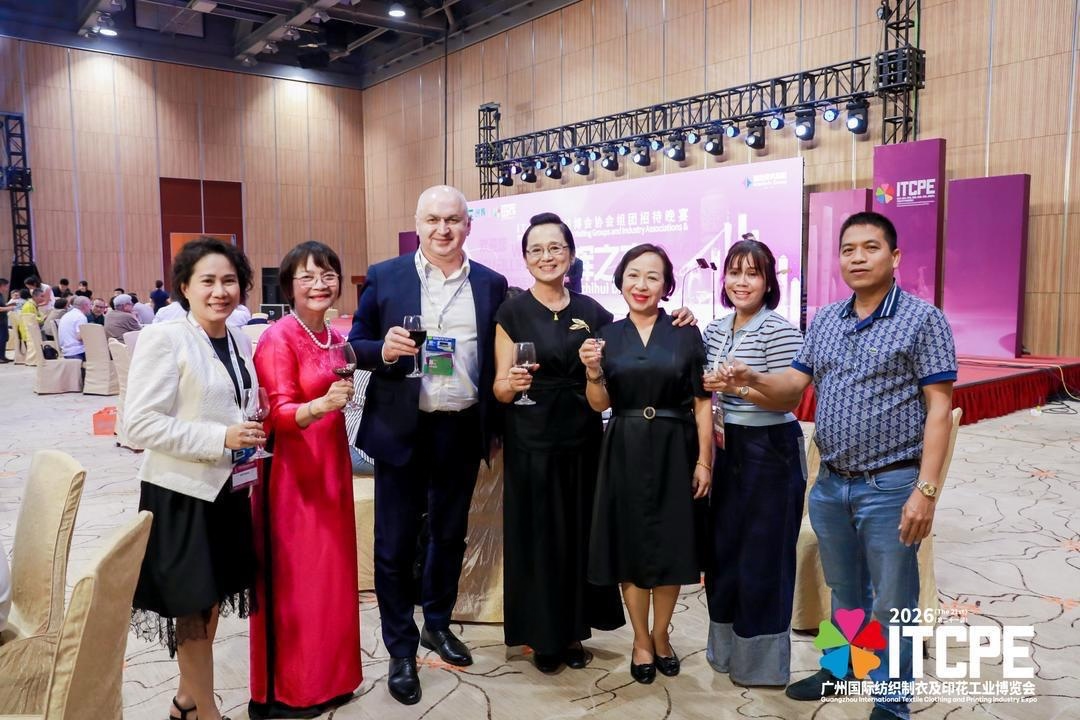
At ITCPE 2026, the presence of the Russian delegation clearly showed that Russia’s textile industry is entering a new stage focused on modernization, automation, AI integration, and international partnerships. Despite global geopolitical complexities, Russian manufacturers appear highly motivated to rebuild and strengthen their industrial ecosystem through new collaborations and advanced technologies.
I also believe exhibitions such as ITCPE are becoming much more than traditional trade fairs. They are evolving into strategic networking platforms where countries, associations, manufacturers, and technology providers shape future industrial partnerships and redefine supply chains for the next generation textile industry.











