If you walk through the bustling aisles of the sewing and embroidery zones at any global textile exhibition, you will see massive, high-speed machines seamlessly crafting intricate designs. But while international buyers marvel at the hardware of brands like SINSIM, Promaker, and Maya, the true technological masterpiece lies deep within the machine’s digital brain.

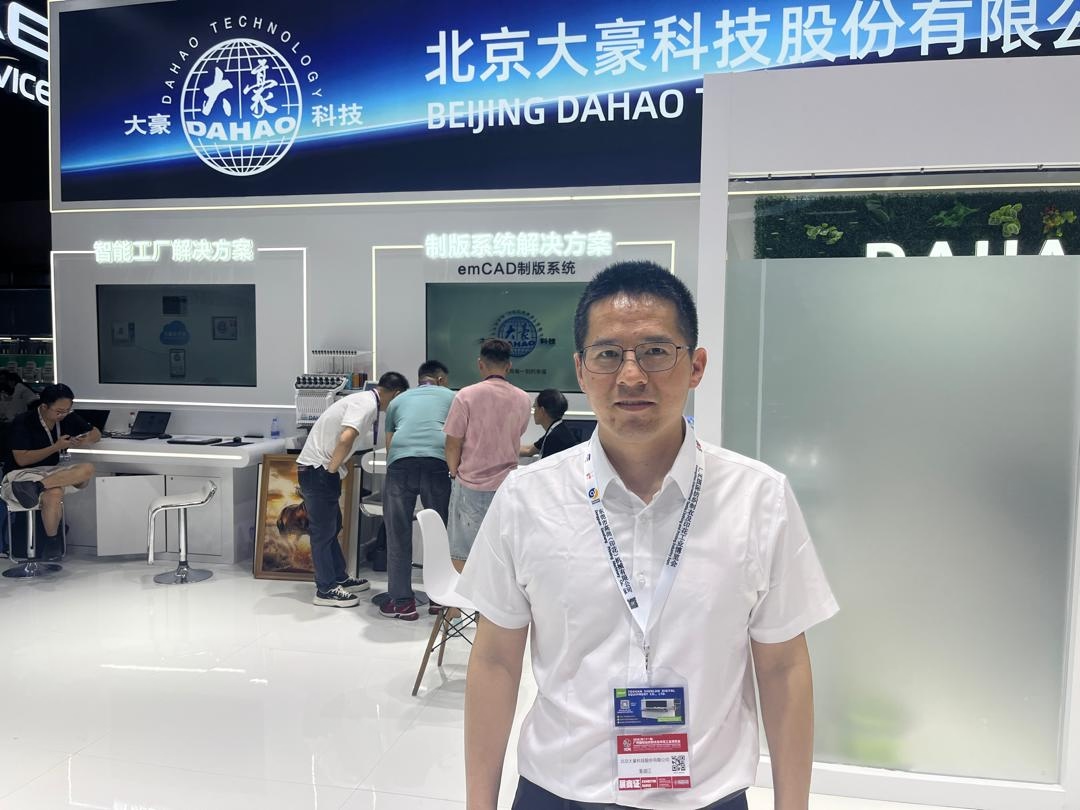
At the 21st International Textile, Clothing & Printing Industry Expo (ITCPE 2026) in Guangzhou, Behnam Ghasemi, Editor-in-Chief of Kohan Textile Journal, caught up with Mr. James Si, Foreign Trade Manager at Beijing DAHAO Technology Corp., Ltd.. Listed on the Shanghai Stock Exchange, DAHAO is the undisputed global titan of computerized control systems, commanding the largest market share worldwide for embroidery electronic controls.
In this exclusive interview, Mr. James pulls back the curtain on how DAHAO’s intelligent electronics are driving the industry’s massive transition toward automated robotics, high-speed production, and advanced industrial clusters.
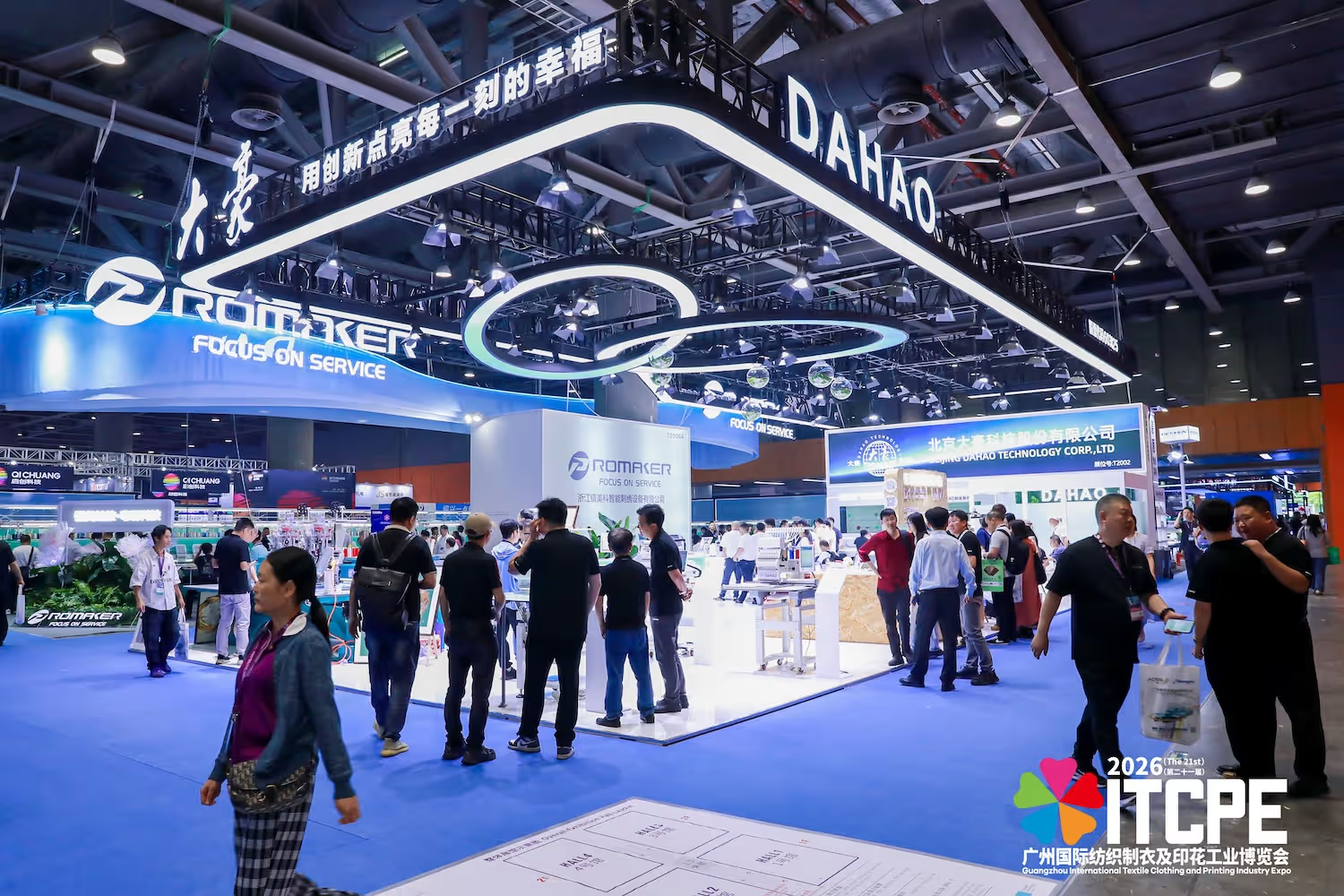
Powering the Giants: SINSIM, Promaker, and Maya Run on DAHAO
For those unfamiliar with the back-end supply chain of textile machinery, DAHAO is the engine that drives the industry’s most recognizable brands like Promaker, SINSIM, Maya and etc.
“Dahao makes the electronic control systems that power a vast majority of the industrial embroidery machinery you see today,” Mr. James states. “When you look at the biggest names on the exhibition floor—Maya, DSM, Promaker, and SINSIM—they are all running on our advanced electronic control architectures.”
Beyond Electronics: The Rise of Embroidery Automation Robots
DAHAO is no longer just controlling the stitching needle; they are transforming embroidery frames into highly collaborative robotic workstations.
At ITCPE 2026, the company put a heavy spotlight on its automated robotic add-ons:
- Auto-Winding Systems & Auto-Bobbin Changers: Minimizing human downtime by letting the machine swap its own bobbins instantly.
- Integrated Laser Systems: Merging precise laser-cutting technology into the embroidery process to craft breathtaking, complex patterns.
The Secret of Zhuji (Zhuge): How China Built an Embroidery Super-Cluster
When asked about the blistering speed at which Chinese textile machinery has evolved over the last decade, moving swiftly from copying Western or Japanese designs to pioneering proprietary tech, Mr. James points directly to a geographic phenomenon: The Zhuji (Zhuge) Industrial Cluster.
Read More: Why ITCPE Has Become a Strong International Platform in the Digital Printing and Embroidery Industry
A Mega-Hub Containing 80% of Global Production
“Zhuji is China’s ultimate embroidery industrial park,” explains Mr. James. “It manufactures more than 80% of the world’s embroidery machines. When you pack that many components suppliers, machine builders, and engineering brains into one specialized zone, communication is instant. We constantly exchange experience, build upon each other’s breakthroughs, and rapidly iterate on hardware and software.”
This hyper-collaborative industrial network has enabled companies within the cluster to scale rapidly. SINSIM’s historic milestone as the first embroidery machinery brand to be publicly listed on the Beijing stock market is a direct result of this ecosystem—a trend Mr. James predicts will soon repeat with other major manufacturers.
Speed vs. Customization: The Two Fractured Paths of Tomorrow’s Embroidery
Predicting the future of embroidery technology requires analyzing shifting consumer behaviors. SINSIM and DAHAO see the industry branching into two distinct engineering challenges:
1. The Industrial Track: High RPM and Ultra-Long Machines
For mass garment manufacturing, efficiency is king. Factory owners are demanding exceptionally long multi-head machines running at incredibly high Revolutions Per Minute (RPM). DAHAO’s software is engineered to keep these long-frame setups entirely stable at extreme speeds to ensure swift, flawless output.
2. The Customization Track: High Precision for Bespoke Designs
Conversely, high-end fashion demands absolute flexibility. DAHAO’s electronic control systems are increasingly utilizing camera tracking and smart AI to execute personalized, highly intricate bespoke designs that traditional mechanical systems could never replicate.
Closing the Gap: The Reality of Chinese vs. European Technology
Historically, European and Japanese equipment held an iron grip on the high-end textile market. Today, that gap has shrunk to near-extinction.
“We started decades ago controlling very basic, small-head machines,” Mr. James reflects. “Today, DAHAO and our manufacturing partners produce premium, highly stable, high-end embroidery machines. Massive corporate investments into Research & Development (R&D) have allowed Chinese manufacturers to leapfrog old limitations. Healthy global competition between China and Europe forces everyone to innovate, and at the end of the day, it is the global customer who wins by getting superior, highly logical, and beautifully optimized machinery.”
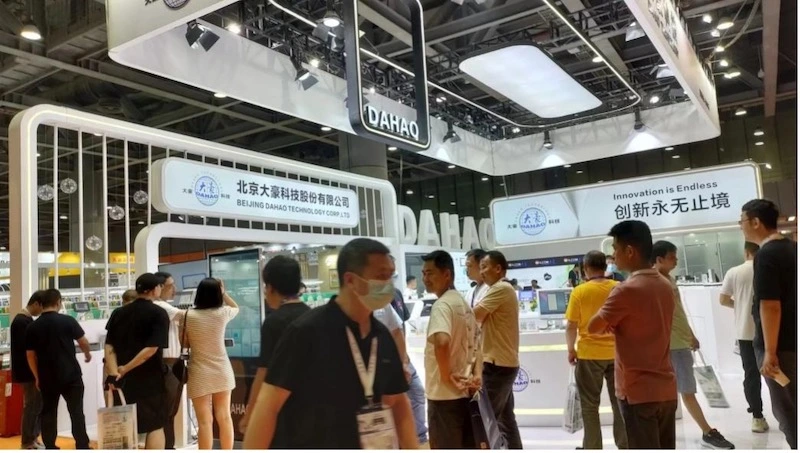
Editor’s Insight: The Interconnected Evolution of DAHAO, SINSIM, and ITCPE 2026
The true takeaway from ITCPE 2026 is that the textile machinery sector has evolved past the era of isolated innovation. A world-class embroidery machine is no longer defined just by the strength of its steel frame or the speed of its needles; it is fundamentally defined by the intelligence of its control system.
The massive influx of international buyers at ITCPE 2026—surging by over 92% year-on-year—proves that global apparel manufacturers are desperately hunting for ways to mitigate surging labor costs through complete automation.
By observing the synergies on the exhibition floor, it becomes crystal clear why China has secured a dominant lead in this space. The deep engineering bond between DAHAO’s electronic architectures and pioneering OEMs like SINSIM creates an unstoppable cycle of innovation. While SINSIM customizes the hardware for high-speed, multi-functional performance, DAHAO provides the underlying robotic brainpower—such as automatic bobbin changers and intelligent laser cutting—to make it a reality.
ITCPE 2026 didn’t just showcase machines; it showcased a fully integrated, mature industrial ecosystem capable of transforming traditional embroidery from a mechanical trade into a highly sophisticated, AI-assisted digital art form.