




Interview with Mr. Andreas Rass – ZIMMER AUSTRIA
By: Behnam Ghasemi
This interview was conducted after Techtextil 2026 and before ITM 2026 in Istanbul.
As part of our coverage of Techtextil and the upcoming ITM 2026 exhibition in Istanbul, I had the opportunity to speak with Mr. Andreas Rass, CEO of Zimmer Austria, about the current transformation of the textile printing and technical textile industries.
During our discussion, Mr. Rass shared valuable insights regarding the growing importance of camouflage and military-related textile printing, the evolution of digital printing technologies, sustainability challenges, and the future direction of carpet, home textile, and technical textile production. He also discussed ZIMMER AUSTRIA’s strategic focus for upcoming exhibitions, including ITM 2026 in Istanbul, where the company will showcase its latest developments in digital printing, coating, and carpet technologies.
In this interview, Andreas Rass explains how global market conditions are reshaping investment priorities in the textile industry and why technologies such as camouflage printing, integrated process solutions, and advanced carpet printing systems are becoming increasingly important for manufacturers worldwide.
Overall Experience at Techtextil 2026
How would you evaluate Zimmer’s overall participation at Techtextil 2026? What were your key takeaways from this year’s edition?
We evaluate our participation at Techtextil 2026 very positively. The exhibition again confirmed its importance as a leading international platform for technical textiles, coating, and advanced production technologies. What stood out to us was not only the international reach of the show, but also the quality of discussions: many conversations were concrete, technically informed, and directly linked to real business opportunities and development projects. Techtextil and Texprocess 2026 brought together more than 36,000 visitors and 1,700 exhibitors from 112 countries, which underlines the scale and relevance of the platform.
For our Digital Printing Systems division, one topic stood out very clearly above all others: camouflage and military-related textile printing was the number one discussion topic at the booth. That was a very important signal for us. It showed that the market is increasingly looking at resilient, regional, and trusted production structures for technical and protective textile applications. For ZIMMER AUSTRIA, this confirms that digital printing for camouflage is no longer a niche subject, but a serious industrial growth area.
Read more : Balat Mensucat Expands Digital Carpet Printing Capacity with Third Colaris Line from Zimmer Austria
Market Atmosphere & Industry Sentiment
Despite global uncertainties and ongoing geopolitical challenges, how would you describe the overall business atmosphere at the exhibition? Did you observe confidence in investment and new projects?
The atmosphere was serious, but constructive. Everyone in the industry is aware of the broader challenges — geopolitical tensions, cost pressure, and uncertain market conditions — but at the exhibition we clearly saw that companies are still investing where technology creates strategic value. In that sense, the mood was not overly optimistic, but it was focused, realistic, and solution-driven. Messe Frankfurt’s final report also reflected this, highlighting strong visitor satisfaction, increased exhibitor confidence in post-show business, and a clear focus on market-ready innovation.
We did see confidence in new projects, especially where customers can strengthen flexibility, improve efficiency, and build more resilient supply chains. This is particularly relevant in technical and military textiles. For many Western textile producers, camouflage printing represents an opportunity to move into more advanced, specification-driven, and higher-value applications. At the same time, it is also a major opportunity for Western machinery manufacturers, because these applications require dependable industrial systems, strong process know-how, and long-term service support.
Product Highlights & Market Interest
Which of Zimmer Austria’s technologies or solutions attracted the most attention during the exhibition?
On the digital side, camouflage printing clearly attracted the strongest interest. Customers were highly engaged by our positioning in military and defense-related textiles, especially because digital printing offers flexibility, fast design adaptation, and controlled, repeatable production on demanding technical substrates. That combination of customization and industrial repeatability is exactly what many producers are looking for today.
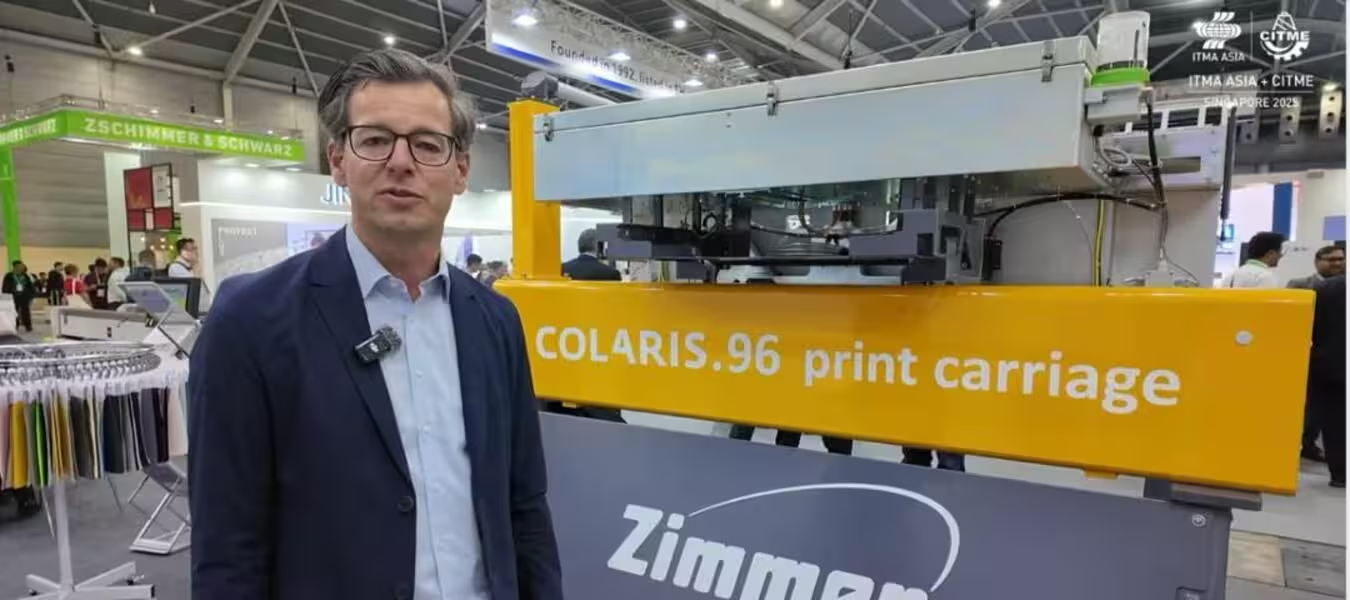
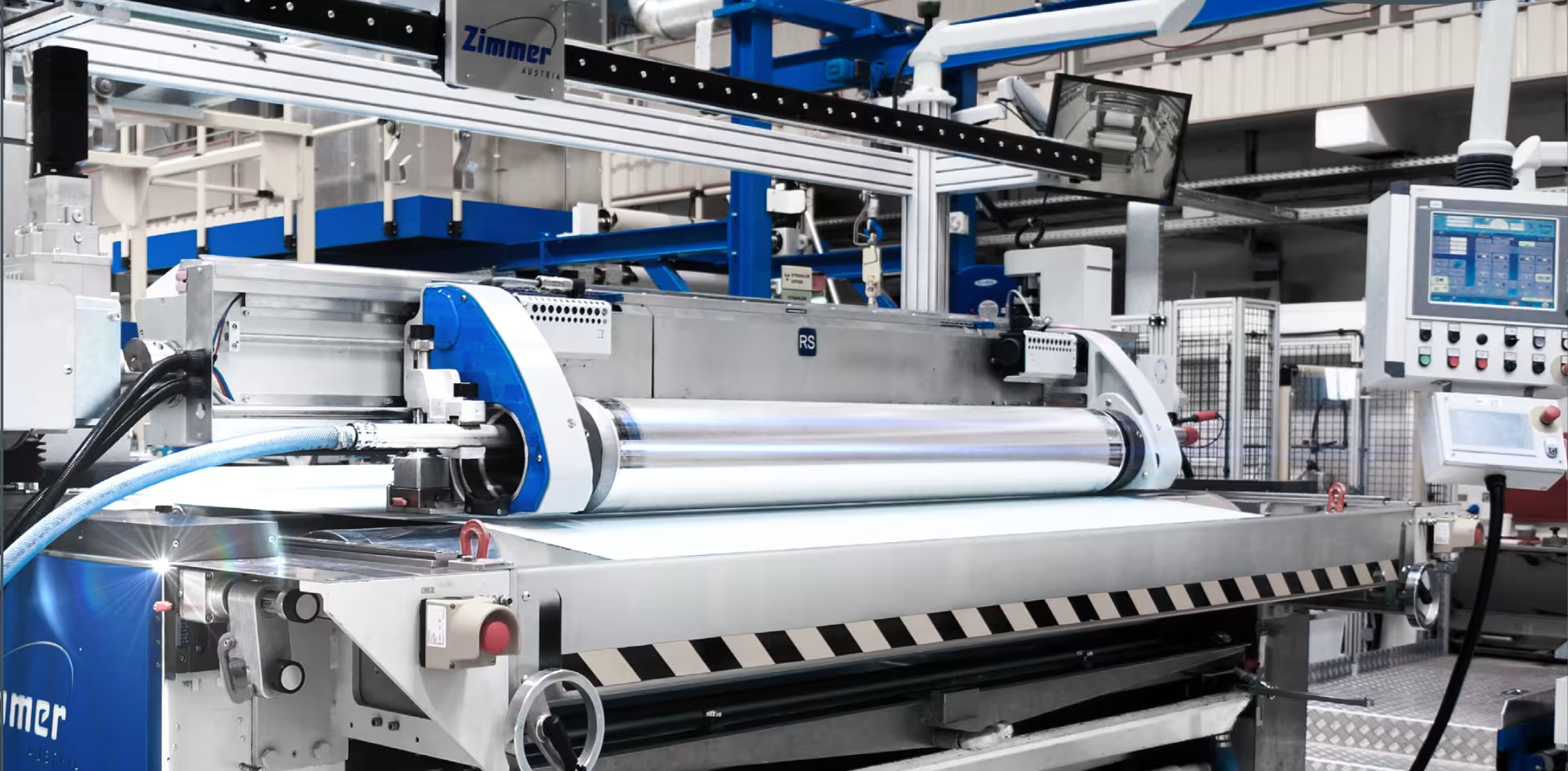
Alongside this, our COLARIS-TeX also attracted strong attention, as did the full-scale COLARIS print carriage with up to 96 printheads, because both demonstrate where industrial digital printing is heading: toward more usability, better serviceability, stronger connectivity, and higher productivity.
In addition, we also saw continued strong market interest in our carpet printing solutions, where the combination of COLARIS and CHROMOJET remains a major differentiator for customers looking for either high-resolution design freedom or robust, high-penetration carpet printing performance.
Read more : Zimmer Austria to Showcase Advanced Textile Printing Technologies at ITM 2026 in Istanbul
Key Industry Trends
From your perspective, what are the key trends currently shaping the technical textiles and coating segment?
From my perspective, four trends are especially important right now. First, the market is moving decisively toward connected and smarter production, where ease of operation, data availability, automation, and machine uptime become just as important as print quality itself. Second, sustainability and efficiency remain central, but customers are increasingly demanding measurable industrial benefits — lower water use, lower energy consumption, and fewer process steps.
Third, we see strong momentum in advanced materials and functional applications, including mobility, protection, outdoor, and industrial textiles. And fourth, there is a very clear shift toward complete process solutions. Customers do not want isolated machines; they want partners who understand printing, coating, fixation, drying, and end-use performance as one integrated production concept. This is particularly true in camouflage printing, where digital printing becomes valuable only when combined with the right application know-how and process control.
Focus for Upcoming Exhibitions
Which key technologies or solutions will Zimmer focus on in upcoming exhibitions, particularly in Istanbul?
In upcoming exhibitions, we will continue to focus on the technologies that best represent our strength as a complete solution provider: digital textile printing, carpet printing, coating, finishing, and technical textile applications. After Techtextil, camouflage printing will certainly remain one of our strategic topics, because it clearly resonates with the market and represents a long-term industrial opportunity.
For Istanbul, however, the emphasis will be broader and more region-specific. There we will put stronger focus on carpet printing, carpet coating, and home textile applications, because these are highly relevant segments for Türkiye and the Middle East. At the same time, we will continue to address military and camouflage-related printing as an additional opportunity for producers in the region to establish higher-value and more specialized textile supply chains.
Booth Highlights
What can visitors expect to see at Zimmer’s booth in Istanbul? Are there any specific highlights or new developments you plan to showcase?
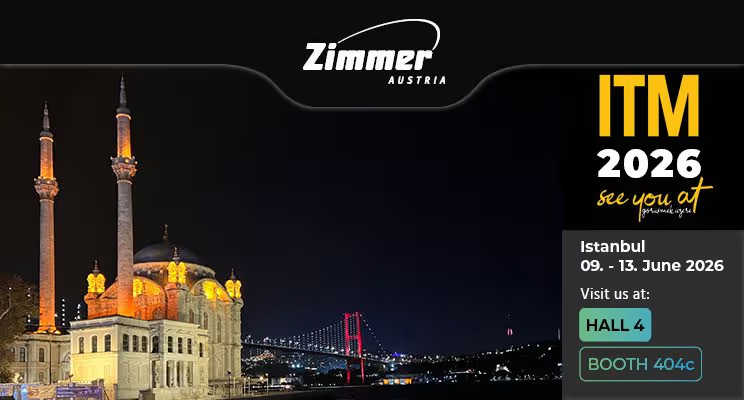
Visitors to our booth in Hall 4, Booth 404C can expect a very application-oriented presentation of ZIMMER AUSTRIA’s capabilities across digital printing, carpet printing, coating, and finishing. Our Digital Printing Systems team as well as our Screen Printing & Coating Systems specialists will be present, and the focus will be on real customer applications and complete production concepts rather than stand-alone components.
The strongest emphasis in Istanbul will be on carpet and home textile solutions, because these are core industries in the region and important growth areas for us. That includes applications such as rugs, runners, tiles, mats, contract carpets, towels, blankets, upholstery, and other home textile products.
At the same time, we will also continue to highlight military and camouflage-related digital printing as a pathway for regional producers who want to move beyond volume manufacturing and into more advanced, value-added segments.
Message to the Market
What message would you like to share with textile manufacturers and industry professionals following Techtextil 2026?
My message is that this market still offers real opportunities for companies that invest with focus and industrial clarity. Even in a difficult environment, we see strong potential wherever manufacturers improve flexibility, shorten response times, and move into higher-value applications. That is true in traditional strengths such as carpet and home textiles, but also in more specialized areas such as technical and military-related textiles.
For Western textile producers, camouflage printing is a strong example of how new, higher-value supply chains can be built around trusted production capability and application know-how. And for Western machinery producers, it is a clear opportunity to provide the industrial platforms that enable such production reliably and at scale. At the same time, in regions such as Türkiye and the Middle East, we believe the combination of strong carpet and home textile know-how with emerging military and technical applications can create a very attractive path toward more differentiated and resilient manufacturing.











