




As sustainability becomes one of the textile industry’s highest priorities, dyeing technology is entering a new era focused on reducing water, chemicals, and environmental impact. At ITM 2026 in Istanbul, Kohan Textile Journal spoke with Ahmet Çelik, General Coordinator of İDES Makina, about the company’s export-driven growth, its breakthrough salt-free dyeing technology, and the future of textile manufacturing in emerging markets.
Developing the Next Generation of Intelligent Dyeing Technologies
Kohan Textile Journal: Could you please introduce yourself and your company?
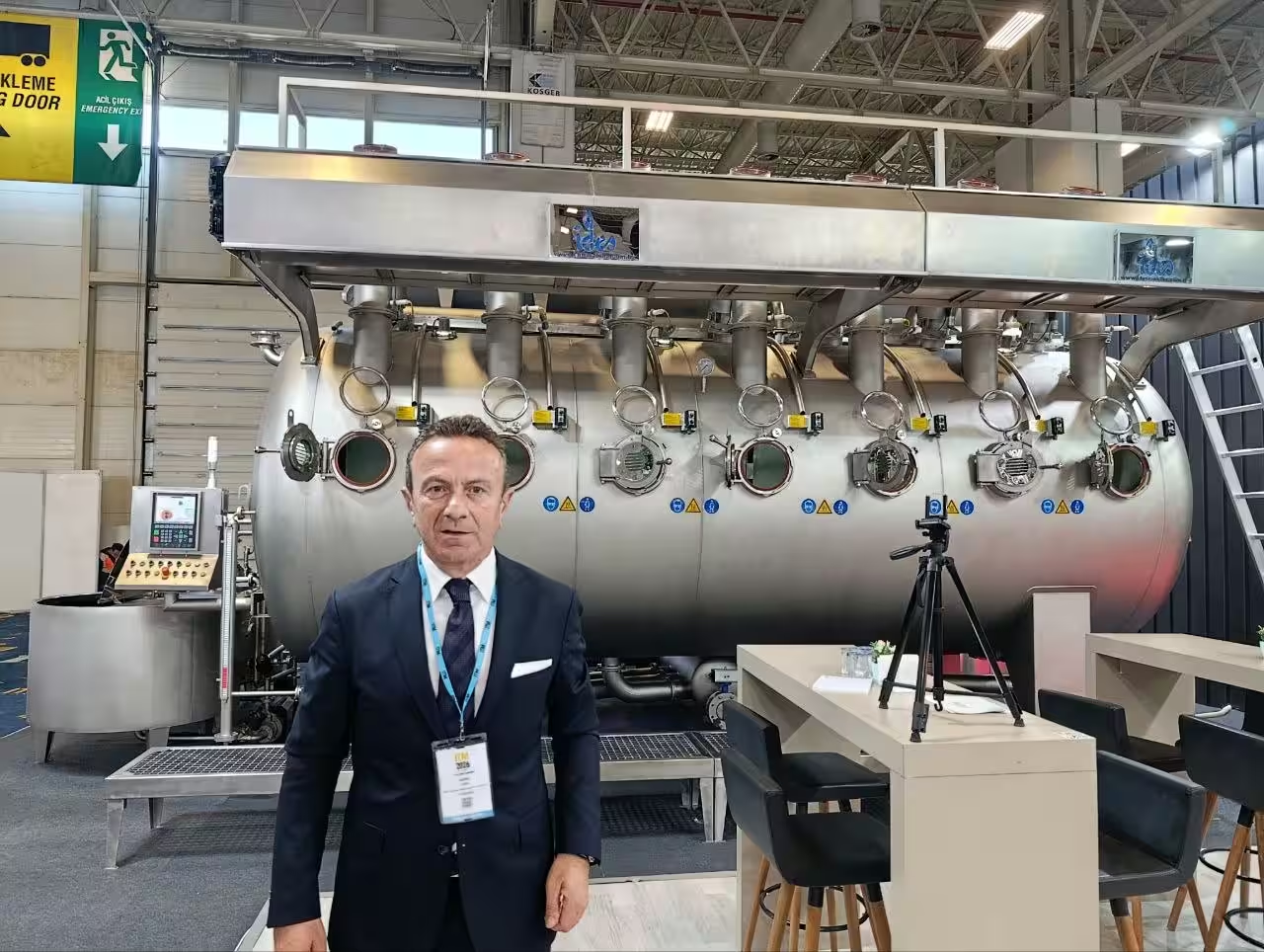
Ahmet Çelik: My name is Ahmet Çelik, and I serve as the General Coordinator of İDES Makina Tekstil. Although I spent 25 years in the banking sector, I joined İDE Makina about one and a half years ago as both a consultant and General Coordinator.
Our company was established in 2013, but our shareholders bring more than 30 years of experience in textile machinery manufacturing and industrial management. We are located in Çorlu, Türkiye, and specialize primarily in jet dyeing machines, while also manufacturing other equipment required in a modern dye house, including stenters, washing systems, and auxiliary dyeing units.
Today, exports account for approximately 95% of our turnover, with Bangladesh currently being our strongest market.
Kohan Textile Journal: How has business been for İDES Makina this year?
Ahmet Çelik: We are having an excellent year. Our factory employs around 100 people and has an annual production capacity of approximately 50 machine units, currently operating at about 85% capacity utilization. Since the beginning of the year, we have been working overtime, including weekends, and our production schedule is already full through the end of September.
One of our biggest achievements this year was securing the largest single Letter of Credit (LC) ever opened for Bangladesh’s textile machinery sector. We successfully sold 60 dyeing machines to a single customer, which has kept our production fully occupied during the first half of the year. The remainder of the year also looks very promising.
Kohan Textile Journal: How do you see the future of the textile industry?
Ahmet Çelik: Textiles will always remain an essential industry. The global population continues to grow, and people will always need clothing, home textiles, curtains, and many other textile products. Therefore, I do not believe there is any scenario where demand for textiles disappears.
However, the way textiles are manufactured must change. The industry’s biggest challenge is reducing its environmental footprint. Following the pandemic, consumers have also become more aware that they can live with fewer possessions, which is influencing consumption patterns. The future of textiles will therefore depend less on product demand and more on producing textiles in a much more sustainable way.
Read more: ITM 2026 (Istanbul Textile Machinery Exhibition)
Kohan Textile Journal: What new technology are you presenting at ITM 2026?
Ahmet Çelik: Our major innovation this year is a salt-free dyeing technology. One of the biggest challenges in textile dyeing has always been the large amount of water consumed and the difficulties associated with water treatment and recovery. Salt has been an essential part of conventional dyeing processes for decades.
We have developed a three-stage solution that combines chemistry, process engineering, and mechanical innovation. Our laboratory testing has been successfully completed, and we are now conducting industrial production trials. A few regulatory procedures still need to be finalized, but we expect that by early 2027, we will officially launch a commercial machine capable of performing salt-free dyeing.
We believe this technology has the potential to reshape the future of textile dyeing. Our company name itself reflects our philosophy—IDE stands for Intelligent Dyeing Expert. Our mission is to become a leading developer of intelligent dyeing technologies.
Kohan Textile Journal: How do you evaluate opportunities in the Middle East and Africa?
Ahmet Çelik: Rather than speaking about the entire region, I prefer to speak from our own experience. We currently have representatives and customers in eight countries, including Bangladesh, Vietnam, Uzbekistan, Brazil, and Mexico.
One of the main reasons textile production continues moving toward emerging economies is labor cost. In countries like Bangladesh, labor remains significantly more affordable than in many other regions, making these markets highly attractive for manufacturers. At the same time, international fashion brands are placing increasing pressure on manufacturers to improve sustainability.
They expect factories to reduce water consumption, minimize chemical use, and comply with internationally recognized environmental and workplace standards. Many developing markets are still working toward meeting these requirements, but sustainability is becoming an essential condition for future growth.











