By: Behnam Ghasemi – Editor in Chief at kohan Textile Journal
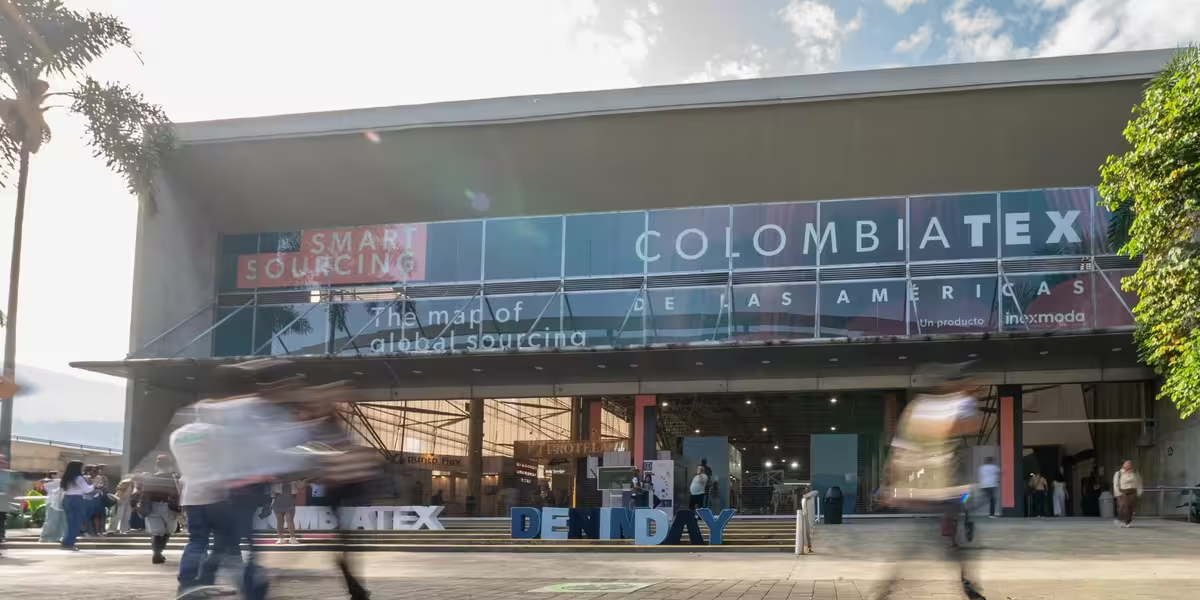
During Colombiatex 2026, one of Latin America’s most influential textile trade fairs, Escarré Spain reaffirmed its long-term commitment to the South American market, emphasizing customer proximity, advanced dosing technologies, and a service-driven business model.
In an interview with Kohan Textile Journal, Samuel Gutiérrez, Area Manager at Escarré Spain (EAS), described Colombiatex as a strategically important platform—not primarily for immediate sales, but for direct engagement with textile producers and factory owners across the region.
A Strategic Platform for Direct Market Feedback
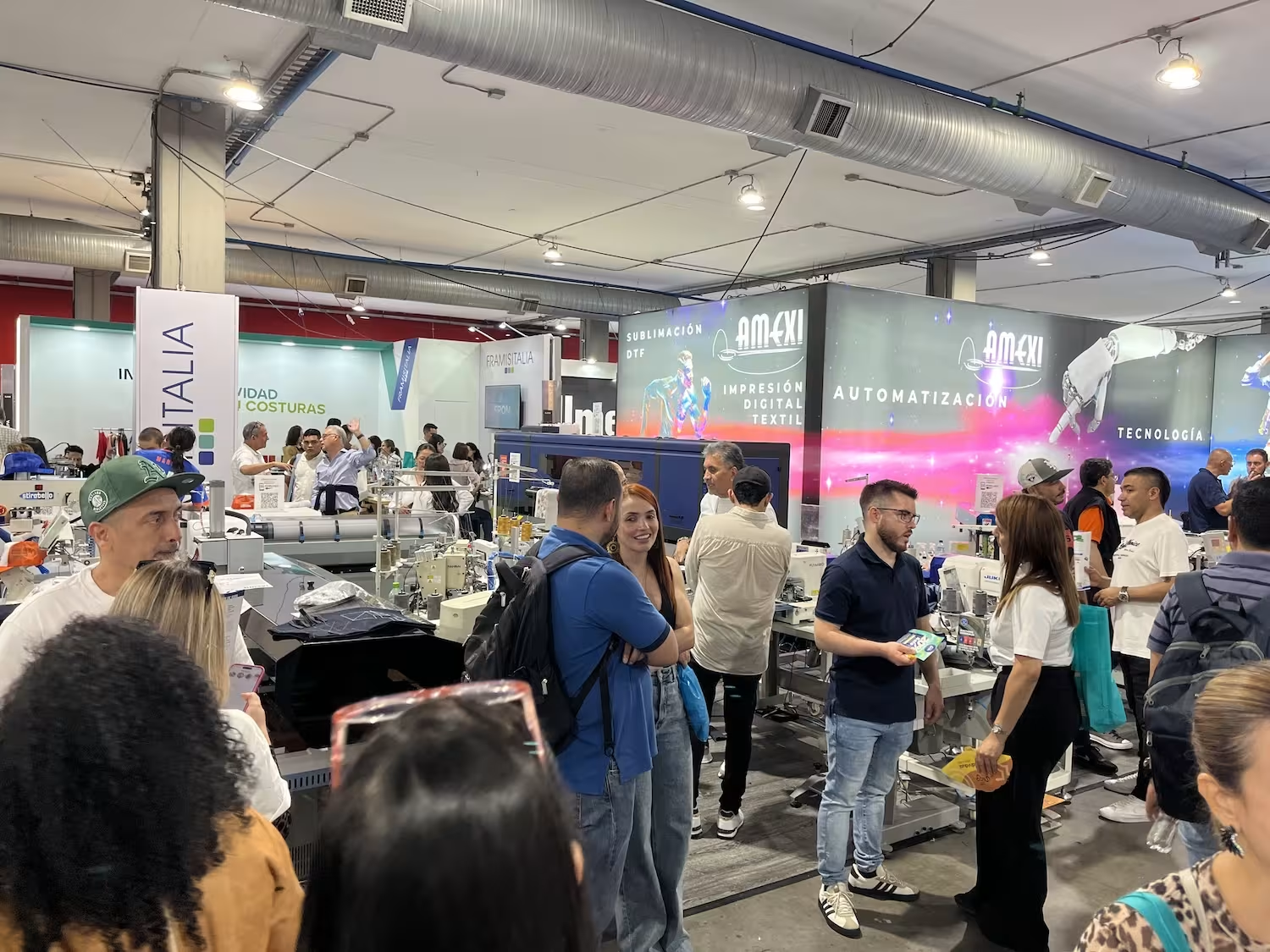
According to Gutiérrez, Colombiatex stands out because it brings together the entire value chain—from factories and producers to end customers—under one roof.
“This exhibition allows us to have direct feedback from our customers,” he noted. “Here, we don’t just present machinery; we listen. Customers explain their real challenges, and that dialogue is invaluable for us.”
He added that while closing business deals at Colombiatex can be challenging, the exhibition plays a critical role in strengthening relationships and understanding operational realities in South American textile production.
Focus on Dosing Systems and Integrated Chemical Solutions
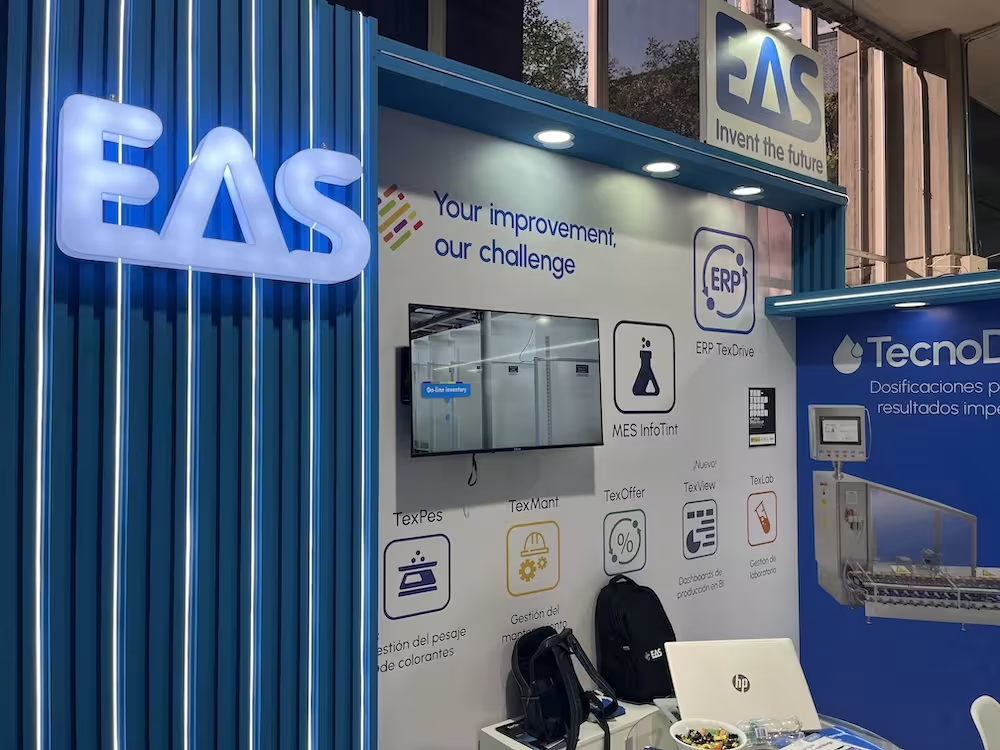
Escarré specializes in dosing systems for chemicals and colorants, with a strong focus on large-scale industrial applications. At Colombiatex 2026, the company highlighted its solutions for chemical kitchens and auxiliary dosing systems, particularly for denim and high-capacity textile factories.
Also Read: Spain Shines at ITMA ASIA + CITME Singapore 2025
“Our strength lies in large, integrated systems,” Gutiérrez explained. “We work closely with finishing and processing machines to ensure precise, efficient dosing for big factories—not small standalone units, but complete industrial solutions.”
Preparing for AI-Driven Textile Production
While Escarré is not yet fully deploying artificial intelligence in its machines, the company is actively preparing for that transition. Gutiérrez revealed that Escarré is currently building internal teams dedicated to AI integration and data management.
“The goal is to reduce trial-and-error for customers,” he said. “With data collection and AI-supported systems, producers can save time, optimize chemical usage, and improve energy efficiency without excessive testing.”
This direction reflects a broader industry shift toward smart manufacturing, resource efficiency, and digitalized production control.
Service as the Core Competitive Advantage
When asked about the success factors behind Spanish textile machinery producers, Gutiérrez emphasized after-sales service above all else.
“For us, success is not about selling machines or software alone,” he stated. “What truly matters is fast, reliable service. When a customer has a problem, they need immediate support.”
With operational bases in Spain, Brazil, and Peru, Escarré is able to provide nearly round-the-clock service to South American clients—an advantage that has become increasingly decisive in today’s competitive machinery market.
South America: A Market of Cycles and Opportunities
Looking ahead, Gutiérrez described South America as a market full of opportunity—but also volatility.
“The region is not stable in a linear way,” he explained. “One year Argentina may be strong, the next year Brazil or Colombia. It moves like a wave.”
This reality, he said, makes geographic diversification essential for machinery suppliers. Despite uncertainties in global politics and trade, Escarré remains confident in South America’s long-term textile potential and sees Colombiatex as a key gateway to that future.