




Interview with Karsten Heinz, Director Sales & Marketing, Xetma Vollenweider GmbH
During ITM 2026 in Istanbul, Behnam Ghasemi, Editor-in-Chief of Kohan Textile Journal, spoke with Karsten Heinz, Director Sales & Marketing at Xetma Vollenweider GmbH, about the company’s latest surface finishing technologies, its long-standing presence in Türkiye, the growing importance of African textile markets, and the role of sustainability in textile machinery development.
Kohan Textile Journal:
Q: Could you please introduce Xetma and tell us about the company’s background?
Karsten Heinz:
A: Xetma Vollenweider is a Swiss-German company with a history of more than 176 years in textile machinery manufacturing and development.
We specialize in mechanical surface finishing technologies for textiles, including raising, shearing, sueding, carpet shearing, and fabric cleaning. Throughout our long history, we have focused on developing innovative finishing solutions that help textile manufacturers improve product quality, flexibility, and productivity.
Kohan Textile Journal:
Q: What technologies and innovations are you showcasing at ITM 2026?
Karsten Heinz:
A: At ITM 2026, we are presenting our latest developments in textile surface finishing technologies.
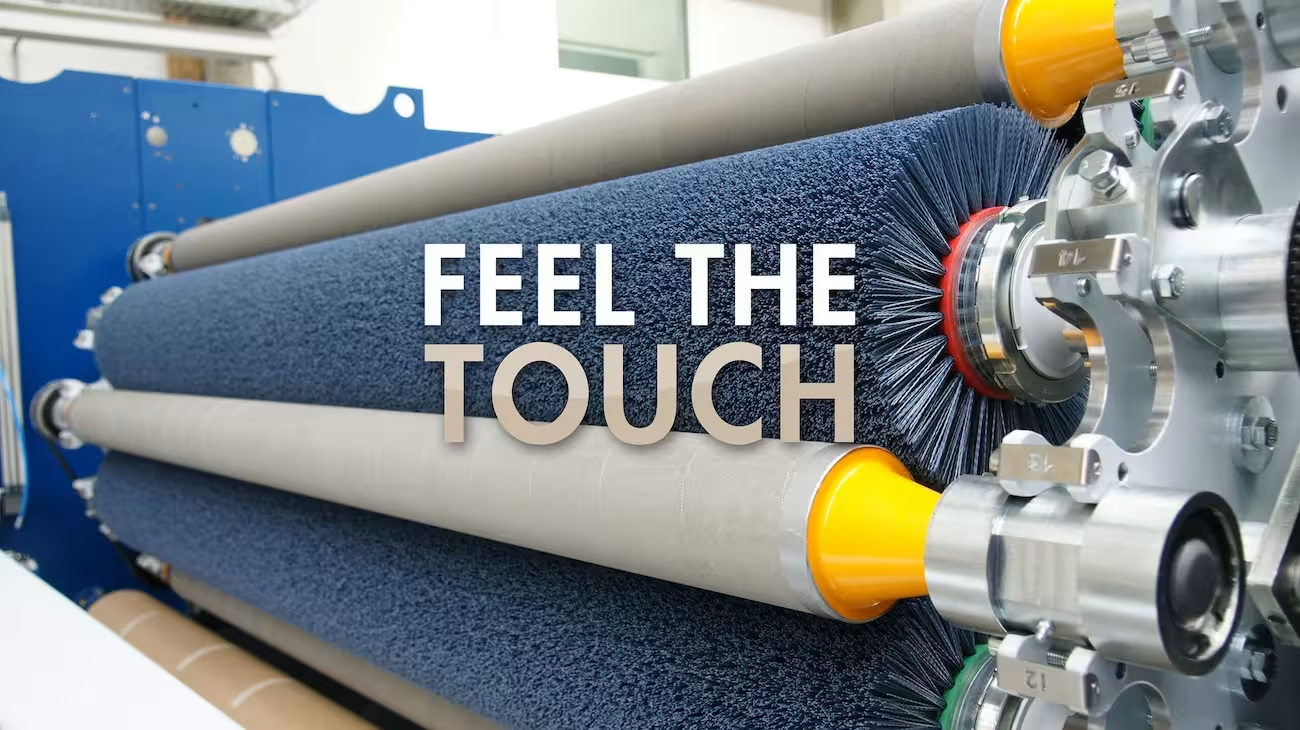
One of our key highlights is our advanced sueding technology. Our machines are capable of producing not only traditional sueding effects but also combining brush sueding and emerizing technologies within a single machine system.
This combination delivers softer hand-feel, superior finishing effects, and higher production performance compared to conventional systems.
Another important advantage is flexibility. Our machines can be converted from one technology to another, allowing manufacturers to adapt quickly to changing fashion trends and market demands. Instead of investing in a machine dedicated to only one process, customers can use the same platform for multiple finishing applications.
This flexibility makes the investment more sustainable and future-proof.
Kohan Textile Journal:
Q: How long has Xetma been active in the Turkish market?
Karsten Heinz:
A: We have been active in Türkiye for many decades and have built a very strong position in the market.
Historically, we have been particularly successful in shearing applications, but today we are also strongly involved in sueding and raising technologies.
One of our most important segments in Türkiye is carpet finishing. Many carpet manufacturers in the Gaziantep region operate Xetma carpet shearing machines, making Türkiye one of our key markets worldwide.
Kohan Textile Journal:
Q: What are your goals for the Turkish market in the coming years?
Karsten Heinz:
A: Our objective is to further strengthen our market position in Türkiye and neighboring countries.
At the same time, we aim to remain a technology leader in textile surface finishing through continuous innovation and the development of new finishing solutions.
Maintaining technological leadership and competitiveness remains one of our primary goals.
Kohan Textile Journal:
Q: How do you view the opportunities in the Middle East and Africa?
Karsten Heinz:
A: These regions are very important markets for us.
In particular, I believe that North African countries will continue to grow as textile manufacturing hubs in the coming years. We already have customers across Africa and see increasing activity in many markets.
Alongside Europe and Asia, Africa is becoming increasingly important for textile production, and we expect its role within the global textile industry to continue expanding.
Kohan Textile Journal:
Q: Are there any specific countries that you see as particularly promising?
Karsten Heinz:
A: Not necessarily.
Xetma is active globally and has representatives in more than 60 countries worldwide. We are not focused on one or two specific markets.
Our strategy is to be present wherever high-quality textiles are produced and where manufacturers value advanced textile machinery and finishing technologies.
Kohan Textile Journal:
Q: How important is sustainability for Xetma?
Karsten Heinz:
A: Sustainability is already a major priority for us and will become even more important in the future.
Our technologies are inherently sustainable because they are dry mechanical finishing processes that operate without pollution and with reduced energy consumption.
We continuously optimize our machines to minimize power usage while maximizing productivity and performance.
Sustainability is also integrated into our manufacturing operations. For example, our production facility operates its own solar power plant, which generates more electrical energy annually than we consume for manufacturing our machinery.
This reflects our commitment to reducing environmental impact both in our products and in our own operations.
Editor’s Insight
As textile manufacturers face increasing pressure to improve sustainability while remaining flexible and competitive, mechanical finishing technologies are becoming more relevant than ever. Xetma’s approach demonstrates how innovation can simultaneously address quality, efficiency, and environmental performance.
Particularly noteworthy is the company’s focus on machine versatility—allowing manufacturers to adapt to changing fashion trends without major capital reinvestment. Combined with energy-efficient finishing technologies and sustainable manufacturing practices, Xetma is positioning itself as a key technology partner for textile producers navigating a rapidly evolving global market.
Also Read: Eltex of Sweden: Helping Textile Manufacturers Improve Quality Through Yarn Monitoring and Control











