




By Behnam Ghasemi
Editor-in-Chief, Kohan Textile Journal
For decades, growth in the textile industry was closely associated with investment in brand-new machinery. Whenever spinning mills sought higher productivity, improved yarn quality, or greater automation, the conventional solution was simple: replace the old equipment with an entirely new production line.
Today, that equation has fundamentally changed.
The global textile industry is experiencing one of the most challenging periods in its modern history. Rising interest rates, geopolitical uncertainty, volatile raw material prices, increasing energy costs, labor shortages, and slowing consumer demand have all placed tremendous financial pressure on textile manufacturers worldwide. Even profitable mills have become significantly more cautious when making capital investments.
In this environment, the question is no longer:
“Which new machine should we buy?”
Instead, many manufacturers are asking:
“How can we make our existing machines perform like new?”
This shift in mindset is transforming investment strategies across the textile machinery sector.
During ITM 2026 in Istanbul, one message emerged repeatedly in conversations with machinery manufacturers, technology providers, and spinning experts: the future of competitiveness will not necessarily belong to companies purchasing entirely new production lines, but to those capable of extracting greater value from the assets they already own.
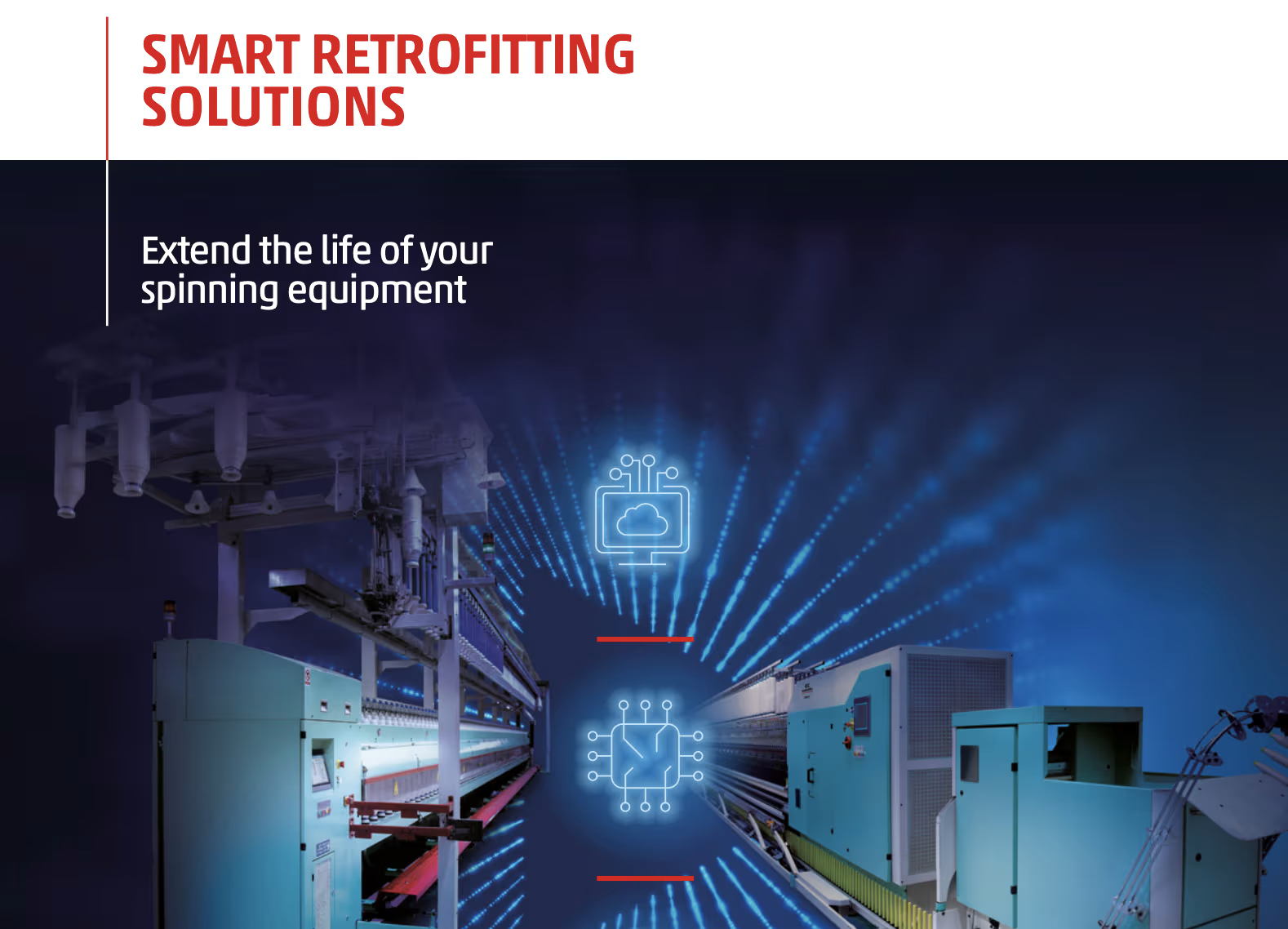
Among the companies promoting this philosophy, Marzoli Textile Engineering has developed one of the industry’s clearest strategies under a simple yet powerful slogan:
Don’t Replace. Repower.
Rather than encouraging mills to discard existing machinery, Marzoli proposes something more practical: upgrade, modernize, digitize, and prepare current production lines for the next generation of intelligent manufacturing. The concept may sound straightforward, yet it represents a profound shift in how textile manufacturers think about modernization.
Instead of viewing machinery as equipment with a fixed lifespan, repowering treats installed assets as platforms that can continuously evolve through new electronics, automation systems, intelligent controls, sensors, software, and digital connectivity.
As the textile industry moves toward Industry 5.0 and artificial intelligence, this philosophy may become one of the most important investment strategies of the coming decade.

The End of the “Replace Everything” Era
For many years, replacing machinery was considered the fastest route toward higher productivity. New machines delivered faster production speeds, lower energy consumption, improved automation, and better yarn quality. Investment cycles were relatively predictable, and expanding production capacity was often supported by strong market growth.
Today’s reality is dramatically different.
Textile manufacturers must now operate in an environment where uncertainty has become the norm rather than the exception. Economic downturns have reduced consumer demand in many markets. Rising financing costs have made large investments increasingly difficult. At the same time, geopolitical conflicts continue to disrupt logistics, energy prices, and supply chains.
Under these conditions, replacing an entire spinning line often requires enormous capital expenditure with uncertain return on investment. Consequently, mills have become far more selective about where they allocate investment budgets.
Rather than replacing machines that are still mechanically reliable, many companies are exploring ways to improve existing equipment while minimizing financial risk. This shift reflects a broader evolution in industrial thinking. Across manufacturing sectors—from automotive to aerospace and textile production—the focus is moving from replacement toward optimization.
The objective is no longer simply purchasing new assets.
It is maximizing the value of existing ones.
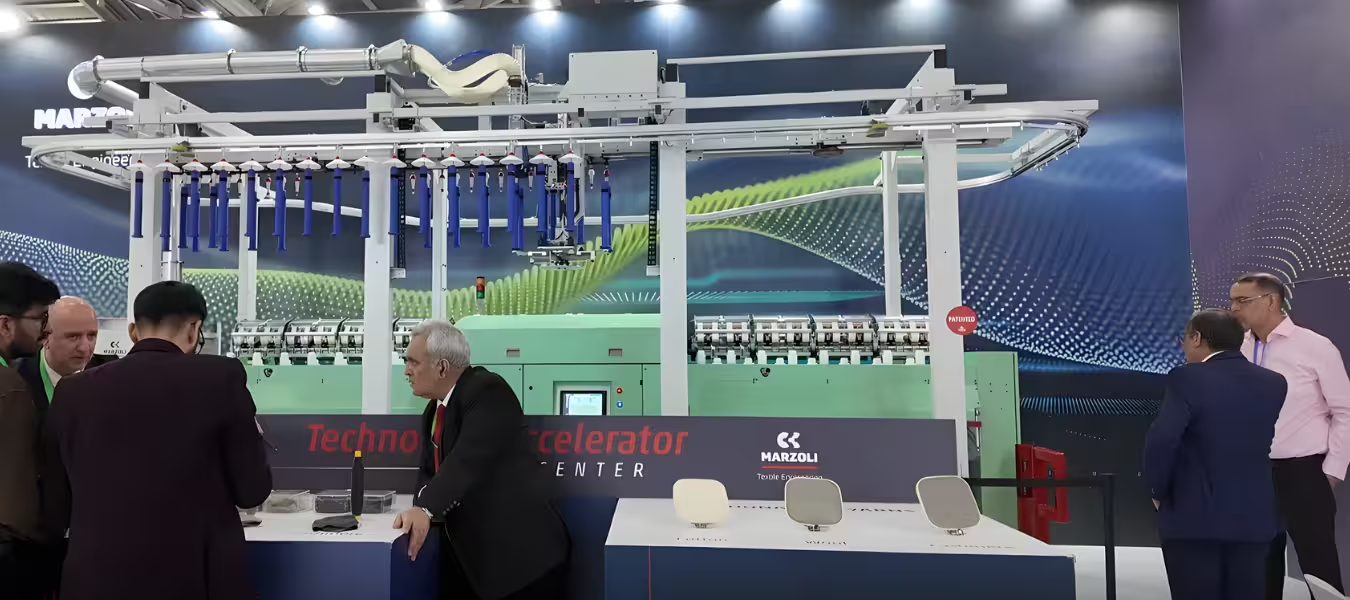
What Does “Repowering” Actually Mean?
One of the biggest misconceptions surrounding repowering is that it simply refers to repairing old machinery.
It does not.
Repairing restores equipment to its original operating condition.
Repowering goes much further.
It transforms existing machinery by integrating modern technologies that significantly improve overall performance without replacing the complete production line.
A typical repowering project may include:
- New electronic control systems
- Advanced drive technologies
- Intelligent sensors
- Digital monitoring platforms
- Energy-efficient motors
- Automation upgrades
- Data collection systems
- AI-ready communication infrastructure
- Human-machine interface improvements
- Predictive maintenance capabilities
In other words, the mechanical structure of the machine often remains intact, while its intelligence is fundamentally upgraded. This distinction is becoming increasingly important.
Many spinning machines installed over the past 10 to 20 years remain mechanically robust. Their frames, drafting systems, and core engineering continue to perform reliably. However, their electronic architecture, automation capabilities, software integration, and data connectivity may no longer meet the requirements of modern production.
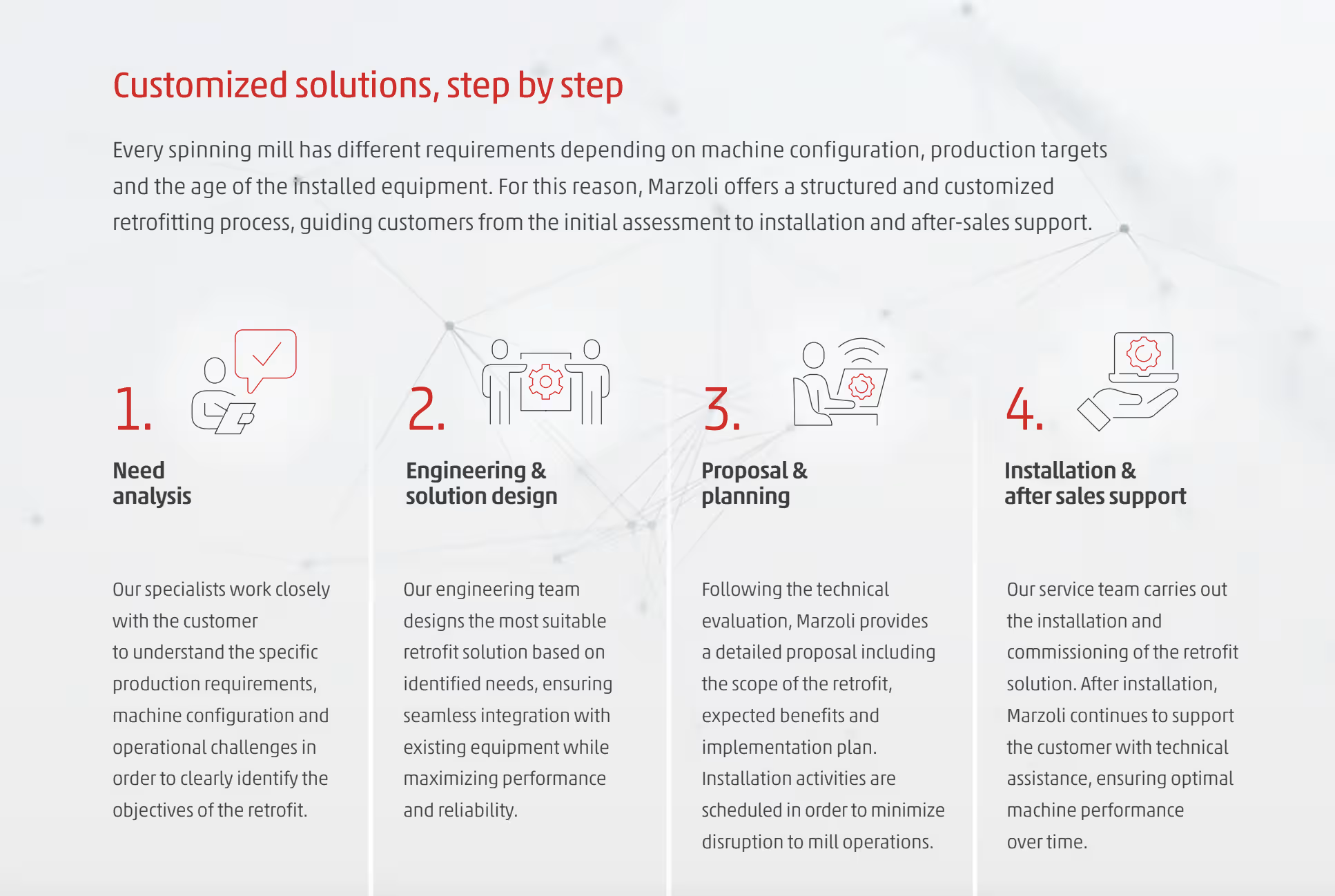
Repowering bridges this technological gap
Instead of replacing millions of euros’ worth of machinery, manufacturers can selectively modernize the components that create the greatest impact on productivity, efficiency, quality, and operational flexibility. The result is often a production system capable of delivering significantly improved performance while requiring only a fraction of the investment associated with purchasing entirely new machinery.
Perhaps most importantly, repowering allows textile mills to continue operating during modernization projects with far less disruption than complete equipment replacement. For manufacturers facing increasingly competitive markets, minimizing production downtime has become almost as valuable as improving production efficiency itself.
Why Textile Mills Are Choosing Repowering Instead of Replacement
The growing popularity of repowering is not simply the result of tighter investment budgets. It reflects a broader change in how manufacturers evaluate long-term competitiveness.
Modern textile mills are increasingly looking beyond the purchase price of machinery. Instead, they focus on lifetime value, operational flexibility, digital readiness, sustainability, and return on investment.
Repowering aligns with all of these priorities.
Rather than committing to large-scale capital expenditure, mills can implement modernization gradually, targeting the production areas where improvements deliver the fastest measurable results. This phased approach reduces financial risk while enabling continuous operational improvement.
Equally important, repowering extends the productive life of valuable industrial assets. In an era where sustainability has become a strategic business objective rather than simply an environmental concern, extending machinery life represents a significant reduction in resource consumption and industrial waste.
It also creates a foundation for future digital transformation. Today’s upgrades are no longer limited to higher speeds or improved mechanical performance. Increasingly, they are designed to prepare machinery for intelligent manufacturing, where connected equipment, real-time data, artificial intelligence, and predictive analytics become central elements of mill management.
This evolution raises an important question:
If tomorrow’s competitive advantage will depend on data rather than hardware alone, is replacing every machine still the smartest investment?
Marzoli believes the answer is no—and its Repower philosophy seeks to demonstrate exactly why.
Marzoli’s “Don’t Replace, Repower” Philosophy
At ITM 2026, Marzoli delivered a message that stood out from many machinery suppliers. Rather than focusing solely on the next generation of spinning equipment, the company emphasized helping manufacturers unlock greater value from the machines they already own. Cristian Locatelli, General Manager of Marzoli Textile Engineering, acknowledged the economic realities facing textile producers today.
“We know this is a very tough moment for the textile industry and for our customers. Our mission is to stay close to them and provide real support.”
That support, according to Marzoli, is not necessarily about selling a completely new spinning line. Instead, it is about helping manufacturers improve productivity, yarn quality, flexibility, and energy efficiency through carefully planned modernization projects.
The Repower strategy reflects a growing recognition that many textile mills already possess mechanically reliable equipment. What these machines often lack is not structural integrity but digital capability. By integrating new electronics, advanced drives, automation technologies, software platforms, and intelligent control systems, existing machinery can be transformed into far more capable production assets.
This philosophy changes the conversation from “buying new machines” to “building smarter factories.” For many textile companies, especially those operating under investment constraints, this approach offers a practical path toward modernization while preserving previous capital investments.
Repowering Is More Than a Technical Upgrade
One of the reasons the Repower concept is attracting growing attention is that its benefits extend well beyond machinery performance. A successful modernization project influences almost every aspect of spinning mill operations.
- Improved automation reduces manual intervention and minimizes the risk of operator error.
- More precise electronic controls create greater consistency in yarn quality.
- Modern drive technologies lower energy consumption.
- Enhanced sensors generate more reliable production data.
- Advanced monitoring systems improve maintenance planning.
- Digital communication between machines enables better production scheduling.
Each improvement may appear relatively small when viewed independently.
Together, however, they create a production environment that is significantly more efficient, more flexible, and better prepared for future technological developments. Perhaps even more importantly, repowering allows manufacturers to modernize gradually.
Instead of stopping production for months while installing an entirely new spinning line, mills can upgrade selected departments in phases. This staged investment model has become increasingly attractive as textile companies seek to reduce financial risk while maintaining continuous production.
Preparing Existing Mills for Artificial Intelligence
Artificial intelligence has rapidly become one of the textile industry’s most discussed technologies. Almost every machinery manufacturer now highlights AI as a cornerstone of future production.
Yet many textile producers continue asking the same question:
Does adopting AI require purchasing an entirely new factory?
The answer is increasingly no.
Artificial intelligence does not operate because machinery is new.
It operates because machinery is connected.
Successful AI applications require four essential elements:
- Reliable production data
- Digital connectivity
- Intelligent sensors
- Integrated software platforms
Without these components, even the newest machines cannot fully benefit from artificial intelligence. Conversely, many existing spinning systems can become AI-ready through modernization.
This is precisely where repowering becomes strategically important. Rather than replacing mechanically sound equipment, manufacturers can create digital infrastructures capable of supporting future AI applications.
- Production data can be collected automatically.
- Machine performance can be analyzed continuously.
- Maintenance schedules can become predictive rather than reactive.
- Energy consumption can be optimized in real time.
- Quality deviations can be identified before they become costly production problems.
Artificial intelligence therefore becomes an extension of existing machinery—not necessarily a replacement for it. This perspective fundamentally changes how textile companies should approach digital transformation.
Instead of asking:
“Which AI system should we buy?”
Manufacturers may first need to ask:
“Is our machinery ready to generate the data AI actually needs?”
Building an Open Digital Ecosystem
One of the most interesting aspects of Marzoli’s long-term strategy is its emphasis on open digital architecture. Historically, textile machinery often operated as isolated systems. Each machine generated its own information. Communication between departments remained limited. Production decisions frequently relied on manual reports instead of live operational data. Industry 4.0 began changing this model.
Industry 5.0 is accelerating it.
Marzoli envisions spinning mills where machinery, software, operators, maintenance teams, and management platforms all communicate through integrated digital ecosystems. Rather than functioning as independent units, machines become connected participants in a larger intelligent production network.
This connectivity enables numerous capabilities, including:
- Real-time production monitoring
- Predictive maintenance
- Automated process optimization
- Centralized production management
- Energy performance analysis
- Digital quality control
- AI-assisted operational decision-making
Importantly, Marzoli’s approach focuses on plug-and-play integration rather than requiring complete factory reconstruction. This significantly lowers the barriers to digital transformation. For textile manufacturers, especially those with large installed machine bases, such flexibility may prove essential.
Instead of rebuilding entire factories, mills can progressively connect existing equipment into a modern digital production environment. In many ways, digitalization becomes less about replacing machines and more about allowing machines to communicate.
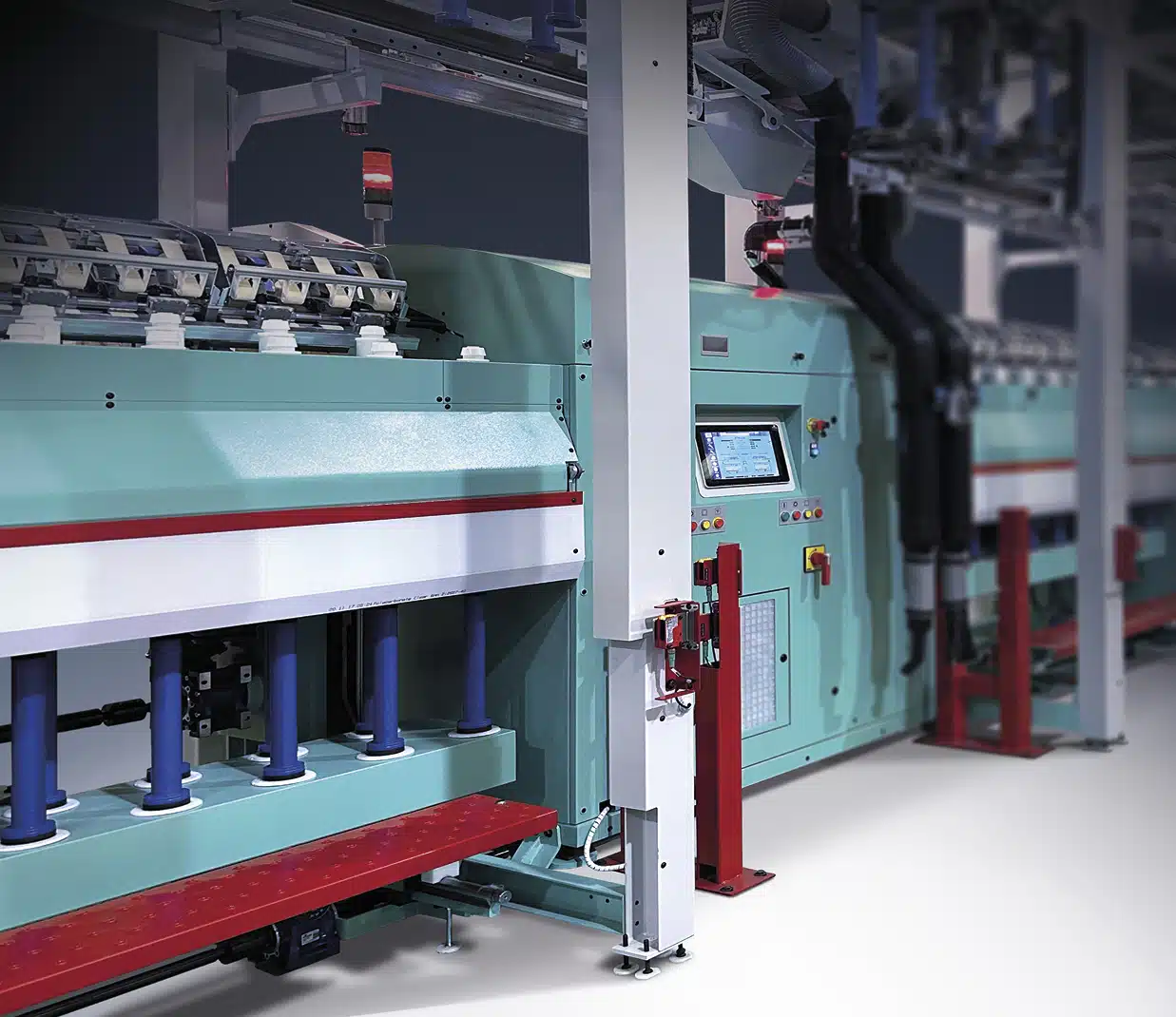
Industry 5.0 Begins with Smarter Assets
The textile industry has spent the past decade discussing Industry 4.0.
- Automation.
- Sensors.
- Connectivity.
- Digital monitoring.
Today, the conversation is evolving once again. Industry 5.0 places greater emphasis on intelligence, sustainability, flexibility, and human-centered manufacturing.
Rather than simply automating production, future factories will increasingly combine human expertise with artificial intelligence, advanced analytics, and adaptive manufacturing systems. This transition does not necessarily require replacing every existing machine.
Instead, it requires creating production environments capable of learning, communicating, and continuously improving. Repowering provides one of the most practical foundations for achieving this objective. It transforms traditional machinery into intelligent industrial assets capable of participating in tomorrow’s connected manufacturing ecosystem.
As the pace of technological change accelerates, the factories best prepared for Industry 5.0 may not be those with the newest equipment—but those with the smartest strategy for evolving the equipment they already have.
Don’t Replace, Repower: Why Modernizing Existing Spinning Machinery Is Becoming the Smartest Investment
Part 3 of 3
Sustainability Begins with Extending Machine Life
Sustainability has become one of the defining priorities of the global textile industry. While much of the conversation focuses on recycled fibers, renewable energy, and water-saving technologies, another important opportunity often receives far less attention: extending the life of industrial machinery.
Manufacturing a new spinning machine requires significant amounts of steel, aluminum, copper, electronics, plastics, transportation, and energy. Replacing an entire production line therefore carries a considerable environmental footprint long before the machine even begins producing yarn.
Repowering offers a different perspective.
Instead of discarding equipment that remains mechanically sound, manufacturers preserve the existing machine structure while upgrading only the technologies that directly influence productivity and efficiency. This approach reduces material consumption, minimizes industrial waste, and avoids unnecessary carbon emissions associated with manufacturing and transporting completely new equipment.
In many cases, extending a machine’s useful life by another 10 to 20 years can be both an economically and environmentally responsible decision. Sustainability, therefore, is no longer measured only by what a mill produces—it is also measured by how intelligently it manages the assets it already owns.
Is Repowering the Right Strategy for Every Textile Mill?
Repowering is not a universal solution. There are situations where investing in entirely new machinery remains the best option, particularly when equipment has reached the end of its mechanical life or when production requirements have fundamentally changed. However, for many spinning mills, modernization represents a highly attractive alternative.
Repowering is particularly suitable when:
Existing Machinery Remains Mechanically Reliable
Many spinning machines continue operating efficiently after 15 or even 20 years. Their frames and mechanical systems remain in excellent condition, while only their electronics or automation systems have become outdated.
Investment Budgets Are Limited
Modernization allows mills to improve productivity without committing to the significant capital expenditure required for complete replacement.
Production Interruptions Must Be Minimized
Replacing an entire spinning line may require extended shutdowns. Repowering projects are often completed in stages, allowing production to continue with limited disruption.
Digital Transformation Has Become a Priority
Companies seeking to introduce AI, predictive maintenance, production monitoring, or advanced automation frequently discover that upgrading existing equipment is the fastest path toward digital readiness.
Sustainability Objectives Matter
Extending machine life supports circular economy principles while reducing waste and resource consumption.
For many manufacturers, the decision is therefore no longer a simple choice between “old” and “new.”
Instead, it becomes a question of which investment delivers the highest long-term value.
Read more: Marzoli Hosts Uzbek Textile Delegation to Showcase Spinning and Sustainable Technologies
Editor’s Perspective
During my meetings with machinery manufacturers at ITM 2026, one observation became increasingly clear. Only a few years ago, conversations were dominated by higher production speeds, larger capacities, and the newest machine models. Today, the discussion has shifted toward something much broader.
Manufacturers are asking how they can become more intelligent rather than simply bigger.
This evolution reflects the realities of today’s textile market.
Economic uncertainty has changed investment behavior across the industry. Textile companies are expected to improve productivity while simultaneously reducing costs, lowering environmental impact, managing energy consumption, and preparing for digital transformation. These objectives cannot always be achieved simply by purchasing new machinery.
What impressed me about Marzoli’s Repower philosophy is that it addresses the industry’s current reality instead of relying on traditional sales narratives. Rather than encouraging manufacturers to replace equipment that still has significant mechanical value, the company promotes a strategy centered on modernization, digitalization, and long-term competitiveness.
More importantly, Repower recognizes that the future of textile manufacturing will depend not only on mechanical engineering but also on software, connectivity, artificial intelligence, and intelligent decision-making.
In my opinion, this reflects a broader transformation taking place across the textile machinery industry. The companies likely to lead the next decade will not necessarily be those building the largest machines—but those developing the smartest manufacturing ecosystems.
The Future Is Not About Buying More Machines—It Is About Making Machines Smarter
The textile industry is entering a new era.
- Factories are becoming connected.
- Production is becoming data-driven.
- Artificial intelligence is beginning to support operational decisions.
- Sustainability is influencing investment strategies.
- Customers increasingly expect higher quality, greater flexibility, and shorter delivery times.
Meeting these expectations requires more than new hardware.
It requires intelligent infrastructure.
Repowering represents one of the most practical ways to bridge today’s factories with tomorrow’s manufacturing technologies. Rather than forcing textile mills to choose between outdated equipment and expensive replacement projects, modernization offers a balanced path forward—one that combines existing mechanical reliability with the intelligence demanded by Industry 5.0.
Marzoli’s “Don’t Replace, Repower” philosophy reflects this transition.
It is more than a modernization program.
It is a new way of thinking about industrial investment.
For textile manufacturers navigating economic uncertainty while preparing for a digital future, the question may no longer be whether to modernize—but how to modernize wisely.
The answer, increasingly, may not begin with replacing machines.
It may begin with unlocking the full potential of the ones already on the factory floor.
Frequently Asked Questions (FAQ)
What does “Repower” mean in textile machinery?
Repowering is the process of upgrading existing textile machinery with modern electronics, automation, software, sensors, and digital technologies instead of replacing the entire machine.
What are the benefits of repowering spinning machinery?
Repowering can improve productivity, yarn quality, energy efficiency, machine reliability, digital connectivity, and AI readiness while requiring significantly lower investment than purchasing new equipment.
How does repowering support Industry 5.0?
Repowering enables existing machines to connect with digital platforms, collect production data, support predictive maintenance, and integrate with AI-driven manufacturing systems, making them ready for Industry 5.0.
Is repowering more sustainable than replacing machinery?
Yes. Extending the service life of machinery reduces material consumption, industrial waste, embedded carbon emissions, and unnecessary equipment disposal, supporting circular manufacturing principles.











