Textile manufacturing has evolved significantly through continuous innovation in machinery, even as the fundamentals of spinning and weaving have largely remained unchanged. Kamal Kulshreshtha revisits some promising textile machine innovations from the past three decades that ultimately failed to sustain themselves.
Textile manufacturing is a complex, multi-stage process, with some operations carried out in batches and others on a continuous basis. Ever since the Industrial Revolution, textile machinery has undergone continuous evolution. At the same time, the classical processes of yarn spinning and weaving have essentially remained unchanged. This article takes us down memory lane to explore some exciting textile machine innovations that emerged over the past three decades but did not survive.
If I were to identify one engineering marvel from each stage of textile manufacturing, they would be:
- Carding in yarn formation, also referred to as the heart of spinning.
- Projectile weaving machines in fabric formation, the first shuttleless weaving machines.
- Digital printing in fabric processing.
Besides these, there have been several other exciting innovations over the last three decades that were path-breaking but are now largely abandoned. I had the good fortune of being associated with three such breakthrough innovations and, with some help from colleagues to refresh my memory, I share what I recall.
RingCan from Suessen
Fibre-to-yarn conversion is perhaps one of the most complex textile processes and has been refined over centuries. The machines used for spinning fibres up to 51 mm, such as cotton, and those used for spinning longer wool fibres are strikingly different, although the underlying processes are similar.
After individualisation, combing and drawing, roving is required for spinning yarn on the ring frame in the classical system, whether for worsted or cotton yarn. It was an essential intermediate stage, but then came the concept of spinning yarn directly from sliver.
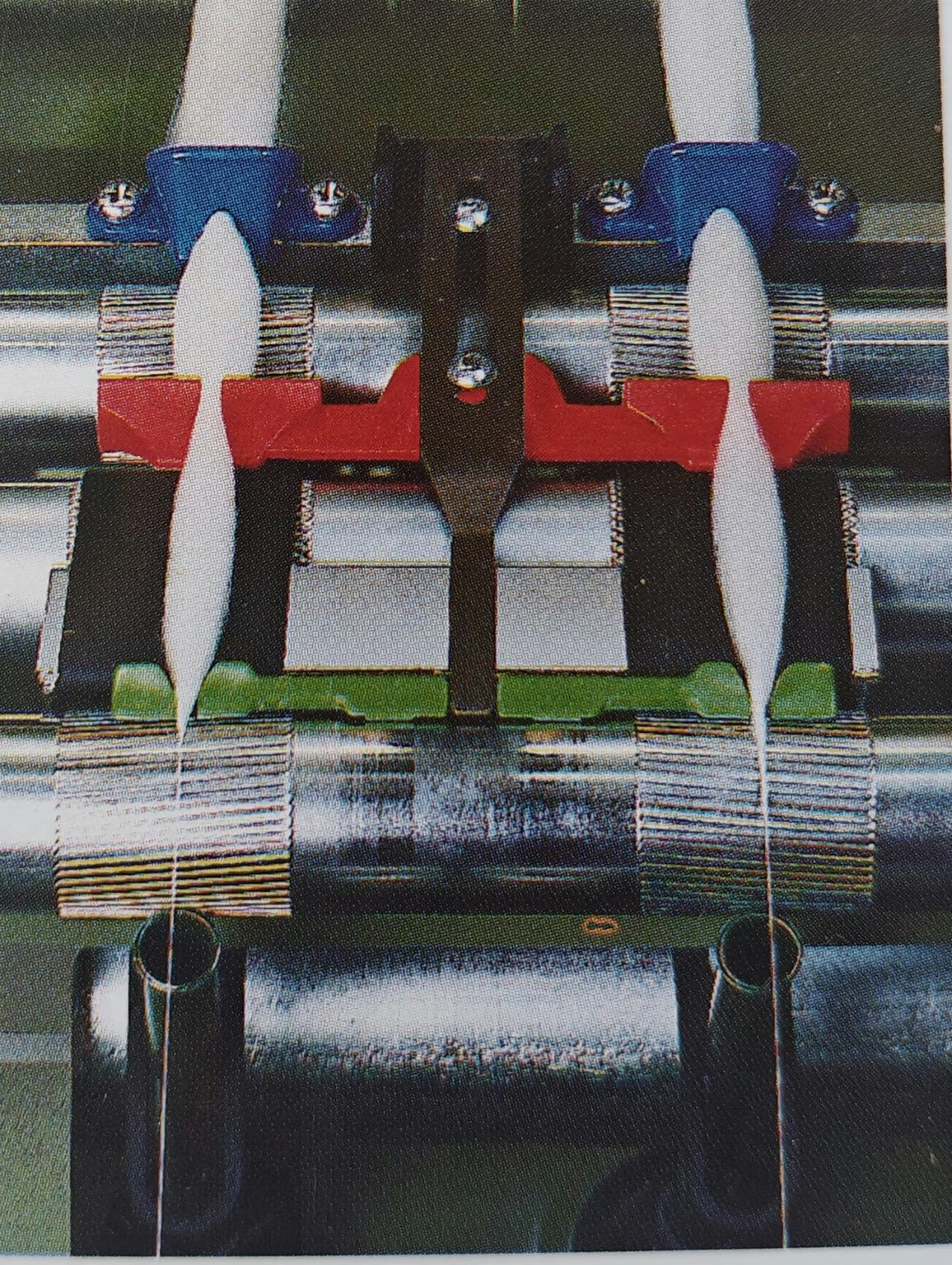
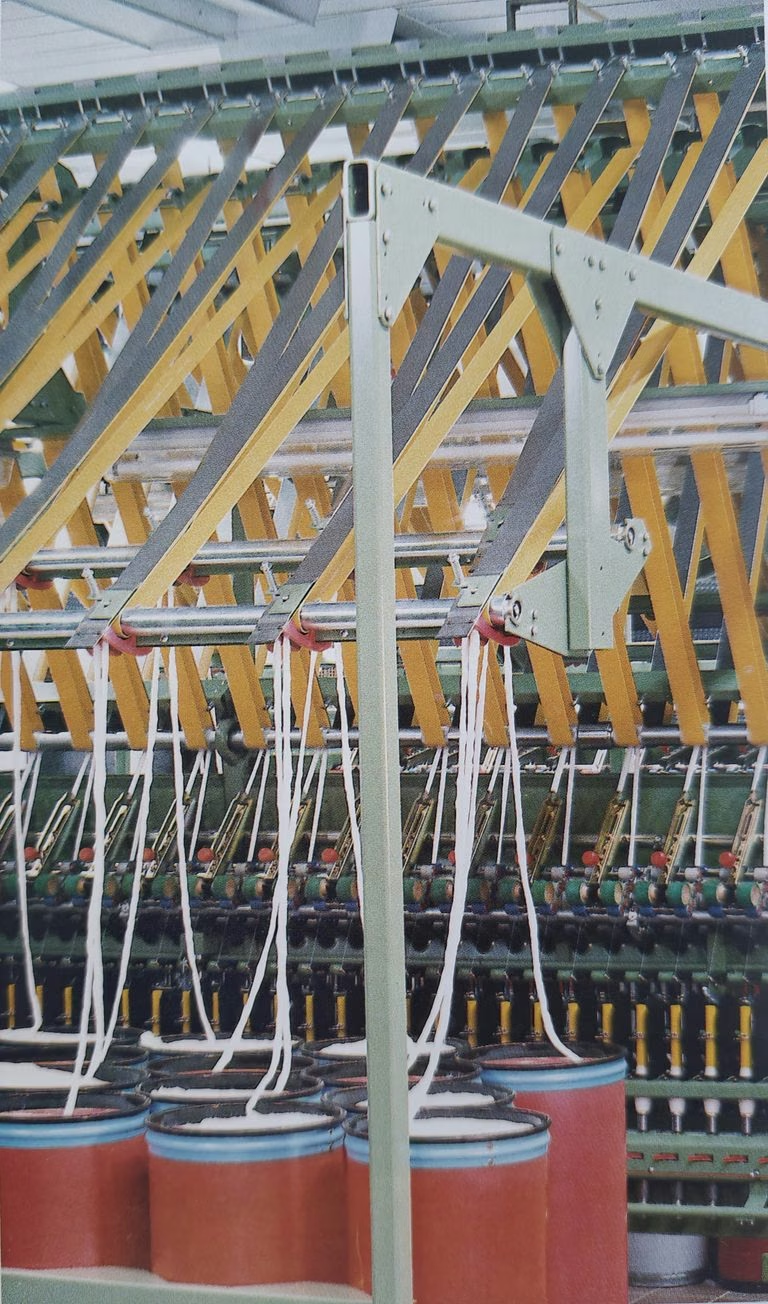
Suessen, Germany, developed a ring frame that eliminated the need for a speed frame. With a draft in the range of 100, slivers could be fed directly into RingCan and spun into yarn.
Textile veteran Prashant Mandke recounts that Bombay Dyeing was the first to adopt the technology in 1995, followed by Kamala Mills in Mumbai, which was among the pioneering investors for spinning 40s Ne cotton yarn. The sliver was transported on a narrow conveyor belt directly from cans to each spindle position. The machines were manufactured at the Suessen Asia Ltd. facility at Shirwal near Pune, a joint venture between ICC India and Suessen GmbH, Germany.
Suessen was a premium precision component manufacturer and OEM supplier for spinning machine makers before extending itself into machine manufacturing. Perhaps machine manufacturing requires a very different approach from component manufacturing, but this was a case of an exciting new product that achieved commercial success before eventually fading away.
Tritec from Hamel
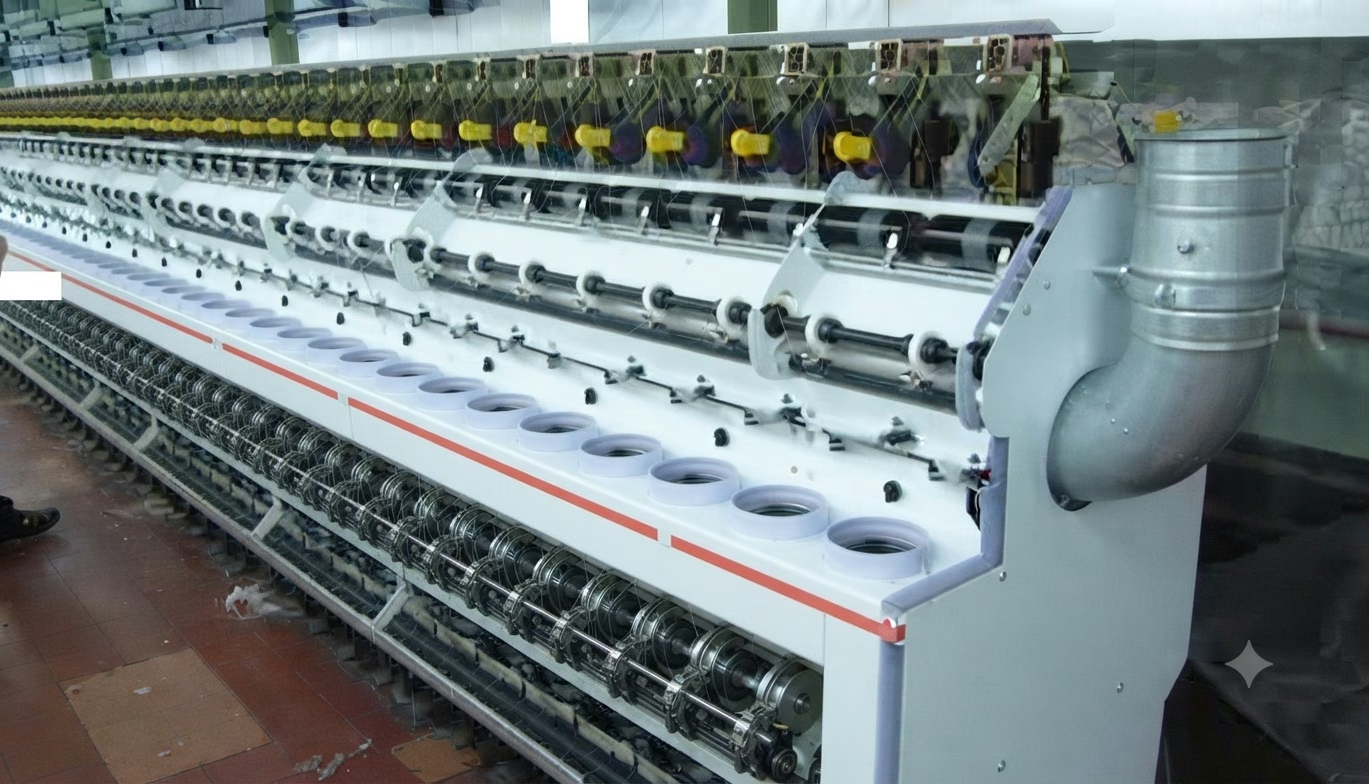
In the post-spinning stage, yarn has to be doubled. TFO (Two-for-One) twisting machines had already replaced ring doubling, but then came a twister that could insert three twists in one spindle rotation.
When I had the opportunity to be associated with Hamel, it was a small company based in the picturesque town of Arbon in Switzerland. The company showed great promise and was already part of the Saurer Group. Driven by three young innovators, Hamel developed a technology to insert three twists in one revolution instead of the established Two-for-One yarn twisting process.
Three-for-One, or Tritec, worked by making the yarn move up and down the spindle three times instead of two. One such installation was at Prakash Industries, Silvassa, where I worked as an installation engineer.
A variant of the machine was developed for twisting staple fibre yarn around a central core of elastomeric yarn. This was different from twisting two yarn strands together, as the staple fibre sheath covered the central core more evenly.
Multiphase weaving machine from Sulzer Textil
Weaving machines can be categorised based on the weft insertion technique used. Projectile, rapier, waterjet and airjet are the established weft insertion technologies that continue to be used today. Airjet weaving machines are the fastest among these. However, about two decades ago, there was an airjet weaving machine that could potentially operate at speeds three to four times higher than the fastest airjet machines available today.
The multiphase weaving machine based on airjet weft insertion technology was developed by Sulzer Textil, when it was still part of the Swiss engineering conglomerate Sulzer. I had the opportunity to see the machine in operation at the company’s R&D centre in Zuchwil, Switzerland.
Like RingCan, this was also a case of a product innovation that achieved commercial launch but could not progress beyond one or two installations in Europe.
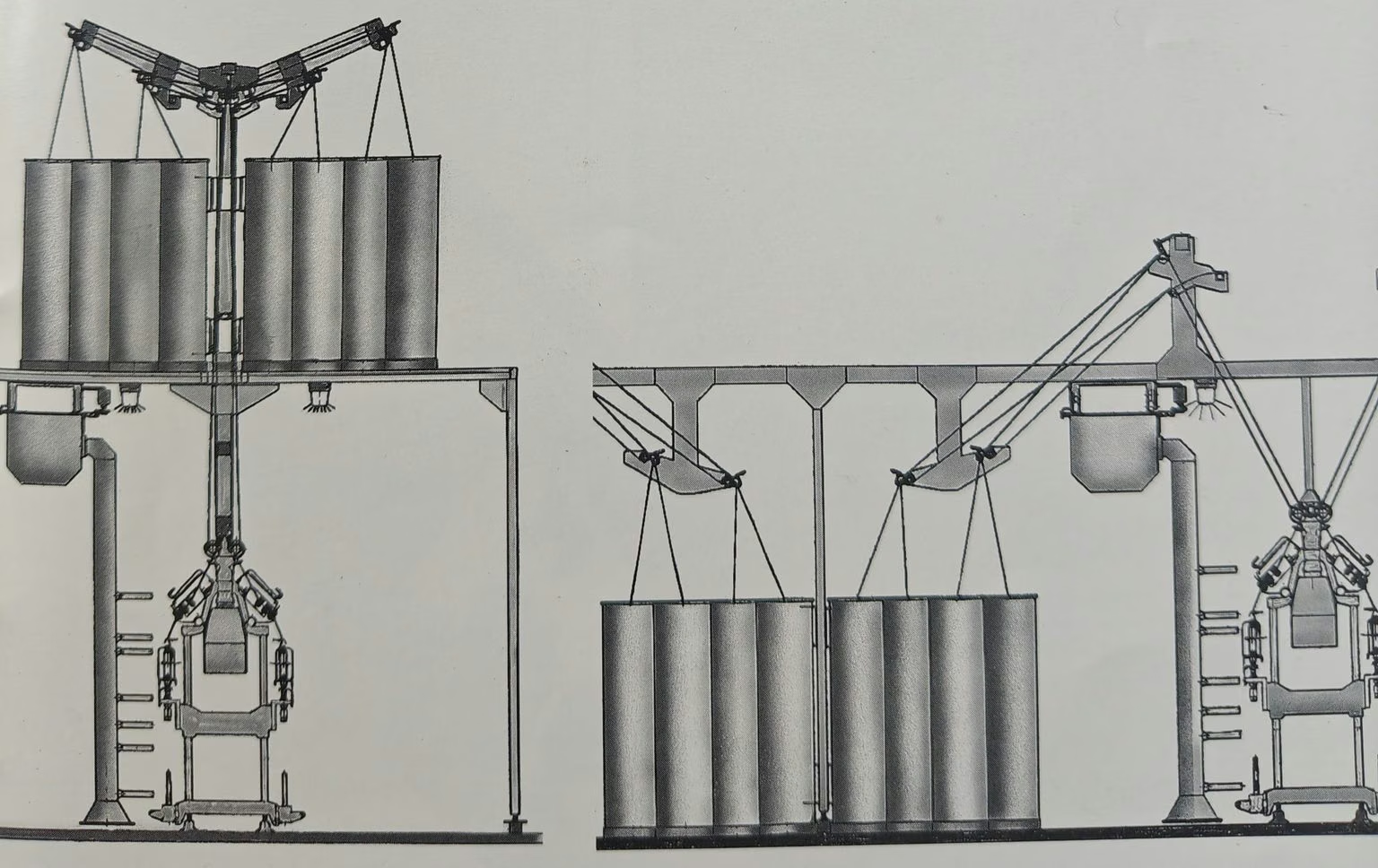
The working principle involved four simultaneous weft insertions into warp sheds, each at a different phase of the insertion cycle. The warp sheet itself moved on a cylinder, on which alternate rows of warp separation and beating-up elements were arranged circumferentially.
As the cylinder rotated, four warp sheds opened to receive four weft insertions from four airjet nozzles positioned radially to propel the weft yarn. The weaving process was cylindrical, and at any given moment, a snapshot of the operation would show four weft yarns at different stages of insertion through the four sheds.
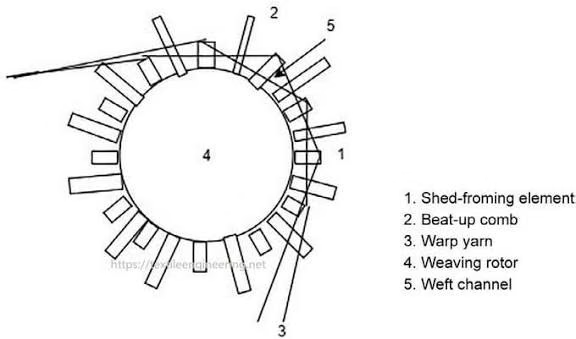
The cylinder was the closest equivalent to a sley in conventional looms. Instead of heald frames and a reed, the cylinder incorporated rows of warp separation elements alternating with rows of beating-up elements. Each weft was pushed into the cloth fell by the beating-up elements as the cylinder rotated.
While still in its infancy, the machine was positioned as a solution for weaving standard, low-cover-factor fabrics. It was capable of producing fabrics suitable for handkerchiefs or other low-GSM applications, but not fabrics such as fine shirtings using similar yarn counts.
It was an excellent concept, and the weaving speed was approximately four times that of a conventional airjet weaving machine. However, it was an idea that was still in its early stages and required further development, investment and industry collaboration.
During the 1990s, Europe had begun experiencing a shift of textile manufacturing towards lower-cost countries. As a result, the much-needed collaboration between textile users and machinery manufacturers became increasingly challenging. Sulzer eventually sold its weaving machine division, bringing an end to this breakthrough technology.
Read More: Italian Textile Machinery Innovation Takes Center Stage in Frankfurt for Techtextil 2026
The evolution continues
While the three cases discussed above may not have achieved commercial success, digital inkjet fabric printing, by contrast, has emerged as a trailblazer. No other development in textile machinery engineering has matched the transformative impact that digital textile printing has had over the past 25 years.
The textile industry was introduced to this groundbreaking technology in the 1990s, but it was only in this century that digital printing truly expanded across the market. It democratised textile printing by enabling greater flexibility, creativity and shorter production runs.
Early adopters who invested in digital printing quickly recognised its potential and expanded their capacities within a year. The industry embraced the technology rapidly, creating strong demand for digital printing solutions.
At ITMA 2015, a major milestone was achieved when machine manufacturers from China, Japan and Italy demonstrated digital printers capable of achieving speeds comparable to rotary printing, while overcoming many of its limitations. Since then, there has been no looking back.
Although the number of single-pass digital textile printers installed in India remains in single digits, thousands of scanning-type digital textile printers are already operating across the country. These machines offer production speeds ranging from 20 sqm/hour to significantly higher levels, with the latest technologies enabling innovations such as position printing and foil printing, allowing designers to create more vibrant and intricate textile designs.
It is encouraging to note that another breakthrough technology emerging from India is making its mark. Suprauno has achieved commercial success with its first 4-tonnes-per-day dyeing capacity plant becoming operational this year.
The technology offers a unique approach to waterless, salt-free dyeing of various man-made and natural textiles and their blends using conventional dyes. If adopted widely, it has the potential to benefit not only the Indian textile industry but also the global textile ecosystem in the years ahead.
Innovation in textiles has always been a journey of experimentation, perseverance and learning. While some technologies disappear despite their promise, they often contribute valuable knowledge that shapes the breakthroughs of tomorrow.