
Originally published in 2021. Fully updated and expanded for 2026.
By Behnam Ghasemi / Editor-in-Chief | Kohan Textile Journal
Europe Is No Longer About Volume — It Is About Control
Over the past two decades, textile manufacturing capacity has shifted dramatically toward Asia. Production volumes expanded. Cost competition intensified. Supply chains stretched across continents.
Yet when investors discuss long-term machinery decisions — especially in spinning, weaving, finishing, and technical textiles — Europe still defines the benchmark.
Why?
Because Europe’s machinery industry was never built on volume.
It was built on control.
Control over fiber handling.
Control over energy consumption.
Control over yarn consistency.
Control over lifecycle performance.
In 2026, as global textile producers face labor instability, volatile energy prices, stricter sustainability regulations, and pressure for automation, European textile machinery manufacturers remain the reference point for intelligent production systems.
The Structural Strength Behind European Machinery Leadership
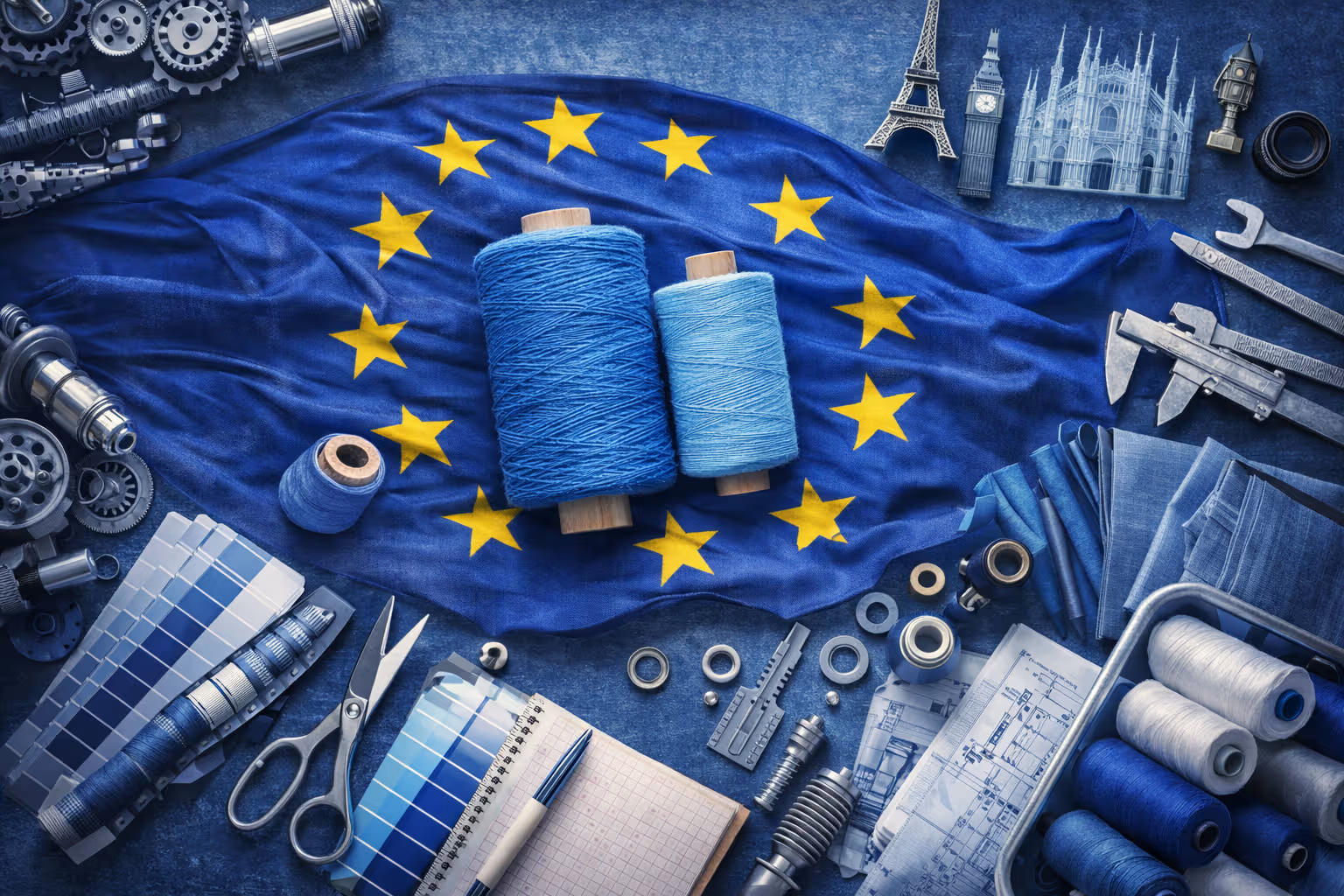
European leadership in textile machinery is not accidental. It is structural.
Germany’s engineering culture is rooted in mechanical precision and industrial durability. Switzerland has mastered system integration and production stability. Italy blends machinery with market-driven finishing innovation. Belgium dominates weaving and carpet technology.
Together, these countries form a technological ecosystem rather than isolated competitors.
Unlike cost-driven machinery models, European manufacturers prioritize:
- Long operational lifespan
- Stable performance under high output
- Energy optimization
- Intelligent machine communication
- Compatibility with recycled fibers
In short, European machinery is designed not for short-term installation — but for decade-long industrial strategy.
Germany: The Industrial Brain of Spinning Technology
Germany continues to anchor Europe’s textile machinery strength.
Companies such as Trützschler, Brückner, Karl Mayer, Mayer & Cie, Dilo Group, and Groz-Beckert represent a deep concentration of spinning preparation, finishing, knitting, and nonwoven expertise.
What differentiates German manufacturers in 2026 is not merely machine speed — but system intelligence.
Automation solutions such as AGV-based material handling, integrated draw frame systems, digital mill monitoring, and energy-recovery finishing lines demonstrate a shift from “machine supplier” to “production architect.”
German engineering focuses on reducing fiber damage, minimizing waste, stabilizing yarn parameters, and ensuring consistent quality even when processing recycled or short fibers.
That level of control is increasingly valuable in today’s unpredictable raw material market.
Switzerland: Precision, Integration, and System Thinking
If Germany represents industrial power, Switzerland represents system precision.
Rieter, Saurer, Staubli, Oerlikon, and other Swiss manufacturers have long specialized in complete solutions rather than individual machines.
Their advantage lies in integration — designing spinning and weaving platforms where every stage communicates, optimizes, and stabilizes output.
In 2026, as mills demand lower energy consumption per kilogram of yarn, Swiss manufacturers are responding with high-efficiency rotor systems, optimized ring frames, and digital platforms capable of predictive maintenance.
Swiss machinery is often selected not for aggressive expansion — but for controlled, reliable, export-grade production.
Italy: Where Engineering Meets Market Sensitivity
Italy occupies a unique position within European machinery.
Italian manufacturers such as Santex Rimar and Biancalani have demonstrated that textile finishing is no longer a mechanical afterthought — it is a performance-defining stage.
As global demand for functional fabrics, technical textiles, and performance-driven materials increases, finishing technology becomes strategic.
Italian companies excel in combining mechanical durability with market awareness — designing machinery that responds to fashion cycles, technical requirements, and niche textile innovations.
Belgium: The Weaving & Carpet Powerhouse
Belgium’s textile machinery identity revolves around weaving and carpet production.
Picanol remains a reference point in high-speed airjet and rapier weaving technology, while Vandewiele leads global carpet and tufting innovation.
In a market increasingly driven by technical fabrics, composites, and industrial textiles, Belgian weaving technology continues to set standards in speed, efficiency, and digital control.
 Currently, powerful companies are producing textile machinery. Switzerland and Germany are leading companies in the textile machinery industry. In addition, Belgium, Italy, Japan, and China are among the countries that produce high-tech textile machinery. In the following essay, top manufacturers of textile machinery are listed.
Trützschler (Germany)
Specializes in nonwoven and staple fiber machinery, carding, spinning, and fiber opening machinery. Trützschler is known for its cutting-edge technology and efficient production solutions.
www.truetzschler.de
Rieter (Switzerland)
A leader in the spinning machinery sector, Rieter offers machinery for spinning yarn from natural and synthetic fibers. Their products include ring spinning, rotor spinning, and air-jet spinning systems.
www.rieter.com
Saurer (Switzerland)
Known for its comprehensive range of textile machinery, including spinning, weaving, and embroidery machines. Saurer also focuses on automation and digitalization in textile production.
www.saurer.com
Zimmer Austria (Austria)
A leader in digital textile printing technology, Zimmer Austria manufactures machines for textile printing, finishing, and textile processing. Their innovations are highly regarded in the digital printing industry.
www.zimmer-austria.com
Dornier (Germany)
Famous for its weaving machines, Dornier is a leading supplier of high-tech weaving machines, including air-jet and rapier weaving machines. They are also innovators in the field of weaving technology.
www.lindauerdornier.com
Picanol (Belgium)
Specializes in weaving machines, particularly rapier and air-jet looms. Picanol is known for its advanced weaving technology and continuous investment in research and development.
www.picanol.be
Itema (Italy)
Leading the industry in weaving machinery, Itema specializes in shuttleless weaving technology, offering rapier and air-jet looms. They are highly regarded for their engineering excellence and advanced loom solutions.
www.itemagroup.com
Oerlikon (Switzerland)
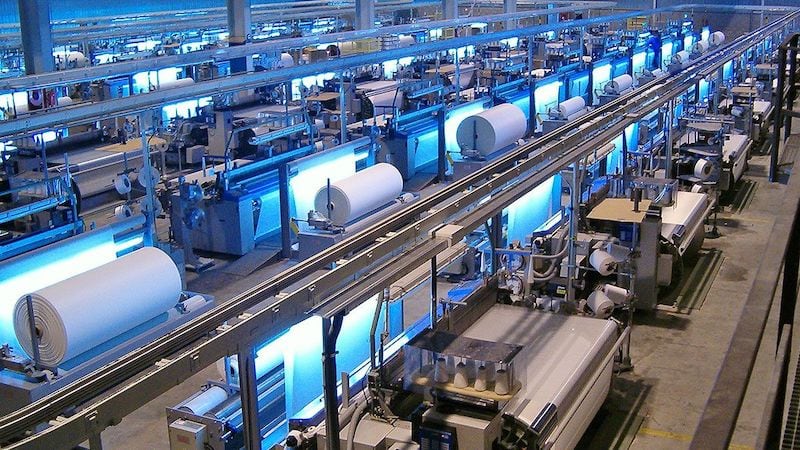
Oerlikon is a leading supplier of man-made fiber spinning systems and texturing machines, offering advanced, energy-efficient solutions for synthetic fiber production and textile manufacturing.
www.oerlikon.com
Biancalani (Italy)
Biancalani is a specialist in textile finishing machinery, providing innovative solutions for fabric processing, including drying, shrinking, and softening to achieve high-quality textile finishes.
www.biancalani.com
Dilo Group (Germany)
Dilo Group specializes in nonwoven machinery, offering comprehensive solutions for manufacturing high-quality nonwoven fabrics, serving industries from hygiene to automotive and medical textiles.
www.dilo.de
BRÜCKNER (Germany)
BRÜCKNER manufactures high-quality textile machinery, focusing on finishing, coating, and drying technologies, offering sustainable solutions for enhancing fabric performance and production efficiency.
www.brueckner-textile.com
Stoll (Germany)
Stoll is a world leader in flat knitting machines, providing cutting-edge solutions for the fashion and technical textiles sectors with innovative, highly customizable knitting technologies.
www.stoll.com
Mayer & Cie (Germany)
Mayer & Cie is a leader in circular knitting machines and braiding machinery, delivering high-quality, durable, and efficient machines for knitting, weaving, and textile production.
www.mayercie.com
Groz-Beckert (Germany)
Groz-Beckert manufactures knotting machines and other textile machinery, providing high-quality solutions that improve efficiency, precision, and performance in various textile processes.
www.groz-beckert.com
Ruti (Switzerland)
Ruti specializes in projectile weaving machines, offering reliable and innovative solutions for the weaving industry, focused on delivering high-quality fabrics and exceptional production performance.
www.rutitextil.ch
Staubli (Switzerland)
Staubli is a leader in weaving preparation, Jacquard weaving, and carpet machines, providing cutting-edge technology that enhances productivity and fabric quality in textile manufacturing.
www.staubli.com
EAS (Spain)
They provide sustainable, profitable textile solutions through advanced software and hardware integration. Their systems enhance forecasting, optimization, tracking, and R&D while ensuring seamless compatibility, driving efficiency, sustainability, and long-term competitiveness in industrial textiles.
www.escarre.com

2026: The Turning Point for Automation
Automation is no longer limited to high-wage European countries.
Rising labor costs in Türkiye, South America, North Africa, and even parts of Asia are accelerating investment in automated transport systems, digital quality control, and integrated machine communication.
European manufacturers were early adopters of these technologies.
AGV systems for sliver can transport, digital twin platforms, machine-to-machine synchronization, and centralized control software are now becoming baseline expectations in new spinning projects.
The shift is clear: productivity gains must now come from intelligence, not headcount.
Recycling Compatibility Is No Longer Optional
Another defining trend in 2026 is the growing importance of recycled fibers.
Shorter staple lengths, mixed compositions, and post-consumer waste streams require machinery capable of maintaining yarn quality under variable input conditions.
European manufacturers have responded by redesigning carding systems, optimizing draw frames, and developing energy-efficient processing technologies tailored for recycled blends.
This is not a marketing add-on.
It is a structural redesign of spinning logic.
Europe vs Asia: A Strategic Difference
Asian machinery manufacturers — particularly in China and India — have significantly improved over the past decade. In some segments, the performance gap has narrowed.
However, the strategic difference remains clear:
Asian manufacturers often compete on acquisition price.
European manufacturers compete on lifecycle performance.
For mills targeting export markets, high-quality yarn consistency, energy efficiency, and long-term resale value remain decisive factors.
This is why many projects in MENA, Latin America, and emerging African markets still rely heavily on European suppliers for high-capacity spinning and weaving installations.
The Future of European Textile Machinery
The next decade will not be defined by machine speed alone.
It will be defined by:
- Energy efficiency per output unit
- Automation scalability
- Digital integration
- Sustainability compliance
- Processing flexibility
European textile machinery manufacturers are uniquely positioned to lead this transformation because they have been building toward it for decades.
The industry may globalize further. Production may shift again. But engineering leadership remains deeply embedded in Europe’s industrial DNA.
Final Perspective
Textile machinery manufacturers in Europe do not dominate through scale.
They dominate through precision, integration, and foresight.
As 2026 unfolds, mills planning long-term investments are no longer asking: “What is the cheapest machine?”
They are asking:
“What system gives me control over quality, cost, and sustainability for the next ten years?”
And increasingly, the answer still points toward Europe.
If you represent a European textile machinery manufacturer and would like to be featured in the next update of this 2026 industry guide, the editorial team of Kohan Textile Journal welcomes professional contributions and industry insights.