An Editorial Analysis by Kohan Textile Journal
Introduction: Africa’s Industrial Story Is Beginning to Change
For decades, Africa’s position within the global economy was largely defined by the export of raw materials. Minerals, metals, oil, agricultural commodities, and cotton left the continent in enormous volumes, while much of the value-added industrial production took place elsewhere.
Today, however, a different conversation is slowly emerging across the continent.
Governments, industrial institutions, and regional economic planners are increasingly discussing how Africa can move beyond the role of raw material supplier and build stronger manufacturing ecosystems capable of supporting long-term industrial growth. One of the most important drivers behind this shift may come from a source that, at first glance, appears unrelated to textiles: sovereign wealth funds.
Across Africa, sovereign investment funds now control assets estimated at more than $164 billion. While much of the recent global attention surrounding these funds focuses on mining, energy, and infrastructure development, the broader implications for manufacturing industries—including textiles and apparel—could become highly significant over the next decade.
Because industrial transformation rarely remains limited to a single sector.
When countries begin strengthening industrial financing systems, infrastructure investment, logistics networks, and long-term development strategies, textile manufacturing often becomes one of the first industries capable of expanding rapidly alongside broader economic modernization.
Why the Textile Industry Could Benefit From This Transformation
The textile and apparel sector has historically played a central role in industrial development across many emerging economies.
Countries such as China, Bangladesh, Türkiye, India, and Vietnam used textile manufacturing not only as an export engine, but also as a foundation for industrial employment, urban growth, technology transfer, and broader manufacturing expansion. Textile production created industrial ecosystems that later supported more advanced sectors.
Africa already possesses several of the structural advantages necessary for textile growth.
The continent has:
- major cotton-producing regions,
- large labor availability,
- growing domestic consumer markets,
- strategic geographic positioning between Europe, the Middle East, and Asia,
- and increasing regional trade integration.
Yet despite these advantages, large-scale textile industrialization across many African economies has historically remained slower than expected.
One of the main reasons has been financing.
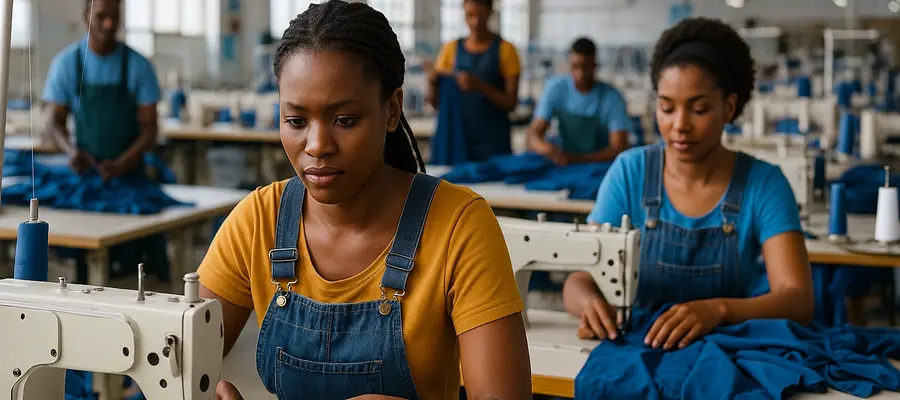
Building a competitive textile industry requires far more than low labor costs. Modern textile manufacturing depends heavily on infrastructure, logistics, energy reliability, machinery investment, industrial parks, transportation systems, and long-term capital availability. Without these foundations, factories often struggle to scale efficiently even when labor advantages exist.
This is precisely where sovereign wealth funds could begin changing the industrial landscape.
Read more : Africa Moves to Harmonise Textile and Leather Standards
Africa Is Beginning to Focus More on Value Addition
One of the most important economic shifts taking place across Africa is the growing emphasis on value-added production.
For many years, numerous African economies remained dependent on exporting raw commodities while importing finished industrial products at significantly higher value levels. Increasingly, governments are now trying to reverse that imbalance by encouraging domestic processing and manufacturing development.
This transition is already becoming visible in sectors linked to mining, metals processing, fertilizers, and industrial production. The same logic can eventually extend much more aggressively into textile manufacturing.
Cotton is perhaps the clearest example.
Africa is already an important global cotton producer, yet a large share of that cotton still leaves the continent without passing through advanced spinning, weaving, dyeing, or garment manufacturing systems. As a result, much of the higher-value textile production remains concentrated elsewhere.
If sovereign wealth funds begin supporting investments in spinning mills, textile parks, garment manufacturing hubs, logistics corridors, and industrial infrastructure, the continent could gradually capture larger portions of the textile value chain internally.
This would not only strengthen exports, but also increase industrial employment and reduce dependency on raw commodity exports alone.
The Global Sourcing Landscape Is Also Changing
The timing of this industrial discussion is particularly important because the global textile industry itself is entering a period of structural transition.
International brands and sourcing companies are increasingly reevaluating supply chain concentration risks after years of geopolitical instability, logistics disruptions, rising Asian production costs, and global transportation volatility. Many companies are now actively exploring supply chain diversification strategies to reduce dependence on a limited number of sourcing regions.
As a result, Africa is receiving growing attention as a potential manufacturing destination.
Countries such as Egypt and Morocco already play important roles in textile and apparel exports, particularly due to their geographic proximity to European markets. Ethiopia, despite facing challenges in recent years, demonstrated how rapidly international apparel manufacturing investment could flow into African markets when industrial policy and infrastructure align effectively.
Meanwhile, countries across East and West Africa are increasingly positioning themselves as future industrial manufacturing destinations.
What has often been missing, however, is the large-scale financial structure capable of supporting long-term industrial ecosystems.
This is where sovereign wealth funds may become strategically important.
Industrial Financing Is Becoming a Competitive Advantage
One of the major challenges in textile manufacturing is that industrial development requires patience.
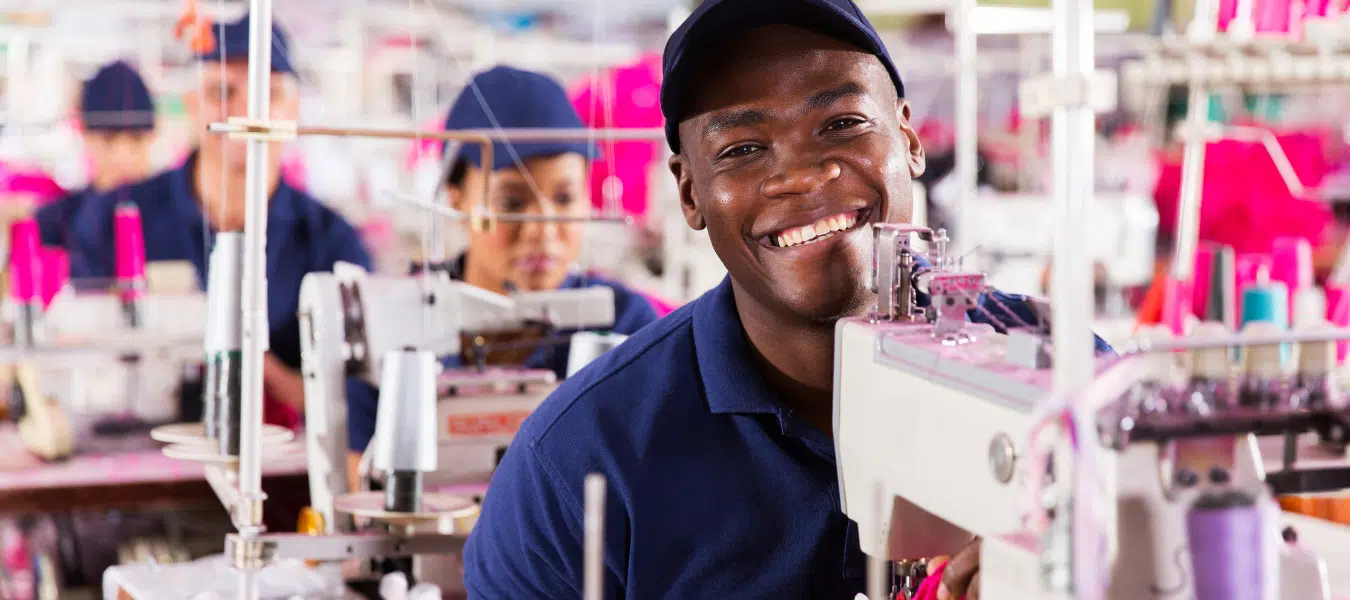
Spinning mills, weaving facilities, dyeing operations, and integrated textile parks require significant upfront investment while returns may take years to fully materialize. Many private investors remain cautious about entering markets where infrastructure development is still evolving or where industrial ecosystems are not yet fully mature.
Sovereign wealth funds operate differently from short-term speculative capital.
In many cases, these funds are designed specifically to support long-term national development objectives. This allows them to participate in infrastructure-heavy sectors that may initially appear too slow or capital intensive for purely private financing models.
If parts of these investment structures begin supporting textile industrialization directly or indirectly, they could help create a more stable foundation for manufacturing growth across multiple African economies.
Even investments initially focused on mining or energy can indirectly support textile expansion by improving electricity access, logistics systems, transportation infrastructure, and industrial connectivity.
For textile manufacturing, these foundational improvements are often just as important as factory investment itself.
Read more : Top 13 Textile Manufacturers in South Africa
Can Africa Build Integrated Textile Ecosystems?
The larger question is no longer whether Africa can participate in textile manufacturing.
That question has already been answered.
African countries are already producing garments, processing cotton, and participating in global sourcing networks. The more important question now is whether the continent can move beyond fragmented production structures and gradually build fully integrated textile ecosystems capable of competing internationally at larger scale.
That would require much deeper industrial coordination.
Successful textile ecosystems depend on close integration between cotton production, spinning, weaving, dyeing, finishing, garment manufacturing, logistics, export systems, technical training, and energy infrastructure. Countries that successfully developed textile industries in Asia spent decades building these interconnected industrial structures.
Africa may now be entering an earlier version of that same process.
The growing role of sovereign industrial capital could become one of the missing pieces necessary to accelerate this transition.
The Future Textile Industry May Be Built Around Regional Industrialization
Another important shift taking place globally is the increasing regionalization of manufacturing.
- faster delivery,
- lower logistics risk,
- improved sustainability,
- and greater supply chain resilience.
Africa’s geographic positioning gives it significant long-term potential in this environment.
North African countries already benefit from strong proximity to Europe, while East African regions increasingly attract attention for labor-intensive manufacturing potential. West Africa, with its cotton production capabilities and expanding infrastructure discussions, may also become more important over time.
If sovereign wealth funds begin supporting broader industrial strategies rather than focusing exclusively on extractive industries, textiles could become one of the sectors most capable of generating large-scale employment and export diversification simultaneously.
Conclusion: A Strategic Industrial Opportunity Is Emerging
At first glance, discussions surrounding sovereign wealth funds may appear primarily connected to mining, energy, and infrastructure.
But the long-term implications may extend far beyond natural resources.
Industrial financing has the power to reshape manufacturing ecosystems, and textile production has historically been one of the industries most capable of translating industrial investment into large-scale economic activity.
Africa already possesses many of the structural ingredients necessary for textile expansion. What has often been missing is the financial and industrial infrastructure capable of supporting long-term manufacturing ecosystems at scale.
The emergence of stronger sovereign investment structures may now begin changing that reality.
Whether Africa can fully capitalize on this opportunity will depend on infrastructure development, industrial coordination, political stability, education systems, and long-term strategic planning. But one thing is becoming increasingly clear: the conversation around Africa’s future is gradually shifting away from raw material exports alone and toward industrial transformation.
And textiles may ultimately become one of the sectors most capable of benefiting from that transition.
Editor’s View – Behnam Ghasemi, Editor-in-Chief of Kohan Textile Journal
“In our opinion, one of the most important industrial stories emerging in Africa today is not only about mining or natural resources—it is about the gradual construction of industrial financing capacity.
Textile manufacturing has historically played a transformative role in many emerging economies because it connects employment, exports, industrialization, and value-added production simultaneously. If African sovereign wealth funds increasingly support broader industrial ecosystems, the textile sector could become one of the continent’s most important long-term growth engines over the next decade.”