At ITM 2026 in Istanbul, Behnam Ghasemi, Editor-in-Chief of Kohan Textile Journal, interviewed Ömer Ozan Uras to discuss the company’s integrated recycling solutions, upcoming textile-to-textile chemical recycling technology, and its strategy for expanding in the Turkish market.
BoReTech on Circular Economy, Chemical Recycling and Sustainable Textile Production
Could you introduce BoReTech and its core business?
Ömer Ozan Uras: BoReTech is a Taiwan-owned company with manufacturing operations in China. We have three major production facilities.
Our first factory, located in Taiwan, specializes in plastic washing and recycling systems. The second facility in China manufactures polyester staple fiber, while the third is dedicated to designing and producing recycling machinery.
Unlike companies that supply individual machines, BoReTech provides complete turnkey production lines from A to Z. We design and install complete polyester fiber production lines using both virgin and recycled raw materials, as well as complete plastic washing, PET flake, PET pellet, and recycling systems.
What new technologies are you presenting at ITM 2026?
Ömer Ozan Uras: One of our key innovations is a new textile waste shredding and cleaning system that enables manufacturers to recycle textile waste directly inside their factories.
The system processes fiber waste, yarn waste, and textile production waste, allowing these materials to be cleaned and immediately fed back into production.
We are also introducing what we believe is the future of textile recycling—our textile-to-textile chemical recycling technology.
The commercial launch is planned for the end of this year, and we expect it to become one of the first comprehensive systems capable of addressing some of the industry’s biggest challenges, including automatic color separation and foreign material removal. These capabilities will enable manufacturers to produce much higher-quality recycled raw materials than current chemical recycling technologies.
Read More: From Bottle to Polyester Staple Fiber: Boretech Drives Sustainable Fiber Manufacturing
Why is the Turkish market important for BoReTech?
Ömer Ozan Uras: Türkiye is one of the world’s leading textile manufacturing countries and serves as an important bridge between Europe, Asia, and the Middle East.
We currently have around 320 production lines operating worldwide, including approximately 100 installations in India. Our technologies are also running successfully across Europe, Africa, the Middle East, and the Americas.
We have already installed our first polyester fiber production line in Türkiye, which marked our entry into this important market. My role within the company was specifically created to support BoReTech’s expansion in Türkiye because we believe the country offers significant long-term opportunities.
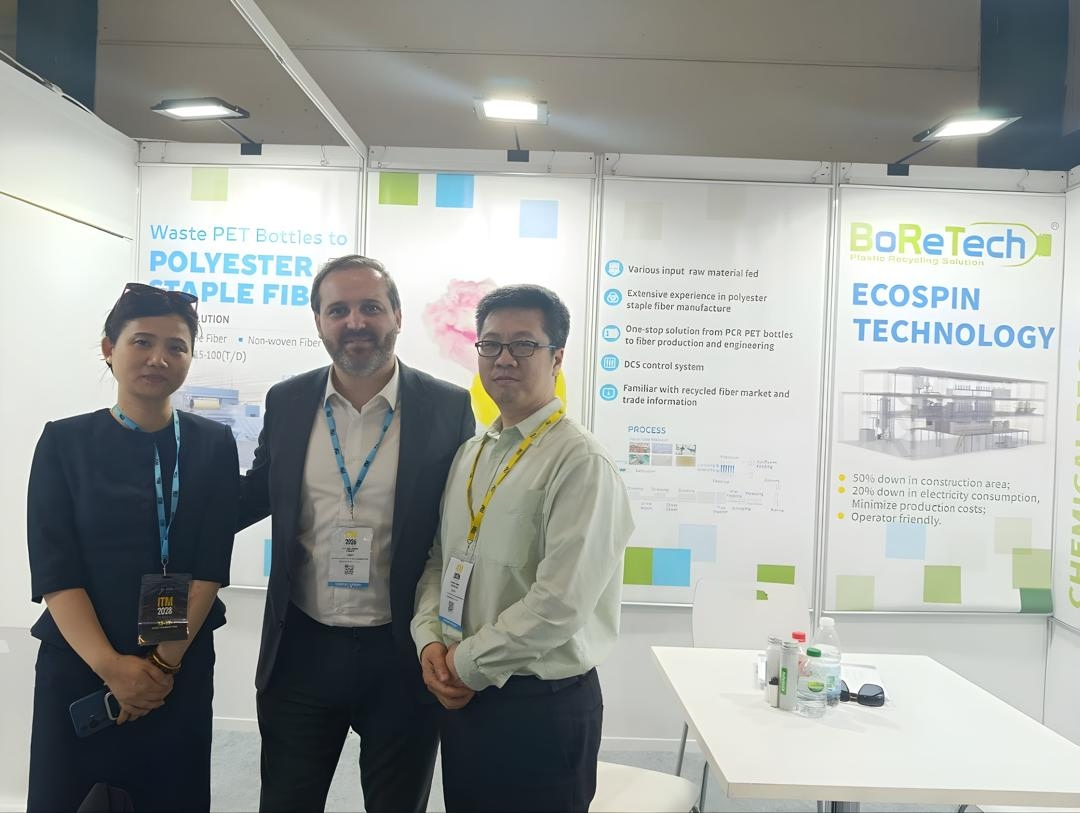
Sustainability is one of the industry’s biggest priorities today. How does BoReTech contribute to circular manufacturing?
Ömer Ozan Uras: Sustainability is not just one part of our business—it is our entire business.
Our expertise begins with collecting plastic waste, processing it through advanced washing and cleaning technologies, and transforming it into reusable raw materials.
For example, recycled PET can be converted into polyester fibers, new bottles, food-grade packaging, or many other products. Before these materials can be reused in textile production, they must be thoroughly cleaned and processed.
BoReTech provides every stage of this value chain. We wash the plastic, produce PET flakes or pellets, manufacture polyester fibers, and supply complete production lines for spinning recycled polyester yarns, including POY and FDY processes.
By integrating the entire recycling process into one complete solution, we help manufacturers reduce waste, improve resource efficiency, and build truly circular textile production systems.
What is BoReTech’s vision for the future of textile recycling?
Ömer Ozan Uras: The future of the textile industry depends on efficient recycling technologies that can produce high-quality recycled materials suitable for demanding textile applications.
Our goal is to continue developing intelligent recycling systems that make textile-to-textile recycling more efficient, more economical, and more sustainable while helping manufacturers meet the growing environmental expectations of global brands and regulators.