




In the modern high-performance circular knitting sector, mechanical value is no longer measured by raw volumetric speed, but by a machine’s capacity to handle advanced, multi-layered technical loops and sustainable materials with zero structural waste. As global textile mills balance fluctuating raw material costs, labor dynamics, and volatile geopolitical landscapes, engineering a highly stable needle loop and perfect yarn feed control has become a critical requirement for survival.
Today’s competitive mills require highly versatile, automated machinery to secure premium product margins across technical sportswear, mattress ticking, and functional apparel.
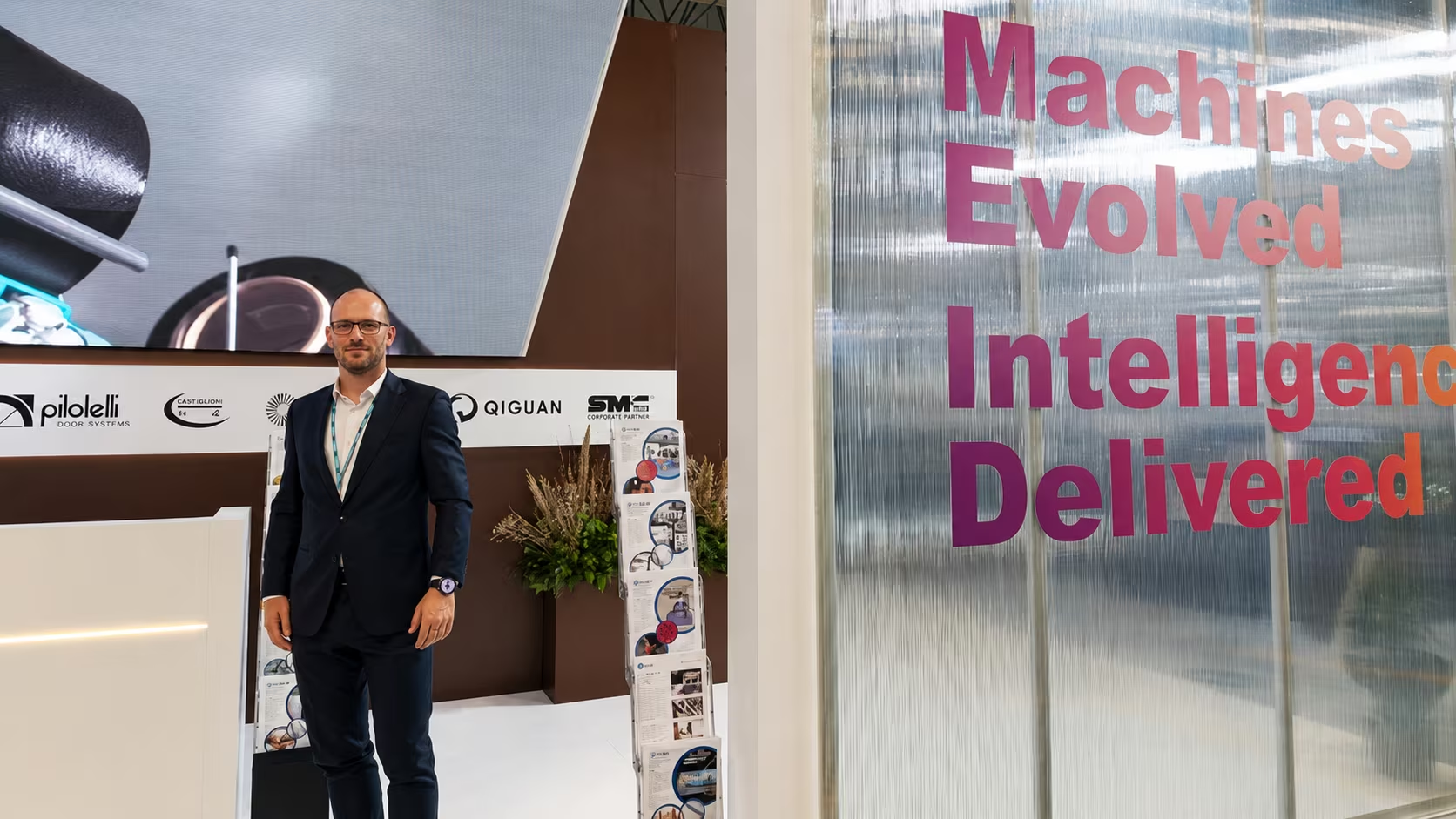
At the International Textile Machinery Exhibition (ITM 2026) in Istanbul, Behnam Ghasemi, Editor-in-Chief of Kohan Textile Journal, met with Mr. Martin Vorsatz, Managing Director at Santoni China Group (Terrot Textilmaschinen GmbH). In this exclusive Q&A editorial interview, they break down Terrot’s 160-year engineering heritage, the mechanical fluid dynamics behind their latest six-layer double-jersey innovations, and the structural economic parameters driving the continuous migration of Turkish textile capital into North African manufacturing corridors.
A 160-Year Foundation in Advanced Circular Knitting
Kohan Textile Journal: Welcome, Mr. Vorsatz. To introduce Terrot and your structural setup to our global audience, could you outline your engineering background and current product specialization?
Mr. Martin Vorsatz: My name is Martin Vorsatz, and I am the Managing Director of Terrot Textilmaschinen GmbH. Terrot has been a specialized manufacturer of high-performance circular knitting machinery for more than 160 years, maintaining an exceptionally well-established and trusted position within the international market.
Our engineering scope is highly comprehensive, covering single-jersey, double-jersey, and highly advanced electronic Jacquard machine configurations. We engineer specialized systems that serve the entirety of the global textile manufacturing industry—ranging from high-speed ready-made garment lines to specialized deep-pile mattress ticking machinery, and high-performance technical sports and leisure wear applications.
Mechanical Innovation: Six-Layer High-Tech Fleece Systems
Kohan Textile Journal: Terrot is recognized for pushing technical boundaries in double-jersey architectures. What specific mechanical innovations are you showcasing here at ITM 2026?
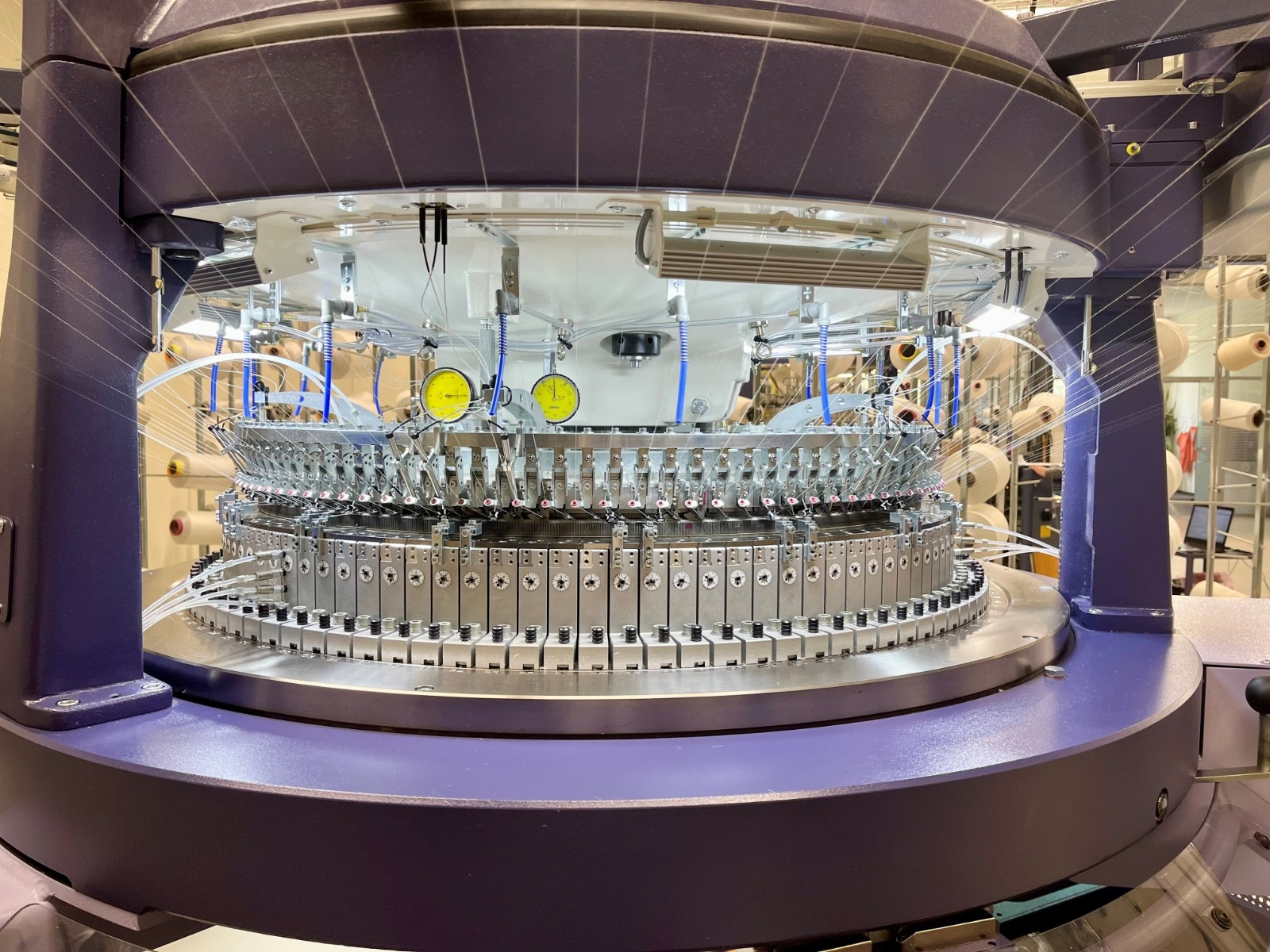
Mr. Martin Vorsatz: At this exhibition, we are highlighting our latest structural development for the double-jersey segment: our proprietary six-layer circular knitting technology, commercially designated as High-Tech Fleece. This advanced knitting method is engineered directly onto our double-jersey hardware configurations.
By optimizing the needle selection and yarn-laying paths across six distinct structural layers, we allow mills to produce premium, highly insulated, yet breathable fabrics that are heavily utilized in the performance sportswear and premium leisure wear markets.
Türkiye represents one of our most vital global markets. Therefore, showcasing this specialized, high-demand fabric structure here allows us to directly interface with advanced local knitters who require premium machinery to differentiate their production lines. Through our strategic integration within the Santoni Group, Terrot is uniquely positioned to deliver a complete, highly versatile range of circular knitting solutions—spanning from high-precision electronic hardware to robust, highly economical production setups for the entire global market.
The Geopolitics of Transit: Istanbul as a Crossroads for Global Culture
Kohan Textile Journal: How has your commercial experience been at the ITM 2026 exhibition this week, and how do you view Istanbul’s position in global textile logistics?
Mr. Martin Vorsatz: The commercial energy at ITM 2026 has been exceptional. Türkiye serves as one of the definitive hearts of the global textile manufacturing industry, making this event an incredible hotspot for international trade.
Istanbul itself represents a perfect geographic and cultural crossroads; it is a unique hub where European, Middle Eastern, and African textile sectors converge seamlessly on the exhibition floor. This centralized accessibility creates a perfect environment for us to establish real human connections, foster long-term commercial relationships, and secure valuable new technical networks with global buyers.
The region continues to show immense industrial potential. It features a highly mature infrastructure, highly skilled technical workers, and deeply experienced field engineers. This localized expertise ensures that advanced knitting innovations developed by Terrot are effectively scaled up across surrounding manufacturing hubs.
Read more: Santoni China Group to showcase integrated technology ecosystem at ITM Istanbul 2026
Mapping the Cross-Border Corridor: The Rise of Egyptian Textile Investment
Kohan Textile Journal: We are observing a significant shift in manufacturing footprints across the region. Based on Terrot’s market data, which specific countries are emerging as primary investment corridors?
Mr. Martin Vorsatz: From our experiences in the past, we see a very strong industrial connection expanding rapidly between Türkiye and Egypt. A notable number of established Turkish textile groups are actively deploying capital and setting up vertical production lines directly within Egyptian manufacturing zones.
This movement is driven by clear economic parameters. Egypt offers highly competitive operating costs, but more importantly, it features an exceptionally mature framework as a primary export gateway to both the United States and European markets.
In a global climate defined by macroeconomic uncertainty, a country’s cross-border agreements and political stability dictate long-term success. We are witnessing a clear trend where the Middle East and North Africa are growing closer, finding a shared economic future through integrated production networks.
Fostering Relationship Quality over Volumetric Expansion
Kohan Textile Journal: Many machinery builders are projecting a conservative outlook for the near future. What is Terrot’s perspective on navigating the current market challenges?
Mr. Martin Vorsatz: My perspective remains highly optimistic, though we recognize the industry is going through a structural transition. Long-term market health will not be driven by raw volumetric growth alone, but by a deep commitment to high-quality manufacturing and tighter, more resilient integration between companies.
Demanding economic periods naturally test the strength of supply chains, highlighting which commercial partnerships are genuinely reliable and built on mutual trust. While these market shifts present real challenges, they force companies to sharpen their focus, ultimately benefiting operators who prioritize engineering excellence and strong, reliable business relationships.
Zero-Waste Engineering: The Fluid Mechanics of Recycled Yarn
Kohan Textile Journal: To conclude our discussion, how is Terrot approaching sustainable manufacturing from a mechanical design standpoint?
Mr. Martin Vorsatz: Sustainable manufacturing is a fundamental requirement for the future of our industry; we must engineer systems that protect global resources. At Terrot, we are continuously refining our mechanical ecosystem to ensure our hardware supports sustainable processes seamlessly.
A major element of this research centers on the mechanical handling of recycled yarns. Recycled fibers often exhibit distinct friction profiles and lower tensile strength compared to virgin polymers. Our engineering focuses on optimizing yarn paths, sinker movements, and tension controls to run these recycled materials safely at commercial speeds without causing needle defects or structural waste.
Our ultimate engineering goal is zero-waste production. By building high-precision circular knitting machinery that eliminates fabric defects, we ensure that every meter of yarn is converted into a premium, flawless end product, maximizing resource efficiency for the knitter.











