




- Why Denim Finishing Needs to Be Rethought
- The “Perfect” Look Comes at a Price
- PP-Free Is Not an End in Itself: Alternatives Alone Are Not Enough
- Process Innovation Instead of Product Promises – From Individual Substances to System Solutions
- Between Laboratory, Laundry and Global Production Dynamics
- Sustainable Denim Finishing Between Ambition and Reality
- More Efficient Processes Are Part of Responsibility
- Innovation Is Not Plug-and-Play – Challenges, Scaling and New Application Practices
- The Market for Alternatives and Its Grey Areas
- Before the Next Development Step
The “PP-free Denim Mission”, initiated by Ruess Group, aims to accelerate the denim industry’s transition toward safer and more sustainable PP-free finishing processes.
1. Why Denim Finishing Needs to Be Rethought
Denim finishing exemplifies the structural challenges facing the textile industry: short fast-fashion collection cycles, rapidly changing trends, and demanding design requirements collide with resource-intensive processes, complex chemistry, globally fragmented supply chains, and growing expectations for economically and environmentally sustainable production.
Unlike many other segments of textile manufacturing, a significant share of the value creation in denim takes place after garment construction. Washing processes, used effects, bleaching treatments, abrasion marks, color gradients, and other manual or digital finishing techniques not only define a product’s appearance but also its market positioning. At the same time, this stage of production is associated with considerable environmental and occupational health risks.
Recent analyses show that garment finishing is one of the most resource-intensive phases of apparel manufacturing, particularly in terms of water and energy consumption, chemical usage, and worker exposure.
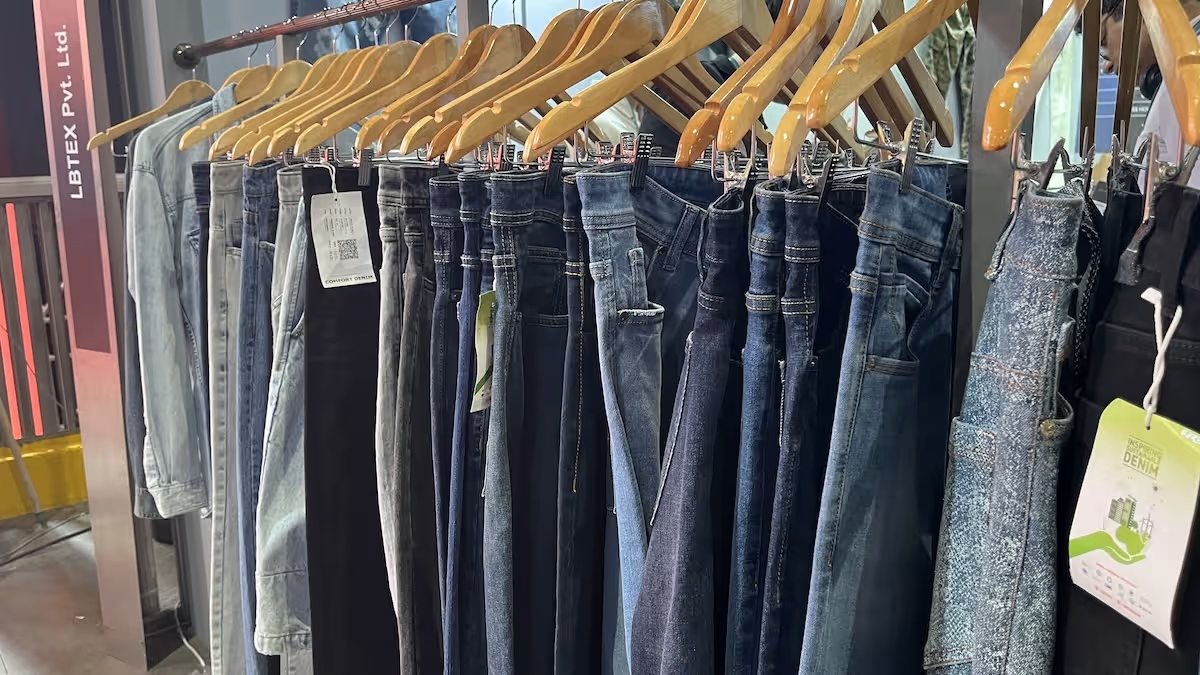
A prominent example is potassium permanganate (KMnO₄), commonly referred to as PP, which has been used for decades to create localized bleaching effects on denim garments. The substance is technically effective, inexpensive, and firmly established in industrial practice. However, its use is also associated with significant risks.
Under the European Chemicals Agency’s (ECHA) CLP classification framework1, potassium permanganate has been listed as a CMR substance (Carcinogenic, Mutagenic and Reprotoxic) since 2018. It is associated with oxidizing properties, acute toxicity, reproductive toxicity, and a high level of hazard to aquatic organisms with long-term effects.
Particularly critical are applications in which PP is not used in closed systems but is applied through spraying processes in production environments, potentially exposing workers to aerosols and chemical residues2.
(average estimation)
The scale of the issue is substantial (see Figure 1). Based on a conservative estimate of 5.5 million pairs of jeans produced worldwide each day and assuming that approximately 70% of these garments undergo KMnO₄ spray bleaching, daily consumption is estimated at around 269,000 liters of KMnO₄ solution. At an average PP concentration of 2%, this corresponds to approximately 5.4 metric tons of potassium permanganate per day—or nearly 2,000 metric tons per year.
These figures clearly demonstrate that PP is not a niche issue but rather a representative example of the broader challenge of evolving finishing processes in a way that meets both industrial requirements and increasing regulatory and societal expectations.
The objective of this dossier is therefore to assess the current state of denim finishing, examine the need for technological advancement, and evaluate different solution approaches, including emerging technologies and systemic innovations—in a differentiated and evidence-based manner.
2. The “Perfect” Look Comes at a Price
Industrial denim finishing has evolved over decades according to clear efficiency principles. Above all, processes were expected to deliver reproducible results at high speed and at the lowest possible cost. Within the context of bleaching technologies, potassium permanganate established itself as a central and highly effective tool. In particular, spray applications enable rapid, targeted lightening effects and the characteristic worn-in appearance that continues to define many denim products today.
The widespread adoption of this process is closely linked to its practical advantages. The chemical reaction is highly effective, the visual outcome is distinctive, and the application can be integrated relatively robustly into industrial workflows. In a globally fragmented production landscape, where processes must function reliably under widely varying conditions, such robustness represents a decisive advantage.
At the same time, finishing—regardless of the specific technology used—remains one of the most resource-intensive stages of the textile value chain. Water consumption, energy use, and chemical management all play a central role. Studies3 show that a significant share of the environmental footprint of denim products is determined during this phase.
This is particularly evident when considering chemical impacts. While considerable progress has been made in recent years with respect to water and energy efficiency, reducing the environmental and occupational burden associated with chemical use remains one of the industry’s greatest challenges.
From an occupational health and safety perspective, spray application is particularly critical. Inhaling sprayed PP-containing solutions poses significant risks to workers’ respiratory systems.
For this reason, PP blasting is assigned the highest possible Worker Impact Score (WIS) in the entire textile industry within the EIM system (Environmental Impact Measurement). The WIS is a metric that measures the extent to which the working conditions of a company or supply chain specifically affect the well-being, rights and quality of life of workers employed in the textile sector. The highest possible rating in the EIM system therefore means that PP blasting is assessed as having a particularly adverse impact on workers.
This makes it clear that the debate about PP-free processes is not merely a technical issue, but one that concerns occupational health worldwide, wastewater pollution and the credibility of sustainable production strategies.
3. PP-Free Is Not an End in Itself: Alternatives Alone Are Not Enough
Despite these challenges, the denim industry has so far moved away from established processes only to a limited extent. The reasons for this are less technological than structural in nature:
- Process robustness: Established processes are relatively insensitive to variations
- Experience: Production personnel are familiar with existing workflows
- Design requirements: Desired visual results have become standardized
- Cost logic: Short-term costs continue to dominate decision-making
- Local production conditions: In many regions, the use of potassium permanganate remains uncomplicated and economically attractive
In addition, denim is fundamentally a design-driven product. Even minor deviations in color tone or surface appearance can lead to the rejection of new technologies, regardless of their technical or environmental benefits.
At the same time, additional and sometimes conflicting dynamics are further increasing the complexity of denim finishing. On one side are regulatory developments – particularly in Europe – that demand greater standardization and verifiability of environmental impacts. Initiatives such as the European Green Deal and increasingly stringent ESG reporting requirements are placing growing pressure on companies to make their processes more transparent and data-driven.
On the other side are market forces. Brands and retailers are increasingly confronted with expectations that extend beyond traditional quality and price considerations. Sustainability is becoming both a differentiating factor and a reputational risk when claims cannot be substantiated.
These developments affect an industry that is organized on a global scale and where change rarely follows a linear path. In some countries, regulatory pressure serves as the primary driver of transformation. In others, change occurs more indirectly through economic dependencies—for example, due to requirements imposed by international brands, sourcing markets, or local production conditions.
What is particularly noteworthy is that many currently available alternatives to potassium permanganate-based finishing represent only limited progress. In many cases, one problematic substance is simply replaced with another without fundamentally changing the underlying process logic. The result is what may be described as “false improvements” – solutions that formally appear to be better but in practice deliver only limited or no meaningful improvement.
This observation points to a deeper issue: the real challenge in denim finishing is not the search for substitute substances, but the transformation of entire process systems.
4. Process Innovation Instead of Product Promises – From Individual Substances to System Solutions
PP is not merely a single process component; it is part of a well-established production logic consisting of spraying, reaction, neutralization, and washing. Anyone seeking to replace PP must therefore offer more than just a new active ingredient. A viable alternative must be capable of integration into existing process chains, deliver comparable visual results, and significantly reduce the risks associated with PP.
At the same time, any change may reduce costs, but it must never increase them. The immense price pressure within the industry simply does not allow for more expensive finishing processes. One particularly promising example is enzyme-based bleaching technology, which is increasingly being discussed as an alternative to conventional oxidative processes.
Unlike traditional methods, where the desired effect is achieved through aggressive chemical reactions, enzymatic bleaching relies on a targeted and controlled reaction sequence. The dye is still degraded, but the process is significantly gentler on the fibers. Through the involvement of peroxide within the reaction chain, the enzyme temporarily becomes powerful enough to break down indigo while leaving cotton fibers and elastane largely unaffected.
Such systems achieve the desired bleaching effect through a precisely coordinated sequence consisting of targeted material pretreatment (primer), a defined spray application (enzyme), and a subsequent enzymatic reaction on the garment that becomes visible almost immediately.
The key difference compared with conventional PP processes lies not only in the active ingredient used, but in the entire process architecture. Whereas PP acts directly as a strong oxidizing agent and must subsequently be neutralized, these innovative systems combine chemical pretreatment with enzymatic reactions.
This fundamentally differs from traditional approaches in which a single chemical product delivers the primary effect. While the process itself may be more sophisticated, it also creates new opportunities for process control and more precise management of outcomes. In turn, this offers the potential for significantly lower environmental impact and reduced exposure for workers.
This development is also changing the role of industry stakeholders. Suppliers are increasingly moving beyond their traditional role as chemical providers and becoming partners in process development. Technical expertise, application know-how, and process support are becoming integral components of the solution itself.
Against this background, a brief technical comparison of the various bleaching and finishing technologies is worthwhile. Sodium hypochlorite remains a widely used agent for all-over bleaching because it is highly effective, inexpensive, and capable of producing the characteristic light-blue shade associated with denim.
Potassium permanganate continues to be primarily used for localized spray bleaching because it is powerful, cost-effective, and easy to handle. Hydrogen peroxide serves different applications, such as sulfur-black denim treatments or color-tone adjustments. Ozone, meanwhile, can be used for all-over bleaching in ozone machines, although it may produce grayer shades and is not equally suitable for all localized effects.
- Strong effect
- Cheap
- Can bleach indigo as well as sulphur black
- Achieves the typically sky blue color tone
- Strong effect
- Cheap
- Easy to handle
- Can bleach indigo as well as sulphur black
- Only for all over bleaching in ozone machines
- The outcome of the color tone is sometimes a bit greyish
- Ecologic bleaching treatment → no environmentally harmful residues
The overview (see Figure 2) illustrates that there is no single alternative capable of replacing all existing processes. Instead, different technological pathways are emerging to address different production requirements. Innovative system solutions such as enzyme-based bleaching technologies (see Figure 3) are particularly interesting because they address multiple application scenarios while representing a transition from traditional chemistry-centered approaches toward more integrated process systems.
- Lower application concentration
(0.5–1.5% OrganIQ Seek vs. 2–4% PP) - Includes modern enzyme-based technology
- No damage to the cotton fibre of the textile or weakening of the elastane content
- The use of OrganIQ Seek does not lead to exposure to toxic ingredients
- In some countries, PP is subject to strict regulations, as it can be misused for the production of explosives or drugs.
Beyond the complete elimination of potassium permanganate—and therefore the avoidance of associated CMR risks—the primary advantage of such systems lies in the combination of less problematic chemistry, precisely controlled reactions, and potentially simplified process management.
Furthermore, enzymatic bleaching processes do not require neutralisation with metabisulfite or intermediate drying steps, which reduces the overall chemical input and energy consumption in the finishing process. Additional benefits relating to material quality have also been reported for new market solutions. According to manufacturer data from CHT, for example, no loss of fabric strength or damage to elastane fibers was observed. Undesirable side effects such as yellowing reportedly did not occur when using the OrganIQ Seek bleaching process, and the system is described as having a neutral and pleasant odor.
5. Between Laboratory, Laundry and Global Production Dynamics
To properly assess the significance of PP-free processes, it is worth looking at the production dynamics of the international denim market, which is characterised by a pronounced imbalance between consumer and production markets.
According to current industry estimates (see Figure 4), North America accounts for around 36% of global jeans consumption, followed by Europe including Turkey at approximately 28%. Other relevant consumer markets include Japan and South Korea at around 10%, South America at approximately 9%, as well as Southeast Asia, China and India with smaller, but in some cases dynamically growing, shares.
On the production side, the picture looks different. The largest manufacturing and finishing capacities are primarily located in countries and regions that themselves account for only a comparatively small share of global jeans consumption.
According to the estimate, Bangladesh is the largest production location at around 26%, followed by Pakistan at approximately 14%, Southeast Asia at around 11%, Mexico at approximately 10% and China at around 8%. Further production shares are accounted for by Brazil, India, Egypt and the Middle East, Central and Latin America, and other regions.
This comparison highlights a central market dynamic: many of the largest production countries are not the largest consumer markets. As a result, the pressure for change often does not originate where production takes place, but in the so-called buyer nations — namely North America, Europe or Japan/South Korea — where brands, retailers, regulation and public perception exert a stronger influence on sustainability requirements.
However, the implementation of these requirements must take place in production countries that operate under different cost, infrastructure and process conditions than the buyer nations.
For denim finishing, this creates a structural tension. Brands and regulators are increasingly calling for more transparent, safer and more resource-efficient processes; producers must translate these requirements into existing industrial workflows. This is precisely why the question of PP-free and more responsible processes is not only a technical issue, but also a market-strategic one: innovation must work where production takes place — even if the impetus for change often comes from the sales markets.
Another important trend is the growing integration of technologies that were originally introduced merely as supplementary tools. Processes such as laser technology and ozone treatment are no longer viewed as isolated solutions but increasingly as components of comprehensive process chains. Nevertheless, these technologies are not direct substitutes for traditional methods.
Laser technology provides a useful example. While manual scraping often produces more authentic and individualized results, laser-generated effects are highly reproducible but may appear less natural because every treated garment looks virtually identical. Moreover, laser technologies frequently require additional cleaning steps or booster treatments and involve substantial capital investment. Laser machinery is extremely expensive, particularly considering that laser treatment can only partially replace localized spray bleaching.
These realities demonstrate that the future of denim finishing is unlikely to be defined by a single technology. Instead, it will most likely consist of intelligently combined process chains in which laser systems, ozone technologies, enzymatic solutions, low-water processes, nebulization, foam applications, and optimized washing technologies each contribute according to specific product requirements.
The critical question is whether these technologies can achieve measurable reductions in environmental and occupational impacts—and whether they can be successfully scaled under industrial production conditions.
6. Sustainable Denim Finishing Between Ambition and Reality
Sustainability in denim finishing is not merely a question of better technology; it is also a question of credibility. Particularly in areas where problematic technologies are coming under increasing scrutiny, markets for alternatives are emerging – and with them, new communication grey areas. Terms such as “PP-free,” “eco,” “sustainable,” and “responsible” initially sound like signs of progress.
The decisive question, however, is what actually lies behind these claims: a genuinely improved process, a measurable reduction in risks, or simply new packaging for familiar chemistry.
One particularly sensitive issue is the marketing of purported alternatives to potassium permanganate. Within the international market, there are reported cases in which products are promoted as alternatives even though they continue to rely on potassium permanganate—albeit in diluted form or under a different commercial name.
For an industry seeking greater transparency and credibility, this is highly problematic. When a product appears to represent progress while continuing to rely on the same critical mechanism of action, the sustainability debate is not resolved but merely obscured.
This grey area is especially relevant because formal compliance does not automatically equate to a more responsible process.
While certifications, positive lists, and assessment frameworks can provide useful guidance, it is often difficult to determine whether, and to what extent, the information provided by producers is accurate and verified. Certificates do not replace a technical assessment of which substances are actually being used, how they are applied, and what risks arise during production.
Potassium permanganate clearly demonstrates that a process does not become unproblematic simply because it remains compatible with certain assessment systems or is marketed under a different commercial name.
As long as the majority of the denim industry relies on certifications,
nothing will change.
If potassium permanganate is merely diluted, reformulated, or replaced by another problematic chemistry, the resulting progress remains limited. Responsible innovation begins where the process itself can be demonstrably improved—in chemistry, application methods, worker protection, wastewater impacts, process design, and industrial scalability.
Against this backdrop, sustainability in denim finishing should not be understood as a marketing claim but rather as an evaluation principle. Anyone positioning a process as more responsible should be able to clearly demonstrate the nature of the improvement:
- Does it eliminate a critical substance?
- Does it reduce worker exposure?
- Does it generate less problematic wastewater?
- Does it require less neutralization chemistry?
- Does it improve material preservation?
- Or does it offer a genuinely sustainable long-term solution rather than a temporary improvement?
For brands, manufacturers, and chemical suppliers alike, this level of transparency is becoming increasingly important. The stronger the regulatory and public pressure becomes, the less sufficient it is to simply label a process as “PP-free.” The real question is: Is it demonstrably better?
7. More Efficient Processes Are Part of Responsibility
The introduction of new technologies in denim finishing is always an economic decision. Beyond direct costs, factors such as process stability, scalability, and implementation effort play a crucial role.
Systemic solutions such as enzymatic bleaching technologies often place greater demands on process management. They require training, process adjustments, and close collaboration among stakeholders throughout the value chain. At the same time, however, they offer considerable potential for efficiency gains, for example through reduced process steps or lower resource consumption.
The economic assessment of such technologies is therefore complex. Higher upfront costs may be offset by lower overall process costs in the long term through savings elsewhere in the production chain. At the same time, intangible factors such as risk reduction and reputational benefits are becoming increasingly relevant and commercially significant.
8. Innovation Is Not Plug-and-Play – Challenges, Scaling and New Application Practices
Despite the progress described above, significant challenges remain. Many new technologies are more sensitive than established processes and require a higher degree of control, expertise, and operational discipline. This can present a particular hurdle in production environments with limited technical resources.
Another critical factor is acceptance on the design and brand side. Even minor differences in color appearance or surface texture can result in alternative technologies not being adopted—or even being deliberately rejected—despite their proven positive impact on worker safety and environmental performance.
In this sense, designers and brands are not merely customers but active gatekeepers of technological innovation. Their willingness to embrace alternative processes often determines whether new technologies succeed in the marketplace.
These dynamics make it clear that technological solutions alone are not sufficient. They must either be integrated into existing market logics or contribute to actively reshaping them.
9. The Market for Alternatives and Its Grey Areas
The spectrum of alternatives available in denim finishing is broad, ranging from incremental improvements to fundamental system changes.
Laser technology, already mentioned above, is often perceived in international discussions as one of the most advanced solutions available. Within denim finishing, it is particularly relevant where manual abrasion techniques (hand scraping), whiskers, crease effects, or localized worn looks are to be reproduced in a more consistent and worker-friendly manner.
| Hand scraping | Laser |
|---|---|
| Every scraping is different → Authentic |
Every scraping is similar → Reproducible |
| Local spray bleach necessary | Can partially replace local spray bleaching |
| No subsequent cleaning necessary | Subsequent cleaning may be necessary |
| Clear scraping image | Laser image is often slightly blurry → Use of a laser booster for a clearer laser image |
| Personnel costs | Lower personnel costs, but high equipment purchase costs |
Laser systems can partially replace manual processing and reduce worker impact by eliminating hazardous or ergonomically demanding techniques. However, laser technology is not a complete alternative to chemical bleaching processes (see Table 2). Localized spray bleaching can often only be partially replaced, and depending on the desired appearance, additional washing, cleaning, or booster treatments may still be required. There are also aesthetic limitations.
While laser-generated effects are highly reproducible, they do not always appear as individualized or authentic as manually created finishes. As a result, experts generally view laser technology as an important component in the digitalization of manual techniques rather than a stand-alone solution for all PP-related applications.
A wide variety of chemical alternatives also exists (see Figure 2). However, their quality varies considerably, and not every alternative automatically leads to lower environmental impacts. The decisive question is whether these technologies fundamentally change the underlying process logic or merely modify existing approaches.
One important chemical alternative is ozone, which has become established for specific bleaching and cleaning applications. Ozone can lighten indigo, reduce back-staining, and subsequently decompose back into oxygen, thereby avoiding residues comparable to those generated by conventional bleaching chemistry.
Studies4 point to potential advantages resulting from lower water and energy consumption. At the same time, they demonstrate that process parameters such as moisture content, treatment time, and pH value play a decisive role in determining both the final color result and the physical properties of the fabric.
The “Innovations and Challenges in Denim Finishing: 2024 Report”5 also classifies ozone as an established technology, particularly for all-over bleaching and back-staining control. However, it becomes equally clear that ozone is primarily effective in appropriately equipped machinery and for specific process objectives. For localized spray effects or highly precise vintage looks, ozone does not automatically provide a complete replacement for PP-based treatments and is therefore best regarded as one component within integrated process chains.
Among PP-free technologies, enzymatic bleaching systems represent a particularly significant advancement. Unlike conventional oxidative alternatives, they do not merely substitute one active ingredient for another. Instead, they rely on a carefully coordinated process logic in which pretreatment, controlled application, and enzymatic bleaching reactions interact in a precisely defined manner.
In the OrganIQ Seek system, for example, garments are first pretreated with a primer, either through dipping followed by hydro-extraction or through spray application. The enzyme is then applied to the moist garment, and the bleaching effect becomes visible immediately, despite both liquids being transparent.
The key advantage of such systems lies in their ability to create localized bleaching effects without the use of potassium permanganate while following a more controlled process approach than many purely chemical replacement technologies. In doing so, they address several key weaknesses of conventional methods, including the use of critical chemicals, the need for neutralization steps, wastewater impacts, material degradation, and worker safety concerns.
Even though switching to enzymatic bleaching processes initially requires a slight change in the production workflow — such as appropriate handling of wet garments — enzymatic bleaching processes like OrganIQ Seek are proving convincing to producers already testing them. They describe the process conditions as pleasant and easy to control and the technical results as consistently very good; depending on process optimisation, they also point to significant cost savings.
Enzymatic bleaching systems therefore currently appear to represent one of the most promising pathways toward more responsible denim finishing—not as a universal solution for every application, but as a qualitative step away from simple chemical substitution and toward more controlled, process-integrated technologies.
10. Before the Next Development Step
The transformation of denim finishing forms part of a broader transition taking place throughout the textile industry. Regulatory requirements, growing expectations regarding transparency, and the need for more efficient resource utilization are all driving this change.
At the same time, progress in this field rarely follows a linear path. Technological innovation, market demands, and regulatory developments interact with one another, creating a complex environment of opportunities and constraints. The central challenge is to develop solutions that not only work technically but can also perform successfully under real production conditions, within global supply chains, and in response to the expectations of brands, retailers, and regulators.
Systemic approaches that integrate chemistry, process design, and application expertise offer a particularly promising perspective. The future of denim finishing will not be defined by individual technologies alone but by the ability to manage complex processes in a more controlled, transparent, and continuously improvable manner.
As a result, the criteria by which “better” denim is evaluated are also changing. For many years, sustainability discussions focused primarily on raw materials and fibers, such as organic cotton, recycled fibers, or alternative material blends. Increasingly, however, attention is shifting toward the production process itself:
Which chemicals were used? How were workers protected? What wastewater and environmental impacts arise during finishing? How much water is consumed per pair of jeans produced? What do global transportation and sourcing routes look like? How credibly can improvements throughout the supply chain be verified?
This perspective is becoming increasingly important not only for regulators and brands but also for retailers and end consumers. While the chemical burden of textiles during consumer use has been publicly debated for years, growing attention is now being paid to the conditions and impacts experienced by the people involved in manufacturing. As a result, sustainability within the denim sector is evolving from a purely material-focused discussion into a broader conversation about processes, accountability, and responsibility.
It is therefore high time that the approaches gaining traction are those capable of combining technological performance, industrial feasibility, and credible reductions in environmental and human impacts. The next stage in the evolution of denim finishing will not be defined by a single process or technology. Rather, it will be defined by a new benchmark: progress must be visible, measurable, and accountable.
Source: PP-free Denim Mission, by Ruess Group











