



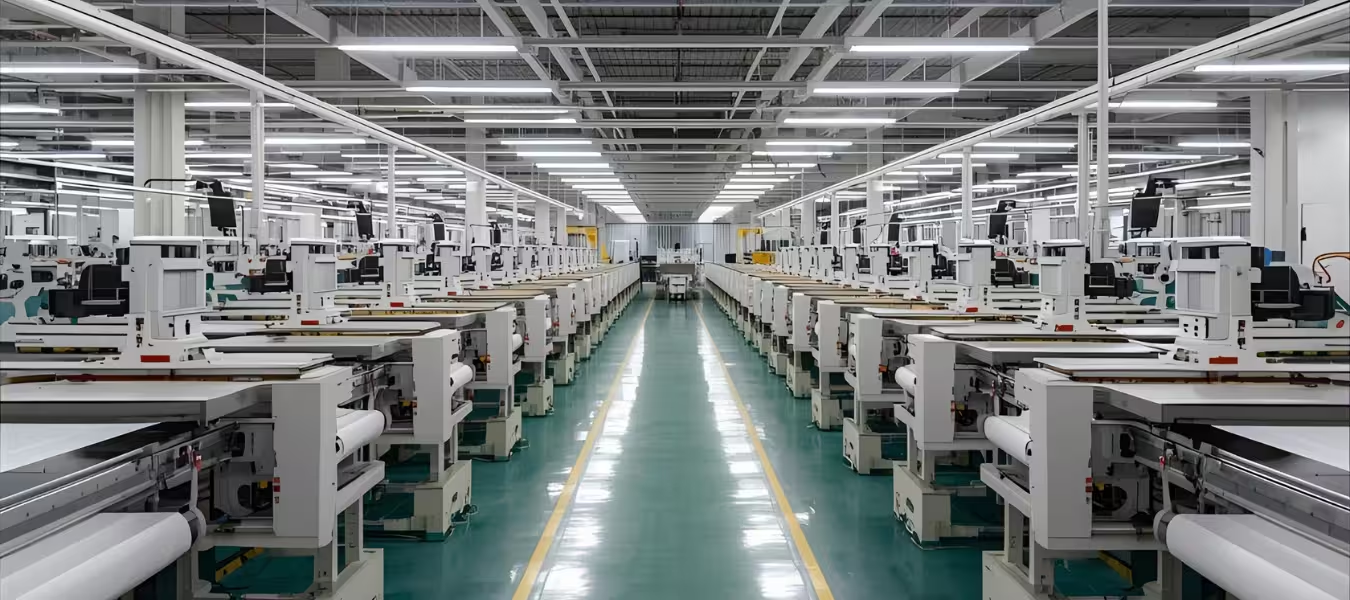
Morocco · Textile & apparel
Morocco’s textile industry, explained.
Morocco’s textile and leather exports reached MAD 43.8 billion in 2025, most of them to European buyers. This guide covers the industry’s factories, trade routes, investment, technology and craft traditions.
Industry snapshot
Morocco Textile Industry
at a Glance
Key figures on Morocco’s textile exports, employment and European market concentration.
Sources: 2025 export value — Office des Changes, December 2025 (provisional); workforce and women’s employment share (2024) — IFC, Morocco Country Private Sector Diagnostic 2026; Spain and France export shares (2022) — Office des Changes, Analyse multidimensionnelle des exportations du secteur textile et cuir. The 70%+ figure is calculated from 2022 export values reported by Office des Changes: Spain MAD 25.3B and France MAD 6.4B, out of approximately MAD 44.5–44.9B for active exporters.
Morocco’s Textile Industry: Scale and Global Position
Morocco’s textile industry competes through proximity to Europe, shorter supply chains and flexible production. Future growth depends on stronger manufacturing capabilities and lower-carbon operations.
Morocco’s Key Textile Growth Priorities
Compete Through Proximity
Morocco’s location gives manufacturers an advantage in lead times, replenishment and closer coordination with European buyers.
Move Beyond Assembly
Long-term competitiveness depends on expanding technical capability and the range of production processes available within the country.
Meet Higher Buyer Standards
Quality, traceability and environmental performance increasingly determine which suppliers can compete for demanding international programmes.
Overview of Morocco’s Textile Industry
Morocco’s textile industry is an export-oriented manufacturing sector centred on garment production and European markets. Its proximity to Europe, established manufacturing base and export routes support shorter lead times, closer production oversight and more flexible order planning for international buyers.
The sector reaches well beyond garment assembly. It includes fabric production, machinery and technical services, testing, trade, foreign investment, recycling projects, textile exhibitions and a handmade economy rooted in regional craft traditions.
Morocco does not compete with the world’s largest textile-producing countries on volume. Its real strength lies in responsiveness — medium-sized orders, faster replenishment, technical know-how and practical access to European markets. That position carries real value, and the pressure on the sector is building at the same time: imported materials still play a major role, technology adoption varies from one factory to the next, and buyers expect clearer evidence on origin, environmental performance and labour standards.
This guide opens with the national picture, then leads readers into dedicated hubs on manufacturing, trade, investment, machinery, sustainability, exhibitions and textile history.
Morocco Textile Industry: Key Data
A snapshot of the industry using the latest confirmed figures.
The 2025 export value (MAD 43.8 billion, down from MAD 45.9 billion in 2024) is provisional
Office des Changes data for December 2025.
Employment, workforce composition, export share and EU ranking are 2024 figures from the
IFC’s Morocco Country Private Sector Diagnostic 2026
(Chapter 4, Low-Carbon Textiles). The decline continued in 2026: textile and leather exports fell 6.5% year on year to MAD 21.07 billion in the first half, as covered in
Morocco’s textile exports in H1 2026.
Business Connections
Meet Morocco’s Textile Industry
Explore Morocco’s textile exhibitions, where manufacturers, buyers, machinery suppliers and industry organisations connect.
Explore Morocco’s Textile Industry
Explore dedicated guides covering the key areas of Morocco’s textile industry, from manufacturing and trade to investment, machinery, sustainability and more.
01
Morocco Textile Manufacturing
Garment production, manufacturers, workwear, technical textiles, industrial regions and supplier discovery.
02
Morocco Textile Trade
Exports, imports, trade agreements, sourcing routes, rules of origin and international partnerships.
03
Morocco Textile Investment
Foreign investment, industrial zones, factory expansion, acquisitions and development projects.
04
Morocco Textile Machinery
Machinery suppliers, production technology, testing systems, finishing equipment and automation.
05
Morocco Textile Sustainability
Recycling, circular manufacturing, traceability, certification, waste recovery and lower-impact production.
06
Morocco Textile Exhibitions
Textile fairs, sourcing events, organisers, exhibitors and international trade shows.
07
Morocco Textile History
Traditional weaving, textile heritage, artisan communities and the evolution of the textile economy.
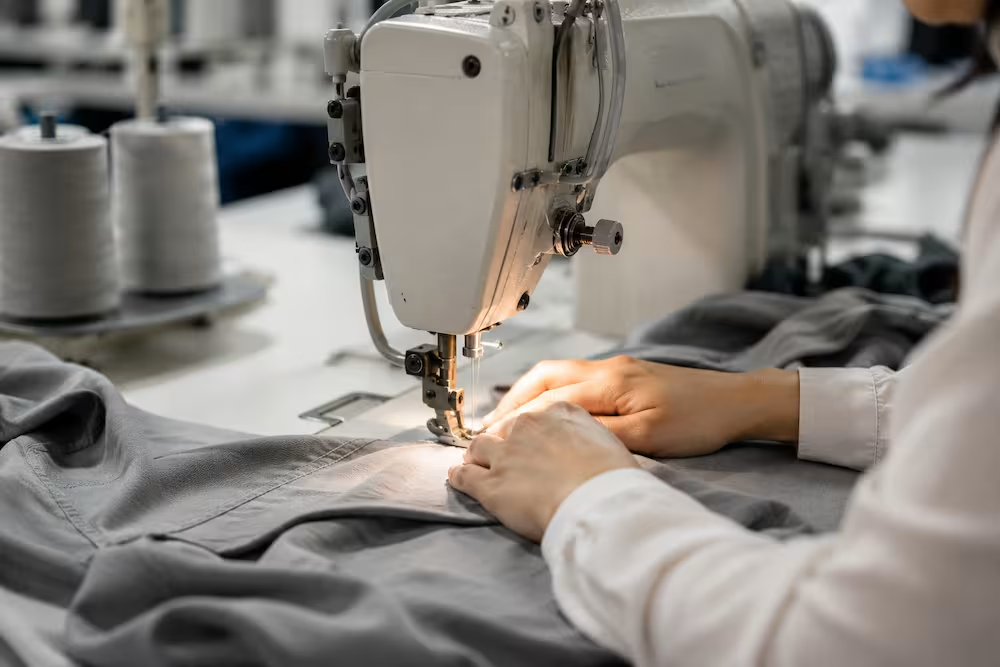
How Morocco’s Textile Industry Is Structured
Morocco’s textile industry combines export-oriented garment manufacturing with fabric suppliers, machinery providers, testing services, logistics, sourcing offices and artisanal production. Apparel remains at the centre of the sector, supported by Morocco’s proximity to European markets and its ability to serve buyers seeking shorter lead times and more flexible production.
The industry, however, depends on more than factory capacity. Fabric availability, finishing, quality control, customs and logistics all influence how efficiently Moroccan manufacturers can respond to international buyers. Recent investment in industrial zones, new factories and circular manufacturing projects is gradually expanding these capabilities beyond traditional cut-and-sew production.
The next challenge is deeper integration. Strengthening local sourcing, technical capability and coordination across the supply chain will determine how much value Morocco can retain within its textile industry.
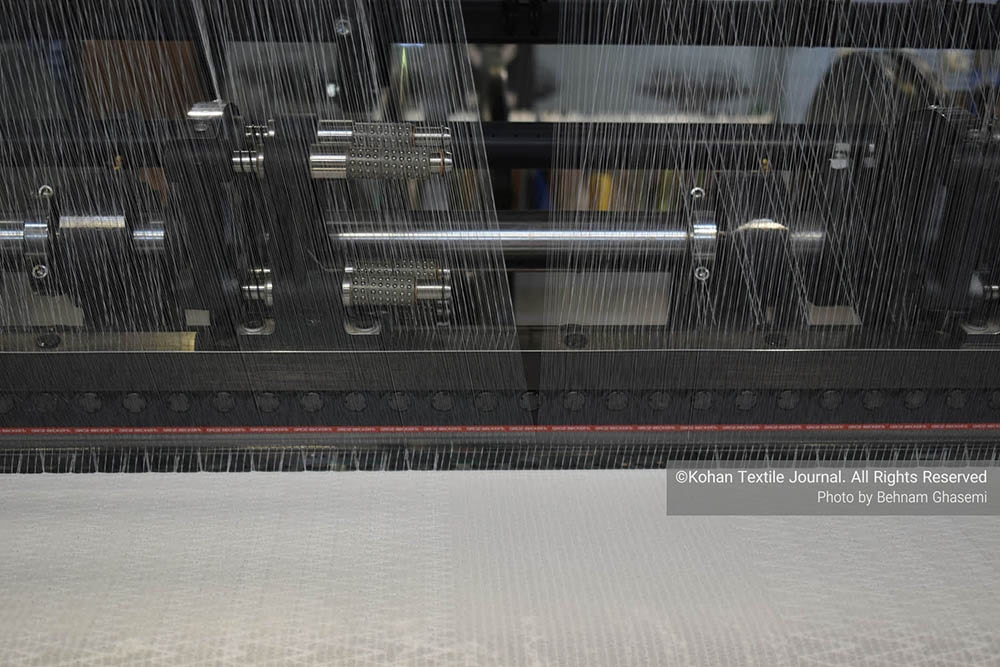
Why Is Morocco Competitive for European Textile Sourcing?
Morocco is competitive for European textile sourcing mainly because of proximity: suppliers can offer shorter lead times, faster replenishment and closer coordination with buyers than longer-distance sourcing allows. Its strength lies in speed and flexibility, such as repeat orders, medium-sized runs and late adjustments, rather than production scale alone.
Capabilities vary across the industry. Some factories focus primarily on garment assembly, while others combine cutting, sewing, washing, finishing, embroidery or printing in-house or through specialist partners. For buyers, understanding this full production route is often more useful than looking at country of origin alone.
Maintaining that nearshoring advantage will increasingly depend on more than labour costs. Automation, digital production planning, technical skills, product development and reliable supply-chain coordination will shape Morocco’s ability to compete as buyer expectations continue to rise. For a closer look at how this advantage is being used, see Morocco’s textile nearshoring strategy for European markets.
How Trade and Supply Chains Shape Competitiveness
European markets account for a large share of Morocco’s textile exports, giving manufacturers close access to key customers while also creating dependence on a concentrated group of markets. At the same time, the industry relies on imported yarns, fabrics, accessories and machinery, linking export competitiveness directly to the reliability of its supply chains.
This creates a manufacturing model in which finished garments can be produced close to European buyers even when many inputs travel much farther. Türkiye is an important regional supplier, while rules of origin, customs procedures and sustainability requirements increasingly influence material choices, documentation and sourcing decisions.
Strengthening local and regional supply networks could reduce material delays and improve resilience. At the same time, a broader export base would reduce concentration risk while allowing Morocco to maintain the European relationships that underpin much of its current textile trade.
Trade intelligence
Explore Morocco’s Textile Trade Hub
Explore Morocco’s trade ecosystem, sourcing routes, import dependencies, rules of origin and European market access through one dedicated guide.
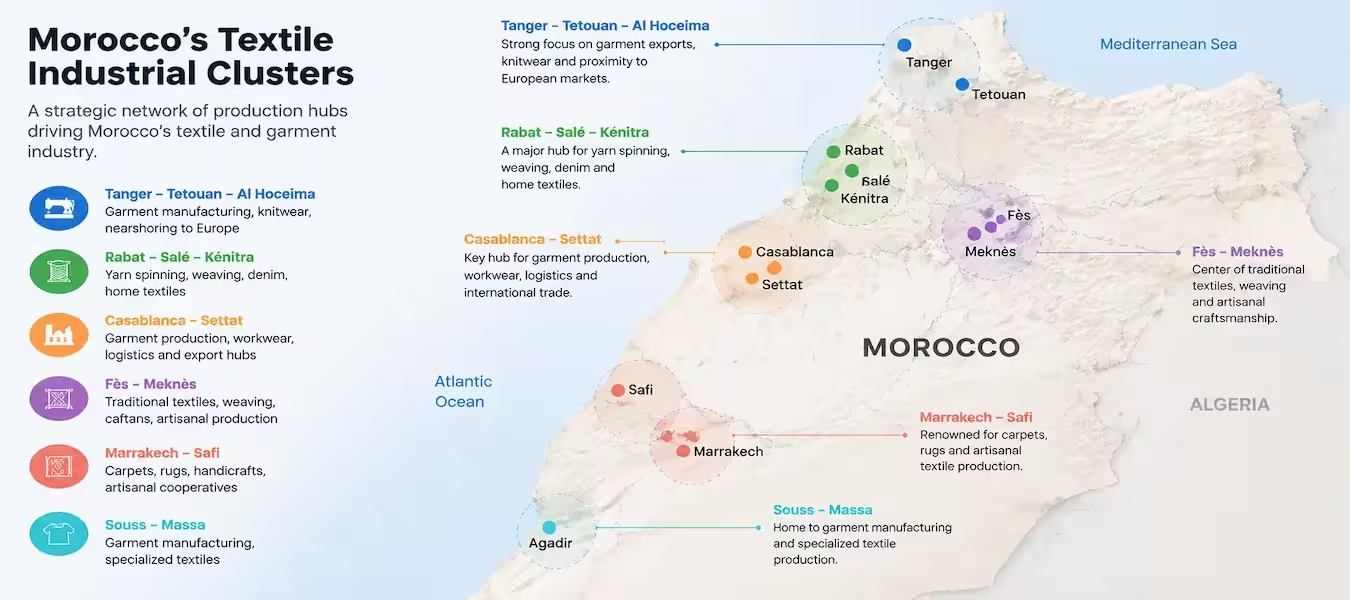
Where Morocco’s Textile Production Is Concentrated
Morocco’s textile production is concentrated around several major urban and industrial centres where manufacturing, logistics, labour and supplier networks operate in close proximity. Casablanca–Settat and Tangier are particularly important to the country’s industrial textile landscape.
Casablanca–Settat combines manufacturing, sourcing, testing, trade institutions and business services, while Tangier has developed a strongly export-oriented manufacturing base supported by industrial zones, Tanger Med and its proximity to European markets. Other regions contribute through manufacturing, distribution and artisanal textile production.
Reliable regional data on textile output remain limited, making precise comparisons between production centres difficult. For a closer look at one of Morocco’s most important manufacturing corridors, explore Kohan Textile Journal’s analysis of Tangier, or continue to the Morocco Textile Manufacturing Hub for deeper coverage of production regions and capabilities.
Jobs, Skills and Production Standards
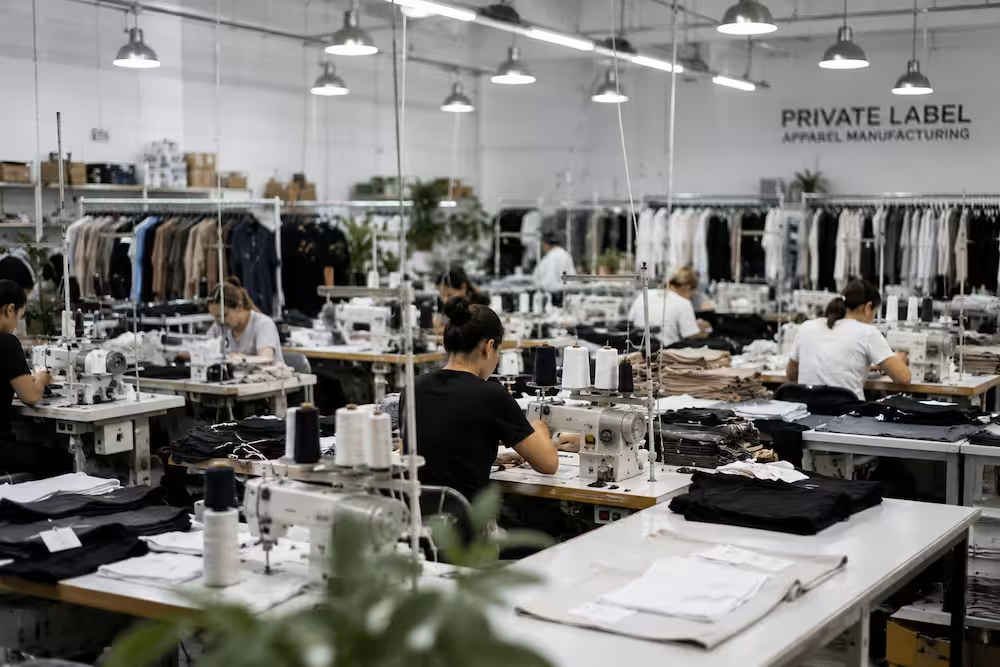
Morocco’s textile and apparel sector employed roughly 234,000 workers in 2024, according to the IFC’s 2026 assessment. Beyond workforce availability, export manufacturers increasingly depend on skills in quality control, production planning, testing and compliance.
Training institutions such as OFPPT support workforce development, while testing laboratories help manufacturers verify product performance, chemical compliance and safety. Kohan Textile Journal’s coverage of SGS textile testing in Morocco provides a closer look at this quality infrastructure.
Long-term competitiveness will depend on stronger technical skills, reliable compliance and continued workforce development.
Where Textile Investment Is Building New Capacity
Textile investment in Morocco is expanding capacity across manufacturing and supporting activities, including spinning, knitting, finishing, recycling and accessories, with the potential to strengthen local supply chains and reduce reliance on imported inputs.
Recent projects covered by Kohan Textile Journal include Hop Lun’s expansion, the Sunrise Group’s MAD 1.4 billion project in Fez and Mainetti’s Casablanca project. These projects are at different stages, so announced investment should not be treated as operational capacity until implementation is confirmed.
The World Bank Group also identifies substantial potential for low-carbon textile investment, but these estimates represent development scenarios rather than capital already committed.
How Machinery Is Changing Moroccan Textile Production
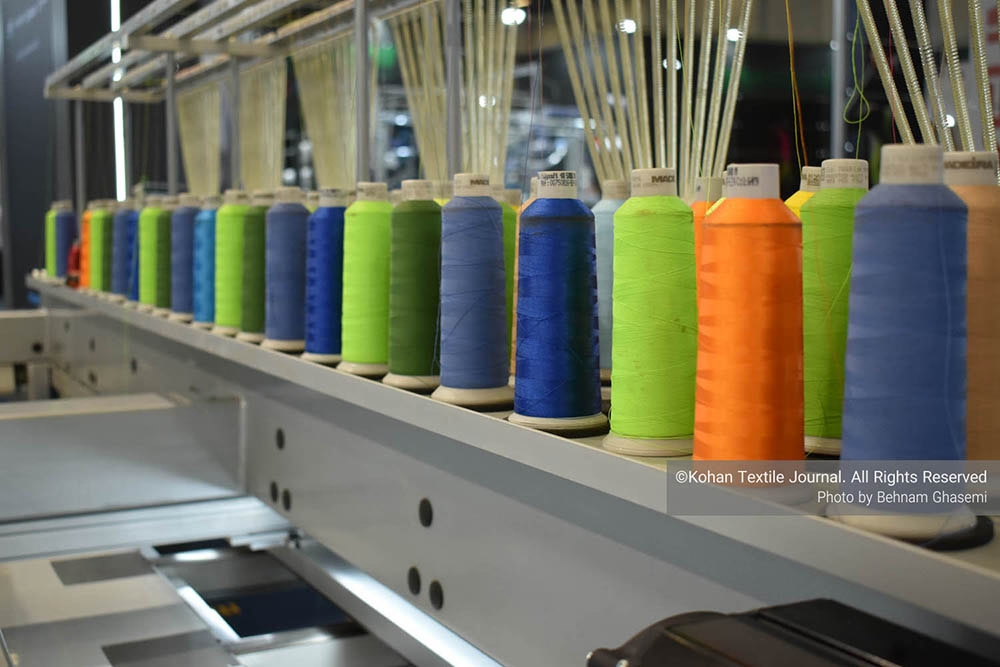
Machinery investment can improve productivity, consistency and resource efficiency across Morocco’s textile industry, from apparel manufacturing to knitting, weaving, dyeing and finishing. Automation, digital production systems and process-control technologies are also expanding what manufacturers can produce efficiently.
Technology alone, however, is not enough. Skilled operators, maintenance, software integration, spare parts and after-sales support all influence the value of an investment. Kohan Textile Journal’s coverage of the Swiss Textile Machinery Symposium in Casablanca highlights the role of technical partnerships in this transition.
The strongest investments address specific production needs, such as improving quality, reducing waste, processing recycled materials or developing higher-value textile products.
Can Morocco Build a Competitive Circular Textile Industry?
Sustainability is increasingly becoming a condition of market access for Morocco’s textile industry, particularly as European buyers place greater emphasis on traceability, recycled content, carbon performance and waste reduction.
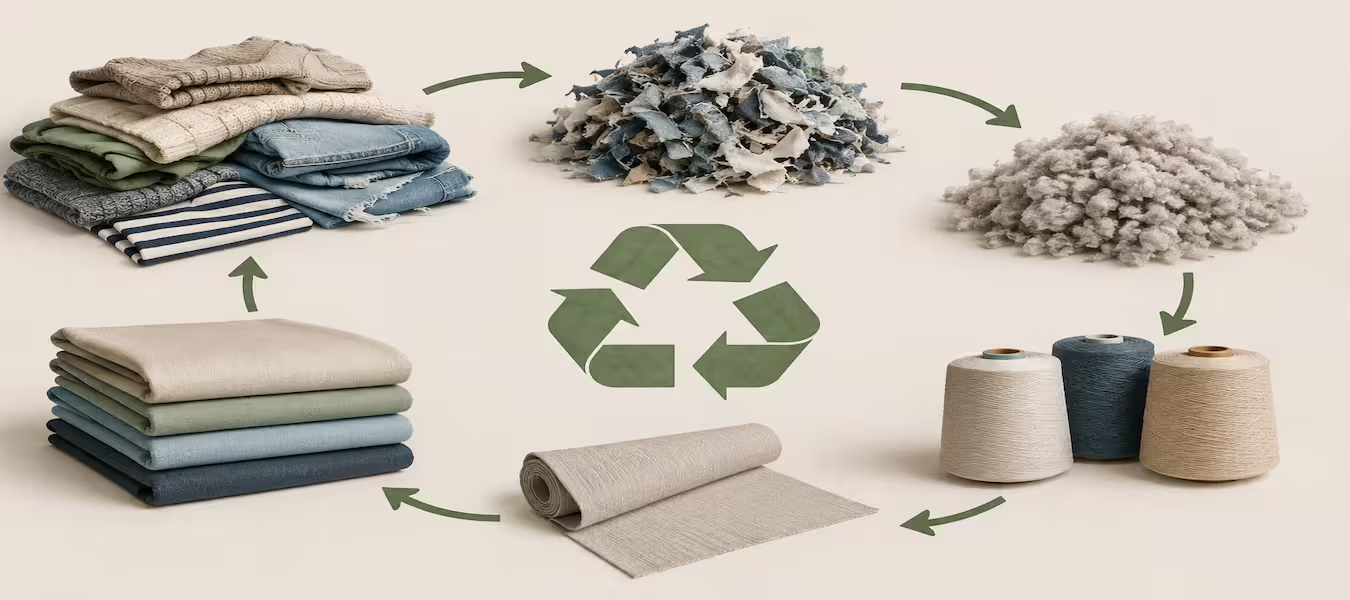
Between 2023 and 2026, an IFC-led circularity programme demonstrated textile-to-textile recycling under commercial conditions in Morocco, with pilot projects converting 427 metric tons of cutting waste into new manufacturing materials. Kohan Textile Journal has covered the IFC Morocco textile circularity pilot and the UNIDO circular textile roadmap.
Scaling circular production will require stronger collection and sorting, recycling and spinning capacity, reliable traceability and sustained demand for recycled materials.
Sustainability intelligence
Explore Morocco’s Circular Textile Transition
Discover recycling initiatives, textile waste management, traceability systems, sustainability certifications and lower-carbon manufacturing across Morocco’s textile industry.
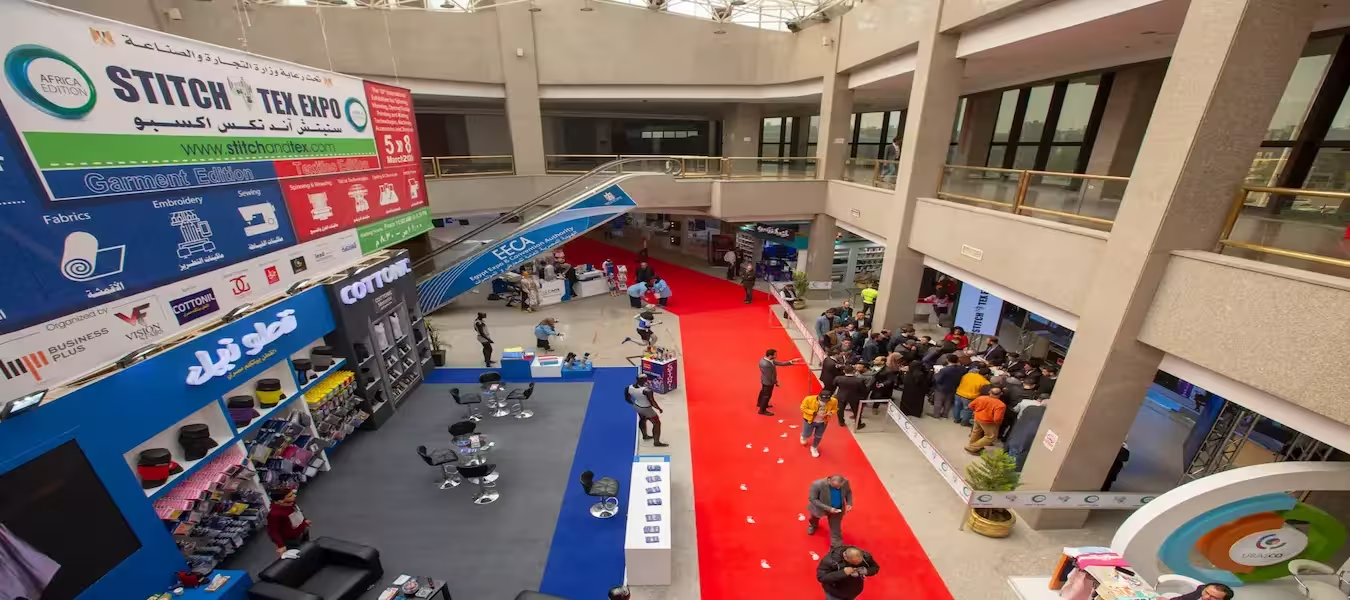
Why Textile Exhibitions Matter to Morocco’s Industry
Morocco’s textile exhibitions connect manufacturers, buyers, machinery suppliers, sourcing professionals and industry organisations, with Casablanca serving as the country’s main exhibition centre for the sector.
Events such as Maroc in Mode bring Moroccan manufacturers together with international buyers and sourcing teams, while other exhibitions connect producers with machinery, materials and technology suppliers.
Explore major events, organisers and industry coverage in the Morocco Textile Exhibitions Hub.
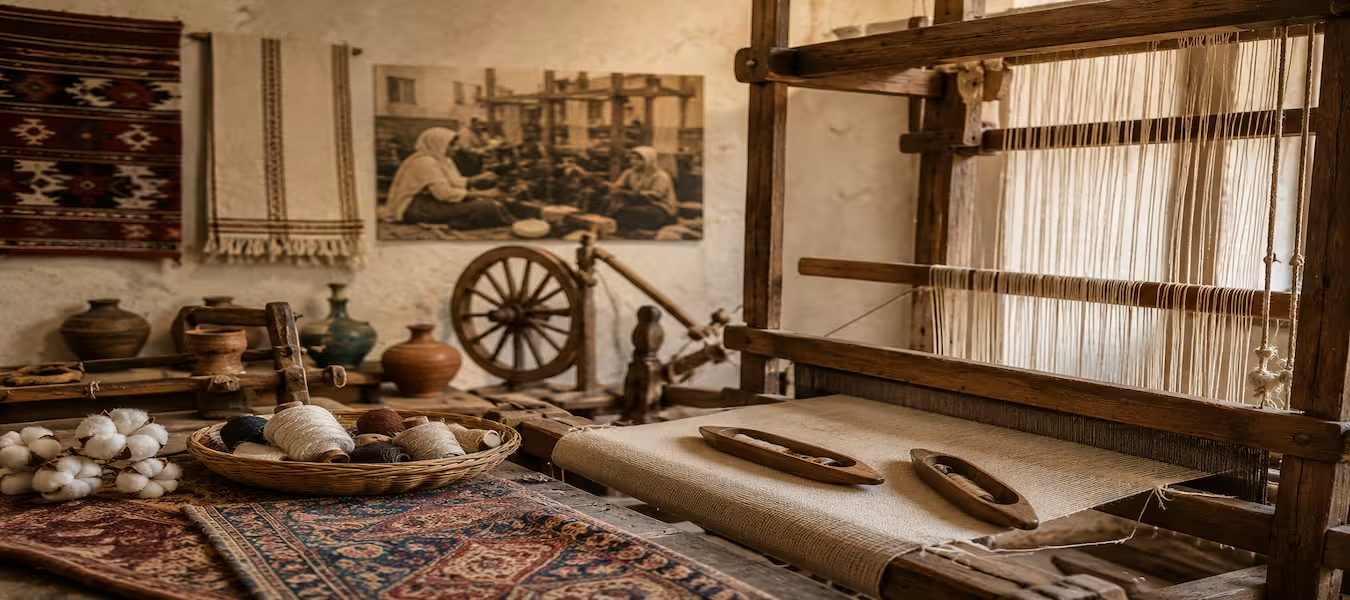
Textile Heritage and the Historical Foundations of the Industry
Morocco’s textile heritage extends across weaving, embroidery, garment making, dyeing and carpet production, with traditions shaped by regional craftsmanship and artisan communities.
This heritage remains relevant to contemporary textile and design markets, particularly where producers can preserve provenance, regional identity and cultural attribution while connecting traditional craftsmanship with new commercial opportunities.
Kohan Textile Journal explores this history through its coverage of Moroccan textiles through the ages and Moroccan artisans showcased in Abu Dhabi.
Challenges and Opportunities in Morocco’s Textile Industry
Morocco has already demonstrated that it can manufacture for demanding international markets. The more important question now is whether future growth makes the textile economy deeper, more resilient and more valuable — or simply larger.
Growth Is Not the Same as Industrial Progress
Export growth, new factories and investment announcements are useful signals, but none of them alone shows whether the industry is becoming more competitive.
A stronger measure is what changes after investment takes place: whether new activities appear inside the country, suppliers gain more specialised roles and manufacturers become capable of handling a greater share of the production process.
Follow Projects Beyond the Announcement
Textile investment should be judged by implementation rather than headline value. A signed agreement, planned factory or announced expansion represents potential capacity until production, employment or operational activity can be verified.
Tracking projects over time therefore matters as much as reporting them when they are announced.
Measure What the Industry Adds
The strongest indicator of progress is not simply how much Morocco produces, but what the industry becomes capable of doing that it could not do before.
That may mean introducing a specialised process, developing a new supplier category, commercialising recycled materials or creating technical expertise that previously had to be sourced elsewhere.
For Morocco, the real opportunity is therefore industrial additionality: growth that leaves the domestic textile ecosystem with capabilities it did not previously have.
Morocco Textile Manufacturers: Quick Snapshot
Morocco’s manufacturing base spans apparel, knitwear, technical textiles and workwear. Companies covered by Kohan Textile Journal include Vita Couture in full-package apparel, Fashion Lixus in garment manufacturing, SoftTech in nonwovens and technical textiles, Compagnie Industrielle de Bonneterie in knitwear, and Preventex in workwear and protective clothing.
These companies are editorial examples and do not represent a ranking or comprehensive directory.
Related Morocco Textile Articles
Further analysis on production, trade, investment and circularity.
01
Why Tangier Is Rewriting Morocco’s Textile Map
Production geography, logistics and European market access.
02
Morocco Ranks Third in Africa’s Textile and Apparel Exports
Export performance and regional competitiveness.
03
Hop Lun’s Strategic Morocco Expansion
Foreign investment and manufacturing expansion.
04
IFC Morocco Textile Circularity Pilot
Commercial textile-to-textile recycling and circular production.
05
Can Morocco Become a Euro-Mediterranean Textile Hub?
Industry perspectives on nearshoring, sourcing and circularity.
06
Redouane Lachgar on Morocco’s Nearshoring 2.0 Strategy
Value-chain gaps, circularity and investment priorities toward 2030.
Key Organizations Shaping Morocco’s Textile Sector
Several public, industry and international organisations influence Morocco’s textile sector through policy, trade, investment, sustainability and industry development.
AMITH
The Moroccan Association of Textile and Apparel Industries (AMITH) represents textile and apparel companies and supports sector development, international cooperation and industry events, including Maroc in Mode.
Ministry of Industry and Trade
Morocco’s Ministry of Industry and Trade oversees national industrial policy and has supported textile-sector integration, investment and industrial development programmes.
Office des Changes
Office des Changes is a primary official source for Morocco’s foreign-trade statistics, including textile and apparel exports, imports and trading partners.
IFC and World Bank Group
IFC and the World Bank Group contribute research, investment analysis and programmes related to private-sector development, low-carbon textiles and textile circularity in Morocco.
UNIDO
UNIDO supports initiatives related to circular value chains, resource efficiency and industrial development.
EURATEX
EURATEX, representing the European textile and apparel industry, works with Moroccan industry partners on trade, sustainability, technology and Euro-Mediterranean cooperation.
What Buyers Should Check Before Sourcing from Morocco
Morocco’s proximity to Europe can support faster and more flexible sourcing, but supplier capability varies. Buyers should evaluate the full production route, material supply, quality systems and operational reliability before placing orders.
01 —
Production Capability
Confirm which processes are handled in-house and which are subcontracted, including cutting, sewing, knitting, dyeing, washing, finishing, printing and testing.
02 —
Material Sourcing and Lead Time
Check where key fabrics and accessories originate, how material availability affects lead times and whether alternative suppliers are available.
03 —
Quality and Compliance
Verify product specifications, testing procedures, inspection systems, chemical compliance, product safety and origin documentation.
04 —
Environmental Evidence
Ask for traceable evidence behind claims involving recycled content, water, energy, waste or emissions rather than relying on general sustainability statements.
05 —
Commercial Resilience
Assess capacity planning, communication, maintenance, subcontractor dependence and contingency arrangements alongside price.
Morocco Textile Industry: Key Metrics
| Indicator | Figure | Evidence Type | How to Read It |
|---|---|---|---|
| Textile Waste Processed in IFC Pilot Trials | 427 metric tons | Pilot result | A completed pilot result, not an estimate of total national textile waste. |
| Additional Waste Committed for Recycling | 2,400 metric tons | Commitment | A commitment reported by IFC; it should not be described as material already processed unless later evidence confirms completion. |
| Potential Private Investment in Low-Carbon Textiles | Approximately USD 1.9 billion | Projection | A World Bank Group scenario dependent on policy reform and investment conditions, not funding already committed. |
| Potential Direct and Indirect Jobs | Approximately 30,800 | Projection | A projected outcome associated with the low-carbon textile opportunity, not current employment. |
The figures in this table represent different forms of evidence: completed pilot results, reported commitments and forward-looking scenarios. They should not be combined or presented as measures of the same outcome.
See the full picture of foreign investment, industrial zones and factory expansion in the Morocco Textile Investment Hub.
About This Guide
This page provides a national overview of Morocco’s textile industry, while the specialist hubs examine manufacturing, trade, investment, machinery, sustainability, exhibitions and textile history in greater depth.
Editorial Method and Update Policy
Kohan Textile Journal distinguishes between verified statistics, completed programmes, announced projects, commitments and forward-looking projections. Figures are dated and attributed where the reference period is available.
Investment announcements are not treated as operational capacity until implementation can be verified, while projections and conditional scenarios are identified as such.
Written and reviewed by Behnam Ghasemi · Last reviewed: October 2026 · Updated as new verified information becomes available.
Frequently Asked Questions
Answers to common questions about Morocco’s textile industry, production base, workforce and sourcing environment.
Why is Morocco important to European fashion and textile buyers?
Morocco combines proximity to Europe with established garment-manufacturing experience and relatively short transport routes. This makes it well suited to shorter lead times, repeat orders and production programmes that require closer coordination with European buyers.
That advantage is strongest when suppliers can also provide consistent quality, traceability and reliable access to materials.
What are the main textile production centres in Morocco?
Casablanca and Tangier are Morocco’s main modern textile production centres. Casablanca has a broad industrial ecosystem that includes manufacturers, suppliers, laboratories, trade institutions and business services. Tangier is closely connected to export-oriented apparel production, Tanger Med and cross-Mediterranean supply chains.
Other regions contribute through smaller manufacturing networks and traditional textile and artisan production.
What textile products does Morocco manufacture?
Morocco is best known for apparel manufacturing, including fashion garments, knitwear, denim, workwear and other sewn products. The wider textile sector also includes home textiles, technical textiles, accessories and finishing services.
Production capabilities vary by factory and supplier.
How large is Morocco’s textile and apparel workforce?
According to the IFC’s 2026 assessment, Morocco’s textile and apparel sector employed approximately 234,000 people in 2024.
Earlier estimates report different totals because they use different reporting periods and statistical definitions, so employment figures should always be read with their year and source.
Does Morocco have a fully integrated textile supply chain?
Not fully. Morocco has established garment manufacturing and a growing range of textile, finishing and technical capabilities, but parts of the industry still depend on imported yarns, fabrics, accessories, machinery and specialised inputs. The level of integration also varies by manufacturer and product category.
Is Morocco developing a circular textile industry?
Yes, although the system is still developing. IFC’s 2023–2026 circularity programme demonstrated textile-to-textile recycling under commercial conditions in Morocco.
Expanding circular production will require stronger collection and sorting, recycling and spinning capacity, reliable traceability and continued demand for recycled materials.
What role do textile exhibitions play in Morocco?
Textile exhibitions connect Moroccan manufacturers with buyers, machinery suppliers, technology providers, sourcing professionals and industry organisations.
Events such as Maroc in Mode support sourcing, business development and cooperation between Morocco’s textile industry and international markets.
Join the Morocco textile network
Put Your Company in Front of Morocco’s Textile Industry
Submit your company for editorial review, free directory inclusion and industry updates from Kohan Textile Journal.
✓ Free Directory Listing ✓ Exhibition Updates ✓ Latest Industry News
Submit Your Company
Company Profile Submission
Tell us about your company and we’ll review it for a free listing in our Morocco directory — plus updates on exhibitions and industry news.
