



Morocco Textile Industry
Morocco Textile Sustainability
A focused guide to circularity, textile waste, recycling, resource-efficient manufacturing, traceability and sustainability requirements shaping Morocco’s textile value chain.
By Behnam Ghasemi · Last Reviewed: October 2026
Textile Waste
Recycling
Resource Efficiency
Traceability
EU Requirements
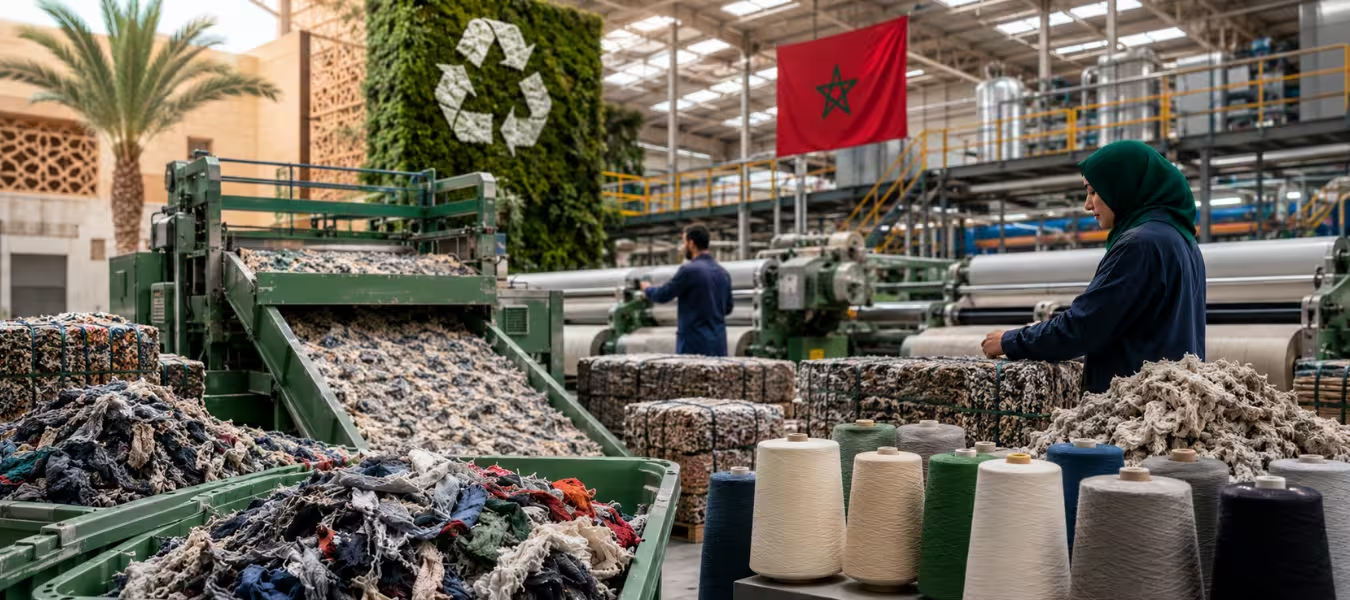
Sustainability Snapshot
Morocco Textile Sustainability at a Glance
Morocco’s sustainability transition is increasingly tied to industrial competitiveness. For export-oriented manufacturers, the issue is not only environmental performance; it also affects buyer qualification, resource cost, production control, traceability and the ability to respond to changing European requirements.
Connected System
How Morocco’s Sustainable Textile Transition Works
A circular textile system is not created by recycling machinery alone. Value is retained only when waste is prevented where possible, remaining materials are identified and separated, recovery routes are technically suitable, and recycled outputs can return to real textile production.
This system also explains why Morocco’s near-term circularity opportunity is often strongest in pre-consumer waste. Factory-generated offcuts are easier to classify than mixed post-consumer textiles, but they still require disciplined separation, stable volumes and a downstream user that can absorb the recovered material.
Circularity & Recovery
Textile Waste and Recycling in Morocco
Different waste streams require different recovery strategies. Combining all textile waste into one figure can overstate realistic recycling potential because contamination, fibre blends, finishes, trims and ownership conditions vary significantly.
| Waste Stream | Typical Source | Recovery Potential | Main Constraint |
|---|---|---|---|
| Clean cutting waste | Garment cutting rooms | High relative potential for sorting and mechanical recovery | Mixed colours, blends and inconsistent collection |
| Fabric/process rejects | Knitting, weaving, dyeing and finishing | Recoverable when composition and process history are known | Finishes, contamination and quality variation |
| Defective garments | Quality control and returned production | Reuse, repair, component recovery or recycling | Trims, labels and mixed construction |
| Unsold stock | Brands, retailers and exporters | Resale, redesign, donation or recycling | Commercial ownership and product sensitivity |
| Post-consumer textiles | Collection systems and households | Potentially large but technically complex | Collection cost, contamination and mixed fibres |
Kohan Textile Journal’s Morocco coverage provides direct evidence for this part of the cluster: the circular textile pilot in Morocco and analysis of textile waste management in Morocco should be read as evidence of opportunity and implementation work, not proof that a complete recycling ecosystem already operates at scale. For expert perspective on what it will take to build this ecosystem at industrial scale, see Kohan Textile Journal’s Morocco’s Textile Recycling and Traceability Challenges.
Factory Operations
Resource-Efficient Textile Manufacturing
Sustainability becomes operational when factories can measure and improve real production performance. Material yield, energy, water, chemicals, wastewater quality, defects and rework all affect environmental impact and production cost.
Waste Prevention First
CAD, nesting, cutting accuracy, inventory control and defect prevention can reduce waste before recycling is required.
Water & Chemical Control
Metering, recipe control, chemical inventory, wastewater treatment and testing are more meaningful than policy statements without operating evidence.
Efficiency Before Claims
Electricity, thermal energy, compressed air and drying should be linked to production output so improvements can be verified under real operating conditions.
The Morocco Textile Manufacturing Hub covers the production base and factory capabilities, while the Morocco Textile Machinery Hub covers process-control technology, testing, automation and resource-efficient equipment.
Market Evidence
Traceability, Recycled Content and EU-facing Requirements
Traceability connects sustainability claims to evidence. For Moroccan exporters, this can involve fibre composition, supplier identity, batch records, recycled-content documentation, testing, chemical controls and production-location data.
Material & Batch Records
A digital system is useful only when fibre composition, suppliers, production stages and test evidence are accurate at source.
Digital Product Information
European product-policy direction is increasing the importance of structured product and supply-chain data. Product-specific scope and implementation dates must be verified as rules develop.
Environmental Evidence
Large customers may request supplier data on materials, chemicals, wastewater, energy and due-diligence controls even when a Moroccan factory is not directly regulated by the same reporting rule.
For customs, logistics, preferential market access and rules of origin, use the Morocco Textile Trade Hub. This Sustainability Hub should remain focused on environmental, product-data and traceability requirements rather than duplicate the Trade intent.
Supporting Coverage
Morocco Sustainability Evidence and Industry Signals
These Morocco-focused reports support the main Sustainability intent. They should be treated as evidence of pilots, roadmaps, waste challenges and industry direction — not collapsed into one claim that the transition is already complete.
IFC Morocco Textile Circularity Pilot
Morocco-focused evidence on textile waste, circular value creation and the conditions required to move from analysis toward implementation.
Can Morocco Become a Euro-Mediterranean Textile Hub?
An industry discussion bringing together expert perspectives on nearshoring, sourcing, circularity and recycling potential between Europe and North Africa.
Morocco & Tunisia Circular Economy
Regional analysis of textile waste and recovery opportunities, useful for understanding Morocco’s waste-management context.
UNIDO Circular Textile Value Chain Roadmap
A Morocco-focused roadmap connecting pre-consumer waste, cleaner production, circular pilots and industrial implementation priorities.
Morocco Fashion Sustainability Focus
Event coverage showing how sustainability and recycled-material themes are becoming more visible in Morocco’s fashion and textile ecosystem.
See the sustainability-led fashion expo in Casablanca →
For event discovery rather than sustainability analysis, continue to the Morocco Textile Exhibitions Hub.
Industry Reference
Beyond Sustainability: The Wider Industry
Explore the complete country-level guide connecting sustainability with manufacturing, trade, investment, machinery, exhibitions and the wider Moroccan textile ecosystem.
Sustainability FAQ
Frequently Asked Questions
Key questions about circularity, textile waste, traceability and lower-impact production in Morocco.
Editorial note: Sustainability programmes, project stages, regulations, company capabilities and technical results can change. Kohan Textile Journal should distinguish verified operating evidence from plans, pilots and announced targets and update this Hub as implementation data becomes available.
