




The global textile industry is entering a new phase—one defined not only by production and trade but increasingly by waste, circularity, and resource efficiency. While Europe has long dominated discussions around textile recycling, emerging regions such as North Africa are rapidly gaining strategic importance.
Morocco and Tunisia, two of the region’s key textile manufacturing hubs, are now at the center of this transformation. A comprehensive mapping study conducted under the UNIDO-led SwitchMed initiative provides a rare, data-driven insight into how textile waste is generated, distributed, and potentially transformed into value across these markets.
The study offers a data-driven basis for planning circular textile initiatives in emerging markets.
Understanding Textile Waste: Beyond the Surface
What Defines Textile Waste Today?
Textile waste is no longer a marginal issue. It is embedded within every stage of the textile value chain—from fiber processing to garment manufacturing and distribution.
The mapping study highlights that textile waste in Morocco and Tunisia is largely post-industrial and pre-consumer, meaning it originates during production rather than after consumption.
This distinction is critical. Unlike post-consumer waste, which is difficult to sort and process, industrial waste offers a cleaner and more structured opportunity for recycling and reuse.
Measuring Waste: A Data-Driven Approach
One of the strengths of the study lies in its methodology. By combining surveys of over 100 companies with a material flow analysis model, researchers were able to estimate waste generation across the entire textile supply chain.
This approach tracks materials from raw fiber imports to finished garments, identifying where waste occurs and how it flows through the system.
The results reveal a clear pattern: waste is not evenly distributed—it is concentrated at specific stages of production.
Read more : Innovative Process Transforms Textile Waste into High-Strength Cement
Where Does Textile Waste Come From?
The Dominance of Cutting Waste
Perhaps the most striking finding is the dominance of cutting waste. In Morocco alone, more than 60% of total textile waste originates from the fabric cutting stage.
This reflects a structural inefficiency in garment manufacturing, where fabric utilization remains far from optimal. Every cut represents lost material—and lost value.
In addition to cutting waste, other sources include spinning waste, fabric production waste, overproduction, and deadstock. Each of these streams represents a different type of challenge—and opportunity.
The Hidden Impact of Overproduction
Beyond production scraps, the study reveals that a significant share of textile waste comes from finished products that are never sold.
Deadstock and overproduction together account for roughly one-fifth of total waste.
This highlights a deeper issue within the global fashion system: demand forecasting and inventory management. The inability to align production with actual market demand leads to excess stock—products that quickly become waste.
Morocco: A Strategic Case Study
A Textile Powerhouse in North Africa
Morocco’s textile and clothing industry is one of the largest in the region, employing over 160,000 people and representing a major share of industrial activity and exports.
The country produces significant volumes of garments annually, largely as a subcontractor for international brands.
This industrial scale inevitably generates significant volumes of waste—but it also creates opportunities for large-scale recycling solutions.
Concentration as an Advantage
One of Morocco’s key structural advantages is the geographic concentration of its textile industry. More than 75% of textile waste is generated in just two regions: Greater Casablanca and Tangier.
This concentration reduces logistics costs and makes it easier to develop centralized recycling facilities.
In fact, the study suggests that proximity to recycling infrastructure could significantly improve the economic viability of circular solutions.
The Material Flow Perspective
Mapping the Textile Lifecycle
Material flow analysis provides a holistic view of how textiles move through the economy.
In Morocco, the system begins with the import of fibers, yarns, and fabrics, which are then processed into garments. At each stage, a portion of the material becomes waste.
This flow-based perspective reveals not just how much waste is generated, but where interventions can have the greatest impact.
Waste as a Resource
The study identifies two main categories of textile waste: reusable and recyclable, treating each as a potential input rather than simply a disposal problem.
Reusable waste includes deadstock and overproduction, which can be resold or repurposed. Recyclable waste includes production scraps that can be transformed into new materials.
Within recyclable waste, there is a further distinction between high-value and low-value streams—an important factor in determining economic viability.
Recycling Potential: From Theory to Reality
The Opportunity for High-Value Recycling
One of the most promising findings of the study is the potential for high-value recycling, particularly for cotton and cotton-rich materials.
In regions like Casablanca, there is enough high-quality waste to support multiple industrial-scale shredding lines, creating new business opportunities within the recycling sector.
This represents a shift from waste management toward resource recovery and higher-value recycling.
Challenges in Scaling Recycling
Despite this potential, significant barriers remain.
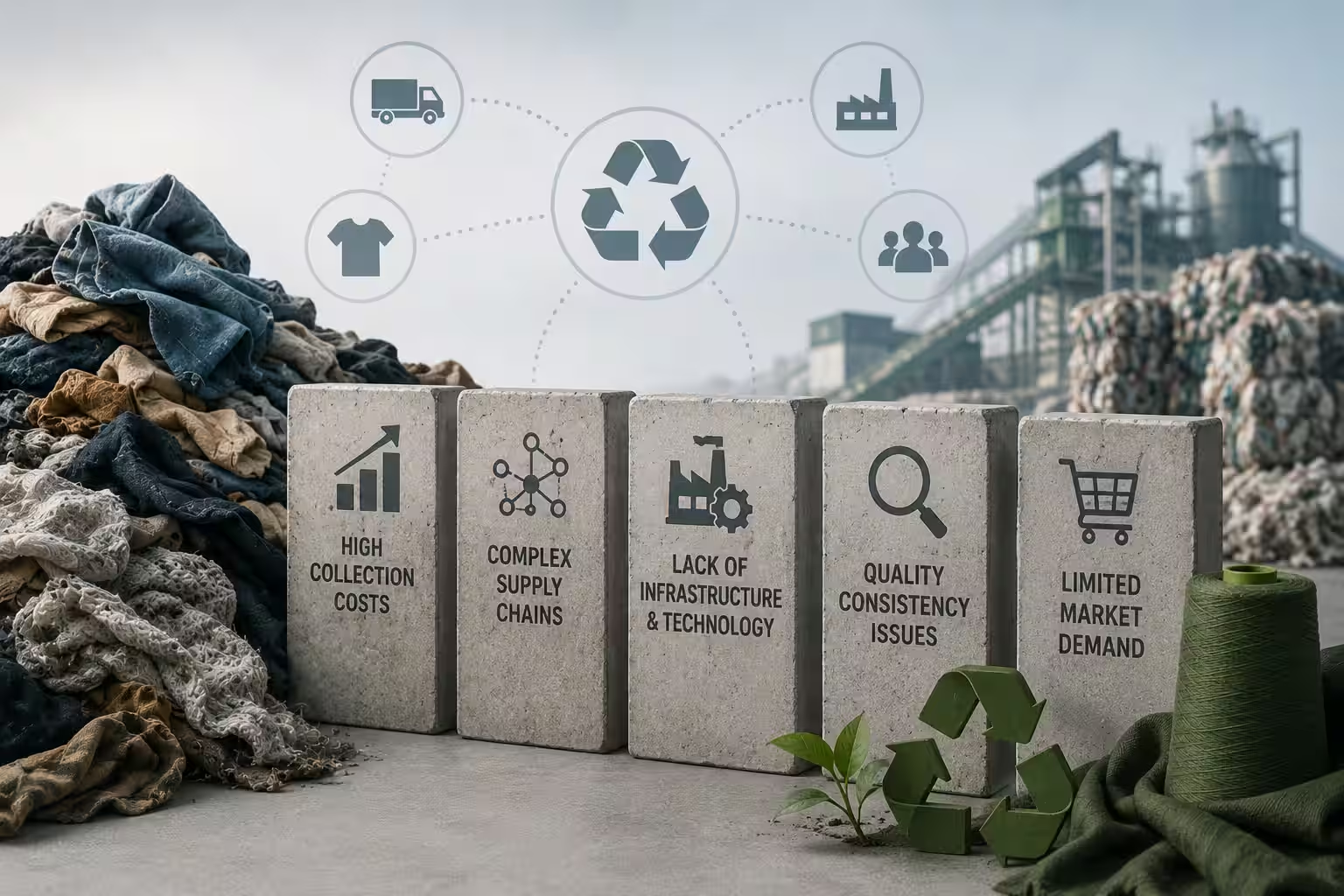
The study highlights the lack of formal recycling infrastructure, limited data availability, and an underdeveloped regulatory framework as key challenges.
In many cases, waste management is handled by informal networks, which limits scalability and efficiency.
Addressing these challenges will require coordinated efforts from industry, government, and international organizations.
Read more : Turning Textile Waste into Value: Circular Solutions Emerging Across Africa and Beyond
Tunisia: A Parallel Landscape
While the document provides detailed data on Morocco, Tunisia shares many of the same structural characteristics.
Both countries rely heavily on textile exports, both generate significant industrial waste, and both face similar challenges in waste management and recycling.
This parallel development creates an opportunity for regional collaboration, where knowledge and infrastructure can be shared across borders.
The Waste Hierarchy: A Framework for Action
Prioritizing Reuse and Recycling
The study adopts a waste hierarchy framework, which prioritizes prevention, reuse, and recycling over disposal.
Once waste is generated, the preferred option is reuse, followed by recycling through processes such as upcycling and downcycling.
This hierarchy reflects a broader shift toward circular economy principles, where materials are kept in use for as long as possible.
Economic Value as a Key Driver
An important dimension of the waste hierarchy is economic potential.
Not all waste is created equal. High-value fibers such as cotton can be recycled into new textiles, while lower-value materials may be used in industries such as construction or automotive.
Understanding this value differentiation is essential for developing viable business models.
Why This Matters for the Global Textile Industry
A New Geography of Circularity
The findings from Morocco and Tunisia highlight a broader trend: the geography of textile sustainability is shifting.
Emerging markets are no longer just production hubs—they are becoming key players in recycling and circular innovation.
This shift is driven by a combination of factors, including industrial scale, geographic concentration, and increasing regulatory pressure.
Implications for Brands and Manufacturers
For global brands, this presents both a challenge and an opportunity.
On one hand, they must address the waste generated within their supply chains. On the other, they can leverage new recycling ecosystems to create more sustainable products.
Partnerships with local manufacturers and recyclers will be critical in this process.
Morocco Textile Waste: Key Figures
| Metric | Figure |
| Textile & clothing sector employment (Morocco) | 160,000+ people |
| Cutting waste share of total waste | 60%+ |
| Deadstock & overproduction share | ~20% |
| Geographic concentration of waste | 75%+ in Greater Casablanca and Tangier |
| Study basis | UNIDO-led SwitchMed mapping, 100+ companies surveyed |
More than 60% of Morocco’s textile waste originates from fabric cutting, and over 75% of it is concentrated in Greater Casablanca and Tangier, according to a UNIDO-led SwitchMed mapping study.
For the full roadmap based on this data, see Kohan Textile Journal’s coverage of UNIDO’s circular textile value chain roadmap for Morocco. For more on circularity and resource efficiency, see the Morocco Textile Sustainability Hub.
Conclusion: Toward a Circular Textile Future
The mapping of textile waste in Morocco and Tunisia provides a data foundation for reducing waste, reusing materials and creating value at multiple stages of the supply chain.
For North Africa, the findings point to an opportunity to build circular manufacturing capacity alongside existing production strength. For the wider industry, they reinforce that addressing textile waste requires structural changes to sourcing, production and recycling systems, not only incremental reductions in impact.











