



Kohan Textile Journal · Manufacturing Intelligence
Morocco Textile Manufacturing Hub
Where Morocco manufactures textiles and apparel, what its factories produce, and how buyers can assess production capability.
By Behnam Ghasemi · Last reviewed: October 2026
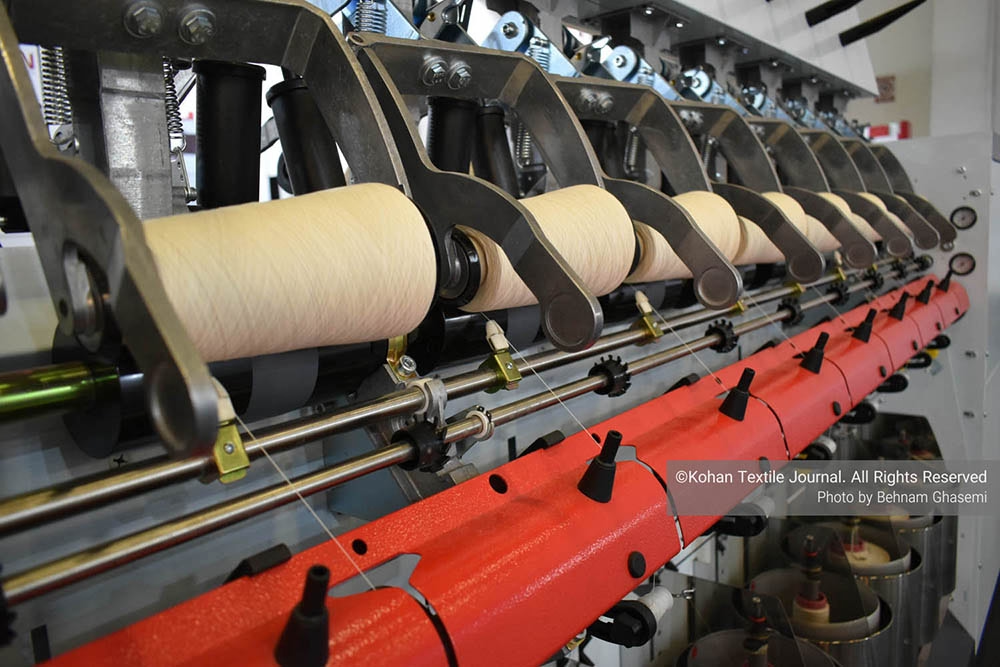
Morocco’s textile and apparel manufacturing base employed about 234,000 people in 2024, according to the IFC, and is concentrated in four regions: Tangier–Tetouan, Casablanca–Settat, Fes–Meknes and Rabat–Salé–Kénitra. Factories range from CMT assembly to full-package, integrated and specialist production, serving mainly European buyers who need shorter lead times. Textile and leather exports reached MAD 43.8 billion in 2025 (provisional Office des Changes data).
Manufacturing overview
Morocco Textile Manufacturing at a Glance
Morocco’s manufacturing base spans CMT, full-package, integrated and specialist production across four major textile regions connected to Europe-facing supply chains.
Sources: workforce — IFC, Morocco Country Private Sector Diagnostic 2026; exports — Office des Changes, December 2025. Regions and production models are Kohan Textile Journal editorial classifications.
Buyer rationale
Why Brands Choose Morocco’s Manufacturing Ecosystem
Five structural advantages recur across buyer and manufacturer coverage of Morocco’s textile sector.
Morocco Manufacturer Network
- Vita CoutureApparel · Full-Package
- Soft TechNonwovens · Technical Textiles
- Compagnie Industrielle de Bonneterie (CIB)Knitwear · Garment Production
- Blue FingersDenim · Integrated Production
- ITEXYarn · Weaving · Knitting
- InterlingeLingerie · Technical Garments
- Apparel MillsKnitting · Garment Production
Manufacturer Directory
Manufacturer Directory Preview
A preview of manufacturers profiled by Kohan Textile Journal. The full directory covers 17 Moroccan textile and apparel companies, from full-package garment makers to nonwovens, denim, knitwear and home-textile producers, with founding dates and specialisms.
Figures describe the 17 companies in Kohan Textile Journal’s directory, not the whole industry. Locations checked against company websites and the Kerix business directory, October 2026.
Factory geography
Where Are Textile Factories Located in Morocco?
Selected production clusters rather than an official government classification. Each combines a different mix of factories, suppliers, workforce and industrial infrastructure.
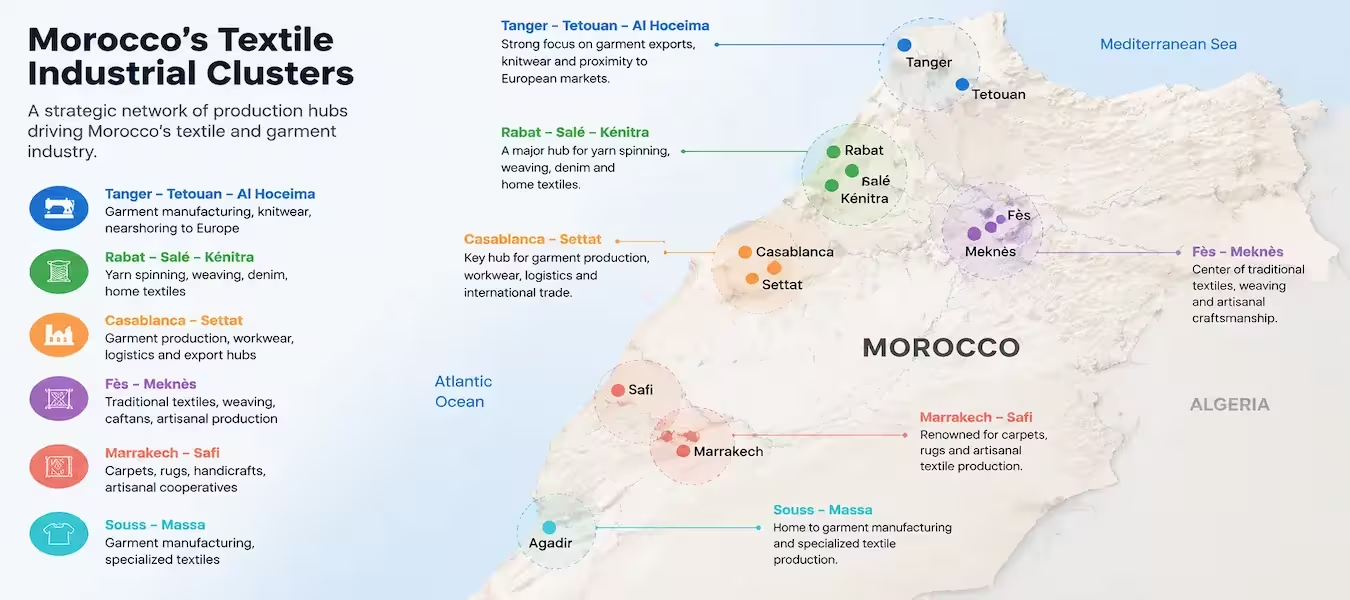
Tangier–Tetouan
Export-oriented apparel production, industrial zones and proximity to Tangier Med support responsive manufacturing for Europe-facing supply chains.
Casablanca–Settat
A broad commercial and production ecosystem with garment factories, suppliers, service companies, quality infrastructure and specialist manufacturers.
Fes–Meknes
An established production base with garment-making skills and developing integrated capacity. Factory-level capability still needs to be assessed individually.
Rabat–Salé–Kénitra
A regional textile base with industrial activity in Salé and manufacturing developments around Skhirat, supported by access to national institutions and services.
Looking for site selection, incentives or textile investment opportunities? Explore the Morocco Textile Investment Hub →
What Morocco manufactures
Main Textile Manufacturing Segments
Apparel & garment
Clothing and Fashion Production
Moroccan factories manufacture woven and knitted garments, lingerie, swimwear and fashion collections through CMT, full-package and category-specialist production models.
Denim
Denim Production and Finishing
Vertically integrated denim manufacturers cover weaving, cutting, washing and finishing, supported by developing local denim-fabric capacity.
Industrial applications
Technical Textiles and Nonwovens
Specialist manufacturing capacity includes nonwovens and technical textile materials serving a range of industrial applications.
Professional clothing
Workwear and Protective Clothing
Manufacturers serve uniforms, workwear and protective-clothing categories where fabric performance, traceability and product-specific testing may be essential.
Interior products
Home Textile Production
Home-textile manufacturers operate alongside Morocco’s separate carpet and artisan production ecosystem. Traditional carpet and rug production remains outside this Manufacturing Hub’s scope.
Sourcing comparison
When Morocco Fits a Nearshore Sourcing Strategy
Morocco’s advantages are structural, but cost, lead time, MOQ and duty treatment depend on the product and the factory. Use the right-hand column as a checklist when requesting quotations.
For opportunities, risks and Morocco’s position among EU suppliers, read Morocco textile nearshoring for European brands →
How production works
Production Capabilities and Service Models
Factories do not all provide the same service level. Buyers should distinguish assembly-only capacity from manufacturers that manage materials, product development and finishing.
CMT Manufacturing
CMT factories handle cutting, making and trimming based on buyer-supplied materials and specifications. The buyer typically retains responsibility for sourcing and product development.
Full-Package Production
The manufacturer can coordinate development, sourcing, cutting, sewing, finishing, quality control and shipment under an agreed programme.
Integrated Manufacturing
Integrated manufacturers combine multiple production stages such as knitting or weaving, dyeing, finishing, printing and garment production within a connected manufacturing operation. For the equipment behind these processes, see the Morocco textile machinery hub.
Specialist Production
Specialist manufacturers concentrate on defined product categories or technical processes that require dedicated expertise, equipment, materials or quality requirements.
Buyer intent
Factory Selection Guide: OEM, Private Label and Sourcing in Morocco
A successful factory search starts with a clear manufacturing brief. Buyers should define the product, required service model, technical capability and commercial requirements before approaching suppliers.
Define the Product
Specify category, construction, target quality, materials, size range, compliance requirements and expected annual volume.
Select the Service Model
Decide whether the project requires CMT, full-package production, private-label support or an integrated specialist producer.
Test Actual Capability
Review machinery lists only as supporting evidence; inspect production, samples, quality systems, subcontracting and workforce capability.
Confirm Commercial Fit
MOQ, lead time, pricing, payment terms and capacity vary by factory and programme. Treat directory data as a starting point, not a quotation.
Production readiness
Supply Chain and Production Readiness
Factory assessment should extend beyond sewing capacity. Buyers should map each production stage, identify imported inputs and confirm whether the supplier network can support the required lead time.
Technical packs, samples, patterns and approval cycles.
Yarns, fabrics, trims and alternative suppliers.
Knitting or weaving, cutting, sewing and assembly.
Dyeing, washing, printing, embroidery and packing.
Testing, inspection, documentation and buyer approval.
Important: A Moroccan supplier may outsource one or more stages. Buyers should document subcontractors, material origins, testing responsibilities and contingency arrangements before confirming orders.
For rules of origin, export documentation and market access considerations, see the Morocco Textile Trade Hub.
Buyer assurance
Quality, Standards and Responsible Manufacturing
Certification names alone do not establish supplier suitability. Buyers should verify that certificates are current, issued by a recognised body and cover the factory, product and process being sourced.
Product Quality and Testing
Define measurable product specifications, inspection stages, test methods and responsibility for corrective action.
Chemical and Market Compliance
Requirements vary by fibre, finish, end use and destination market. Protective, medical and children’s products may require specialised evidence.
Social Compliance and Traceability
Factory identity, working conditions, subcontractor controls and documented production routes matter when brands need reliable chain-of-custody evidence.
Operational Sustainability
Manufacturing teams increasingly need evidence on water, energy, chemicals, waste and recycled inputs. Recycling programmes, circularity and wider sustainability policy are covered in the Morocco textile sustainability hub.
Manufacturing outlook
Manufacturing Challenges and Emerging Priorities
Upstream Material Gaps
Dependence on imported yarns, fabrics or trims can reduce the lead-time advantage of nearshore garment assembly.
Skills, Productivity and Technical Capability
Moving into more complex products requires production engineering, technical training, reliable supervision and consistent quality management.
Traceable Production
Europe-facing production increasingly requires stronger evidence of material traceability, subcontracting controls and environmental and social compliance.
Higher-Value Manufacturing
Technical textiles, specialist workwear, integrated manufacturing and stronger product-development capabilities can expand Morocco’s role beyond basic garment assembly.
For a deeper look at how these pressures are playing out in practice, see Kohan Textile Journal’s analysis of Morocco’s apparel industry facing a new competitiveness test as Zara moves upmarket.
For expert perspective on these value-chain gaps and technical production needs, see Kohan Textile Journal’s Redouane Lachgar on Morocco’s Nearshoring 2.0 Strategy.
Industry reference
Beyond Manufacturing: The Wider Industry
Explore Kohan Textile Journal’s broader guide to Morocco’s textile industry, connecting manufacturing with trade, investment, machinery, sustainability and the country’s wider textile ecosystem.
Buyer FAQ
Frequently Asked Questions
Answers to the most common questions from buyers, manufacturers and sourcing teams.
What textiles are manufactured in Morocco?
Morocco manufactures woven and knitted garments, lingerie, swimwear, denim products, workwear, protective clothing, technical textiles, nonwovens and home textiles. Capabilities vary by manufacturer and may include knitting, weaving, washing, finishing and other specialist processes.
Where are Morocco’s main textile manufacturing regions?
Tangier–Tetouan and Casablanca–Settat are major manufacturing centres. Fes–Meknes and Rabat–Salé–Kénitra also contain textile production and developing factory capacity. These are selected production clusters, not an official government classification.
Does Morocco offer full-package garment manufacturing?
Yes. Some Moroccan suppliers manage product development, material sourcing, cutting, sewing, finishing, quality control and shipment. Others operate as CMT factories or specialist subcontractors, so buyers should verify the exact service scope.
Does Morocco manufacture technical textiles and nonwovens?
Yes. Morocco has specialist manufacturing capacity in nonwovens and technical textile materials serving a range of industrial applications. Capabilities vary by manufacturer and should be verified for the required end use.
What should buyers verify before selecting a Moroccan manufacturer?
Buyers should verify in-house processes, subcontractors, production capacity, sample quality, material origins, lead times, quality systems, certificate validity, social compliance and commercial terms before confirming an order.
How can buyers find textile manufacturers in Morocco?
Buyers can start with Kohan Textile Journal’s Morocco manufacturer directory and complement it with sector associations, company websites and Moroccan textile sourcing events. Directory information should be treated as a starting point; supplier selection still requires factory verification, capability assessment, sample development and commercial due diligence.
Editorial note: Company capabilities, certifications and production status can change. Verify commercial and technical information directly with the relevant manufacturer or official institution before making sourcing decisions.
