In the precision-driven world of modern spinning and textile manufacturing, laboratory metrology and automated material testing are no longer passive verification steps—they are critical lines of defense against product failure and margin erosion. As production speeds accelerate and mills increasingly integrate highly variable recycled fibers or complex elastic blends, the demand for real-time, high-sensitivity instrumentation has reached an unprecedented peak.
Minor variances in yarn evenness or hidden deficits in fabric bursting strength can compromise high-volume garment lines, forcing international brands to demand flawless, data-certified quality assurance directly from the factory floor.
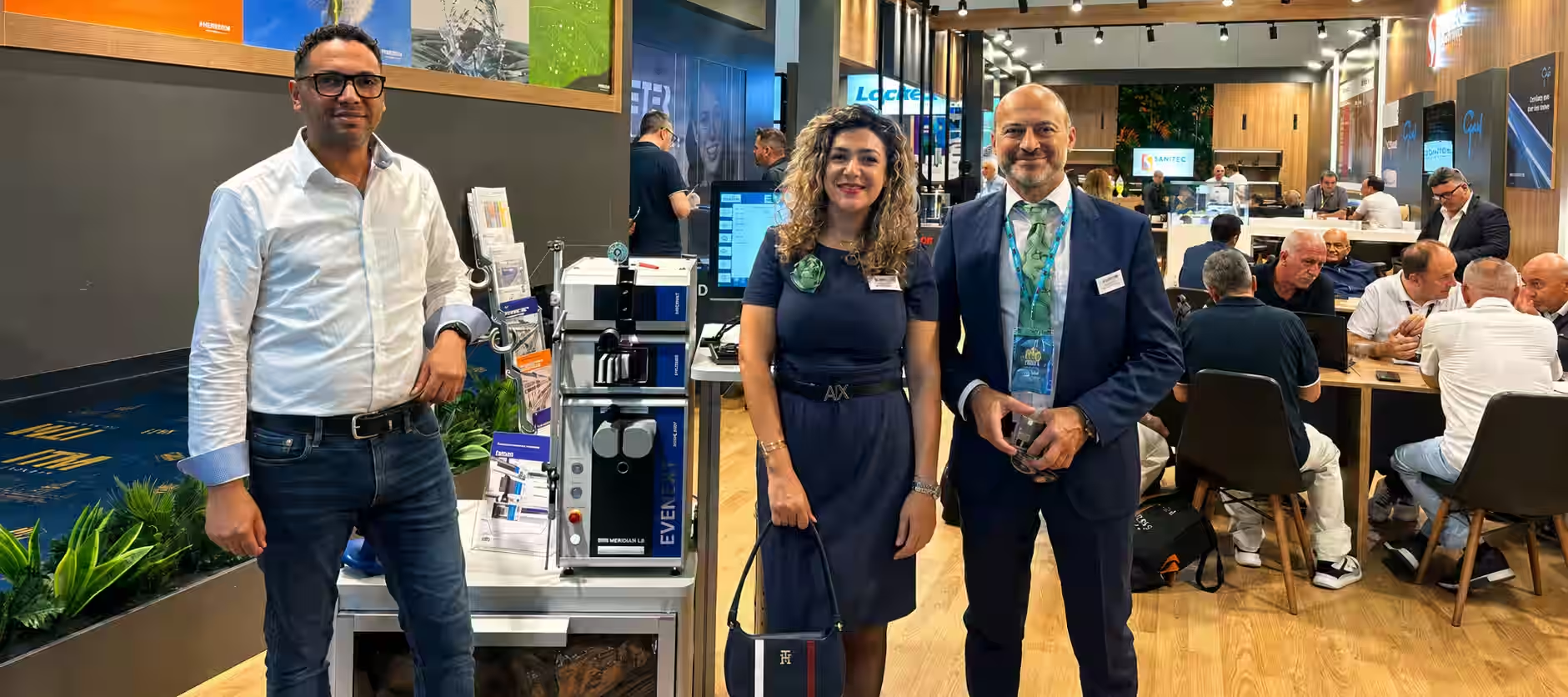
At the International Textile Machinery Exhibition (ITM 2026) in Istanbul, Behnam Ghasemi, Editor-in-Chief of Kohan Textile Journal, met with Mr. Claudio Bertolotti, Sales Director at Mesdan S.p.A. (a premier subsidiary of the Vandewiele Group). In this exclusive Q&A editorial feature, Mr. Bertolotti breaks down Mesdan’s nearly century-long history, unveils their next-generation sensor architectures, and provides a candid, data-driven analysis of the severe macroeconomic and geopolitical currents driving textile capital out of traditional manufacturing centers and reshaping the North African apparel corridor.
A Century of Calibration: The Dual Core of Mesdan Engineering
Kohan Textile Journal: Welcome, Mr. Bertolotti. To establish a baseline for our global readers, could you introduce Mesdan, your industrial heritage, and your corporate integration within the Vandewiele Group?
Mr. Claudio Bertolotti: Mesdan is an Italian company, and we are now proudly a part of the Vandewiele Group. We have an exceptionally long and robust history in the international market; in fact, our company will celebrate its 100th anniversary next year. For many decades, Mesdan operated strictly as a specialized, family-owned business before integrating into this massive global machinery group.
Operationally, our engineering expertise is sharply focused on two core industrial divisions:
- Yarn Joining Devices: Providing high-precision automatic knotters and splicers designed specifically to secure seamless continuity in spinning mills.
- Laboratory Equipment: Engineering advanced testing instrumentation, material calibration systems, and metrology solutions for the entire global textile supply chain.
The Next Generation of Metrology: Unveiling EvenNext and Burstmatic 2
Kohan Textile Journal: Quality control is undergoing rapid digitization. What specific hardware innovations or testing breakthroughs is Mesdan showcasing here at ITM 2026?
Mr. Claudio Bertolotti: At this edition of ITM Istanbul 2026, we are incredibly excited to present our new, completely redesigned evenness tester for the very first time. While evenness testing equipment has historically been a foundational staple in our laboratory range, this new system represents a total structural overhaul. We have rebuilt the entire architecture from the ground up, integrating next-generation electronic processors, highly advanced software analytical suites, and ultra-sensitive digital sensors.
Because it represents a monumental leap forward in analytical precision, we have officially named it EvenNext—it genuinely embodies the next generation of industrial evenness testing.
Kohan Textile Journal: That is a major milestone for spinning mills. Are there any specific advancements on the fabric or knitwear testing side?
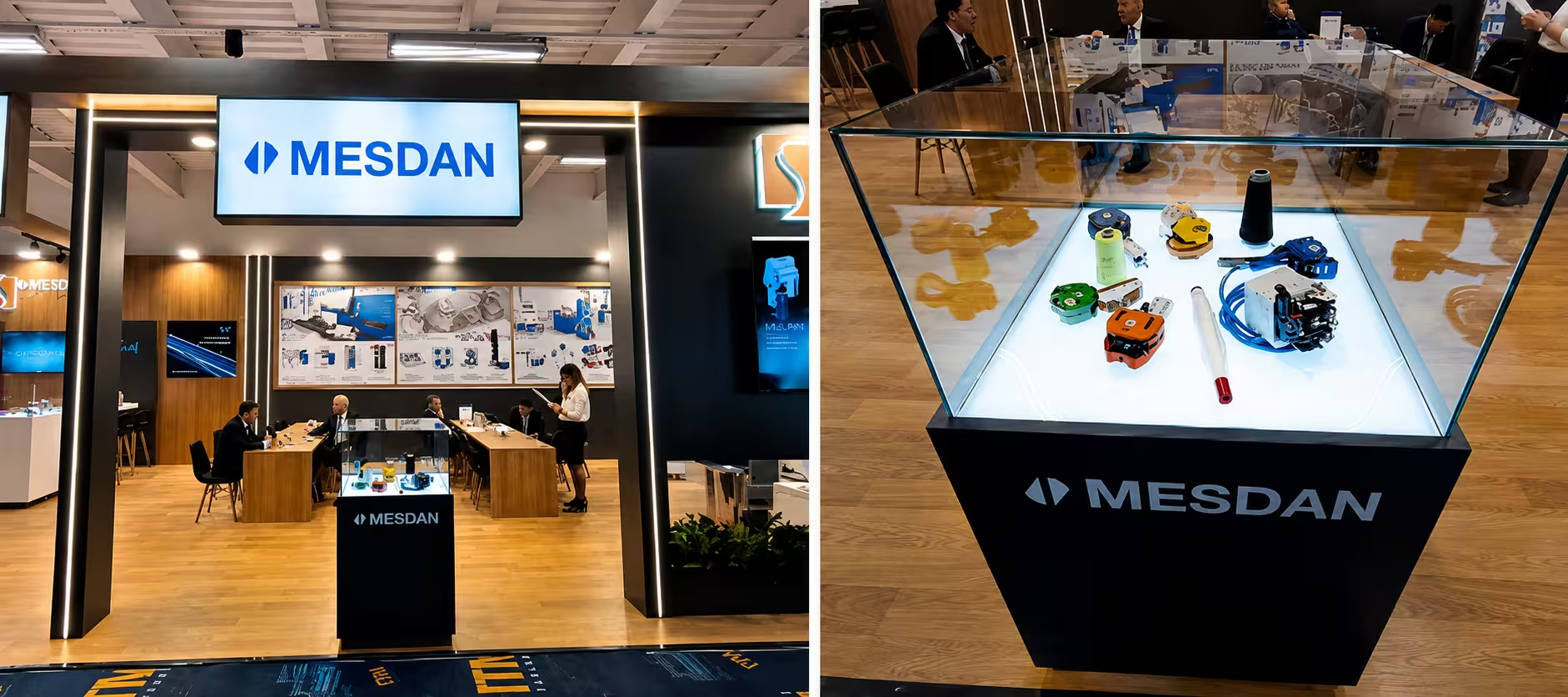
Mr. Claudio Bertolotti: Yes, absolutely. The second major piece of laboratory equipment we are showcasing on the exhibition floor is our Burstmatic 2. This is an advanced pneumatic bursting tester engineered specifically to evaluate fabric bursting strength under extreme physical pressure. It is uniquely optimized to measure the exact stretch, elongation, and structural recovery profiles of elastic, spandex-blended, and high-performance technical fabrics.
The Strategic Importance of the Turkish Textile Infrastructure
Kohan Textile Journal: Moving to market dynamics, Italian machinery builders have a historic relationship with local mills. How do you evaluate the strategic position of the Turkish market for Mesdan?
Mr. Claudio Bertolotti: The Turkish market is unequivocally one of the most vital global markets for Italian textile machinery manufacturers, sitting right at the top alongside China. Mesdan has maintained a direct, active presence in this market for many years.
As a result of this long-term commitment, we support an immense customer base across the region. Mesdan is a highly respected, household name recognized by virtually every major vertical textile mill, commercial spinning factory, local testing institute, and specialized textile university in Türkiye. For our corporate growth, remaining deeply embedded in Türkiye is an absolute necessity.
Geopolitical Friction and the Real Cost of Domestic Production
Kohan Textile Journal: The wider region is navigating intense economic and political shifts. How do you view the future of the industry across the broader Middle East and Africa (MEA)?
Mr. Claudio Bertolotti: This is an exceptionally timely and vital question. At this exact moment, we are witnessing significant geopolitical instability cascading across the region, driven heavily by ongoing conflicts between major regional actors, including Iran and Israel, alongside friction in alternative corridors.
Simultaneously, we are observing a sharp economic shift in the local landscape: the Turkish textile industry is becoming increasingly and unsustainably expensive. Rising labor costs, soaring utility tariffs, and overhead pressures are making it incredibly difficult for manufacturers to preserve their operational margins while keeping their production lines physically located here.
Consequently, we are watching a distinct trend where many of our long-term Turkish customers are actively migrating their capital expenditure and moving their production plants to alternative countries. This critical bottleneck makes it highly complex to map out definitive industry forecasts. While we firmly believe that the Turkish textile industry will ultimately execute a successful structural comeback, it will likely not return to the massive, high-volume production heights we observed five to ten years ago.
The Ascent of Egypt and the Future Rehabilitation of Syria
Kohan Textile Journal: As capital relocates to escape these domestic cost pressures, which alternative production hubs are poised to capture this manufacturing market share?
Mr. Claudio Bertolotti: Our data indicates that countries like Egypt are positioned for rapid, highly aggressive industrial growth. Egypt offers a highly competitive cost structure, favorable export agreements, and an optimal geographical location, making it a primary destination for relocating garment and yarn capacities.
Furthermore, looking further ahead, we remain hopeful that once the overarching geopolitical situation in the Middle East achieves real, long-term stabilization, Syria can also execute a powerful return to the global textile industry. Syria possesses a rich historical legacy in master spinning and weaving, and a stabilized environment will unlock massive reconstruction and production potential.