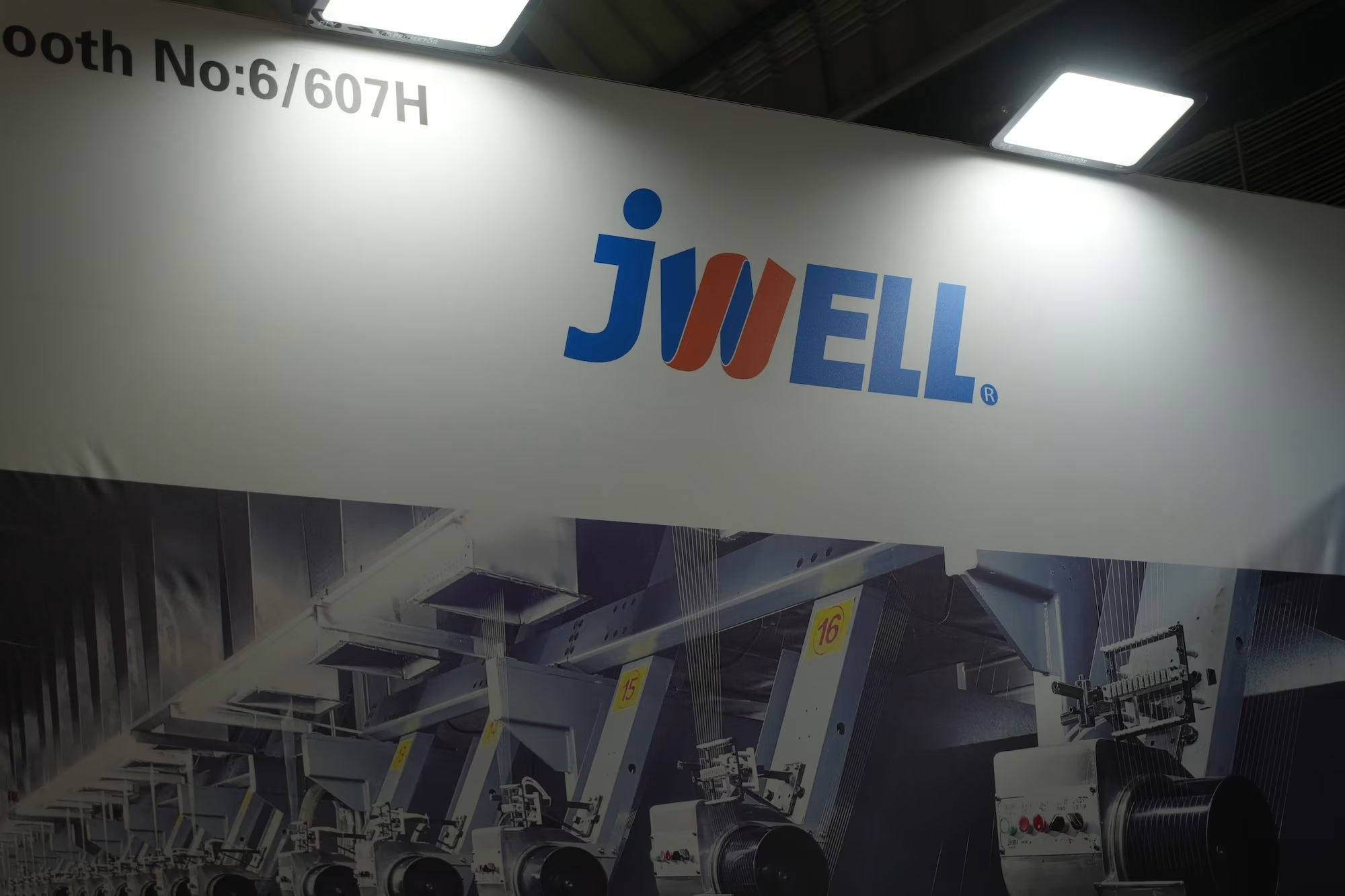
The production of synthetic yarns is experiencing a rapid technological evolution, demanding higher operational yields, absolute mechanical stability, and a lower total cost of production. As synthetic spinning operators search for ways to navigate soaring production expenses, heavy engineering suppliers are stepping up with complete factory layouts. Standing at the vanguard of this engineering movement is Jwell Fiber Machinery Co., Ltd. (Suzhou), a prominent manufacturer recognized worldwide as a professional chemical fiber machine supplier.
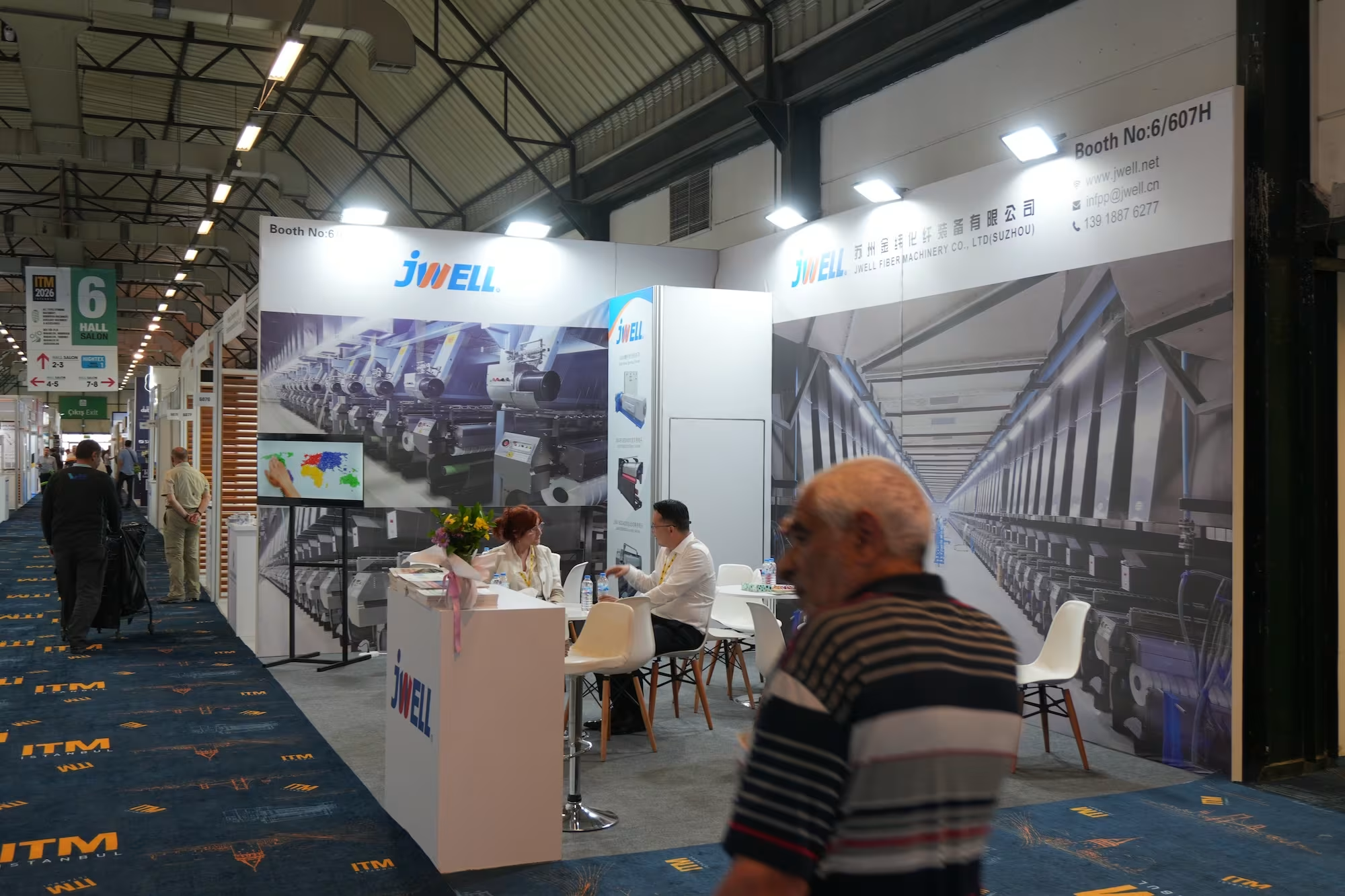
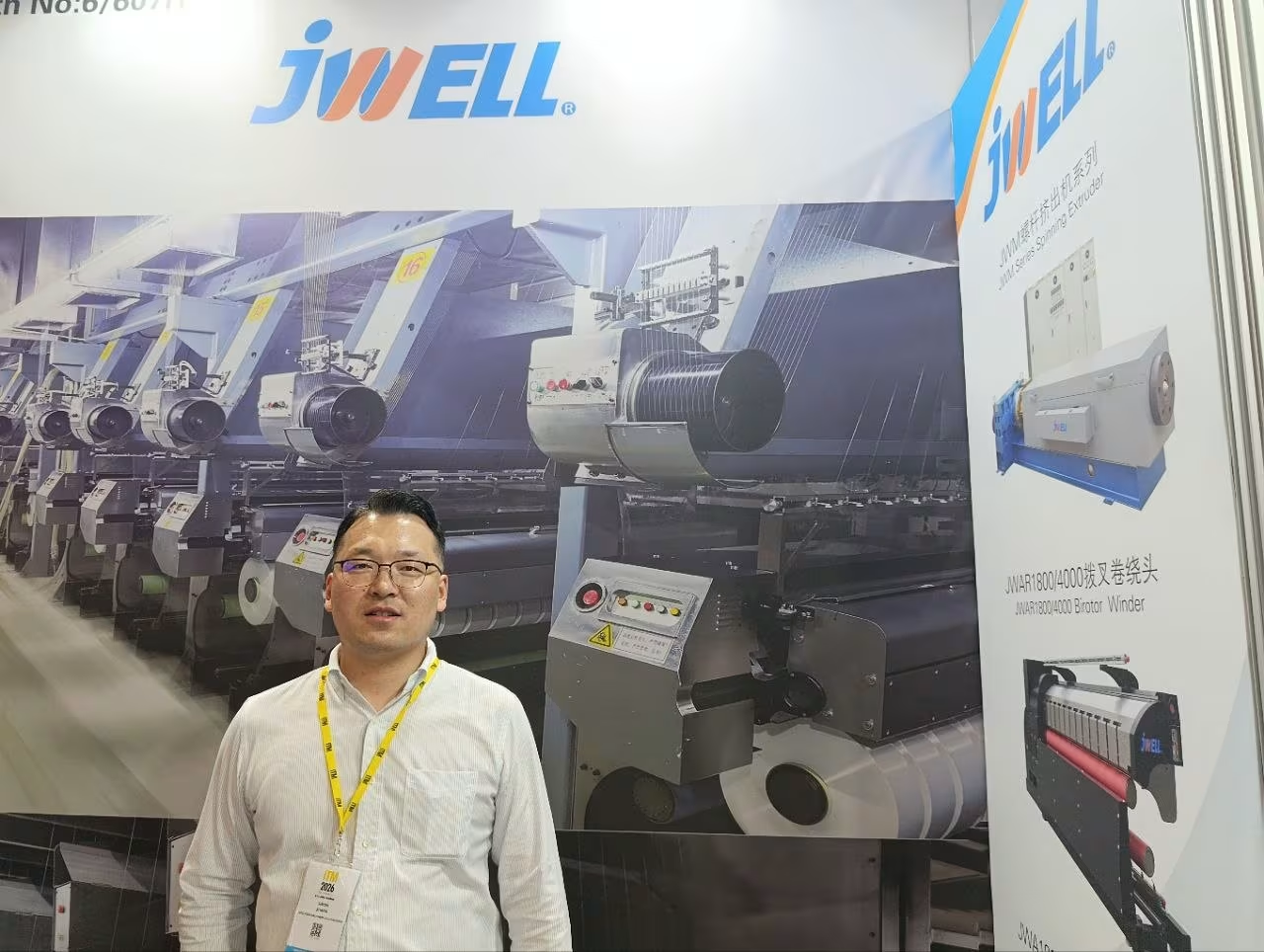
At the ITM 2026 Exhibition in Istanbul, Behnam Ghasemi, Editor-in-Chief of Kohan Textile Journal, sat down with Mr. Simon Zhang, General Manager at Jwell, to analyze the mechanics behind their custom spinning solutions, the industrial relocation patterns into Africa, and the rising role of circular materials within the global supply grid.
A Complete Engineering Spectrum: From Raw Extrusion to Turnkey Spinning Lines
For textile operations aiming to enter or expand filament spinning, fragmenting technology purchases across multiple manufacturers creates systemic implementation risks. Jwell’s primary competitive advantage lies in its capacity to construct entirely complete, vertically engineered turnkey spinning lines.
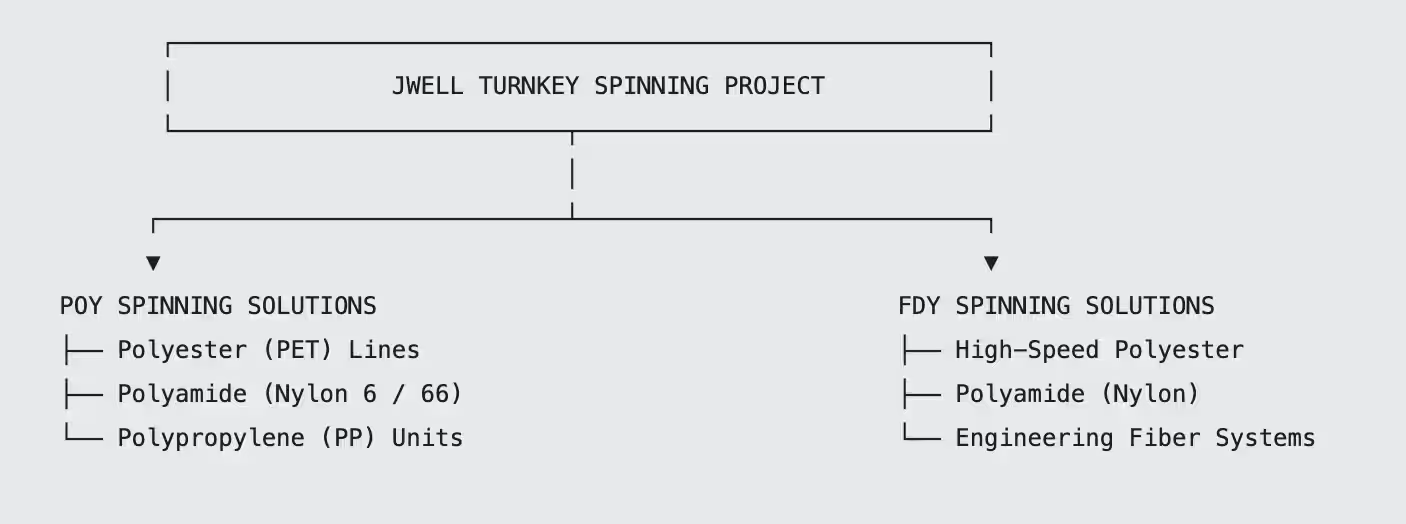
“Our engineering is primarily focused on delivering high-capacity POY (Partially Oriented Yarn) and FDY (Fully Drawn Yarn) spinning machines,” Mr. Zhang noted. “We construct systems tailored for the full raw material matrix, processing Polyester, Polyamide, and Polypropylene. Our objective at ITM 2026 is to demonstrate our full turnkey project capabilities. We don’t just supply individual components; we deliver the entire spinning line from extrusion down to winding.”
Beyond standard commercial apparel yarns, Jwell is channeling substantial engineering resources into custom engineering fiber lines, enabling industrial textiles to satisfy stringent material performance standards.
Read More: The Countdown to ITM 2026 Has Begun: Global Textile Investors Will Meet in Istanbul
Turkey: An Indispensable Platform for Global Synthetic Machinery
For Jwell, the Turkish market is not a novel territory, but a corner-stone market where the company has consistently invested for multiple product generations.
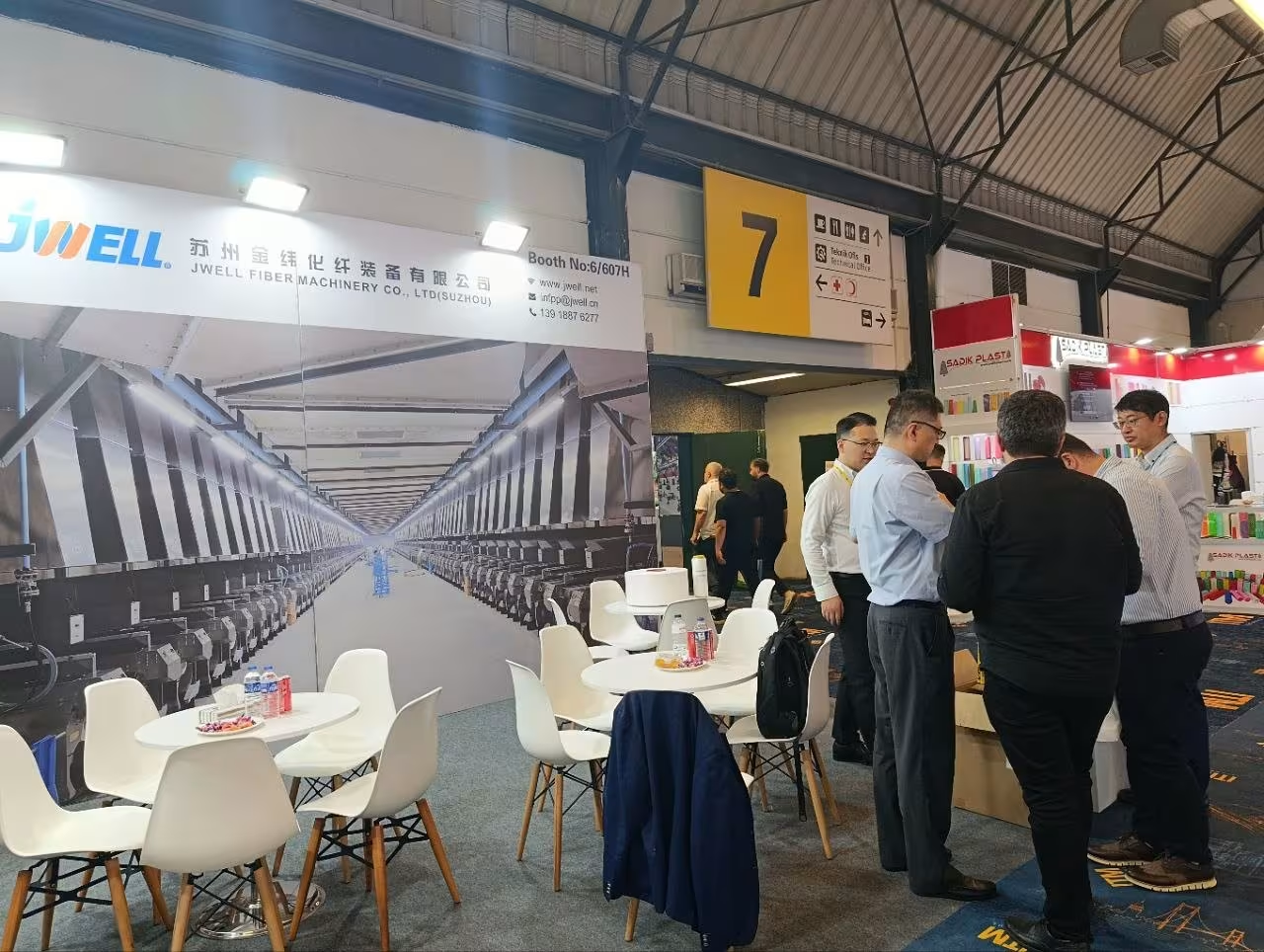
“Turkey stands firmly as one of the top three manufacturing markets in the world for the synthetic fiber business,” Mr. Zhang explained. “We have been systematically developing our position within the Turkish market for several years, building a strong, trusted client infrastructure across major industrial clusters. Because of Turkey’s immense regional significance, we return to Istanbul every two years without fail to showcase our latest engineering iterations at the Tüyap exhibition center.”
Navigating the Manufacturing Cost Challenge
Despite Turkey’s high infrastructure maturity, the local market is grappling with shifting macro-economic variables that are driving operational overhead to historical highs.
“The structural issue currently facing Turkish spinning operators is that the baseline manufacturing cost has risen too high,” Mr. Zhang observed critically. “This has caused a notable operational shift, with certain large-scale manufacturers choosing to migrate their production lines out of the region. For the field to stabilize, it is critical that manufacturing costs come down and inflationary pressures ease over the coming months.”
The Southward Migration: Africa Emerges as the Next Synthetic Fiber Hotspot
As rising labor and energy expenses alter traditional trade routes in both China and Turkey, Jwell is tracking a clear geographical movement of manufacturing capital into North and Sub-Saharan Africa.
- The Egyptian Epicenter: Egypt is rapidly establishing itself as the primary destination for relocated synthetic spinning mills.
- The North African Circuit: Alongside Egypt, both Morocco and Algeria are securing a high volume of factory investments from operators seeking competitive energy structures and optimized logistics to Europe.
- Targeted Expansion: Reflecting this major market shift, Jwell is actively expanding its regional presence. “Africa is undeniably the next high-growth market for the synthetic fiber industry,” Mr. Zhang revealed. “In fact, this coming September, Jwell will be directly participating in a major machinery exhibition in Egypt to anchor our project developments in the region.”
Material Circularity: Driving the Shift to PLA, PBAT, and Bottle-to-Yarn Recycling
The synthetic yarn field is no longer evaluating machinery purely on mechanical speed; ecological parameters are now defining long-term factory viability. Jwell has adapted its extrusion screws and spinning manifolds to process a new generation of sustainable and bio-degradable polymers.
Advanced Bio-Based Polymers
Jwell’s latest machines are optimized to process PLA (Polylactic Acid) and PBAT (Polybutyrate Adipate Terephthalate), providing a clean path for factories to transition into certified compostable and environmental fiber production.
Industrial Bottle-to-Yarn Systems
“The global market is demanding a systemic shift toward recycled materials,” Mr. Zhang concluded. “We have developed specialized extrusion architectures that convert post-consumer water bottles directly into high-grade textile-grade fibers. This bottle-to-yarn circular approach is no longer an experimental concept; it is the definitive production concept that will guide the synthetic industry forward.”
Editor’s Insight: The Structural Mandate for Turnkey Engineering
In a challenging macro-economic climate where the cost of raw materials and operational energy can fluctuate wildly, the profitability of a synthetic spinning plant is determined in the prep and extrusion phases. If an extrusion system fails to distribute heat evenly across a polymer line, the resulting filament suffers from structural irregularities, leading to constant fiber breakages during subsequent down-stream processing.
Jwell’s intense focus on providing undivided turnkey project solutions represents a logical response to modern textile realities. For manufacturing hubs looking to mitigate rising domestic production costs—whether in Turkey’s traditional industrial regions or within the rapidly growing textile corridors of Egypt and North Africa—the elimination of third-party integration risk is paramount. By engineering the entire spinning line under a unified